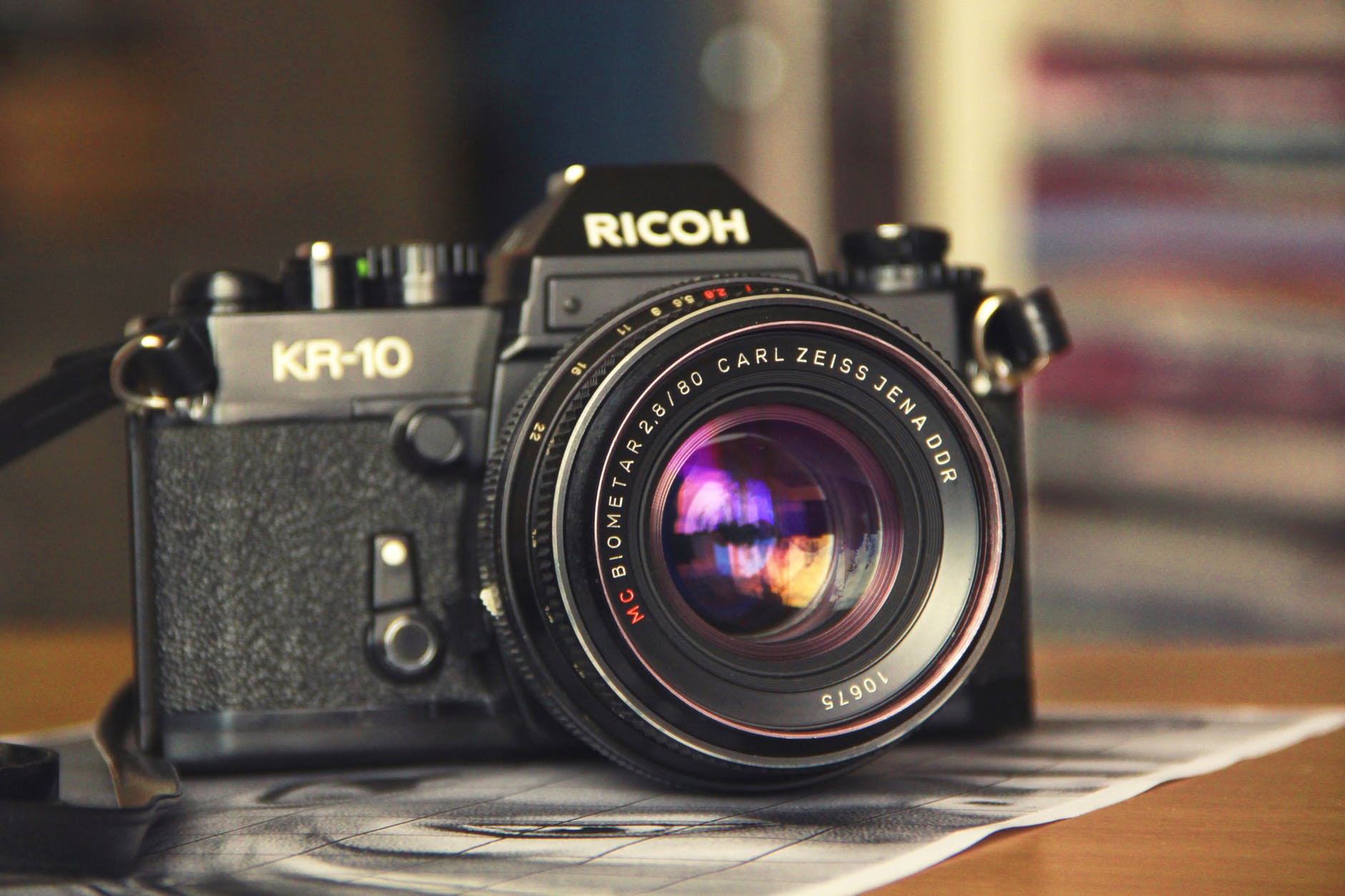
PHO705: Incorrect Print Result – initially colour off and green cast. Subsequently a ‘silent’ swap to the restricted paper choice with the AirPrint driver

Silent software updates led to issues with my Epson P800 Printer, prompting me to initiate a recovery plan and conduct a thorough analysis of the print process. Despite setbacks, including a technical issue and the COVID-19 lockdown forcing the cancellation of my exhibition, I remained adaptable and managed to complete my book within a shorter time frame.

This is a recurring problem caused when software updates. I’ve added an Annexe below to contain more detailed information relating to how I’ve setup for print.

User Resolution

1 Connect the Mac computer and printer by direct wire

2 Reinstate the link to Epson paper profiles by reinstalling the driver software. This triggers the choice of Epson driver over Apple Airprint for you to select

3 Select Printer Manages Colors

By filming the required page-turning video and creating a 3D model of the exhibition space, I demonstrated resilience in overcoming challenges. My experience highlighted the importance of being prepared for the unexpected and staying flexible when faced with unforeseen events.

However, the problem with ICC paper profile selection on the Epson P800 Printer persisted in the years that followed, as automatic software updates caused the printer to lose the link to the folder containing Epson ICC paper profiles. The default connection became AirPrint, which only recognized generic profiles supplied by Apple, rather than specific Epson paper types.

Advice

It sounds like you had a lot of challenges to overcome in order to complete your FMP. I’m glad that you were able to persevere and produce a high-quality piece of work.

I understand your frustration with the Epson P800 printer. It sounds like the software updates are causing problems with the ICC paper profiles. I’ve done some research, and it seems like this is a known issue with the printer.

There are a few things you can do to try to fix the problem. First, you can try uninstalling the printer driver and then reinstalling it. You can also try disabling the automatic software updates for the printer.

If those steps don’t work, you may need to contact Epson support for help. They may be able to provide you with a newer version of the printer driver that fixes the problem.

I hope this helps!

References in case required:

https://www.redrivercatalog.com/infocenter/tips/how-to-fix-missing-paper-media-type-selection-OSX.html

https://community.adobe.com/t5/color-management/printer-profiles-missing-for-epson-sc-p800/m-p/10870908#M3033

Annexe A – Print setup additional information.

Where are the ICC profiles located for my printer on my Mac?

• Do the following to locate the files:

1. Open your hard drive, then select Library > Printers > EPSON > InkjetPrinter2 > ICCProfiles.

2. Press and hold the Control key on your keyboard while you click the profile package in the ICCProfiles folder. In the pop-up menu that appears, select Show Package Contents.

3. Select Contents > Resources.

https://epson.com/faq/SPT_SCP9000SE~faq-00009ed-shared?faq_cat=faq-topFaqs#:~:text=Do%20the%20following%20to%20locate,%3E%20EPSON%20%3E%20InkjetPrinter2%20%3E%20ICCProfiles.

ColorSync

The profiles can also be found using the Colosync app.

Profile Naming Variations

Note when viewing the print paper profiles in a) the package (see above Where are the ICC profiles located) the file names are used. B) in ColorSync a description is used (contains some of the file name information but missing the printer ID SC-P800 and c) in the photo app (e.g. Photoshop) Print – media selection, there is another very similar description. Simply note the identification is the same but different depending on where you view the paper ICC.

Printer icons

On the computer, print icons existed for three devices: one for a Canon portable printer and two for the Epson P800. One is for the AirPrint driver (do not use) which is live as wifi is available, the other Epson P800 icon is for the direct cable connection. If the printer cable becomes disconnected that print option is offline.

Check:

1. A print cable is connected between computer and Epson P800

2. Ensure the direct connection icon is set as default.

This is to avoid a silent swap to the AirPrint.

PHO705: Week 24 Reflection

Done. The work has been done. Everything was handed in well in advance or in advance.

It proved important to leave enough time for checking as the inevitable was ready to happen – the screen freeze and colour printing going all wrong with an unexpectedly deep dive into ColorSync print technology.

Restart work on the Exhibition items put on ice

The video refresh, the music, the exhibition in a box were all in work but lost out as publication turned to book when the exhibition was postponed. Now there is time to prepare for a new date.

I’ll continue to check this blog for any mistakes. I know there a few.

Reflection

At the current point, much has been taken from the course. Starting with a new passion for bookbinding. Things there are going wild with three more hand bindings lined up.

Practice in using media tools with a vengeance was a highlight too.

Fulfilling the objective of making a portfolio of publishable work was the aim at the outset and how that has been helped along.

Making pictures as Art based on cutting edge Science ArtSci became a revelation in the area of genetics This genre is ripe for new picture making.

PHO705: Week 23 Reflection

Week 23 has been about letting the work fall into place given that all the research and the practicalities of exhibition and book had been readied. Now for the resolved body of work.

Critical Review of Practice CRoP Update

The Critical Review of Practice had input from a group of reviewers during the week. Review has been especially valuable given the abstract surreal nature of the pictures. The work does communicate! This accords with feedback from the August 2019 practice exhibition although the work did move on.

The CRoP was submitted before the Easter break and one more review was received later in the week which will be incorporated and the CRoP will be resubmitted with a tighter ending.

Picture Edit and Book Draft

The picture edit took place during this week. Having tightened this down considerably from the original set of 50 – 80 images I then got productive and created a whole other set of family archive / DNA edits.

So far I’ve resisted adding these as sometimes the temptation is to over embellish at which point it can get out of control, especially if a distraction to the work.

This page-turning video was made. I recycled prints made for an external review which here are made into a brochure.

Narrative Lines

There was at least 6 months of research into themes and creating a visual narrative. I had believed I’d need to place an abstract surreal on recto pages to keep them from clashing, but have a text to picture or cloud DNA composite on the verso to pick out the narrative with clouds of text or alternatively, text to picture generative art.

What happened during the edit was that picture matching fell into place and some well matched pairs resulted (my view and a reviewer view).

This eliminates the need for the verso narrative with a cloud of text or text to picture plate. The cloud method developed now unused is quite focussed on theme through word selection. Thinking about DNA bases annotated as ACGT, then by selecting 100 words I can make narratives out of the English language set of around 1100 words where those four letters appear e.g. ’photographic’ (phoToGrAphiC). Still singing the praise of the method inspired by Recombinant rhymes and DNA Art (RRDA), it provides the photographer with exceptional flexibility in overlay as narrative creation which is important to my choice of conceptual approach in the abstract surreal, if it helps the viewer along. There is a visual challenge of overlaying the text with an appropriate photograph that blends sympathetically with the work. There is a variation where a poem or song lyric can be overlaid on an image as text to picture (rather than as emphasised words in a cloud). The outcome of RRDA subtlety leads the narrative line as the other of the 300 words are still shown. As the viewers eye scans the composite they may trigger not just on the emphasised words but others they see. By leaving this open to the viewer they do in effect choose their own interpretation as they do normally but each time they return to the verso and recto they can gain more as the method keeps on giving.

So why so much thought on something that didn’t get used in Past-Present in the Artist’s book or the extended Exhibition with multiple themes in separate spaces?

It’s just that the method is contemporary and works in its own right. It is combinatorial in word selection (100C3 for the current approach for the mathematicians amongst us). Out of Past-Present has been created a whole area of endeavour and here the idea is shared with anyone interested in such ways of visual language creation. I have time to consider a side exhibition of RRDA pictures as a standalone group of theme common that contrasts with the figurative forms from my main exhibition of abstract surreal pictures.

I now think these verso images deserve a separate portfolio. An early example of the method was to use poem or song lyrics (in text to picture generative art) overlaid on the source picture. There is no creative limit. The fact I like it so much as photographer was the trap if I shovelled in too much research spoiling the simpler visual narrative that was used in the end. Post-FMP submission I’m going to return to RRDA.

The rules that developed for this included a) not crowding out the central pictures, only allowing then to punctuate transitions in picture style.

The text method is flexible and effective but for ‘Past-Present a mythology of time’, these verso images graphic content I decided would push against the grain of abstract surreal pictures.

What I’m focussed on is creating a resolved body of work.

The textual method formed a valuable part of my research and acted as insurance if there was viewer disconnect. The abstract surreal images paired up well visually and this reduced the need for additional support. That turned out well.

The resolved body of work approach led me to rationalise the use of ghost pictures. Place is represented as ghost landscapes and are core to the work. The people ghosts and the cellular division theme together are dropped as themes in the book. Ghost have a place in the exhibition as a side exhibition.

A-V production that included ghosts was researched as part of the FMP PDF. Again it is interesting and possibly quite dramatic but is not needed for now.

Poems and Interview

A version of the book has been created as a PDF and ISSUU publication in order to gather in review comments.

I had to resolve different views about supporting pictures with text. For now I’m happy to have:

  • a short section of prose relevant to the theme
  • a poem about place and archive picture
  • an interview
  • the core pictures
  • repeated as miniatures with caption and print details as an index

There are improvements and review inputs to deal with before imposing and collating the pages into the book.

The book will be case bound, with a block comprising kettle stitched signatures. This type of hand-bound book was created in an earlier module. The current book will be the fourth to be hand made.

It is expected that an even tighter edit will arise from this for the Final Major Project PDF submission.

Final Major Project FMP PDF document

This is the last major assignment to be handed in and is worth 60 points. It is due before 1May. I have this in synopsis form ready to pull together.

Inputs to this will include the picture edit developed out of both the exhibition and the book.

Media will be created to demonstrate the materiality of the book.

In lieu of the exhibition, the 3D model created, for now, will be set-up with the selected pictures and screen captures will be taken from a 3D model I’ve made to synthesize the studio/gallery space.

Audio

I’ve been keen to address a requirement to present in different forms. Recently I gained insight. I’d seen the exhibition and book as equivalent when in practice they have very different sets of demands even though the pictures overlap.

I want to avoid forcing the narrative with audio in the FMP PDF. When the pictorial element starts to resolve why then distract the viewer?

When it dawned how different the exhibition and book are then the problems resolved. I enjoyed the learning and it was simply a journey I had to make.

Although the audio has been dropped it may well find its place in the exhibition later on where the physical space benefits from creating a conducive atmosphere with linked but contrasting works. The thing is our aim is a professional body of work of high quality. Adding media, audio in this case, that produces a Ronald Dhal-esq scary story feel which he did aimed at the child audience then it clearly goes wrong. The work would start to emphasise the child in me and while the creative child never went away the style goes against the level of publication required for this FMP.

I did additional external studies on sound recording and on podcasting and set about practising technique within my practice. It proved to be quite sustaining and a) took my mind away from being too focussed on my practice. This led to a breakthrough with selecting the edit and b) settled my thoughts during the lockdown.

My work was not halted because I’d chosen at the start of the degree second module to work on a subject that was sustainable. However, there are many distractions to photography while comprehending the impact of the lockdown.

External courses, applicable to my practice proved a welcome distraction. There has been knowledge and skill development that I’m glad to have had even if audio is dropped.

External Practitioner Reviews

The reviewers have adapted to circumstance with the COVID-19 move across from physical exhibition to making of a book. I shouldn’t complain that the project changed emphasis as in a last year critique I not only began to be recognised as a maker of books but was strongly advised to make a book. Why didn’t I listen? It would have been too easy to follow the guidance but once more I had a journey of learning to embark upon. I came into the course with a specialism in books and it would have been my loss to only had done books and not have explored what this course has to offer to practice development.

I met a chosen art photographer reviewer at the exhibition space before lockdown and they kindly went over an extended set of test prints and later the draft portfolio website. I decided to engage early and bring my external reviewers back in towards the end. It is a delicate art interacting like this as it chews up the time, and actually had to disengage for a fortnight to get on. Usually it saves failure and avoids starting all over again.

The practitioner reviewers onboard I’m delighted to say are:

  • a fellowship art photographer
  • a fellowship fine art photographer
  • a fellowship book collector and editor
  • a journal editor and
  • a multi-genre, multi-award winning and twice professional photographer of the year finalist.


PHO705: Easter Reflection

This an important Milestone in my assignment plan.

Hand in statuses

FMP Proposal 10 points

Status Green – submitted and marked at Week 4

FMP Critical Review Journal CRJ 10 points

Status Amber/Green – up to date with around 4 more posts to make.

Important Note:

  • All FMP entries are titled by module identifier PHO705
  • Search is provided- page all the way down to view the tag cloud, category selector and search box.

Link michaelturnercrj.blog

FMP Critical Review of Practice 20 points

This is ready for review.

FMP PDF 60 points

Status Amber/Red – completion is dependent on making that’s work in progress.

The FMP PDF is WIP:

Exhibition Prints

Status Amber – poster board printing and edit of 50 down to 20 images is lined up to start. Materials available and inks replenished.

Book

Status Amber – interview text and some poetry/prose is written and ready for an edit. The picture edit is to be tightened up and layout created in InDesign. This is a time-consuming activity. The book was proposed by the University as the replacement activity of the postponed exhibition.

ISSUU

An electronic publication on ISSUU is a step in visualising the book before printing and hand binding.

Portfolio Website

Status Amber – draft published pre the edit. The picture edit is in work.

Link: https://www.michaelmturnerphotography.com

Other Elements

Status Red – these activities have been prioritised down in favour of the marked assignments and in line with Exhibition postponement.

Note: the August 2019 exhibition ran for eight days for the same project with the last module images. The other elements were used for that.

Supporting elements to be remade: audio recording, moving stills, and video.

Review

I’ve planned to gain review, some is in and other practitioners will need the items above to make comment.

This will be my final stage adjusting to the public presentation of my FMP and a vital opportunity to make adjustments before handling in.

PHO705: Easter Reflection

The Final Major Project is expected to adapt to the COVID-19 outbreak.

Falmouth University Self-help

A series of Thursday meetings have been run or engaged in for students as a Final Major Project cross-cohort group. We are all affected by the pandemic that is currently peaking.

Effects of imposed social isolation are many, from not being able to shoot project images anymore, through to cancelled exhibitions.

There is increased engagement from our tutors and module leaders at this time with many inspirational guest lectures.

A personal challenge, exhibition apart, is simply writing with distractions and increased communications with families and through a media storm.

Completion of the MA

There are two key communications:

  • PhotoHub – Announcements – ECs Updates from the University Course Leader 20 Mar.
  • Office of the Vice-Chancellor 3 Apr. Coronavirus: update on assessments.

I’ve really no idea how to fully interpret these in my circumstances, without stopping to clarify. With time already lost to the pandemic, I cannot sustain too much more delay.

As for self-isolating, I’ve been isolating in effect since the end of September and I’m quite used to it now.

My work was designed to be sustainable from 3 months into the course. If necessary I could simulate glow using pressure marks in a similar way to exposing photographic paper.

As for making I planned in advance and have enough materials for printing and book binding. The main problem is the writing of a 20 point review that has taken an inordinate time and is currently 2/3 rds of the way through it third incarnation.

In a sense, it is needed in advance of making as the guiding intent. But then it can’t complete until the work has gone public. I think the Critical Review of Practice CRoP should be renamed the Catch22 Review of Practice CRoP because of this gotcha. I hope this entanglement might be recognised for future cohorts.

PHO705: Week 22 Reflection

Reflections, Reflections, Reflections

A Writing Review

Never make this mistake. Go to review early but not too early.

FMP calls for multiple unplanned writing requests. Show me the ticketing blurb. What does your artist’s statement say? What is the context of this work? Random creative scribblings for the book front stuff with raw poetry, a collection of quotes and an interview. Add to this list this very CRJ.

An outcome has been the abrupt realisation that the writing needs to be planned

Reflections on the pandemic spread of SARS-CoV-2

Handwashing

Hand washing is Government advice and in turn, frequent hand washing has led for some to minor healing from drying and cracking.

Colour has returned to my work on this latest adaption to my FMP:

[metaslider id=8759 cssclass=””]

Deep Sequencing

The outbreak of the Corona Virus on a cruise ship was sampled and deep sequenced by scientists in Japan:

Despite the length of this nucleotide, a virus is a very simple molecular mechanism compared to our genome. Here is a visual rendition created for the virus to summarise all of the nucleotides you see in the PDF:

Factoids – Genetic Research

My FMP work can get really deep and intense and involved and I’m sure the intensity can be too much for the casual viewer of the work. This is becoming ever so clear as a result of making a synopsis of the Critical Review of Practice and book content.

A bias entered the FMP by deciding to place focus on own DNA (at a meeting with Victoria Forrest). I have since analysed 680,000 lines of my genome and revisited the book “Your DNA Adventure” (Living DNA, 2019). The language used there is straightforward to follow. It is better than my own writing that is based on two months of genetic research made possible when being laid low twice (or thrice) last year with the visit of a nasty virus.

Here are the snippets that inform. I like to call them factoids.

Motherline MTDNA Haplogroup T1a Subclade T1a1a arose in a woman in the Mediterranean 17,000 years ago. Inherited directly from mother.

Fatherline Y-DNA Haplogroup R-L21 Subclade R-DF25 Atlantic shores of Northern Europe. As male inherited from father.

Autosomal DNA cover the last 250 years. The FMP covers just over 100 years to the Great War. The first 22 (of 23) chromosome pairs form the autosome.

680,000 markers are analysed from my genome.

I am of Scottish cultural descent and now certified as Irish with Norwegian trace from the Viking invasions. This links me to Celtic legend and a tribal genetic legacy.

The genetic signature has a quality unusual in the British Isles linked to migrations in the 1600s but intermixing occurred before then with natural migrations across the sea.

Remarkably DNA can be traced back to nomadic Stone Age people at the end of the last ice age. The signature is found in Western Germany, Northern France and Belgium. It is therefore ironic that brothers from my family who fought in the Royal Highland Black Watch Regiment, fought their ancestral brothers and died fighting in France and Belgium.

I have a common motherline ancestor with peoples living in Udmurtia, Romania, Tunisia, Iran ant the Caucasus.

My common ancestral mother would have been a hardy hunter gatherer. Competition for resources would have been fierce. This character lived on in my mother and was present in her representing southern Scotland in as a sprint runner. The hunter gatherer tradition lived on in living memory in the Scottish community I was born into and lived within. A tradition that lasted for 17,000 years of which I may be the last in line to witness these events.

My fatherline hails from Ireland, Wales, Brittany, Scotland, England, Netherlands, Norway, Switzerland and Germany in an Atlantic Celtic migration arriving in the early Bronze Age. In fact my father was lined up to be the village blacksmith before he left to join the Parachute Regiment.

Mitochondrial DNA exists as circular cells outside of the chromosome nucleus. The egg contains thousands of mitochondria and the sperm very few. These are mostly in the tail which is lost during fertilisation adn so mitochondria is inherited from the mother. It is thought there may be one or two individuals alive who improbably inherited the mitochondria of the father. Mitochondia are very stable and can be assumed to mutate once in every 1,000 years. The Salamander and even wheat have greater DNA diversity than humans.Genetic diversity is very limited in modern humans outside of Africa.

Africans who are resistant to malaria received a gene 33,000 years ago. Europeans had already migrated and so do not share the resistant gene.

Although my DNA is unique, it is over 99% in common with every other human being alive. Our genetic connections with those in different regions have more in common than in our geographic separation.

While Crick and Watson won the Nobel prize and are credited with the discovery of the DNA double helix, their work actually used the results of X-Ray crystallography created by Rosalind Franklin at Kings College London, who was not credited.

Last year at a Symposium led by women on the subject of the parallels in thinking behind the art, and behind science, I met a husband of one of these eminent scientists. The husband took my research question and replied, and I asked if he had been at Oxford. No, he was Professor in X-Ray crystallography at King’s. But if that was not enough coincidence, when I said I’d been at the Oxford Department of Zoology on the Computing side of X-Ray crystallography, it turned out he was there doing his degree that same year.

And finally, when the 1951 discovery was made what knowledge previously existed? Plato (428 BC-348 BC) a philosopher and mathematician in Classical Greece wrote in “Tinneus” of the creation of man and used terms that directly parallel the modern science.

Bibliography

LivingDNA (2019) Michael Turner – Your DNA Adventure.

PHO705: Week 21 Reflection

The exhibition will now take place in a silent studio and plans are afoot to make a video presentation. Maybe in expansive mood perhaps also an artist talk.

Silent Exhibition

What to say when narrating the exhibition? Some plans are afoot as to how to conduct this but what to say. Perhaps make a reading of the book front stuff: prose going into poem and artist interview.

Versus Alternative Venue

Plan B would be to leave the studio and use brick walls and lighting I have lined up. Would it make a difference to the interpretation of the work, well yes?

A venue change to a brick built environment reminds of the following with lyrics following on to some kind of parallel to the pandemic:

Inspired by music and the feel of an alternative venue and the reason behind the change of venue:

Empty Spaces – Pink Floyd

What shall we use to fill the empty spaces
Where waves of hunger roar?
Shall we set out across the sea of faces
In search of more and more applause?

Shall we buy a new guitar?
Shall we drive a more powerful car?
Shall we work straight through the night?
Shall we get into fights?
Leave the lights on?
Drop bombs?
Do tours of the east?
contract diseases?
Bury bones?
Break up homes?
Send flowers by phone?
Take to drink?
Go to shrinks?
Give up meat?
Rarely sleep?
Keep people as pets?
Train dogs?
Race rats?
Fill the attic with cash?
Bury treasure?
Store up leisure?
But never relax at all
With our backs to the wall

PHO705: Week 20 Reflection

Practitioner Feedback

A practitioner was approached for feedback and this turned into an immediate request to see the portfolio online. This seemed too soon as the different activities have still to come together into a whole.

Initial indications are about the work being striking and original and as test prints, at 4×5 inches they would be better viewed at greater than A4 size. A3+ posterboard on order has now arrived and is ready for printing.

Looking at the care instructions I was surprised to read the small print. Matte posterboard being a heavy-duty option compared to gloss photopaper requires more care. It has to be covered in an absorbent paper when taken out of the printer. It then needs 24 hours to fully dry and for the colour to fix. Then it needs mounting behind glass.

I’m glad there was time in the plan to allow for this unexpected activity.

All of this because the size of the images matters. I’d normally go to A4 so the prints are going up in scale.

As mentioned elsewhere , I’m willing to give it a go. It could be an expensive failure and I might have to revert to my standard A4 on 40x50cm mountboard.

The cancellation of the exhibition means it could all be counterproductive anyway. The revised intention is to film the setup on iPhone and add a spoken narrative. I’m going to have to deal with iPhone stabilisation issue, but I’m sure that can be managed.

I can see me doing a practice run with a planned and edited spoken word displayed on a teleprompter. These things require a team effort because so many hands are needed and the delivery requires practice. If I’m pressed the video might be released. My concern is about introducing new technology at this stage on top of 3D modelling tools Sketchup, and Vectorworks, Generative art software Processing and P5.js and Wordclouds. I really need to concentrate on the marked elements of the course.

The poster-boards will bring a whole new challenge to taking the work public regards unfilled white space. The finish is matte (when glossy was my intent). Size is large (when my original intent is memento based). Then there is the need to re-layout the images and there is the increase in size and weight for 30 prints.

If this goes badly wrong at least I should have some nice individual prints over and with enough mount-board ordered I can repeat the whole exercise on A4 gloss. This variation from plan doubles my workload and in circumstances where an exhibition may be postponed with the current virus threat to society.

Another constraint is the supporting material of which video and exhibition guide are examples that require time and effort and may not get to be appreciated or shown even in public.

Re-emphasis, as now expected by the University, is towards the book. This was never meant to be the main public deliverable only an artist’s book dummy as a keepsake from the exhibition. Taking the book to the main deliverable makes this a serious concern that normally requires collaborative input and the design assistance of a graphic designer. It is widely known that photographers on the subject of their own work are poor at bookmaking in terms of selection of edit, layout, graphics design and writing.

Would it be wise to follow this direction as the work is not going to be shown at its best as working with a graphic designer and printer requires three months elapsed and there is only 6 weeks or less remaining?

This global virus pandemic is really destabilising the end product quality. It is a killer in the normal sense of health but is also a killer with the additional contingency planning and actions and new methods of making required. It is a great shame to have a two-year build-up to the end of the course and then have this destabilised in the planning and acting at the final stage.

All this effort and the prospect, not so much of a good outcome that reflects engagement, but the question and doubt, will the outcome even be a pass?

Exhibition Re-planning

The exhibition is in an advanced state of planning and now for contingency planning as the global alert has increased over potential COVID-19 pandemic. Update: The WHO has now declared a pandemic. The Falmouth Vision 2020 event is still going ahead thus far/ did go ahead – I decided to avoid the risk.

Yesterday it was announced that the NEC Photography Show is to be postponed until September. Over the next month, the situation has the scope to change even further.

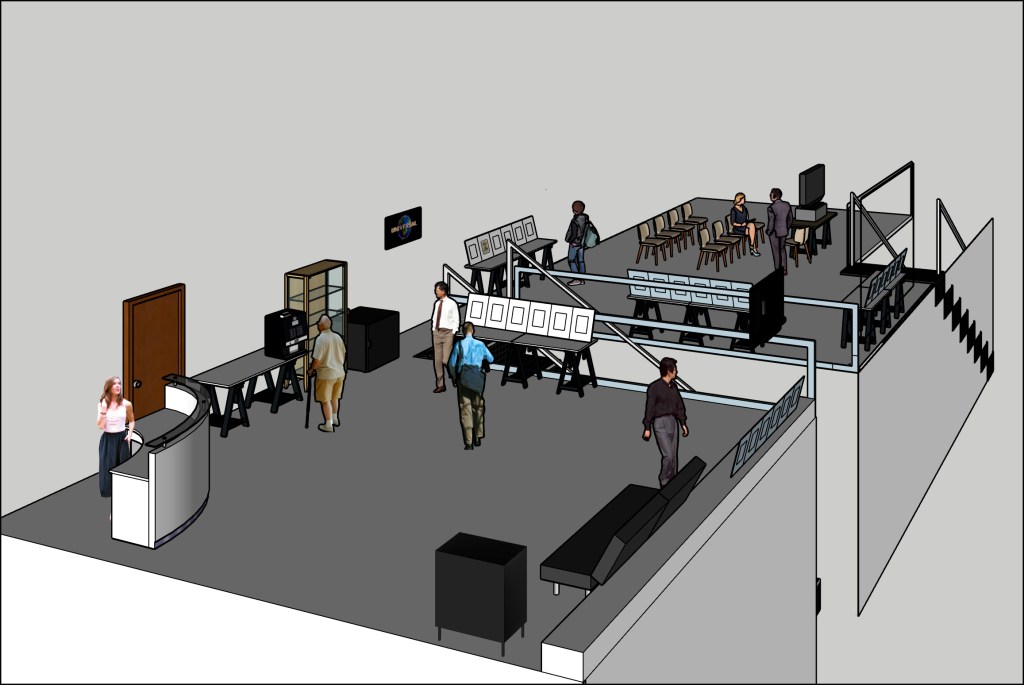
The current state of 3D modelling has been advanced again this week to include the first photograph on display. Here is a more simplified model and detailed model.

Layout identical to the summer exhibition except triptych layout becomes a run of six images

Titled deja vu as the 3D render is eerily like being at work. There are still some simplifications such as walls that are hidden so as to aid both construction and the ability to walkabout within the 3D space. The final edit has yet to be decided but when ready (soon) my photographic images will appear within the mounts. One is shown at the moment.

Narrative Quotations of Past Present

I’ve researched some narrative quotes for my Critical Review of Practice and front stuff in the Artist’s book. I’m going to choose two from the three I think, probably eliminating the harder to follow. Let’s see.

  1. The Moment of Hearing

“The moment of hearing appears to be the moment of writing, for it is only in the recapitulation that he hears the bird.  Experience is an a posteriori reconstruction that does not make the past present to consciousness but projects it into the future: “O you demon, singing by yourself projecting me, O solitary me, listening never more shall I cease imitating, perpetuating you” 

2. Memory

“Memory, as philosopher James Booth states in his recent book Communities of Memory, “memory is centered on an absence, tries to make it present, and in this effort answers the call of the trace. “Traces are markers pointing to “a past that dwells in the hollows of the forgotten” I call these traces “memory texts” in any form, be it a map, a story, a landscape or a building or a monument, or a ritual, a performance or a commemoration, … You and I participate and share these memory texts, feeling that “the call of the trace” makes the absent past present. A memory text is nearly always a space of contestation: different people attach different meanings to the same semiophore, they remember the same event differently. The … collective memory of the … War is shared by people who have not experienced the war or the anti-war”

3. Back in Time

“… practices performed by the family members produce movements in three directions; it transports the members of the … family back in time as well as it makes the past present and, last but not least, the image itself makes sure that the family is remembered in the future. Finally (hopefully), in the end, the portrayed members of the family will be granted a place in heaven.”

Quotations chosen from English Web Corpus enTenTen15 under SketchEngine with CQL query [word=”Past”][word=”Present” & tag!=”V.*” ]

The query eliminates the Verb Intransitive form of Present.

Exhibition Ticketing and Announcement

The announcement was created for the exhibition including a description thus:

“Past-Present explores the experience of identification with an ancestral past linked through the modern science of genetics. The author’s genome is decoded and shown within the work mixed with a trace of healing glow. 

The family previously unknown from “Galloway’s Great War” who fought in the Royal Black Watch, are reconnected with, in a commemorative work that bridges to history over 100 years ago. As a photographic work, there are visualisations throughout of imaginings and fading memory of childhood of places common, including agricultural and coastal lands. The science connects trace of human healing glow with wounding suffered by those injured who returned to battle and were lost in the Great War.

A style of word cloud visual, inspired by a genre of poetry known as Recombinant Rhymes and helps guide the narrative. 

Opening times 14:00- 17:00 on public days Saturday 11th, Sunday 12th and Monday 13th April.

With the kind support of Simon Ellingworth multi-genre multi-award-winning professional photographer and studio owner at Amersham Studios. Part of Trade Secrets Live, trainers for Royal Photographic Society workshops and premium training by international photographers and digital artists.”

Contingency Planning

In case the Easter exhibition has to be postponed, some options are being considered without yet knowing what would be best at satisfying the course requirements:

  1. Continue with handbound artist bookmaking but make a public offering via one of the commercial book sites.
  1. Extend the 3D environment I’ve part built this week for the Studio/Gallery space and send a link for viewers to browse the installation. I’m not sure if this will require viewing 3D drawings in SketchUp Pro 3D via the downloadable SketchUp Viewer or move everything over to VectorWorks software which allows browser viewing. Taking this to the next level of Augmented Reality AR would be a push given the time left in this module.
  1. Set-up the studio space as planned (football is currently being played behind closed doors) and provide panoramic viewing or live Whereby access. Potentially I could record an artist talk (an unrecorded one was given at the summer trial exhibition, and feedback was recorded.
  1. Still, go ahead with the new commercial website https://turnerphoto.art and academic portfolio website https://www.michaelmturnerphotography.com/shop-11
  1. Still, go ahead with the moving still presentation with delivery via Vimeo.
  1. Expand the facsimile print exhibition in a box and send out a package to specified reviewers for their critique. It might require that a PO box of some sort be set up for privacy. 

Bibliography

enTenTen15 (2020) SketchEngine. Available at: https://app.sketchengine.eu/#concordance?corpname=preloaded%2Fententen15_tt21&tab=advanced&queryselector=cql&refs_up=1&itemsPerPage=100&structs=s%2Cg&refs=%3Ddoc.website&default_attr=lemma&cql=%5Bword%3D%22Past%22%5D%5Bword%3D%22present%22%26tag!%3D%22V.*%22%5D&operations=%5B%7B%22name%22%3A%22cql%22%2C%22arg%22%3A%22%5Bword%3D%5C%22Past%5C%22%5D%5Bword%3D%5C%22present%5C%22%26tag!%3D%5C%22V.*%5C%22%5D%22%2C%22active%22%3Atrue%2C%22query%22%3A%7B%22queryselector%22%3A%22cqlrow%22%2C%22cql%22%3A%22%5Bword%3D%5C%22Past%5C%22%5D%5Bword%3D%5C%22present%5C%22%26tag!%3D%5C%22V.*%5C%22%5D%22%2C%22default_attr%22%3A%22lemma%22%7D%2C%22id%22%3A791%7D%5D.

PHO705: Week 19 Reflection

A model is created for the Exhibition space to experiment with layouts. Here is the first building block to start to work with.

Starting to create the exhibition space in a 3D model (Sketchup Pro)

This is a straightforward adaption of the Summer exhibition which had three of these layouts in a C-shaped floor plan. The adaption is from triptychs to a straight run of 6 mounts of 40cmx50cm mount boards.

Each mount stands on parade or is a metaphor for such.

Ultimately, two other rows will be present making a total of three rows and should run parallel so when the viewer is looking at the front row they would see all of the other rows behind as soldiers on parade. The viewer could process as if conducting a parade inspection.

Okay, so the above 3D model as the start and is an enabler. It has already allowed some ideas to try out as to how to best place the work as befits the intent.

More to follow.

On reflection, the exercise to date has demanded practice be gained in using the 3D IMB layout tool SketchUp Pro. This time is an investment for now and for the future.

Ancillary items to add to the space include the facsimile of the exhibition in a box i.e. the portable exhibition, which stands alongside the main exhibition while it is running. Another item to include is the handbound book.

Within the space there will also be two video screens, an audience seating area and a secondary exhibition of outtakes.

Studio equipment on stands has to be added for the somewhat vital daylight balanced lighting.

Print Handling

The philosophy the author is running with is of not being precious about the prints and in fact encouraging audience interaction. I’ve been normalised to the presence of print handling and during the summer exhibition, I encouraged viewers to interact with a couple of exercises being set out. It created a degree of immersion and sat alongside the other media and sound, creating a suitable atmosphere. Overall this makes a kind of performance.

PHO705: Week 18 Reflection

This blog post reflects on test printing as all of the images made since mid January are made available for an edit. I also reflect on the presentation of work as a facsimile exhibition in box packaging. Finally, there is another look at the Critical Review of Practice for which drafting has fallen behind plan somewhat.

Print

Printing went remarkably well – all 50+ images printed, and are all keepers with no adjustments having been required.

Reflecting further. The prints are quite dark but are subtle in toning and not burnt out in the shadows. It is just that the content has to be discovered under daylight-balanced lighting. This was the same for ghost images at the Summer exhibition and worked as the effect was to draw in the viewer. This is taken as the ideal and fits with intent. The printed work was as envisaged and on-screen and in print. The subject matter by design is somewhat dark thematically as place or landscape as faded memory visualised in the present.

A visit was made to the printers and they allowed their guillotine to be used to cut down 4×6 prints to 4×5 size. This was quick and consistent.

Printshop

The visit to a commercial print shop was also made to enquire about exhibition support items.

  1. Leaflets to promote the exhibition (100-200) as handouts.
  2. Bookbinding three copies of artist books with 64 pages. With embossed/gilded text, front stuff printed and blank pages for the 4×5 glossy prints to be attached. The paper choice wasn’t found to be suitable for my project. A case bound book dummy I’d made earlier has off white paper and makes an excellent surround to the gloss prints. The printer I use offers Black, Light Black, Light light Black and Photo Black. A lot of variation is found in the shadows. This all adds up in the right direction and matches the intent and has been tried and tested.
  3. Packaging for the portable exhibition is in support of the memento style. It is consistent with the commemorative theme.

The previous exhibition was a success as a learning activity even though it was not heavily promoted. Leaflet handouts will address this. Business cards were not available at the time, This was a shame as there opportunities to exchange details. Business cards are available this time branded as turner photo.art. Marketing extends to a new website with consistent email address michael@turnerphoto.art.

All is becoming consistent and should serve the cause beyond the MA Photography course.

Packaging

I’m finding this rather tricky in terms of judgment and I’m currently exploring making. In some areas, it is similar to hand bookbinding and case binding. Why has the time been spent on this? In some respects, the making of an exhibition and the creation of a book somehow overshadow what is potentially the main element of public delivery. It may not be as showy but the author believes the exhibition in a box method best as it extends the conversation about the project and in scale and approach creates better opportunities for others to engage.

In critique, I was advised that it might be advisable to make my own packaging rather than use a commercial test kit box. As noted earlier I have been experimenting with making and ran up against the problem of scale. I’ve been working with a simpler design and large card stock with the hope of being able to run the card through the printer before curing, folding and glueing. So what seems an aside in going public is actually the main preferred approach. If this became the absolute first choice delivery method, it would be necessary to swap from mounted ZINK prints to the preferred glossy prints.

Sketchup 3D designed packaging.

This is very time consuming and extends the demands on skill set to 3D layout software and the practice of making packaging while being at a fairly late stage of FMP. It is is not yet too late but making a box is burning up my time. A question of maintaining balance and acting on the priorities.

As a fallback I have two commercial packaging solutions that meet the original intent, pre-FMP:

4×5 Prints in temporary packaging

Commercial packaging for 2×3 print pairs

Staying with the commercial packaging for a moment and meanwhile creating my own design, I have new packaging shown above for 4×5 prints for edit/critique and a new box for the 2×3 facsimile prints.

This removes the dependency on designing, printing, cutting, folding and glueing which are not central to the delivery of the project in a public setting.

PHO705: DNA Art Portraits

With an eye on commercialising art, the following is from AffinityDNA (AffinityDNA, 2020). This blog post demonstrates the contemporary and growing economic aspect of this genre allied to my photography. Perhaps by marketing photography, it could pay for the cost of the studies. Currently, there is communication taking place with another major DNA testing supplier on an introductory and more mundane level perhaps.

DNA Art Portraits

Display your DNA fingerprint as a unique personalised piece of genetic artwork! DNA art portraits from only £179

In terms of context this offering is available amongst other tests:

This demonstrates the contemporary and growing economic aspect of this (my) genre of photography.

Bibliography

AffiinityDNA (2020) Affinity DNA. Available at: https://www.affinitydna.co.uk.

PHO705: Week 17 Reflection

Guest Lecture

This week saw another Guest Lecture take place this time with Paul Clements Photojournalist.

GCC – Module Leader

There was also a Group Guest Critique GCC with the Module Leader and for some reason, probably to do with timing and project evolution the meeting was very much appreciated. A welcome relief.

I was able to announce the intended exhibition visit of a Contemporary Photographic Editor who I am pleased to have volunteered to take a new job with that is waiting until June. This is as a proofreader for a Contemporary Photography Journal. My earlier offer of managing a related ISSUU electronic magazine was something the photographic group couldn’t wait 8 months for and one of my colleagues from a group photographic project took it on. What this says is that the chosen attendee is someone I’d hope to work with.

The course remains the top priority above all else other than the mortal deeds and close relationships. The reason for reflecting on this is to demonstrate to anyone thinking of doing a course such as the Falmouth MA Photography that even at 10-hour study plus 10 hours photographic practice per week, it requires a high level of commitment. My admiration goes to those able to deliver at this level such as is likely of the really talented artist of whom there are many examples on our course. For me, I hail from STEM education and associated career and often worked from a blank sheet of paper through to architected solutions and adapt my experience to the MA.

Making

During the week attention turned to the facsimile / portable exhibition and a small sense of pride resulted from taking printable cardboard and making a dummy box. Printing the guides at A4 resulted in a miniature of only 2’x3′

Pencil marked dummy

An estimated card stock size of between A3 and A2 would be required. The 2″x3″ dimensions are only external for the pictured dummy box. The final box needs to be double the size to accommodate side-by-side mounted miniatures.

Size didn’t matter for the dummy as the intent was to work out the printed surfaces, the orientation of the print surfaces, the glue points and the folding sequence. An overall feel for how sturdy the box would be for the given card stock was also confirmed.

There is the other matter of now the box construction is would be feasible, how is it to be decorated? The theme of own DNA or historic archive? Design decisions need to be made.

Recombinant Rhymes

Recombinant Rhymes was an ArtSci feature on the radio that I’ve adapted to my project to aid context building.

A revisit was made to the literary element of adding contextualising text, specifically a list of dictionary entries for words that contain the base pair letters A, C, G and T.

Perhaps there is scope for extending individual words by concordance perhaps using SketchEngine (SketchEngine, 2020) to expand the text.

On the one hand, this can be categorised as being overly smart which detracts from communication but then again it does allow context to be built and we (I certainly do) know how important context building can be to a visual project especially in the surreal abstract.

Video (and Music)

Music was composed for a Ghost theme feature after a visit to a store that demonstrated the GarageBand music composition software.

A further video has been storyboarded as a follow on to a successful showing at the Summer Exhibition.

Bibliography

SketchEngine (2020) Sketch Engine. Available at: https://app.sketchengine.eu.

PHO705: Week 16 Reflection

Guest Lectures – GLs

Two recent GLs were attended. The first related to online dating and second-hand wedding dresses the second GL looked at life in an eastern European country under what was effectively martial law.

One to One – Critical Review of Practice

There was also a Supervisor session that turned activity on its head in changing direction from project development to one of the main deliverables, the Critical Review of Practice. It mattered not that anticipatory work had begun as nothing of a deliverable standard was yet available. A previous mention was made about having to make a late start this task due to circumstances beyond normal control.

The CRoP task has a dependency on the planned exhibition as that is where the behind the scenes shots are to be obtained and practitioner critical comment received.

The work that was progressed was made to the drumbeat of “No work – no exhibition – no book” etc.

Project Development

A session was conducted to split the overall InDesign file into themes:

  • ghost landscapes
  • ghost images of people
  • narratives of biology around cell division

This is not to mention subdivision into individual Surreal images, and Animals. There are also Ancestral Family Archive images to restore and reprocess as own DNA (base pairs) and glow image.

A lot of this is still in the melting pot as it is a natural development stage as an image set forms, plus there are influences from the book designer session.

There has been some reaching out to practitioners in advance of the Exhibition.

Print is becoming a more imminent activity. A preliminary decision is required over further tests of print making using the matte paper stock.

To create atmosphere, work on a video storyboard was started but somewhat frustratingly dropped, for now, to give precedence to the Critical Review of Practice.

PHO705: Creating Draft Critical Review of Practice

Two items have been held up pending 10 weeks of illness then need to create portfolio work.

These are the Video that should have been made over the break and the Critical Review of Practice CRoP.

These have been taken together, but oddly manage to support the work. The following PDF is the mind map. A CRoP is a CRoP but it has to be about something so the overview of working practice and methodology is given as a mind map. The CRoP requirement (or part of) has been mapped onto it and requires further development like issuing a draft. However, there is some referencing to other practitioners still in research. Despite having this for earlier incarnations of the work (in earlier study Modules) the work has progressed on so time for the update.

To an extent I can argue about originality and a need to mask off external influences as the work is quite unique in its standing as a branch of Art based on Science. As blogged previously I’m never surprised anymore to find original thought crop up in other places of which two examples could be cited.

  • Top left hand in the mind map is the Critical Review of Practice from an earlier module assignment.
  • The bottom left hand is a storyboard outline for a useful video resource that is being created. (This proved very helpful to visitors to the summer exhibition).
  • Above this is the connection to the CRoP linked to Ghost Abstract Figurative Themes. While Ghosts per se have been dropped since the review with a book designer, the landscapes remain ghost images.
  • Practice location top right is the piece being updated for this dynamic project. It does need to settle down urgently prints, book, portable exhibition and talk to be worked on.

There is quite a challenge here as none of the work has been subcontracted to printers or anyone else so all of the skills from the photography through to all branches of making have been absorbed and this alongside all of the marked assignment work. For anyone wishing to embark on an MA Photography Course they may wish to consider how much work to outsource to specialists. Personally, outsourcing the Book making to an online offering is not preferred over an artists book dummy and hiring a book designer would lose some of the original intent to someone else’s view of what the market would stand. The work is still too dynamic for this.

Bottom right is the remainder of the CRoP assignment requirement, which pertains to the public showing.

In terms of evidencing the work as mentioned here in an FMP lecture video then on the subject of gaining public feedback, there is a need to reach out to practitioners to elicit attendance or somehow provide comment on the work.

I now have a date of the Easter Weekend for showing the work over four days at Amersham Studios tradesecrets.live Only now can approaches be made by reaching out.

As image-making is fundamental and has been a major focus, work has been flooding forward and is now starting to receive critique (two critiques were missed through technology issues).

There is scope for an earlier pop-up exhibition at the same location. No promises yet. Details will be published and a campaign run via Instagram account foto_graphical and Facebook.

<placeholder> for draft CRoP

PHO705: Week 15 Reflection

Now that was what is called busy. The connection with the University has re-established big time. There was a gap over November, December and January. To be fair there was the end of year “holiday” and the so-named 3 week assessment period – needed for the other Modules.

Thinking about this in reflection then, several group lectures were attended and there was the follow up from the previous week’s module leader one2one meeting that led to running a consistent aesthetic right across image set.

We also briefly held a peer to peer meeting, the first known of in several months. We’re a small cohort with 10 of 13 starters still around. Only 8 signed up for these meetings. A connection has also been made with a student from another cohort who was passed in my direction by a tutor.

There were also the preparations for a meeting with a book designer Victoria Forrest. All good as the work is interrelated and the key to the public showing. No images, no public showing. The research was toned down and research-led practice had been in full flow again this week.

So how did the book design session go? (rhetorical question). That’s in a separate post.

It was good and has focussed on incorporating one’s own genome. My DNA has been sequenced and has now been downloaded and is being analysed for transcription errors and an academic publication read on the topic. Although specific to kidney disease and with some reference to mice it was nevertheless useful to learn of the error rates, non-base insertion and the weird folding that results. In the mind’s eye the DNA spiral has an idealised representation. This reading gave the truth.

Anyway, the knowledge gives the photographer some deeper information to back up any talk that might follow?

Scanning became a big thing and a whole weekend was spent learning software SilverFast and i1 colour calibration. The reason for this is/was to up the level of professionalism in reusing family archive photographs. The current set I accessed needs to be rescanned. A hidden agenda exists too. The acquisition of a film scanner and darkroom gear means work can go back to film photography. This will now be after the FMP but it is an exciting development in photography. The Studio where I’m based (less so with these studies) is starting to run combined workshops on Landscape and Street film photography. I’m really pleased with this revival.

With so much digital practice and digital darkroom processing, it will be a relief to turn back to film.

Thinking ahead of the week there is the catch-up to be made on Video making and drafting of the Critical Review of Practice CRoP.

Such is the life that this blog post will need to be cut back as some of the activity reported falls into the Week 16 reflection, due in the next day or two.

So, all in all, a very rewarding and active time on the project with work changing rapidly at this point. Lots of connection with the University has been helpful while consuming more of that rare resource called time. Can’t win.

PHO705: Week 14 Reflection

Trial Assignment PDF

Having published a PDF with an extended payload of hi-res photographs last week, in preparation for the one to one meeting with the Module Leader, it was time to keep to plan and size the file. There is a 10MB file limit for the assessment. Success! Over 50 images, which should be over that needed to submit the Assessment PDF and filesize which was whopping has dropped to 5.5MB with no appreciable loss of quality on-screen.

In contemplating the book publication, a second PDF is required and this would need to be produced at high resolution.

There are some known niggles in the content of the following but here is the ‘same’ or equivalent PDF from last time but in its new reduced size. The PDF has been created using industry-leading page layout software Adobe InDesign:

This was an important trial and it has worked. The picture content can be refined as one image went missing during the day and will be tracked down. Three images processed with marginally incorrect height – width was fine.

The experience improved with some practice. Images untreated, or taken as they were at multiple size, needed to be standardised and this took place using Adobe Bridge – Photoshop to run some automation to fix dots per inch and pixel WxH to fit the page and the adjusted 3mm page margins created.

The more work done in preparation the easier it was to manage InDesign. Not just easier, the experience went from impractical to smooth operation.

Some bells and whistles will be added at the next iteration using available image files – many new items are being lined up to go into work, although the exhibition is expected to repeat the 18 number of prints created at a summer run of the exhibition. A greater number of images would be required of a book. The book number will be limited by shadowing standard commercial offerings in view of the potential cost impact in later in taking the hand bound book dummy to a designer.

Returning to the immediate needs, sections have to be added for

  • captions,
  • text (make an appropriate selection fo text),
  • a bibliography,
  • attribution list for images,
  • content page,
  • interactive elements, next/prev buttons, section buttons and so on.

Exhibition Printing

Paper and printing considerations and mounting without frames become necessary to investigate for the charcoal style sepia images with the given light vignette border style. A lesser paper choice last time, was Epson double-sided matte for the handbound book and laser paper for the exhibition guide.

Hahnemuhle art paper has been suggested, whereas until now gloss was chosen for its handling of deep blacks.

Board mounting needs consideration as well as the method of hanging. A professional exhibition stand lined up for the exhibition – not used during the summer, is not recommended at this stage.

It is recommended to print as early as possible to anticipate the time need for adjustments. A first print was made! The available paper stock was Epson double-sided matte, used in making the book for an earlier Ed Ruscha challenge.

There are numerous actions required in the making process to be visited. ISSUU has been revisited as it is used as a means of simulating the book to aid the design, printing and binding. It also makes an electronic version publicly available.

The https://turnerphoto.art website was trialled in the previous module as a commercial selling site and unexpectedly went offline and has since been restored. At present, the marked assessment items take priority over website building and the selling of photographs is something for beyond the course.

These technical matters are always tempting to get involved in but for now, a reasonably good PortfolioBox portfolio site has been maintained and although there are layout limitations each use, there are get around and the company is meant to be quite responsive, although it has not been witnessed personally.

The website had a different purpose earlier in the course, where now, like during the Summer exhibition practice run, it is intended as a support to the exhibition in terms of proving multimedia in promoting it and in generating atmosphere.

In the same vein, social media is being lined up for promoting going public. Instagram has been quiescent for a while ready to roll once the exhibition date is decided (third week of March or first week of April) depending on making more work of publishable standard and whether or not to attend the Falmouth 2020 Face to Face ‘week’.

The outbreak of coronavirus and its spread through international travel could be a risk with this year’s event. A watching brief is being made at present. This is particularly sensitive personally having contracted a bug several times last year in spite of being vaccinated.

Not considered yet is a video recording of an artist talk and the remaking of the moving slides video with better images. An artist talk was run several times during the Summer exhibition.

The making of the portable exhibition in a box continues to be important in moving beyond the studio confines to take the discussion wider to allow it to continue. An unexpected benefit last time was it generated an invitation to attend an art sale. The commercial element whilst welcomed was a little ahead of practice development at that stage.

PHO705: Week 13 Reflection

One to One Preparation (and now for Group Critique)

In preparation for a “one to one” session, a range of portfolio work has been prepared in advance. Beware, if you download the PDF file it is a large size even if already reduced*.

For presentation, it has been decided to screen share in Acrobat page edit mode to give both a visual overview and page by page viewing depending on the zoom setting.

Status is a decision needs to be made to proceed with one theme. of which several are shown.

Probable preference for priority is indicated as

  • sepia landscape & family archive
  • cellular theme
  • abstract with still from newsreel
  • surrealism and other

There is a display of:

  • a scene-setting image of current theme is on page 1
  • sepia ‘Landscape’ prints at the start on pages 2-13
  • a transition from cellular to landscape is at pages 14 and 15
  • the earlier ‘landscape’ style variations are at pages 16-19
  • a venture into the surreal is at various points starting at pages 20-22
  • a family archive crossed with ancestral biology on page 23
  • a theme of ghosts is explored at pages 24-28
  • a non-human variation is on page 29
  • a montage series with newsreel extracted stills begins pages 30-32
  • a lesson learned is on page 33
  • the pan cellular ex cellular series runs over pages 34-40
  • running on to rather surreal examples of work on pages 41-42
  • the cellular continues on pages 43-47
  • the re-use of earlier work is broached at page 47
  • an emergent theme example ‘animal life’ in b&W and colour pages 47-49
  • random elements end the series pages 50-52 with page 52 a caricature

*Learnings at this point prior to the meeting concern the first collection as a PDF and files size being 8x over the allowance. It is the first collection and the solution is to use Adobe InDesign and the save to animated PDF format. This was taught at the university and the subject of an FMP video.

in the transition to professional quality (a lot of the earlier work has been experimental) standardised sizing has been arrived at and needs to be worked retrospectively across the whole image set for display consistency.

PHO705: Assessment Period Reflection

So what has been happing of late?

  • Making new work.
  • Planning going public. (which requires new work)
  • Ramping up the professional
  • Ramping up the quality of work

Overall, an exciting period of practice development.

Concluding, is the intense period of reading and learning putting substance behind research based practice. Going are the days of creating themes in support of project narratives.

For visual language development samples of themes have been created.

  • Father mitochondria layered on mother image (mitochondria as transmitter). Biological markers ready to be layered in next stage.
  • Stills dropped out of newsreel of 100 years ago montaged into project examples
  • Family archive motherline photograph layered with glow image (mitochondria)
  • graphic development of DNA and cellular imagery and text

A rather busy and very worthwhile period indeed.

Three months of work to finish off a professional portfolio of high quality to be taken public Reacquainting with the MA Photography requirements caused a close look at example work created so far.

There were then many ups and downs hinging on the practice of being fully digital in the making. With much time spent in the digital darkroom the methodology was fully re-examined and especially following the digital imaging Symposium at Westminster University.

The Symposium was good and gave access to several key scientists in skincare and medical forensics. For those that know about the project the relevance should be clear. Much was confirmed around the artist’s assumptions of biological science as applied here.

The quality of the work then came under deep scrutiny anticipating cramming a lifework into a meagre 10MB PDF file without undue loss of image quality. The answer is InDesign and the methods documented in the FMP block.

However, any signs of a borderline quality entering the process and the situation will only worsen. Were there signs in current work?

Previous bad experience of transferring to mobile working and lack of connectivity in the Scottish Highlands led to a deliverable quality issue. It was never planned to be like that – the cohort will remember those events.

In an attempt to avoid technical issues deep scrutiny was performed on the work. A solarisation filter is quick to pick up on banding faults and pixelation (not in the original but from processing).

How to resolve this? Some very detailed analysis and comparison trials showed how and where different algorithms broke down affecting an unacceptable number of images.

During the last week of the “break” or so called University Assessment Period, and to which this blog post pertains work continued urgently to sort out technical issues. A number of workshops and external resources were called upon and a growing amount of time was soaked up.

This continued into Week 13. The current blog post is a retrospective. That is how important it was to resolve quality, instigate testing and build a professional approach to practice. Time normally spent learning and researching art and photography began to make way to working the critical methodology during the FMP blocks.

It would be great to have visual examples accompanying this post but for now it is important to continue making and delivering images elsewhere. Return later when priorities resolve.

There has been much catching up to do. After 10 weeks of being slain by the aftereffects of two bouts of flu, it is sad to note the passing of two more family members in the run-up to year-end.

In a way, the losses underline the importance of the project being made complete to pass on to others. The pay-off would be in gathering the technique that others may wish to use with their own, alongside forever unfolding events on a world stage, whether that be a 9/11 or something else.

PHO705: Assessment Period Reflection

The Helter Skelter that is Making (of late)

The research period moved into the making phase within the digital darkroom.

Many up and downswings have been encountered in the making, from renewed optimism to unexpected problems arising that needed to be resolved.

More structured recording of image statuses has now been established on Evernote as a wider body of work has emerged, none of which is entirely satisfactory at present.

Direction around abstract outcomes such as landscapes for some images fell foul of image banding as well as encountering more editing suite false images on the screen versus print.

Being guarded and mindful of this resulted in changes. A solar checking layer is used to detect banding where it might not be immediately visible to the eye followed by a step by step expansion method and 100% viewing (or do and undo merge layers).

And so too, subject matter bias changed in moving to the biology theme with the development of skill in making cellular images alongside associated graphic elements. Maybe too this was an avoidance strategy as avoidance of quality issues which and it led to switching the major theme to and fro ghost/landscape/biology

The methodology has changed through this as methodology currently biases towards forms as Surrealist imagery.

Another branch in the period in between these stages meant conducting a series of trials of merging stills dropped out of newsreel video. That presents challenges with the mixed resolution, edge problems and differential lighting when integrating. Time out was taken to practice overcoming these challenges but as a major wartime theme production has stopped for now. The problems can be tackled with more confidence having gained more practice on different methods. Whether to return to this or not is the question. There are probably too many themes for a book or exhibition and so something has to go. If the biology theme of cellular imagery went ahead then maybe too many similar images result. There is no obvious solution at this stage and so work continues with the numerous themes,

Reading the course requirement for quality scanning and professional making at this level on top of evidencing this does lead towards a situation of panic in these matters.

Thinking through the image merging the experience from the Summer exhibition weighed. Separate archives (of the author in this case) and abstract expressionistic images led to triptych layouts that worked in exhibition but not as a book (the weight of paper in a signature with not enough strength in the stitching. Signatures are complicated, always looking wrong at the earlier printing stage but turn out right, where triptych became unmanageable in the handling and ended up being complex or not practicable as a dummy.

PHO705: Assessment Period Reflection

This reflection is made during the break otherwise timetabled as the first of three weeks of a University assessment period. No work on the Final Major Project FMP module is under assessment at this time. It is simply a break during which work is able to be progressed.

The activities conducted have been:

  • Guest Lectures and
  • Post-processing photographs.

Guest Lectures

The (optional) lectures watched back are:

  • Christiane Monarchi Part 1
  • Christiane Monarchi Part 2
  • David Moore
  • Guy Martin

The guest lecture by Jim Mottram was viewed last year. These lectures have been very useful and represent a blogging task that competes for a limited resource (time) when working on the priority task of making work. It will be necessary for completeness to return and write up the blog posts. It is interesting blogging this point of view when it is still the break.

Post-processing

The methodology employed is to post-process photographs of healing wounds into surreal/abstract style. Subsequent to this is a choice of theme that is essential to building a narrative.

There needs to be an oversupply of candidate images for various outcomes:

  • Exhibition images (for subsequent edit/reduction for the assessment PDF)
  • Book dummy in particular for a group meeting with a Book Designer.

Progress in post-processing

From the outset, time was taken to make the project a research-based project. This has matured and could go on longer than the permitted time for the course but now is coming together as a whole and so making has resumed.

[metaslider id=4045 cssclass=””]

A mixture of figurative images or images with other referents can be seen here. In these images above the referent relates to themes of ghost, inner/outer space, landscape/seascape/mountainscape.

With research ideas in place, making by intuition took take-off once more. As this progressed, that state of flow that is spoken of returned and a variety of outcomes were generated.

Variations sprang forward as in the case of the mind interpreting the outcomes as weird and eerie then finding this feel worked its way into non-healing as you recognise the characteristics in source photographs that likely produce an aesthetic. In particular, there has been an emphasis on synthesising a project theme of inner/outer spaces.

Also, by expanding reading into the Surreal it quickly becomes apparent how geometric manipulations used appropriately can expand the scope of work produced. There is a personal appeal and education bias here. At present, more general acceptance and a decision to proceed will be down to making more geometric manipulations. The purpose is to stimulate structural interest in the original glow images from the trace of healing and life energy.

Module activity has firmly progressed from ArtSci into digital imaging, and from outcomes into how they arise in the conscious mind supported by a reading of the weird and eerie and of the unheimlich and of place.

Another branch being touched upon is a return to further artist research to aid the positioning of practice amongst contemporary photographers.

In the digital post action, it is necessary to limit change if the image becomes overprocessed. For example, banding can occur. In a project that encompasses the real and the imaginary, there is the analogous of realistic depiction and an imaginary version of the image found to be displayed sometimes on screen.

Artefacts first noticed in some processed images in an earlier module returned to haunt a number of edit in FMP. The previous observation was of fringing, now it was of banding.

Eventually, this was traced to image zoom level affecting how the software adapts. The software creates in effect, fleeting visual outcomes that do not exist in reality when saving a file or printing and image. This seemed quite ‘haunting’ until an explanation was found on a technical forum.

The software maker in its attempt to reduce the processing load for a displayed image that is zoomed interpolates the pixel data and injects impermanent changes. Surreal/abstract imagery developed for the FMP Project can be prone to showing the desired finish but it is not possible to save or print.

It is not just the camera that sees differently to the eye, but now the editing software which is deemed an integral part sees differently to the author The camera never lies can be extended to the editor software never lies?

In defence of the software manufacturer, the product is intended for general purpose use within particular specialisms. The type of processing used for the FMP project is susceptible to showing up the problem discussed. It is especially true where there is an openness towards challenging the computing limits.

Integrity checks are now performed on new images during the making. An integrity check would be defined as confirming what is intended is what you see on screen and what you get as a result. We are used to JPEG saves adding artefacts in performing destructive processing when reducing file size. We are already aware of this. It is more of a surprise to see transitional effects that exist completely within the editing software and then vanishes.

If the effect is desirable and needs to be made permanent, then this involves using a camera to photograph the screen. This may or may not be successful by individual image.

Two checks have been routinely incorporated.

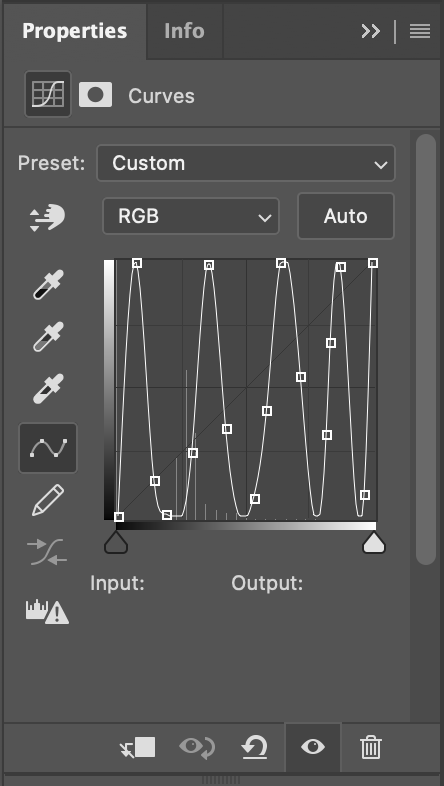
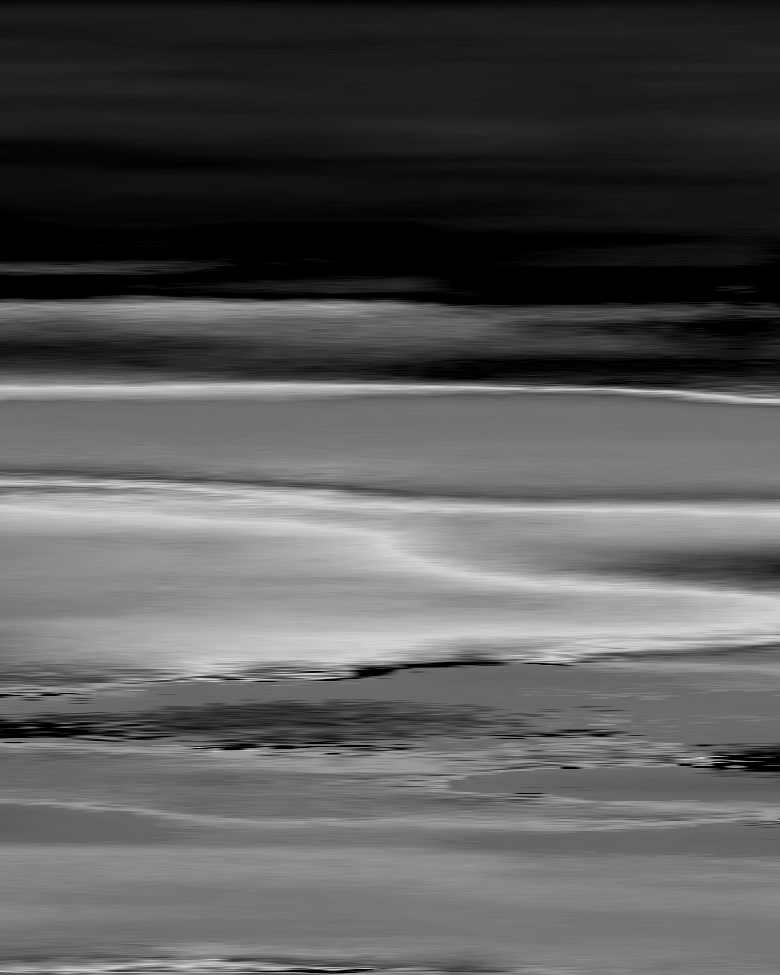
First is to add a curves layer with solarisation characteristic. High contrast shows up transitions and identifies banding. Fringing, by comparison, is already directly obvious to the eye.

Curves solar characteristic makes subtle banding more obvious.

Second, as an alternative is to merge layers – the difference is immediately obvious. If editing layers have to be retained then unmerge once the check has been performed.

Finally, try to work at 100% zoom for the true image or switch zoom to check the render. Full zoom at 100%, however, is usually less desirable than fit-to-screen that allows the overall image to be viewed.

Depending on the aesthetic and theme, some forms of banding are referent of DNA testing and so may be desirable in a print.

Reprocessed Photographs

Some photographs taken before FMP have been reprocessed to use more refined techniques that have been developed.

This increases the variety of source material and is consistent with good ethics given the nature of the subject, healing wounds.

More reprocessing is in progress and as the number of outcomes increases a decision can be made.

Narrative

The decision is pending at present around the visual theme. Adding archive to the mix is felt to really strengthen the presentation making it more accessible to the viewer. One processed image has had a second processed image layer added where the still was dropped out of video footage. The combination works well. There is a judgement needed in such pairings and whilst a second paring was found it still remains at present to increase the stock of surreal/abstract images.

[metaslider id=4056 cssclass=””]

PHO705: Christmas Reflection

The last week of Christmas Reflection before the University three week Assessment Period and course resumption next month on 20 January.

Portfolio Image Processing

The intention during the break has been to build a large enough catalogue of images for the current stage – transition to making.

The plan is to generate enough work to feed the planned public outcomes. This building activity is designed to generate the larger numbers of images required and serve to gather feedback and critique prior to a final edit for the assignments.

Work continued on processing images in light of the outcomes following the Imaging Science with the following developments.

Side by side image comparison

This refers to the outcomes of digital darkroom processing before and after imaging science symposium.

This is a side by side comparison of Method A (original image compression/decompression method) versus Method B (filter).

The reason for this was that whilst outcomes were easier to obtain were they flatter as in looking as a greyscale monochrome effect? The results are in the now-classic red developed for the summer exhibition.

Colour Outcomes

With so much focus on the above, the investigation of colour outcomes had taken a minor role in project development in the making aspect and so this has begun to be righted.

[metaslider id=3892 cssclass=””]

Colour Abstract Images by Michael Turner

The use of colour became important and was then dropped during an edit. Primarily, this use of colour became a signature style and appeared to have an indication of having greater commercial potential. What could be better, a signature style with commercial potential? One assessment is that we are living in a political age in which austerity is seen to be coming to a gradual close. Perhaps viewers want something with a sense of bright optimism or perhaps simply a distraction from their day.

The use of colour has to remain true to the project intent and colour was introduced because of this, as a way of remaining independently connected with the past and while living our lives find a sense of celebration.

Would those. making the greatest sacrifice have wished us to live our lives with sombre memory. Recognition, yes, if freely given and more nowadays with a reminder given the decline of living memory. The celebration of freedom is something that does not have to be justified but in doing so celebration represents our natural response to being free.

Celebration ought not to be a constant. Just as a grin tires and even begins to appear foolish we ought to as an intent of the Motherline provide the opportunity for the viewer to look upon the work and be given the opportunity to feel more uplifted. This intent has to be more grounded than consequences otherwise: a heavy heart: or even confusion as to why ponder over that which is dark.

Without consideration, the work could become irrelevant too soon.

There again a mixed visual message could be an outcome of mixing the sombre with the celebratory. It could easily make resolved work look unresolved.

To date, the use of colour has stubbornly remained as monochrome plus red (as in the blood spilt). The bright vibrant colours were dropped. However, it is a strong sign that colour was never let go of completely meaning that is an important element for the author.

It is not necessary or always beneficial to have a fixed signature style and yet realising this, it is a stronger motive to have vibrant saturated colour as an uplifting portfolio intent but that has to remain rooted to the past.

A previous line of the study led to Art as an Experience as a way forward but with a final outcome or realisation that Rothko who created work in this style ended his own life. This created a flash response, a rejection of this kind of art due to the association of an act seen as cowardly in some senses and it is linked to themes of bravery. This seemed like a form of ‘contamination’. The wrong word but a countertheme perhaps.

There is also the important consideration of self-preservation when deeply involved in the emotional response to the past events that consumed relatives. Normally, there would be moments of feeling but as an ongoing photography project, the intensity of feeling was heightened time and again through the authorship task. In a sense, this turned the theme away from colour but the themes remained in sombre mood. Something has changed in the six months or so that have passed.

It has to be the taking up again of Family Constellations. Realising that they (ancestors) had their lives, and lived the consequences, there is no need for us (or the author) to allow ourselves to become consumed. We can avoid entanglement with those we loved or would have loved and realise that we can simply live our own lives to the best we can reasonably do so.

What does this mean? Simply that the seeming barrier to using bright vibrant and saturated colour can be removed and colour brought back.

Looking back, is this the whole story? Two modules ago a colour image went for critique and was deemed undeniably to be DECORATIVE. The colour palette was pastel in the image, and not in harmony with the sombre.

Around this time Art as Experience as in Rothko’s large scale paintings in colour fell from favour in learning of Rothko’s demise. Circumstances further combined around the quasi-spiritual way in which an element of randomness in image data, resulted in stronger black and white images tied to emergent themes (of biology and of ghosts). And in such ways the argument swings between colour and black and white.

There is an element of being guided by the quasi-spiritual as this links to the soul of the author. This can be an intense experience. Whether this translates to the viewer is another matter.

What did connect at the practice exhibition was the availability of contextualising material and an artist talk. Beyond this was a strong engagement with activity in the presence of the author. Being able to pick up the prints and the exhibition in a box that was present meant visitors engaged over these. Whether this would stand in the absence of the author is probably a key point. Is the work meant to be a performance, is a key question? In fact, performance is the natural element the author prefers to work with as the socialising element of photography is a key motivator.

As an exhibition, this can be managed and through the author’s nature, it would be difficult to resist engagement. Again though, how would the work stand in the author’s absence. There are more occasions possible without the presence of the author, thus it becomes necessary to convey somehow that presence by some other means such as recording and prepared materials (for exhibition activity).

The strongest implementation is the exhibition in a box as it encompasses many if not all of the characteristics thought desireable. The presentation of the exhibition in a box at critique at Unseen Amsterdam was the embodiment. The way that critique ran, was as a result of having had the practice exhibition as a primer.

Public outreach becomes the challenge, So although the performative elements are satisfied would there be little or no residual message for the public, a curator or compared to prize entry.

A book, and it was thought that a book would be a strong approach, could resolve some of the performative and outreach elements. It would have to be more than a picture book and border on an activity book.

At the summer exhibition, it was good to have a book dummy to show the scope of the course, over which there was interest. This time it would be necessary to contain the subject to the Motherline project, where before it was the outcome of the so-called Rothko challenge.

An exhibition pamphlet was also created and was dark printed. Even the red colour was printed in black. This was a very uniform pamphlet in the current trend of the black paper noted at Arles Recontres. It was simple, lightweight in production demands (other than ink) and carried off well in dark mood. The actual pamphlet contained the full 23 image selection rather than the slightly later 18 image edit of the final exhibition. There was also a solution to cover printing.

Another pamphlet has to be made. This is in the final project plan. It could carry off colour printing but perhaps not with the same consistency as the black and white pamphlet. There is an accomplishment in hand binding even for the saddle-stitched example.

After a recent visit to The Photographers Gallery examples were purchased of sheet books similar to the pamphlet. One is unstitched and a plastic cover (Klien, 2019) with a long edge fold to keep the sheets stacked. The other is a small-sized monograph (Atkinson, 2017) with stapled binding.

Also in the portrayal of molecular biology, visuals e.g. DNA authors use colour for visual elements as an artistic choice. Vibrant, saturated colour fits well with this established theme.

Further Image Development

Image abstractions had so far resulted from healing wound photographs as this is the powerful tie between the living and those ancestors from the past. In the current period of reflection, the reading around the Unheimlich or Phantasmagoria, the Weird and the Eerie has had an impact on visual perception. Once triggered the appearance of abstract ghost or landscapes became unavoidable. As a consequence not 100% of abstract ghost images or eerie landscapes have been derived from healing wounds.

Once the mind’s eye became attuned, a few potential photographs began to be gathered and processed. Although only a few such images have resulted, the principle of authenticity has to be considered. Would these images pollute, or even dilute the work? Perhaps it is no different to using archive photographs?

FMP Guest Lectures

It was decided early on to engage in the (optional) guest lecture series provided as FMP resources. Ahead of deadline which if there is one is during resumption in late January.

In looking ahead the following lectures have been watched ahead of updating a blog post for each.


Guest Lecture (Publication) – Christiane Monarchi Part 1

Guest Lecture (Publication) – Christiane Monarchi Part 2

Guest Lecture (Publication) – Jim Mortram

Guest Lecture (Publication) – David Moore

Guest Lecture (Publication) – Guy Martin

Work is being piled up in the break. It will be important to keep the balance of progress right. As a consequence, Guest Lecture consumption has been placed outside of “office hours”. Watching the GLs encourages focus on them and while it would be good to complete the related blog posts this would detract from other key activities.

A video/moving still has yet to be made. The approaches considered for making have two options at present 1) a moving landscape – a file has been processed to enable this to be done. 2) a remake of the video made in the previous module and used in the Summer Exhibition – the materials could bring onboard archive stills, the historic family album and war scene images extracted from video footage.

This serves to expand the related theme possibilities and has been an investment in time. It may be that the time has arrived to begin looking for the most plausible way forward that strengthens the project Motherline.

The examples of other work that comes to mind when resolving this are:

War Primer 2 (Broomberg, 2018) – here pages are media collages of different sources of still including from television or video in one example a tv broadcast is visible. This is the most comprehensive use of materials but likely a challenge to manage as a solo presentation. Is it necessary to use all of the sources gathered for the FMP Module,? Probably no, if the result looks scruffy and the public materials have increased scope of errant decision making by incorrectly pairing when there is a vast amount of images not to mention the appearance of several texts per collage. Broomberg worked with Chanarin and so together they were able to take stock and check more readily for potential flaws. It is not known how long the authors spent creating the edit for War Primer 2 but this could easily exceed the FMP three months work remaining on this MA Photography course.

What is most likely is that War Primer 2 provides a structure to test against in making Motherline. Then beyond the MA there are materials already researched for potential further development. One possibility is to separate some of the picture sources into supporting work products, as in an extra book dummy which could be useful in further practising bookbinding. or as a video or moving still resource.

It will be advisable to avoid being drawn into this too far before considering the mark. In the previous module, in addition to the three assignments that were handed in, a lot of hard work was done and at the last, there were unmarked items: book dummies (book and catalogue), an eight-day (so-called practice) exhibition with an artist talk and other supporting work; portable exhibition in a box, video, music selection, side exhibition of colour abstract work and extra prints.

Reminders

Trial PDF making.

Return to video / moving stills making.

Bibliography

Atkinson, C. (2017) London Barbican. 2017 Open. Cafe Royal Books CRB. Available at: www.caferoyalbooks.com.

Broomberg, A. and Chanarin, O. (2018) War Primer 2. London, [England]: MACK.

Klein, W. (2019) Photographique. 1st edn. Edited by K. Stevens and P.-L. Denis. ethos.ink. Available at: http://www.ethos.ink.

PHO705: Christmas Reflection

This post relates to calendar Weeks 13 and 14. A return was made to reading, PHO705: Research – Phantasmagoria and the Weird and the Eerie in PHO705: Beyond the Unheimlich. This has meant going back to these earlier weeks posts to update them.

The way this blog is structured it keeps to an original plan of delivering posts to a given schedule. A number of blank posts are present that call for attention, for example, reviewing some optional FMP video materials that if reviewed give a wider experience. This brings attention to the activities and should help to get the work done. There is a natural balance developing.

At present activity has been prioritised towards making and this is timely given the Symposium attended and the access gained to relevant expertise and further related research. Meanwhile, sets of images will be needed as a growing matter of urgency, to build a broad portfolio for onward editing. Making also gained importance in avoiding any pitfall in interpreting science. An example that comes to mind is that of Phrenology from the earlier years of photography. The project assumption around IR filtering and processing becomes trace rather than direct as originally postulated. The theme of identification of Motherline ancestors remained true.

PHO705: Digital Darkroom Analysis for Motherline

An analysis of digital darkroom activity followed on from the posts on Art Science and Imaging Science Symposium and concerns the How. This has resulted on a return to making which until now had slowed while research ran on.

A change in method has occurred to an equivalent approach that produces equivalent results and was possible after a more detailed look into the techniques used as well as having been able to enter the discussion with scientific imaging experts. The new darkroom method is more direct and controllable and simpler to work with.

Greater insight has led to more flexible image manipulation and then onto a new approach able to generate image sets. Potentially the extended method could be used to generate wide landscapes or sets of images for moving stills. This is very much in tune with the Final Proposal to generate supporting materials during the seasonal break, to advance the materials available to use in an exhibition or book.

Further work into contextualising the project visuals has been progressed by capturing images from Great War video broadcast material. The capture and initial handling of the numerous images is an enabler to any next stage.

The themes derived have expanded choice and at some point in the next month say some decisions will have to be made. It would make sense to trial the themes where possible and even make them public to get a sense of what gains the best impact while maintaining the original project intent.

PHO705: Recombinant Rhymes and DNA Art

This blog was revisited and research extended from DNA to RNA and the 1100-word set for words containing the letters ACGT of the DNA bases has been extended for RNA bases ACGU with a 500-word set (lists partially overlap each other). It has been informative to learn of the RNA processes and how it connects to the overall picture of life.

The activity is more of a supporting task than the main task of the FMP but will add to the overall impact of the planned exhibition and possibly of a book.

Conclusion

First identified in PHO705: Research-Driven Practice effort has substantially moved to build research around Motherline project development. The natural cycle of research turning into making continues on from two earlier modules and informs the FMP module activity which is given a solid grounding in project-related research. The intent is to take work public and then enter a final stage of refinement and edit stage to ready for submission for assessment.

PHO705: Group Guest Critique 10 Dec 2019

Theme sets

Themes occur in several sets subdivided. First, are the now consistent outputs of the work, and second, the themes of visual narrative explored and third the set of the subject matter placed before the camera.

In turn, we have:

Out of abstraction, the theme set subdivided into

  • place as landscape/seascape/mountains of heritage and theatre of war;
  • ghosts ever more recurring;
  • depictions of inner/outer space.

Out of the physical and psychoanalytical, the theme sets are around language/communication and intent:

  • science mitochondrial DNA,
  • war,
  • the phenomenological – the weird/eerie/uncanny

Examples of the above can be found in this portfolio:

Portfolio by Michael Turner

There is the theme set of the subject and photography:

  • healing wounds,
  • museum (military and medicine),
  • family archive,
  • video (gaming and broadcast)
  • Generative art.

Examples of some of the above are also in this portfolio.

Portfolio by Michael Turner

In retrospect, this presents the analytical. To think in deconstructivist terms as in Derrida, it would make sense to home in on that which conveys the main feelings. There again Art Science (Artsci) as described by Arthur Millar brings scientific method back into scope. The latter demands more resolution by the artist. Millar points to the history of the avant-garde. The art world and gallery system had rejected impressionism and the likes of Picasso as surrealist. Artists then built alliances later their work being more established it became more widely accepted. Millar might argue the case for art-science as the new avant-garde.

In the case of accepting Millar, then the project proceeds as

Family Constellations

Family Constellations have allowed freedom from entanglement with ancestors and their narratives of loss in a war.

FMP Experimental

View the following as experimental imagery that is work in progress. This is not the end product of publishable standard at this early point.

PHO705: Week 9 Reflection

Bases and Ghost by Michael Turner

Position and Intent

The work is intended to be positioned within Modernism PHO705: Modernism. As abstract it may fit into the Art-Science avant-garde as a branch of Modernism.

The implementation is still open at an early stage. Developments in one direction are towards overlapping archive ancestry images of motherline and mtDNA glow images.

Motherline – Glow by Michael Turner

This is in the direction of Susan Hiller Aura and Falmouth painter Jake Wood Evans. PHO705: Artist Jake Wood Evans

To go ahead, work needs to be resolved. As these firm, vestiges are present in other approaches.

War imagery, either from Museum exhibits or from video archives footage. There is the style of Natalia Goncherova with angels and flying machines compressed into the frame in a very claustrophobic way (as in her lithographs).

Science, as molecular biology, animation and Generative Art.

Further influences begin with Albert Steiglitz and images similar to cloud formations. This is closest to my type of work of any of the above approaches.

by Steiglitz

There persists influence from Picasso, in breaking bounds then Rachel Howard in terms of the hidden brush of gravity abstract style.

Thoughts about Resolution

More wayward approaches need to be set aside where project intent risks being diluted i.e avoid any negative impact.

The strong influence going into the Final Major Project FMP has been to resolve the visual language to make the abstract accessible to the viewer. This was achieved in a summer exhibition although the martial narrative need not be enforced was a consideration.

Having just stated that though, the war theme is necessary otherwise we lose the linkage and orphan the themes of place foreign and theme of ghosts recurrent.

PHO705: Week 12 Reflection

The following were covered in Week 12/;

PHO705: Symposium – Good Picture 2019 “Imaging Revealed”

The Symposium was long-awaited (August – December), and in terms of the ‘How’ element of the major project Motherline. The impact of ancestral identification was tested in discussion with imaging science professionals. Fortunately, the basis of the project once more stands when the premise is tested against science.

The input received on the methodology of making acted as a precursor for ramping up image creation which during the break has now taken off.

PHO705: Recombinant Rhymes and DNA Art

Recombinant rhymes and DNA Art is approached as supporting art either in creating Exhibition context or as part of a book, or indeed both.

The scope was set as words containing DNA base letters ACGT from which ‘poetry’ might be created. Originally this was inspired ‘double-strand poetry’ from a BBC Art-Science podcast.

Since the word list (circa 1100 words) was created for DNA using ACGT bases a second and partly overlapping wordlist (circa 500 words) has been created for RNA using its bases ACGU.

The idea would be to create a spoken-word recording and contextualising graphics for exhibition atmosphere and book in turn.

The atmospherics of playing spoken word was experienced at the Tate Modern exhibition of Natalia Goncharova’s work. In one area, viewers were funnelled through a corridor space that linked two functional areas. The corridor had its own smaller-scale works on view. Playing in the background was a recording of a Russian speaker whose voice created a wonderful aesthetic effect.

Example Russian speaker recording from the Tate exhibition:

During the summer exhibition. the atmosphere was created by video (and for a while using audio) and proved effective as a trial.

PHO705: Group Guest Critique 10 Dec 2019

There were two students with our guest so a minimum group size on the day.

The other student went first whose work had already been reviewed amongst the cohort. Comment related to:

  • advice to drop text and focus on visual language.
  • a question about reverting to film process.

The recently named Motherline was reviewed and received reviewer comment. Questions related to clarification and comments were mainly of the checklist variety:

Was the intent exhibition? Yes. The summer exhibition led to a question about the level of comment received. This was recorded already within this blog. The reviewer wished to attend the Easter exhibition as the venue had been decided and dates needed to be pencilled in.

PHO705: Thinking allowed/aloud

As current research continues into Phenomenology and mtDNA, a break is taken to cast ahead to publication. The work has to be taken to the public and is still experimental as shown in PHO705: WEEK 9 REFLECTION. Some of the making stages in the plan will arrive soon enough.

It makes sense to gather some direction even though the desire is there to complete work in progress reading as mentioned in PHO705: WEEK 10 REFLECTION.

Thinking through one idea here has a purpose of creating a Strawman. This will have enough form or structure or clarify the artistic design. This idea is about a book and starts with Ghost images. These creations appear fleetingly and have to be captured before they disappear. There is a need to conquer this and to avoid there being no work of this type to show. Apparitions are always welcome to this work but the nature of creating them is open to the random. A perhaps predictable but nevertheless still surprising element of this randomness occurred during a period of distraction in which Ghost images began to appear in other made work, outside of the main project. Perhaps these intrusions are just another type of Ghost, linked to the main project by occurring during the project timescale.

In the previous module, an attempt was made to help progress by restricting image scope to abstract Landscape. At first, this was a mistaken choice. As with Ghosts, Landscapes are also subject to random process but nevertheless, they regularly feature in the work.

The experience was somewhat worrying as having restricted scope to landscape the theme was worked towards for a solid two weeks and the worst – no Landscape could be made. Letting intuition take over the method of obtaining the desired result was finally fathomed. A way of making at will was settled on which largely depended on recognising the kind of processed starting image that might work. There is an earlier Landscape representation with horizontals and verticals that would have been readily obtained from the start, which may still feature as published work, but what it had led to was a more imaginative scene that required more sophisticated processing more akin to perspective images as compared to earlier flatter images.

All this is taken as a lesson learned around the intuitive making versus something closely allied to a ‘commissioned’ approach.

The Week 9 reflection above turned up a Ghost of the kind sought. But what if that was it? in this case, it might be necessary to showcase the image as a full-page and in a process of categorisation accompany it with earlier ghost images as a plate of smaller inserts.

There is a process of categorisation that would work equally as well with the works other representations (seascapes/mountainscapes and spaces inner/outer). Each theme is linked phenomenologically with narratives of the work but each would stand as page layouts again of main plate and plate of earlier images at a smaller scale.

This is not the final piece, but thus far it has an appeal. It leads to making and it does so in a structured way and way familiar to the author and in some respects reflective of Victorian categorisation schemes e.g. in Botany.

To take this a stage further is to keep a keen eye on an Exhibition element of publication. Having learned from visits of a knowledgeable public to a Summer exhibition of recent work, the idea would be to take from this experience the things that worked well with the audiences especially around sequenced narrative and incorporate it into the same book design mentioned above. A book section that parallels an Exhibition.

There then becomes a substantive element of making to propose and gather feedback on from the University regards the standards of the MA Photography course. It would also be necessary to maintain balance, i.e. not try and squeeze a long term project into the remaining time on the MA.

What this is about is the practicalities of making images of publishable standard, about a book and about an exhibition.

There are extras planned either to assist the design such as using ISSUU as a template for hand, bookbinding. Or, to help create impactfully contextualisation by making moving stills and or a video. This created the atmosphere at the earlier summer exhibition.

The exhibition has some elements that are rooted such as the available space and the possibility for lunchtime pop-ups during appropriate photographic training sessions. Some elements would be more aspirational at present, such as making society presentations at one or both societies with which there is an affiliation. This is a likely outcome but does not have to happen within the timeframe of the MA, it can follow on. Another group or in fact two groups have made approaches although generally so and not so much around a specific project.

The aspirational elements represent To-do action if something is to be achieved. For the purpose of the MA and continuity, it might make sense to negotiate with the various societies and groups, the further taking of the work to public view but time this to allow freedom to complete substantive work for the MA without too much self-imposed overload.

PHO705: Week 11 Reflection

As research continues into Phenomenology and mtDNA thoughts cast ahead to publication – PHO705: THINKING ALLOWED/ALOUD. In a sense, this has been a reflection upon recent refections and keeps in mind the need to take the work public.

The blog post PHO705: Artist Jake Wood Evans led to quite a bit of inspiration over colour. Colour has previously been worked on where it settled. In other words, the colour palette settled on monochrome and red as the preferred colour scheme. The reason for mentioning this is that whilst the references are very useful and interesting, the value of making a deeper dive could have limited value other than polishing work as there is already a developed sense of colour from work practice and ongoing development of colour in the projects developed for this MA Photography course.

While PHO705: Thinking allowed/aloud cast ahead to possibilities for making. This made a break from the intensity of research themes; of Phenomenology and the biological in terms of mtDNA.

In the background, research into Phenomenology in relation to the final photo project continued in spare moments. This will need to be taken under closer control to prevent reading from becoming too open-ended.

It is beginning to be sensed how much more time needs to be spent researching topics that can become very open-ended. IT has been quite a luxury being able to spend the time so far and this has aligned with such matters as continually being laid dreadfully low as bug resistance seemed to almost disappear for the majority of the Final module.

Whilst reflecting on colour, a seminal work was re-discovered that is available in PDf form. (Itten, 1970)

Bibliography

Itten, J. (1970) The Elements of Color. Edited by F. Birren and E. van Hagen. New York, Cincinnati, Toronto, London, Melbourne: Van Nostrand Reinhold Company. Available at: https://monoskop.org/images/4/46/Itten_Johannes_The_Elements_of_Color.pdf.

PHO705: Week 10 Reflection

Week 10 completed whilst still getting over the after-effects of flu.

Another research week (with some photographs post-processed).

Research into Biology has somewhat taken priority.

Reading continues with Photography and the Optical Unconscious (Smith, 2017).

There remains a backlog of reading material with Phantasmagoria (Warner, 2006); The Weird and the Eerie (Fisher, 2016), Memory of Place (Trigg, 2013); the Body Keeps the Score (Kolk, 2015).

Competition between themes meant a switch for Phenomenology to mtDNA. Time did need to be spent on visual research of mtDNA. There is a need to switch back to the Phenomenological in Week 11.

There is a growing need to further develop photographs in the digital darkroom if work is to be shown. The last update was in PHO705: Week 9 Reflection.

Bibliography

Miller, A. I. (2014) Colliding Worlds – How Cutting-Edge Science is Redefining Contemporary Art. New York and London: W. W. Norton and Company. Available at: http://www.wwnorton.

Smith, S. M. and Sliwinski, S. (2017) Photography and the Optical Unconscious. eBook. Chicago, US: Duke University Press. Available at: https://lccn.loc.gov/2016048393.

Backlog

Fisher, M. (2016) The Weird and the Eerie. London, [England]: Repeater Books. Available at: https://www.repeaterbooks.com.

Kolk, B. Van Der (2015) The Body Keeps the Score Mind, Brain and Body in the Transformation of Trauma. Penguin. Great Britain: Penguin Random House UK. Available at: http://www.greenpenguin.co.uk.

Trigg, D. (2013) The Memory of Place A Phenomenology of the Uncanny. Athens: Ohio University Press. Available at: http://www.ohioswallow.com.

Warner, M. (2006) Phantasmagoria Spirit Visions, Metaphors and Media into the Twenty-first Century. Oxford, United Kingdom: Oxford University Press.

PHO705: Week 9 Reflection

My reflections on Week 9.

Research has become focussed on the Psychoanalytical for example in terms of ghosts. And as below the ideas of Science in Art have been explored.

Work in Progress: There are some textbooks to finish researching.

To Do: Other books on the history and development of abstract art, hanging over from a previous module. The importance here is to more fully develop an understanding of the evolution of the art. Also, there is a desire to contrast and compare with other artists abstract work to fix in place the photo project.

A collection of FMP photographs has been catalogued and are in the backlog queue and production rate has picked up. Photography of healing continues and images are being processed. In one case it was a relief to obtain the first Ghost image of this series:

Week 9 Revenant 1 by Michael Turner

Another image is of a graphic type and serves as a representation from DNA testing and might be expected to form an image layer as part of the contextualising process.

Week 9 DNA Analysis by Michael Turner

Some colour images have also been made while ideas are being formed. As such they are individual examples of technique or aesthetic stylisation. The main priority has been to maintain practice – concentrated periods are need to explore and develop the image types.

Here is this week’s example of a glow image:

Week 9 Untitled by Michael Turner

This week’s example of an abstract Landscape image:

Week 9 Landscape by Michael Turner

A rendition of a pure abstract in Week 8 harks back to the saturated colour theme from earlier portfolios. There is a personal joy to this image as at exhibition in the summer there were requests for two such images to be made complete with a third. This looks like the missing third image:

Week 9 Colour Abstract by Michael Turner

At present these are partial works and it is plain to see there is no attempt at consistency as ideas remain open. Once the direction is decided the work can properly proceed.

Social interaction occurred in making this week and was a joy too. This continues to be motivational. The making is also a pleasant break from the reading and research.

Blog Posts

The post: Research Artsci, Communicating Science Visually, Computational Biology and a new Avante-Garde was blogged and has spilt over into Week 10.

This post connects an earlier technological career with an analysis of this scene as a motivator in the current photo project and stands alongside the more psychoanalytical regarding the strangeness of abstract images created.

In creating the post the photo project became more connected. Answers were found to questions such as how animations at the cellular and molecular levels were resolved. Further validation and extension of an understanding of Biology occurred. This allows the topics to spoken of with greater clarity. The connection between Biology and Art was explored and parallels drawn with art forms such as poetry and music.

It is clear that recent medical progress is so significant that we have entered a new era and as we do so we witness the integration of Art, Science, Engineering and Technology into a new field simply described as Research.

Guest Lectures

One of two Guest Lectures was blogged as the Week 8 lecture was replayed in Week 9. Guest Lecture with Andy Hughes. Andy talked about the environment in terms of plastics and global warming as well as the making of a film using a gaming platform.

To Do: Another Guest Lecture, provided as a recording will be caught up with, in due course: Guest Lecture (Publication) – Sarah Davidmann.

PHO705: Week 8 Reflection

My reflections on Week 8

Influenza may have slowly begun to pass but it has left behind a frequent loud cough. Keep on resting and keep away from others until it clears up is the idea for now. Sadly I’ll miss the Bristol trip to MPF and RPS exhibitions.

Written more as a progress report this reflection continues on from Week 6 Research-Driven Practice. This self-directed activity ran across Week 7 and Week 8.

As blogged earlier the research is being opened out in a number of areas.

After the last module Surfaces and Strategies, emergent themes are being researched to identify areas of contextualisation:

This work deals with the emergence of ghosts, historic places and inner or outer spaces. These are recurring outcomes when healing images are abstracted.

Further contextualisation taken or taking place include: 

  • video documentaries concerning molecular biology around genetics and DNA and
  • a research trip to the Wellcome Museum and Library.

(Instagram: foto_graphical or michaelturnercrj.blog for photo updates)

There is a catalogue of archive photographs recovered relating to the family maternal lines (mainly) linked to mitochondrial DNA. The stability of common mitochondria is the basis for time collapsing into a moment and creating the experience of identification. Finally, there is the unchanging flora of the Scottish lands and coastal areas of concern and again a metaphor for collapsing time into a single moment.

Really, there are lots of strands here that need to be brought into a consistent theme. The abstract visuals in the project have a strong element of randomness – results are hard to have any control over.

Lots of new healing sites have been photographed.but these need to be processed for glow and then be sorted through. Until this is done it won’t be known if there are enough good images to use in a publication edit. The best public work at present would likely result from taking selected abstracts from previous portfolios alongside new work. 

It is a slow burn process at the moment and hopefully well matched to the current stage of the Final Major Project FMP.

PHO705: Week 7 Reflection

My reflections on Week 7

Due to catching influenza (twice now since Unseen Amsterdam) there will be a brief reflection given here and more detailed account in Week 8. This makes sense as research was continuous throughout the fortnight period.

On reflection, it was interesting to see how much ground was covered as self-directed study/research and other coursework.

Week 7 blog posts

Wellcome Museum and Library Reading Room visit. There is a bit more visual research to write-up relating to stained colour images although the point is made succinctly in the text.

Guest Lecture with Laura Pannack. Laura’s website was viewed before the lecture. Afterwards, a podcast was replayed title: episode 006 Laura Pannack. Here Laura is in an interview with Ben Smith for the Small Voice podcast.

Omnis Cellula ex Cellula presents a visual app on Genetics viewed through Augmented Reality AR. There were other independently found smartphone apps and a recheck shows there to be an extensive list.

Some apps look as if they might support rather well, the binge in video watching on genetics. Binge-watching is far from a normal practice but tied in with resting with flu.

Guest Lecture with Nick Dunmur AoP. We were given cause to seriously review our Critical Research Journal contents as the blog face out to the public.

PHO705: Module Leader Group Critique

The Forth cohort attended a group critique, our first. 

So to take forward something of the way of telling a story by a compositional layout of three parts or by layering an archive portrait with a glow picture. What feedback would the Module Leader and the audience give? 

The PDF attached can be downloaded. It contains two frames, one for each method of interest.

This file displays correctly as two pages: View – Page Display – Two Page View for side by side comparison and to show a two-page spread. 

Making a PDF was practice for the 1 May hand-in but at a small scale. 

The intention is to obtain a PDF with the best resolution images saved as an Interactive PDF format. InDesign frames also ensured even sizing of the pages which of different dimensions from Word and Photoshop were made consistent.

(TBD Here is the work of the previous module:)

#Advice

Here is the update promised following today’s critique. The idea is to obtain greater clarity and something actionable. 

We learned from each other’s presentations as much as our own. Five presentations were made:

  • Skye rushes
  • Balloon metaphor
  • Mitochondria 
  • Book diptychs
  • Urban regeneration

Reaction to presentation – mitochondria

Preparation for the presentation was done well in advance and meantime it may have answered its questions on the layout options.

There were no audience comments. Module Leader comment went beyond layout, drawing attention to the importance of mitochondria as a theme. Agreed this is the foundation and deserves elevating.

The work could be helped along by adding a family tree. Privacy issues prevent this. However, a generic chart is something I would entertain.

David Fathi did some work concerning the impact on moral actions of using a genetic sample for modelling disease.

The family mitochondria theme does have a historical element as that is what stirs a feeling of identification with family. It is more of a driver or motivator than the actual purpose of the work which is forward-looking in terms of light reemerging as a means of detecting disease. It may be infeasible in the time to go too far with this science as the interest is really in creating art. The art is from the digital sensor capturing glow in a way the eye tends to ignore which given a style of processing can emphasise the hidden.

General learning points

The advice given related to the current point we are at on the course. Our work needs to be research-driven. So back to the books.

Also, no work is ever complete until we present it to the public as the audience. It is then we start to gain feedback.

Practical learning point

The student from the group, three months ahead of us was very informative in terms of their planning. They have already had their exhibition with six weeks to the end of their studies. They had 30 images and proposed editing them down to 20 for their portfolio but add in more for a book. They received interest in their work, and a videographer had even filmed their work.

PHO705: Feedback on Final Proposal

This was a very useful 1-2-1 session guided by a true professional. Thank you for helping me to progress my work.

During the 1-2-1 there were some exciting and helpful turns, that I’d not expected. Thankfully I was able to address each point.

Referencing

Referencing had been deficient in my proposal. I’d not planned it to be a rushed job, but it was what it was, and I accept the comment. I’d since blogged my references, and was able to show these in my fully refreshed CRJ blog here.

In practice, my work is back on track, I just wasn’t able to assemble and organise references in time for the Proposal submission.

Proposal Organisation – Headings

A comment was made on the Proposal organisation. There was a need for more headings. The proposal was likened to a stream of consciousness, a comment which I love. There is a time and place I accept, but to be recognised as writing in the style of Roland Barthes, has to be an honour, surely?

Evidencing

Some assertions in my Proposal required evidencing. I can rectify the problem now, even if only for my own satisfaction. Points relate to detailing:

  • A planned Meeting with a Kodak scientist and specialist in digital imaging and medical imaging who works in the cosmetics industry.
  • A visit to a Digital Imaging Symposium in December – a Kodak scientist I’ve known since 2010 is set to give me an introduction. Note to self, I need to catch up with him on Friday.

My reviewer wanting to know more was encouraging. The project has been moving forward from interpretations of Biology theme and begins to enter a medical world of digital imaging. Why so? This originally was simply to validate a technical point around healing glow and Infrared emissions.

However, this research led me to investigate a bridge between Art and Science. especially following a Symposium back in September.

A further point that required evidencing concerned:

  • Creativity and the subconscious mind.

Direct evidence is present in the making of my work. The process is experiential. Appreciation of how abstract art is created cannot be assumed for the non-practitioner audience.

In academic terms, this is probably insufficient, or so I now realise. With the formal approach, I reference:

(Kandinsky, no date) Page ii on our spiritual relationship with the primitives, “… these artists sought to express in their work only internal truths, renouncing, in consequence, all considerations of external form”. So too I.

(Scarry 1987) page 21. “The human action of making entails two distinct phases – making up (mental imaging) and making-real (endowing the mental object with a material or verbal form).

Scarry ably described then, what became second nature in my work.

The Critical Review Journal CRJ (this blog)

As I’d shown my updated reference post and this later conjured interest in the CRJ. I was able to show a couple of relevant posts and by navigating to the bottom of the page, demonstrate the organisation:

  • Tag Cloud
  • Category selector and
  • Free text search

Next came the test, to retrieve a Portfolio from a prior module. That worked smoothly and was a testament to the preparations made. The search was a genuine thing as the Portfolio was then displayed and discussed. What followed was a connected piece on the next steps of project development. This at the time was a screen share of a prepared PDF on my computer desktop. Since the 1-2-1 the PDF has been posted here:

Bibliography

Kandinsky, W. (no date) Concerning the Spiritual in Art. Edited by M. Sadlier.

Scarry, E. (1987) The Body in Pain: The Making and Unmaking of the World. New York, London: Oxford University Press-23 978-0-19-504996-1.

PHO705: Week 6 Reflection

Reflections on Week 6

The activity was wide-ranging this week and covered the end to end process of the proposal review through, development of the project, research-driven work and some image-making related to contextualisation with a focus on genetics.

In terms of Learning Outcome L06, it is now clear from a reading of (Preiss, 2012) that the photographic project subject matter creates a great deal of entanglement between the author and family ancestors. This entanglement is fundamental to the theme being complicated and difficult to express. A reading of this reference has furnished the tools to disconnect from a deeply personal and difficult subject matter. At first, it seemed that the project could altogether complete as the attachment can now be broken and even a new project undertaken. Reasons now for keeping going are the development of the DNA theme of science as art, and not to mention the level of investment in the project.

The Video section in the list caused thought to be spent on the target audience and in particular highlighted audience limitations – not the younger (game playing) age group in this research.

If research bias is to move towards mitochondria then the visual language contextualization needed to be developed and so the first attempt during the FMP module. A feature of the new approach is there is no travel to southern Scotland for shooting the environment.

It was appropriate to reacquaint with the research skills of a) skim reading, b) scanning and c) close reading. The different reading skills would be essential given the number of reading materials that are currently being dealt with.

Bibliography

Preiss, I. T. (2012) Family Constellations Revealed. 2nd Editio. Antwerp, Belgium: Indra Torsten Preiss.

PHO705: Week 5 Reflection

My reflections on Week 5.

This has been a week for consolidating and catching-up and a time to start looking forward too. After a poor start to FMP, there is a recovery and so a lot of activity of seven guest lectures. Three on the Photography Hub, four on the FMP Module.

Photographers Researched

Posts have been written on three photographers who were more fully researched: 

  • Susan Hiller – Auras; 
  • Evan Roth, Red Lines; and 
  • David Fathi (also listed in the FMP section below) 

I caught up on three Photography Hub Guest Lectures

I watched the following when off-sick and haven’t written the blog posts yet.

FMP Lectures

In addition to the three Photography Hub guest lectures, four FMP lectures were studied.

Summary

This was a lot of lectures (seven) that were caught up. This took me away from preparing photographic work. There is more catch-up with, two more Photography Hub guest lectures to write-up (Forrest and Labas) and a forthcoming FMP research lecture featuring Caroline Molloy

on post-processing from several shoots to catch up on. So a very hectic week ahead. It is just a case of maintaining this level of focus.

Final Proposal

Our Supervisor published the scores for the Final Proposal and I rightly gained a low pass. My excuse is an illness that I’m now over and an unprecedented set of personal circumstances.

Applying for Extenuating Circumstances EC is something offered by the University but I didn’t entertain this. I didn’t anticipate the barrage of further circumstances about to unfold. I wasn’t able to plan and progress my proposal and did not have it reviewed prior to submission.

Overall, there were already too many other activities to catch-up on and EC would only have compounded.

Instead I scraped together a submission and got on with fixing my blog, began advance planning and substantially caught up on coursework and research.

Shoots and Post Processing

Thinking aloud. I’ve managed to keep shooting and even do some practice shooting as circumstances proved favourable. Practice shooting was with local Flora with new techniques I wished to hone before going farther afield, e.g. back to Scotland should this transpire as my method. As yet it is undecided. In a sense, it would be easy enough to arrange to do this, but the purpose and intent need to be clear and robust compared to other approaches I have on the go.

Post-processing, a key element in making a useable image, has only been lightly pursued. Why so? The obvious question of available time but also of needing to know more of the direction I want to take-up. Ideas are still being formed.

e-Zine and Bound Book

On the subject of an eZine, I need to communicate my interpretation of what this is about. My practice is such that when I begin a bookbinding task which of course is only a part of the book publication workflow, I have so far made an eZine using the online tool ISSUU. This is so I can maintain clarity by modeling the book. The vagaries of page imposition are such that the ordering looks completely wrong at every single stage until the printed signatures are assembled in sequence at which point the eZine version and the book-bound version match in page sequence. I’ve been accurate on this so far.

I researched imposition tools and my findings were around expense, software incompatibility and the distraction of learning a third-party application when a direct method in tools I already use would be about as good. There are always refinements to learn including dealing with page creep.

Printing

I did go out and find a print shop and talked to them about book production and would need to go back and sort out PDF image format etc.

Something I discovered from a recent announcement by a camera manufacturer is their flat spread binding offering. There is a special appeal for me in the two-page spread that is continuous across the join. If the claim is true it could work for me depending on what I decide to do. I should probably create a dummy to check this out.

Look ahead

There are several activities scheduled for next week, Week 6.

On Tuesday, I have my final proposal feedback – I said I’d analyze the marks (against the Learning Outcomes, LO3, LO4, LO5, LO6, LO7. These are searchable categories within this CRJ blog. I elaborate in the following blog post.

Bibliography

Colberg, J. (2017) Understanding Photo Books the Form and Content of the Photographic Book. Edited by Taylor and Francis. New York: Focal Press.

PHO705: Guest Lecture Judy Harrison

This video was returned to on 16 October. This lecture tunes in to the representation of people through community collaborative practice.

I then relate Judy Harrison’s work to my practice to find out what I can take from it.

Studying at college with what were to become famous names such as Martin Parr and others, Judy was in good company. Judy’s work showed a great deal of social concern around the topic of identity, migration and racism. Her work also featured themes of strong women in farming and in the pottery industry.

Judy’s work showed genuine concern for people as she spent time talking with them. Examples here were the women working on farms. Judy noted the importance of engaging with the women who were her subjects. This was part of slowing down. She did not want to take advantage of her subjects.

An element of rephotography existed as Judy often returned to the original places and so was aware of changes that had occurred.

[metaslider id=3014 cssclass=””]

Judy instigated the setting up of workshops in migrant communities and by lending cameras, and by showing how to use them her subjects were able to document their own identities. This was a lengthy venture in which Judy was involved for 15 years.

The collaborative work toured and exhibited nationally.

[metaslider id=3022 cssclass=””]

Work began to locate in a third space, between shooting indoors and outdoors. Her collaborators were able to bring gestures of performance and create images of self-expression. People were given a voice. She would often go back over the years. The children had grown into adults and now had their own children.

Judy then became concerned to document place, people and school. Her concern was to mend a cultural divide, through a literacy project.

Her work changed to that of the decline in the potteries and she became deeply ingrained in the remaining industry and alludes to the sensory experience in that working environment with the smell of clay and dust.

[metaslider id=3035 cssclass=””]

Judy is an advocate of making work on photographic film as a means of slowing down. This compares with the Final photo project. As a photographer, 35mm film use has been readopted. However, its use is infrequent. The digital practice is unavoidable in the Final photo project where unseen data on the digital sensor is key. Slowing down still occurs but this occurs at the post-processing of image art in the digital darkroom.

#Advice

The work is not about Nostalgia. Is nostalgia a negative?

Obtain a balance between others’ interests and the photographer’s interests.

Collaboration is encouraged by the University. A challenge is knowing how to mark the work. Family archive prints are a newly introduced part of my project as I seek direction in mixing art with photographs others can identify with. If seen as collaboration it is in the context of using historical records.

Bibliography

Photographs – courtesy Judy Harrison from Falmouth University Guest Lecture

PHO705: Week 4 Reflection

These are my reflections on Week 4, the Week in which the Final Project Proposal was submitted to Canvas Assignment.

This is slightly back to front in that the assignment submission was Monday and so the remainder of the week saw other activities take place:

  1. Shoot 4 – a combination of healing and recording family archive images.
  2. WordPress restructuring took place and was a major overhaul.
  3. The P2P meeting was attended on Tuesday.

A 121 meeting has been booked to receive Proposal feedback from my Supervisor and eminent photographer Dr Wendy McMurdo.

Item 1 above was a very significant step forward in the development of new themes for the portfolio visual language and has been blogged here and here. This is the most important take-away point from the previous module, exhibition and portfolio. Acting early is key in order to avoid running out of time after Christmas. Something I reflected on afterwards when contextualising and in particular in following a podcast was the need to avoid, I feel, the move of primary focus towards a theme of NOSTALGIA. This needs unwrapping as it could in one sense become the project’s downfall. However, archive photography has proven its worth too and as well this is a time for experimentation. A second concern is around the idea that women have been portrayed in photography by men. This was pointed out in a podcast discussion with exciting, emerging women photographers Juno Calypso, Maisie Cousins and Sophie Green.

Item 2 WordPress activity became a major undertaking. The inspiration and resources were also blogged.

PHO705: Week 1 Reflection

These are my reflections on Week 1

The Final Major Project first Module is underway. At this point I start to gather my ideas, while circumstances enabled the first shoot

The Introduction to FMP video was watched back once more.

This, of course, led to an increased focus on the first two deliverables: a Pecha Kucha presentation and Final Project Proposal.

Week 4 Strategies of Freedom

Week 4 Resources

Week 4 Webinar 24 hours

I have taken all of the opportunities presented to meet my tutor and other students online. I did so again this week in the context of a 24-hour challenge the course had set for us.

I decided to explore how to supplement the visual narrative of my abstract work and ended up using photographs from the realm of scientific and computational biology and synthesised 3D images.

I had appropriated and mixed ideas in line with course discussion about such practice. I started with an exploration of what the public or viewer might expect to see generally in biological images. How could I expand visual narratives to reach out to the viewer?

I could adopt 3D, although this was not my intention. I’ll think about that. I have time to try out some ideas during the current Surfaces and Strategies Module.

Colour images I make, I envisage being presented as transparencies on lightboxes for best effect. At £33 x 20 that is an expensive option and I still have to establish the feasibility of printing on translucent material. I read somewhere that Epson printer using pigment ink should work although drying takes longer. With this in mind, what I discovered by synthesising 3D for myself was a new effect I liked. The red-cyan anaglyptic images I made presented as if light pourde through a transparency layer and cast a shadow on a wall behind.

I shall also be mindful of the science being something separate to the art in my work and try not to let it distract. I learned that I need to exercise care and balance the inter-disciplinary visuals.

My first response to the activity this week failed due to poor weather conditions. As a cameraless approach, I’d wanted to time how long paper took to burn under a magnifying glass. Afterwards, I did go back to this but stopped because the method is extrememly crude (lacks any finese), there is a risk of fire and the risk of the bright sun causing eye damage. I stopped that. A mind experiment only.

Pending still is yet another method of recording that doesn’t use a camera. I wanted to make a sundial and sketch the gnomon shadow for different hours. A grid would act like pixels and be light, or under the shadow, they would be dark. A computer would be used to speak the pattern. An update has now been provided immediately below.

Week 4 Independent Reflection

This weeks content has an applied element and helped to develop my practice. Practice explored new visual presentation, which is a development point. I do not appropriate and yet was challenged to, and this made me feel uncomfortable as well as mindful of licensing and permission. I needed to examine visuals for reasons for exploration.

Sundial.jpg

In summary, audio rather than visual output was the result, and I didn’t use a camera.

If you listen to the track, maybe 30 seconds or less is to be advised. It even drives me crazy.

https://soundcloud.com/search?q=mtcrj

Method

I copied the light and dark squares as text into Adobe Audition and generated speech (Audition – Effect – Generate – Speech). I had previously discovered a Flanger effect called the Crazy Clock of Doom, which sounds a little more exciting, and the name appeals to my sense of humour. (Audition – Effects – Flanger – The Crazy Clock of Doom.

Week 4 Activity Hands Off

I decided to take some media images from the realm of human biology and computational biology and apply some technical methods to obtain 3D visuals. That helps me explore visual themes as my abstract expressionist work uses common DNA as a link to the past.

In 2004 my desktop computer worked away as a part of the World Community Grid. The first thing I chose to support was the then Human Proteome Folding project. My machine is now working on finding Human Cancer Markers.

I did not realise until this week how my photography had gained influence from this field of computational biology.

And so from the Science Museum, I took the model of the famous double helix and used it to create a stereogram pair. I landed on this presentation after trying several different approaches, and this was the best result for such a delicate subject.

DNA_IMG_5488.jpg

I find I can Freeview and get the depth using just my eyes. The London Stereoscopic Company sent me a simple viewer designed by Brian May (of Queen) that cost about £5.

I had seen red and cyan anaglyphs in the past and found today this method worked well on a set of cellular images I grabbed from the World Community Grid facebook group.

A friend gave me a pair of cardboard viewing spectacles, and in trying to get the 3D effect, I stumbled upon a layer visual that took me by surprise. I like it. The result is a wall with the image on it, then a nearer version of the image as if on a transparent surface.

I’m so excited about this because I recently considered using light boxes to display my abstract work.

Until you look at the following with specialized specs, it is hard to gain access. However, there is a more latitude on image size, and that is important in my work as I still have in mind the idea of the viewer looking closeup to become immersed in art as an experience.  These are still early days.

I’m glad to have done this activity as it seems like now I make the progress I was seeking to make in starting this new module.

TransparencyIMG_5064.jpg
TransparencyIMG_5068.jpg

My earlier venture into microscopy took me to x80 magnification which is nowhere near the 3 to 5 Angstrom units of resolution used in scientific research, so for the supporting images, I need to appropriate, and remix the work of someone else. If I go much further, then I need to sort out rights and permissions. The stock images I looked at have a cost of £50 for a base image, and I would still need to create the 3D They are less visually stimulating.  The license is a lot when, as a student, you don’t yet know what you’ll end up doing.

I’ve got some more lined up to make the five images by the end of today. At the moment, I’m wrestling with third party images and mixing them to sample the visual language of cellular biology.

Cells-3.jpg
Spermatazoa.jpg

Week 4 Presentation 4 Turn Away

When I engage in my photographic practice, I scan for bodily injury/repair and may need to use a mirror to check specific framing and focus. Although I take a photograph, the situation often requires someone else to be a photographer. I created strategies to use in place of a second photographer. When I photograph a family member, the constraint becomes one of acting directly and with speed as the subject is only willing to cooperate a short while.

Week 4 Presentation 3 Force

I do not use force for the satisfaction of exercising power over the medium. Instead, I interpret the data in an image and try to read the direction in which it will go if I process it. With experience, I choose which stills I can work on to make a significant effect. I have had to practice a lot. Ever since my first digital camera and post-processing suite, I have practised, and I continue to do so. I previsualize style or type of outcome but let the image data provide the direction.

I am selective and respond to the data in a photograph.

Others may view my approach as passive. I would ask the question, is aikido passive? Aikido is a martial art and philosophy and is a way of unifying life energy. I would settle for that.

Week 4 Presentation 2 Smuggle

I explained below how I use my intent. The outcome is a visual effect of glow, in the underlying image. I reject the need for a high pixel count in my practice. Medium resolution is better suited to my intent. The photography software I use is passive when there is a lot of detail. Filters no longer have a good effect.

I look at the sensor data for the living glow of repair. Detail of a wound or human hair would be distasteful in my art and would serve as a distraction. I wish to create an experience in looking.

There is a concept of a one-pixel cinema, which I see a parallel to my work. Let me explain what the one-pixel cinema is. It acknowledges how to manage colour in film scenes. It goes beyond the use of LUTs. Films from companies such as Disney deploy a recognizable tone aesthetic that harmonizes across the film catalogue. I’ve described what is behind a one-pixel cinema and will now explain how it works. The programmer identifies the dominant colour in each scene. The programmer would reduce each frame in turn, except there are some complications.

Several frames can invoke change and make visual sense by overlaying an original full frame.

The programmer reduces the whole film to a single-pixels that cycle through the dominant colours from the scenes.

I deconstruct my images but not to the extreme just described.

Week 4 Presentation 1 Outwit

I started with the lens to begin with and then thought turned to the camera. I realized that it’s code is designed to read the sensor, but in doing so, it compensated for allowable lens aberration. That way, lens manufacturing can stop short of absolute perfection. I take an integrated view of the apparatus and so thought now turns to the software designed to read the camera files once on a computer. Today this could be a smartphone, tablet, laptop computer, or a workstation. And so I view this as a whole, at least in terms of apparatus.

Photography is, therefore, about the lens, the camera, and the processing software. I then identify the constraints in the processing software, and I will force an algorithm to generate an unintended effect that I can use.

I have designed algorithms and so am tuned to finding limitations that create useful results. For example, I initially mute the effect of colour to give way to the infrared light that the filter inside the camera fails to stop getting through. I get my pictures to glow where there is a source of heat for example, where the body acts to heal an injury.

I’ve given one example of what I do with the software. I do not de-privilege the apparatus by seeking alternative processes.

I do not advertise my methods so yes there is a black box but may relent once the experimentation matures into a technique, Nothing is firm just yet.

Week 4 Forum Human

I responded to the forum over whether it is possible to have non-human photography.

Movement detection software as an app running in tandem on the pairing of an old smartphone and a new smartphone can auto-trigger and send the user an email containing each snap.
This brings into focus a modern dilemma of consumerism, what to do with old equipment that still works. In this example, the first and second apparatuses become linked functionally thanks to the convenience of wifi and availability of unlimited internet data plans alongside the accessibility of integrated camera and networked computer.
This approach is based on machine detection of the moving target and the extension of technological innovation into the field of a machine on machine integration based here on a consequence of a consumerist society.

Week 4 Introduction Playing Against the Camera

I suppose the freedom I experience is a result of knowing that the photography software designed to allow the photographer to improve an image will begin to breakdown at absolute extremes. I seek to find useful ways of breaking the software. I act intuitively with the data the camera has captured, and I test how it responds to my actions.

I do look elsewhere, as I attempt to return to film and photo paper. I do not have the full facilities of a darkroom, but I am gradually building up my expertise and equipment. There is a certain amount of politics at home about turning a space into a darkroom and especially in introducing chemicals into the house. I can force the issue, but there again, I am a digital worker and create lots of exciting challenges without an absolute need to find material alternatives.

PHO703: Week 4 Strategies of Freedom

Week 4 Resources

Week 4 Webinar 24 hours

I have taken all of the opportunities presented to meet my tutor and other students online. I did so again this week in the context of a 24-hour challenge the course had set for us.

I decided to explore how to supplement the visual narrative of my abstract work and ended up using photographs from the realm of scientific and computational biology and synthesised 3D images.

I had appropriated and mixed ideas in line with course discussion about such practice. I started with an exploration of what the public or viewer might expect to see generally in biological images. How could I expand visual narratives to reach out to the viewer?

I could adopt 3D, although this was not my intention. I’ll think about that. I have time to try out some ideas during the current Surfaces and Strategies Module.

Colour images I make, I envisage being presented as transparencies on lightboxes for best effect. At £33 x 20 that is an expensive option and I still have to establish the feasibility of printing on translucent material. I read somewhere that Epson printer using pigment ink should work although drying takes longer. With this in mind, what I discovered by synthesising 3D for myself was a new effect I liked. The red-cyan anaglyptic images I made presented as if light poured through a transparency layer and cast a shadow on a wall behind.

I shall also be mindful of the science being something separate to the art in my work and try not to let it distract. I learned that I need to exercise care and balance the inter-disciplinary visuals.

My first response to the activity this week failed due to poor weather conditions. As a cameraless approach, I’d wanted to time how long paper took to burn under a magnifying glass. Afterwards, I did go back to this but stopped because the method is exceptionally crude (lacks any finesse), there is a risk of fire and the risk of the bright sun causing eye damage. I stopped that. A mind experiment only.

Pending still is yet another method of recording that doesn’t use a camera. I wanted to make a sundial and sketch the gnomon shadow for different hours. A grid would act like pixels and be light, or under the shadow, they would be dark. A computer would be used to speak the pattern. An update has now been provided immediately below.

Week 4 Independent Reflection

This weeks content has an applied element and helped to develop my practice. Practice explored new visual presentation, which is a development point. I do not appropriate and yet was challenged to, and this made me feel uncomfortable as well as mindful of licensing and permission. I needed to examine visuals for reasons for exploration.

Sundial.jpg

In summary, audio rather than visual output was the result, and I didn’t use a camera.

If you listen to the track, maybe 30 seconds or less is to be advised. It even drives me crazy.

https://soundcloud.com/search?q=mtcrj

Method

I copied the light and dark squares as text into Adobe Audition and generated speech (Audition – Effect – Generate – Speech). I had previously discovered a Flanger effect called the Crazy Clock of Doom, which sounds a little more exciting, and the name appeals to my sense of humour. (Audition – Effects – Flanger – The Crazy Clock of Doom.

Week 4 Activity Hands Off

I decided to take some media images from the realm of human biology and computational biology and apply some technical methods to obtain 3D visuals. That helps me explore visual themes as my abstract expressionist work uses common DNA as a link to the past.

In 2004 my desktop computer worked away as a part of the World Community Grid. The first thing I chose to support was the then Human Proteome Folding project. My machine is now working on finding Human Cancer Markers.

I did not realise until this week how my photography had gained influence from this field of computational biology.

And so from the Science Museum, I took the model of the famous double helix and used it to create a stereogram pair. I landed on this presentation after trying several different approaches, and this was the best result for such a delicate subject.

DNA_IMG_5488.jpg

I find I can Freeview and get the depth using just my eyes. The London Stereoscopic Company sent me a simple viewer designed by Brian May (of Queen) that cost about £5.

I had seen red and cyan anaglyphs in the past and found today this method worked well on a set of cellular images I grabbed from the World Community Grid facebook group.

A friend gave me a pair of cardboard viewing spectacles, and in trying to get the 3D effect, I stumbled upon a layer visual that took me by surprise. I like it. The result is a wall with the image on it, then a nearer version of the image as if on a transparent surface.

I’m so excited about this because I recently considered using light boxes to display my abstract work.

Until you look at the following with specialised specs, it is hard to gain access. However, there is a more latitude on image size, and that is important in my work as I still have in mind the idea of the viewer looking closeup to become immersed in art as an experience.  These are still early days.

I’m glad to have done this activity as it seems like now I make the progress I was seeking to make in starting this new module.

TransparencyIMG_5064.jpg
TransparencyIMG_5068.jpg

My earlier venture into microscopy took me to x80 magnification which is nowhere near the 3 to 5 Angstrom units of resolution used in scientific research, so for the supporting images, I need to appropriate, and remix the work of someone else. If I go much further, then I need to sort out rights and permissions. The stock images I looked at have a cost of £50 for a base image, and I would still need to create the 3D They are less visually stimulating.  The license is a lot when, as a student, you don’t yet know what you’ll end up doing.

I’ve got some more lined up to make the five images by the end of today. At the moment, I’m wrestling with third party images and mixing them to sample the visual language of cellular biology.

Cells-3.jpg
Spermatazoa.jpg

Week 4 Presentation 4 Turn Away

When I engage in my photographic practice, I scan for bodily injury/repair and may need to use a mirror to check specific framing and focus. Although I take a photograph, the situation often requires someone else to be a photographer. I created strategies to use in place of a second photographer. When I photograph a family member, the constraint becomes one of acting directly and with speed as the subject is only willing to cooperate a short while.

Week 4 Presentation 3 Force

I do not use force for the satisfaction of exercising power over the medium. Instead, I interpret the data in an image and try to read the direction in which it will go if I process it. With experience, I choose which stills I can work on to make a significant effect. I have had to practice a lot. Ever since my first digital camera and post-processing suite, I have practised, and I continue to do so. I previsualize style or type of outcome but let the image data provide the direction.

I am selective and respond to the data in a photograph.

Others may view my approach as passive. I would ask the question, is aikido passive? Aikido is a martial art and philosophy and is a way of unifying life energy. I would settle for that.

Week 4 Presentation 2 Smuggle

I explained below how I use my intent. The outcome is a visual effect of glow, in the underlying image. I reject the need for a high pixel count in my practice. Medium resolution is better suited to my intent. The photography software I use is passive when there is a lot of detail. Filters no longer have a good effect.

I look at the sensor data for the living glow of repair. Detail of a wound or human hair would be distasteful in my art and would serve as a distraction. I wish to create an experience in looking.

There is a concept of a one-pixel cinema, which I see a parallel to my work. Let me explain what the one-pixel cinema is. It acknowledges how to manage colour in film scenes. It goes beyond the use of LUTs. Films from companies such as Disney deploy a recognisable tone aesthetic that harmonises across the film catalogue. I’ve described what is behind a one-pixel cinema and will now explain how it works. The programmer identifies the dominant colour in each scene. The programmer would reduce each frame in turn, except there are some complications.

Several frames can invoke change and make visual sense by overlaying an original full frame.

The programmer reduces the whole film to a single-pixels that cycle through the dominant colours from the scenes.

I deconstruct my images but not to the extreme just described.

Week 4 Presentation 1 Outwit

I started with the lens to begin with and then thought turned to the camera. I realised that it’s code is designed to read the sensor, but in doing so, it compensated for allowable lens aberration. That way, lens manufacturing can stop short of absolute perfection. I take an integrated view of the apparatus and so thought now turns to the software designed to read the camera files once on a computer. Today this could be a smartphone, tablet, laptop computer, or a workstation. And so I view this as a whole, at least in terms of apparatus.

Photography is, therefore, about the lens, the camera, and the processing software. I then identify the constraints in the processing software, and I will force an algorithm to generate an unintended effect that I can use.

I have designed algorithms and so am tuned to finding limitations that create useful results. For example, I initially mute the effect of colour to give way to the infrared light that the filter inside the camera fails to stop getting through. I get my pictures to glow where there is a source of heat, for example, where the body acts to heal an injury.

I’ve given one example of what I do with the software. I do not de-privilege the apparatus by seeking alternative processes.

I do not advertise my methods so yes there is a black box but may relent once the experimentation matures into a technique, Nothing is firm just yet.

Week 4 Forum Human

I responded to the forum over whether it is possible to have non-human photography.

Movement detection software as an app running in tandem on the pairing of an old smartphone and a new smartphone can auto-trigger and send the user an email containing each snap.
This brings into focus a modern dilemma of consumerism, what to do with old equipment that still works. In this example, the first and second apparatuses become linked thanks to the convenience of wifi and the availability of unlimited internet data plans alongside the accessibility of integrated camera and networked computer functionally.
This approach is based on machine detection of the moving target and the extension of technological innovation into the field of a machine on machine integration based here on a consequence of a consumerist society.

Week 4 Introduction Playing Against the Camera

I suppose the freedom I experience is a result of knowing that the photography software designed to allow the photographer to improve an image will begin to breakdown at absolute extremes. I seek to find useful ways of breaking the software. I act intuitively with the data the camera has captured, and I test how it responds to my actions.

I do look elsewhere, as I attempt to return to film and photo paper. I do not have the full facilities of a darkroom, but I am gradually building up my expertise and equipment. There is a certain amount of politics at home about turning a space into a darkroom and especially in introducing chemicals into the house. I can force the issue, but there again, I am a digital worker and create lots of exciting challenges without an absolute need to find real alternatives.

PHO703: Week 1 to 12 Surface and Strategies Reflection

Improvements in the blog.

I moved on from the base template to simplify the blog appearance and to allow the use of Tags. I also had a problem with structuring Reflections as I have this hanging section. Reflections crop up within my Coursework blog right now.

I updated the template at Week 7 spurred on by various things including Landing 2019. I also started a new website for portfolio work but have taken on quite a bit of work through this. The site in its first incarnation is almost an eCommerce site allowing visitors to purchase my work via the internet. That came about more through intrigue and future intent than an immediate requirement.

So in terms of reflections, they remain in the coursework section of this blog for the moment. I will need to rationalise this to make the content clear to visitors, especially as the staff of Falmouth University expect to see a laid out site where everything is readily accessible.

Week 8

Reserved for insight into the computational biology aspect of what I’ve done since 2004 and how it helped inspire the work I make.

World Community Grid

Week 1

Week 1 Independent Reflection

My current practice is abstract expressionism with the aim of scaling images for art as experience as demonstrated by Mark Rothko in his painting.

During the week I was caused to revisit why I’d been conflicted and why I had settled on black and white images. There are two things running together a) the motivation which has sadness and darkness and b) celebration of life with vibrant colour which along the way got lost last module.

My methodology is a maturing process of controlled lighting with hints of clinical photography practice in the taking of photographs then in the digital dark room transformation of image texture and glow takes place (my IR processing method has developed). At this stage a glow image may be the end result I have in mind or an imaginings of home landscape may be the other form I have in mind. I allow the image to dictate my choices.

What I do could be described as an abstract form of rephotography through the surreal connection created by threads of common biology.

I was asked about developing the narratives in my work. Standard methods I had intended to use or reuse are captions in call and response (I dropped this last time I published a WIP portfolio). I was also experimenting with incorporating hand drawn glyphs and was yet to decide what symbols to use.

I didn’t get round to saying this week but do now, that I have a methodology I was now beginning to refine for improved visual impact and for clear narrative. I have yet to go back to early thoughts of romantic cultural inputs as my story connects with the song and verse of Robert Burns through location “A mans a man for aw that” etc.

Appropriation is something I’d not considered incorporating at this stage. Anything from stock images of place or similar approach or use Google Earth for sketch background storyline. I don’t know, early days.

There is scope to make that visit to London’s Imperial War Museum to get some contrasting stock imagery. I can seek out abandoned buildings of farm buildings, or park trenches or a mortar range I know of, for example as may have been use to hide out in during battle. Again I don’t know.

I’d been advised of the psychology of the method called Family Constellation Therapy, as a way of working with narrative. I followed up this to find out what might be taken from it. There is a parallel to a communication planning method I’m familiar with, I can consider. There is also, I find anyway a parallel with the male influence versus female influence on individual which runs alongside my themes of matriarchy and patriarchy.

I took a look at the presentation of the (near pornographic) work of Nobuyoshi Araki as an example of image pairings for visual interest. My work was seen to be uniform, which of course was exactly what I rebounded to after struggling to get more than a few images that went together in my previous work. Seems I might have overdone it.

References

My colour work : https://www.michaelmturnerphotography.com/sustainableprospectsmodulewipportfolio

My b&w work:

https://www.michaelmturnerphotography.com/informingcontextswipportfolio

Family Constellation Therapy

Nobiyoshu Araki

PHO703: Spring Assessment Period

Exhibitions

My first visit to PhotoLondon. I used the virtual tour previously. That was good but left me slightly disorientated. Nowadays, I appreciate physical attendance perhaps as testament to increasing awareness of the making, purpose and the impact of the exhibition.

It was absorbing to witness the variety of display methods as well as the seeing montages and other types of work. No doubt my time will come so a chance to think ahead.

On the day, and in terms of an icon of photography, it was Ellen Carey and her talk on the Avant Garde that resonated strongly with me.

Socially, the event was very rewarding. As usual I was not backwards in striking up conversations where appropriate and then in a flood of happenings, met a photographic colleague and then fellow student with family member, all whilst exchanging business cards with an artist photographer.

Highlights were numerous, especially as I carried with me ideas and artist information from earlier times. This expanded of course. I enjoyed Shore, and saw displays of Matthews, Davey, Fenton, Tripe, et al.

There was a noticeable interest in black and white and vintage prints amongst those attending.

undefined

Sorolla lost out to the emerging Modernist movement and towards the end the growing interest in Picasso.

Many paintings are of family, of the beach and later of reflections on water.

From a critical perspective, I noted that given that painting is an additive process, one portrait had cropped the top of the subjects head. In another portrait an ear appeared to have at least a stop to much brightness.

The paintings are of impressionist style with dynamic elements in a number of them. A stronger sun in Spain proves advantageous yet at the same time shadows can be deep contrast. Where the camera would lack the dynamic range of the eye, the painters vision and technique would win over.

I’m reminded of the long sitting times for subjects in paintings, compared to the much faster exposure of film or today he digital sensor.

I felt a sense of calm and warmth from the paintings. It was an excellent experience to contrast and compare painting with the photograph. Although Sorolla was not a portrait artist as such, portraits were a necessary means of income.

The paintings are on loan to the National Gallery and as such cannot be photographed even for reference.

I’d not heard of this Spanish painter before and so welcomed the viewing.

Sorolla painted that which appeared before him, and was not quite in the right era or did not keep up with fashion is painting and so was overtaken by others. So you make the very best of work and not achieve full recognition.

I will take the opportunity to attend the exhibition again.

PHO702: Reflections

Guest Lectures

I almost passed over blogging on this topic when, in fact, I attended all lectures, made copious notes in my logbook and often contributed to any questions discussions.

Two particularly fruitful sessions were those with university staff and tutors I was then able to go on and meet and listen to present at the almost week-long Face to Face event in Falmouth.

At the present hour, I will stick with my handwritten lecture notes as there is little extra added value in translating these into a blog post.

Week 6 to 10

A change in Blog structure, Reflections rejoin the weekly Coursework blogs and have somehow become closely allied with the weekly Tutor sessions.

As. is often the case with a filing cabinet, a single item might fit within more than one place (file pocket). For reasons of efficiency and in trying to keep up with the flood of information and activity, I do my reflection within the coursework blogs as thought is prompted there.

The overarching structure of the blog settles on:

  • Coursework activity
  • Development of Practice
  • Contextualisation

Week 5

Throughout the events this week, you have reflected on the nature of your gaze both as author and consumer of images.

Spend a few moments looking back on your reflective notes from the presentations, the Bright (1985)  Article and the contributions and feedback of your peers on the forums.

Task:

Think about the following questions:

  • What is the ‘nature’ of your own photographic gaze?
  • How is the body represented to us?
  • Where do we see this?
  • Do we maintain views of individual bodies as ‘inferior’ or ‘dangerous’?

Then, write a brief summary in your research journal that reflects on your work in the context of:

  • Your own ‘look’.
  • How it might be interpreted, by whom and why?
  • Any ideas / visual practices you were particularly interested in.
  • Any ideas / visual practices challenged/shed new light on your existing practice.
  • Your work/ideas in the context of other visual practices and
  • critical insights.

My work/ideas in the context of other visual practices and critical approaches.

Student input in open forum focusses on gaze, photography and landscape.

Gaze seems to be described as a dynamic element of vision in terms of the first look, looking again, or looking more and searching. The gaze is mentioned sometimes in an apologetic manner with denial or admission to the fore. There are examples of fetishisation, perhaps if we take the definition of holding two conflicting ideas at once.

In the course presentations, the focus is broader covering landscape, gaze, photography and disability.

In the presentations, the gaze is covered in broader terms, including the sexualising nature of the gaze, and as such, it is talked about without reference to the author so can be more open. The presentations are therefore more expansive and roam across difficulties such as voyeurism and the exercise of power and aggression and how gaze may be lingering (with intent) and done to satisfy. It is the rare student that will own up to such behaviours.

The persons of disability aspect are covered and include the role of charity organisation or advertising agency (implied). Having recently learned about signifiers and admitting advertising as a role model may just be early in the week yet for this discussion to have caught up on the student side. There is a lot more to “mine” in student blogs if there were only the time. I may return to it.

My own ‘look’.

In photographic terms, my look is very directed in sensing minor trauma as happens from time to time, and the (ordinary) viewer (distinct from this analytical academic audience) may only realise through extended gaze at which point Barthes punctum is triggered. For my practice, I have developed an eagle eye for minor accidents/injury, and with family as subject to maintain the genetic narrative, they know what I’m about and never ready for when I pounce with the camera then plaster. They realise the work is published in the abstract and have read the book (reading gaze?) that my spouse and co-collaborator researched. As the course evolves, so do my photographs, now images and a body (sic) of work takes on a new life of its own.

How it might be interpreted, by whom and why?

Interpretation or acceptance is never going to be that easy amongst close family, even with cooperative understanding. I suppose it is a distraction from the conversation and seen as mildly intrusive. It is quite a challenge to get in focus the camera and get back out quickly. If necessary, I can sometimes offer first aid for minor cuts, bumps and grazes.

With self as subject, that too is a challenge as trying to capture some photographs really requires there to be a photographer present as it is quite a contortion even for the most straightforward arrangement.

In a conversation, the bluntest comment was from a public health professional who coined the term skin photography. Creepy, especially knowing what their work led them to. I prefer the definition of Body Art from the Tate website. I’m reminded of the surname Bucket, pronounced Bouquet.

One fellow hinted at a mildly symmetric abstract as female genitalia. I don’t want by accident to make a rude image, but really symmetry detracts from the narrative theme of collected photographs, title and captions.

Clinical photography shadows my work. What medics do is standardise on technique to record the progress of the disease, e.g. on the body surface. There is enough separation between medicine and art to be comfortable alongside standards of medical ethics and privacy of stored full-body photographs

Any ideas / visual practices I was particularly interested in and Any ideas / visual methods challenged/shed new light on your existing practice.

The Landscape presentation was engaging, somewhat surprisingly. Without thinking it through, we probably don’t immediately think of Landscape as the male gaze. To a degree, I feel that this gaze interpretation references Art History rather than Contemporary practice. Once mentioned, it starts to communicate, although there are references better related to Art History. Interest in this course has to be Contemporary in intent (in the main).

The link for me is that my abstracted trauma imagery takes on a layered aesthetic in which I allow the viewer to sense depth and signifier of a seascape or landscape. Fading memories of home and dark scenes from the theatre of war are classic male gaze as the male fighter is the subject – there is the historical narrative of 100 years past, so I adopt the Art History view. One image to date has been representative of a relative (now signified is the female (mother) looking out on a veiled landscape to a sea that divides.

In one narrative, two out of 17 were sent into battle, so the gazes ought to be numerically in favour of the 15. However, the intensity is in the struggle. There is scope to work with this balance and gaze.

An interested art acquaintance enquired, of which there is a growing audience, and discussion about gaze rolled on awhile, and as their daughters final year project had been on the subject we realised she thought the conversation was about gays. That was quite surreal.

Your work/ideas in the context of other visual practices and critical approaches.

In terms of breakthrough, this week, I looked again at the Art and expression of Mark Rothko’s work. This was a significant diversion into an area of personal research and understanding and very very worthwhile (thank you, Michelle). I’ve written about this elsewhere in the blog under the Week 5 Contextualization I recall.

There is more research, but I risk repeating myself here (bioglphs, photogram workshop, other practitioners usually painters).

In the analysis, I allow my interpretation of genetic inheritance to motivate Practice. Soon I will introduce this within the visual language.

In answering the set questions, if there is a hierarchy and there is a risk of any sort, it would lie in the unknown. The general rules of genetic inheritance are mostly accurate, not always enforced by nature. Then we make natural assumptions of propriety in the recorded relationships.

Week 4

Reflect on the content of this week’s presentations and the personal response you had to the images we discussed, as well as any different readings of the adverts you discussed in the forums. Reflect on the reaction to your work.

Write a passage in your research journal that reflects on:

  • The ‘intent’ of your work.
  • The strategies you use to achieve this intent.
  • Whether you think these strategies are successful and, if so, for whom?
  • Is photographic ambiguity an intent in its own right?

The intent of my work has been consistent and is already documented. What changed going into the week is one thing and change on exiting the week another, the latter being influenced by the week’s learnings.

Experimentation was vital at the start with colour control being achieved by spot colour (red injury) and colour filter on monochrome. These two new techniques were added to my digital darkroom processes for the practice.

Exciting the week, I now need to take on board semiology learnings, look more at adverts and try and adopt a common visual language. This aligns with a recent review.

My strategies emerge from the digital darkroom and reading of landscape works with the viewer when trauma is superimposed. That intent seems to work. It should work in the context of a book.

Ambiguity is a part of the work. It protects identity to some extent and transformation from trace is the method of creating art. It will be challenging to closely align with the visual language of advertising in my abstracts, but nevertheless, there is something to take from it.

Position your work into a broader image world and viewing the community as you keep working and reflecting on your own practice in preparation for the webinar.

The broader image world I link with includes the work of painters in the main of which several have been mentioned in this blog. As always, I create work and then discover artists. The challenge I note is to do with scale and how painters can add as much texture or detail as necessary for whatever canvas size they choose.

Week 3

Throughout the activities this week, you have been required to reflect on how photographers construct their images to evoke an intended narrative or meaning – sometimes explicit and inter-textual and sometimes more open-ended and ambiguous. As Lori Pauli (2006: 135) notes: ‘In an era when all photographic representation has become suspect, these fictions encourage an interrogation or the “truth” of photographic representations’.

Spend a few moments looking back on your reflective notes from the Week 3 presentations, your reading, the contributions of your peers and feedback on your posts.

Tasks:

Reflect on:

  • Whether any of these ‘constructed’ approaches give you ideas to develop your own practice.
  • If so, why? What ideas?
  • Is our reading of a photographic ‘truth’ merely a symbolic construction itself?

I use layering and abstractions that may combine trace with the imaginings wish to portray. As a construction, I want to start developing textual or typographical references to drive the meaning forward. I’ve been asked to consider sound on several occasions, and this is likely to get included for potential gallery/exhibition.

As for truth, there is only an overlap of some degree between authors intent and the reader’s interpretation. That is the truth, and it will vary by context and by an individual.

In your research journal:

  • Find three photographs that interest you regarding multiple interpretations of the world and a ‘constructed’ approach.
  • Record the manner of their constructed nature.
  • Identify why you read them the way you do.
  • Position your own practice about this, both aesthetically and conceptually.

Okay, how to find constructed images. Let’s see.

Week 2

Throughout the activities this week, you have reflected on the culturally perceived veracity of the photograph, perhaps in opposition to other forms of visual communication.

Task: Spend a few moments looking back on your reflective notes from the two presentationsthe Snyder & Allen (1975) article and the contributions of your peers to the forums so far. Take into account the following questions:

  • Did any ideas particularly interest you?
  • What challenged you?
  • Have your ideas changed?

Authenticity, for me, is vital when finding my voice. Active emotional elements are there and at times can overwhelm. As family as diaspora and in reconnecting with our culture is dominant and lives on in a new generation.

The main challenge for me has been the language. Either reference is typically outdated coming from the history of photography rather than being contemporary, or the presentation content is almost impenetrable where a half-hour lecture can take me over two hours of activity to digest. This then takes away from free time for reading, which is a shame.

Being acutely organised is a necessity and is challenged occasionally by the starting structure of the blog beginning to be outgrown. It all has to be kept on top of, or it would readily career out of control.

A personal challenge is in using citations both in using a software tool and given the variety of methods and knowing where to draw the line. That is about the experience. It is easy to get overly diligent and cite where it becomes an affectation rather than reliable support to a research base. I have to remind myself this is not a doctoral research degree and cite appropriately. I tend to over-record on maintained sources, which has a slowing down effect, but a price I pay to alleviate future risk. I have a bit of trouble with page-level citing.

As for my ideas changing, I did take a photogram approach to bodily contact instead of minor trauma. It gave another method of moving forward with practical making.

Write a brief summary of your research journal.

  • How might your work be (or not be) considered a ‘peculiar practice’?
  • Think about how the context affects how people view your work.
  • Reflect on your practice in the context of other visual methods and theoretical points.

A unique of my practice is the recording of injuries to the skin, which may seem somewhat weird but is a basis I use for creating my punctum.

IF I think about complementing my work with sound, then a gallery context demands or facilitates a different approach to a book or a Zine or a Journal. All of these are potentially extended contexts for my work.

My work is a form of art and uses a potent metaphor. Being photographic rather than painted, it sits better in a book than a painted work with surface texture.

Week 2 CRJ: Independent Reflection

Did any ideas particularly interest you?

What challenged you?

Have your ideas changed?

Write a brief summary in your research journal.

How might your work be (or not be) considered a ‘peculiar practice’?

Think about how the context affects how people view your work.

Reflect on your practice in the context of other visual methods and theoretical points.

Ideas briefly, that interested me were the definition or new definition received for Indexicality as Causal Relationship. (Snyder and Allen Neil Walsh, 1975).

To me on previous readings and research, Philosophy takes up the idea of Indexicality in terms of what is there that is unique to, in our case, Photography, that defines Photography. This began with Studium and a second concept that has driven my work to where it stands now the Punctum. (Barthes and Howard, 1980) Since I’ve conducted a brief language analysis and note that punctum is a foreign language word that has been used for centuries and that what we talk about is Barthes punctum.

It was also interesting to discuss Truth when looking at Authenticity. Clearly, there is no one truth but many attempts possible at the fact. In returning to this, I note from a later reading that there is no universal truth, only the intersection between the authors intent and the viewers reading.

Context is a challenge at present. As my work was initially intended as a book and I learned of other exciting means of getting my work out there, then complexion changed. The challenge I’m learning about is one of simplification of intent, something I continue to strive to get right affecting how I communicate about my work. While I rise to this challenge, which I find tough to get right, I now have other considerations to manage.

In a book context, I could manage the message, while in this academic environment we study in, I describe much deeper the intentionally hidden layers. I learn that intent mustn’t guide too much as the room must be there for the Viewer to make interpretation and should be allowed to go in their own direction with it.

Next is a rather exciting part of the extension of contexts where these call for supporting methods, from moving still, to the movie, to sound. I will always express the excitement of the child within and yet as I learned in my first module, the work needs to be focussed, contained in scope as to what I choose to do and make sure it is achievable within an MA. So I am thinking more substantial, being a bit more aspirational but with realism as to what might be achieved. I’d hate to create the video then discover there was no available means of playing it in whatever space.

My ideas had to change during Week 2, as over the inactive Winter period there have been fewer opportunities to capture that minor trauma and so have adapted and focussed on a healthy glow and now on the trace of objects imprinted on self as an analogy to photogram and photographed, and abstracted. With practice during the assessment period, I’ve been able to develop skills in controlling colour and in particular luminosity. The latter led to some recent competition successes, and I’ve now begun to apply a level of sophistication to the look of my images. This should evolve during the module. Some of the subject matter I capture in Photograph responds in the digital darkroom and some not. I improve my image selection as I go and have reverted to flash photography to cut out environmental lighting contamination.

In terms of peculiar practice, then if the work was viewed through the lens of clinical photography (Nayler, Jeremy (Institute of Child Health and Great Ormond Street, Hospital for Children NHS Trust, 2003), there could readily be negative feelings. In my experience, others who have some medical interest seem to engage without adverse reaction.

In reference ibid, there is the guidance that “it is not acceptable to use photographic tricks to enhance the outcomes of clinical outcomes”. I do not create clinical outcomes. Instead, I create art. There is an enhancement as I seek out the glow in an image and increase the saturation to draw the colours back out.

In terms of general context, I have initially thought this through and written of it: book versus Zine, versus, Gallery etc. This is a developmental area and still quite early as I just started making the current batch of images only yesterday. Obviously, with two terms completed on a two-year course, my work cannot yet be viewed as complete, and some of the questions addressed here must wait for the action to unfold. I am grateful though to be prompted now on such matters as contexts rather than proceed irrecoverably down the path with little time to adjust.

I reflect on Clinical Practice as I seek to obtain higher quality images in a controlled environment. I may decamp to the photographic studio ultimately.

The visual practice I am drawn to and cannot avoid, and others tune into on my behalf is Painting. At a personal level, religion tried to enter the practice arena, and discussions held had a very marked effect. The context was regarding paintings.

Not all is visual as culturally I seek to include poetry or parts thereof or inspiration or even my own writing. The rhythmical elements of music too are present on the perimeter of my practice and through lyrics has been present in the past.

In terms of the punctum I experience through my practice, I am guided to look for detail and visual elements that do not appear contrived where the punctum is or may be lost.

Bibliography

Barthes, R. and Howard, R. (1980) Camera lucida: reflections on photography. London: Vintage.

Nayler, Jeremy (Institute of Child Health and Great Ormond Street, Hospital for Children NHS Trust, L. (2003) Clinical Photography: A Guide for the ClinicianClinical Photography: A Guide for the Clinician. JnPostgrad Med. 2003. Available at: http://www.jpgmonline.com/text.asp?2003/49/3/256/1145 (Accessed: 8 February 2019).

Snyder, J. and Allen Neil Walsh (1975) ‘Photography, Vision and Representation’, Critical Inquiry. Available at: https://falmouthflexible.instructure.com/courses/202/files/37216/download?wrap=1.

Week 1

In this section, I cover a general response to Week 1 but start by addressing the following activity, which I’m glad to have found! I nearly overlooked it in my efforts to get organised

Week 1 CRJ Independent Reflection

The ontological nature of the ubiquitous photograph within its specific contexts of consumption, as it relates to my own practice.

Tasks:

Think about:

The ‘nature’ of my own photographic practice;

The importance of context in our reading of images;

Any ideas / visual practices I were particularly interested in;

Any ideas / visual practices that challenged/shed new light on your existing practice.

Write a brief summary in your research journal regarding:

Where you are now;

The ‘nature’ and intent of your practice;

What contexts your work could be consumed in;

Your training in the context of other visual practices and critical ideas.

I almost overlooked this reflective exercise as having been covered in other places my CRJ and in Canvas. The important thing here now relates to having gone back over reading, in particular, Sontag (Sontag, 1977)

My intent is abstract Impressionism related to intentionally hidden layers of meaning. This refers to genetic connections that establish connections that link over 100 years and creates closure. Gaps recognised are filled regarding communications made to me as a child. These gaps (feelings and people missed) and the filling of those gaps has become vital. A  diaspora is reconnected with its culture, and a family is healed. Family members have made their trek back, and even the youngest family member now has made their first cultural visit. It is not solely due to this work, but its wider repercussions have been felt. Central to this is a family member, now of advanced years to whom a lot of this work is dedicated – the “Mother of all Fathers”.

I have become more acutely aware of what a photograph is, and the relationship, such as it is between painting and photography. This is of particular importance to my practice. I quickly moved from photo to digital abstract art.

The main point I picked up on relating to context, refers to a common concern of how I communicate my message to the viewer if I still feel it is essential to guide their interpretation. In a museum context, if that were to be realised, this would need to be clear, in other settings, there could be different presentations (e-Zine, Book, Journal). Different have different capabilities or require different strategies for mixed media. Having once started working with other media moving still and sound and eliminated this from my work on course assignments, it has been prompted as a tutor comment, so I have to consider mixed media. I feel that could be quite a positive addition by I do need to build up my skill level as such, skills have gone dormant and remained so for a while. There is a necessity, and I personally would find it exciting. The challenge would be to reach professional quality in the remaining time.

A practice that I employ that is of particular interest is the one of a kind nature of my work as I feel that may increase its value as I am currently forced into destructive editing and it is difficult to repeat the steps and arrive at the same end image. A starting photograph can be looked at for promise in taking it into the post, and then there is a process of intuition that drives the development of the abstract. Therefore it is not formulaic – the process is open loop. Work can be set aside if it does not technically process.

I was particularly interested in the Squires Exhibition What is a Photograph, notwithstanding the exhibition title question not being answered. The contributors work though I take something from in terms of their ideas. This is much in the same way that I relate to the work of David Hockney (Hockney David, 1998)

My photography can be representational but always returns to the abstract, as observed as being my natural tendency or the natural style. In earlier times I strove to make the photograph almost appear to be painted. I do not use filters but use a mix of techniques. I mention this here as is often the case, others refer my work back to painting and painters (Millar and now Rothko). I have also related to (Howard).

I’m currently satisfied that my photography is a trace of the original subject. With bodily healing, the matter of minor trauma disappears, so in slow time there is a critical period (moment?), so timing is a consideration.

As in Sontag, the idea for the image is in the authors head before the shutter is released seems right. The categorisation of the work as Fine Art needs further consideration, although it is not that important to the author.  Well having said that, not initially so. I’ve seen the argument in either direction as to whether photography is a fine art. I thought to myself for a while it had gained such recognition, but for now, I conclude that Photography gained a new acceptance and is nowadays displayed in places where Fine Art is posted as noted in the Times article (Campbell-Johnston, 2012)

Campbell-Johnston, R. (2012) Seduced by Art: Photography Past &amp; Present | The TimesThe Times Expert Traveller. Available at: https://www.thetimes.co.uk/article/seduced-by-art-photography-past-and-present-g562snn7lvp (Accessed: 9 January 2019).

Hockney David (1998) David Hockney on Photography &amp; Other Matters (Secret Knowledge) – YouTubeSky Arts. Available at: https://www.youtube.com/watch?v=coGPeckNQZw (Accessed: 21 January 2019).

Sontag, S. (1977) On Photography. Penguin Bo. Penguin Modern Classics.

General Commentary on the Week

I ended the week on a high as I start to get the information sources under control. I’m happier to read a variety of resources having tried out the set-up I have here for making citations. I still have one or two unanswered questions: tags seem to be at blog post level yet I try to avoid a proliferation of posts of the same type, in attempting to keep them on a single page with the latest entry at the top. So can a tag be more local, at sentence level? Hoping yes. So having allocated tags, what is the mechanism for searching? I’m sure I’ll be able to look it up.

Answered: During our FMP, we were invited to attend two meetings where the design of a blog was documented and discussed in detail. There was also a student demonstrating an exemplar, and this specifically highlighted the differences in WordPress dashboard (education version versus standard version we had used. Once this was resolved (in my case by an upgrade), then it was possible to use all of the controls and indeed start using Tags correctly in a blog. This did take a couple or more long days to resolve, in the end.

Things were slow while getting organised, but in the end, I enjoyed the week and started to view my work in a new light and started to get some fresh ideas together.

I was able to read/research and cite material and was able to express a more unobstructed view of my project though by being prompted by the coursework. What I need to do more of is draw in critical resources, provide balanced argument and move forward, and do this across a range of my own research to “put fuel in the tank”.

Intensified focus and improved organisation. There were so many seemingly disparate inputs.

Some things are settling down, over access to conferences and group etiquette within conferences.

For a while, I carried a question about modernism is art versus photography. It took a while to resolve as amongst the many sources that had become available I didn’t initially find my way back to the learning material (video). Here it is:

Modernism, Postmodernism (and back again) (Cosgrove, 2019)

Cosgrove, S. (2019) PHO702: Informing Contexts: Falmouth Flexible Photography HubFalmouth Flexible. Available at: https://falmouthflexible.instructure.com/courses/249/pages/pho702-informing-contexts?module_item_id=14427 (Accessed: 1 February 2019).

Assessment Period
PHO702: Assessment Period 2 – Christmas 2018

Note to self on visual side: return and add photographs selected as time permits – it has been a surprisingly busy period.

I had established a way forward in my first module on a Commemorative Historical project based on ancestors and common land of upbringing and livelihood. I had lived here as a child and shared in the culture. The project with its visits created renewed cultural connection. A deep sense of emotional tie resulted that now at times borders on being overwhelming.

As my work moved towards the end of my first module it changed form from Close-up photography mixed with Conceptual work.

Why did the project change?

It was clear that by the Final Major Project FMP stage there would be difficulty in sustaining the work. That’s not to say the work cannot complete satisfactorily in its original form – an illustrated book narrative had been the plan.

A challenge related to the Conceptual work. I transformed the cultural home location colour and texture, into attempts at atmospheric scenes from a far location in the theatre of war: scenes from the trenches and memories of home.

I’d practiced a method of abstraction that gave horizontal and vertical treatment to photographs of place, of being or of artefact. Edges might be added back in, for form.

I quite enjoyed the work insofar as my own needs were concerned. It seemed quite inspired and especially creative.

I was using ideas from filmmaking that were not felt to hold true to photographic work. In filmmaking you might stage a scene near London that represents Norway. Whilst this fits in with the storyline the equivalent in photography can be challenged in terms of authenticity. Perhaps now I understand in terms of Barthes, “a photograph is a record of something that has been” or words to that effect.

Both Close-up and Conceptual work had been carefully devised to overcome constraints of resource of time, cost, travel. Originally the work being made as a way of supporting an historical text narrative.

So how did the project change?

A style evolved of colour or saturation processing to create highly colourful and vivid work and sits alongside other more muted but glowing images.

The change occurred around assignment hand-in time, as these fresh ideas were sparked. This took the work to a different level. This had the purpose of connecting living individuals to specific others and narratives from the past. Given records of wounding and repeated return to action, connections are made across 100 years or more by abstracting starting photographs of minor everyday trauma.

The viewer is presented with sets of strikingly colourful images. A subset follows a red theme from my earlier Poppies are Red … project.

There is a process of identification with the past that helps to sort of bring it back to life. As descendants including the author have different degrees of connection to the particular ancestors, then we identify with specific individuals and narratives of their lives in a way that we can contrast and compare with.

This led to a Project “Poppies are Red …” and the limited trials I did on my photographs led in the direction of red themes which tied in with the theme and the project name.

The project for a while took on the title Life’s Glow.

With areas of minor trauma there is obtained a degree of visual structure to the work. The camera sensor is capable of detecting IR. In my work I bring down the colour before bringing it back in and in doing so appear to raise the level of glow within a photograph.

This uncovers visual aspects not seen by the eye alone and lead to a fascination surrounding the effects

Two methods of abstraction had resulted during the unfolding of the work. Now these can be combined where it makes visual sense. In one example this contains otherwise wildly saturated colours.

The effect of shadow:

When drawing colour back into an image, having deliberately drained it, I noticed an effect due to shadow. Shadow seems to alter the direction of the colour as it is brought back, perhaps having altered the low level hue which then goes off in its own direction.

I’m now in a position of continuing with refinement. This becomes necessary for reasons of visual consistency across the portfolio. In drawing comparisons with a painter and an abstract practitioners my work needs to to gain a level of improvement. Or at least that is what I seek.

Refinement is necessary to enable any move from a book context to a gallery context. What is acceptable in one medium may not be scalable to the other.

In retrospect it occurred to the author that a magical connection was being made that helped fill gaps in communication from those early years as a child.

In summary:

Stories of deep personal sadness and loss had been held back by surviving relatives. Individuals who were missing amongst them as contemporaries did not gain mention. Now those gaps are being filled and so their lives are not forgotten.

Where my Practice is Now

At the start of my third module I consider where my practice is now and that is in the genre of Abstract Impressionism. As new photographic work recently evolved, that remains within my chosen subject area, for me it is down to a process of refinement. I work to enhance scale, control colour and finish. I am on a trajectory of developing a personal style and I continue to match the standards of other practitioners I connect with be they painters or photographers.

Image Success

In terms of successful images and not so successful images, the early images were the most creative and tidy. Some images were made after the previous Module submission and so were new work made in the last break. However, a ruling that work had to be made from the first day of the new Module, meant some of my most creative work was out of scope, sadly. With these images my Portfolio edit may have strengthened. It would have strengthened as the reshooting and digital darkroom work did not result in the same level of creative images.

As I rely on everyday minor trauma, it would be unethical to deliberately cause damage. If there is no subject material for a while then there is no material. In these times I concentrate on portraying Life’s Force and the glow that we emit as means of identifying with those in the past.

My work is such that the steps in the digital darkroom cannot be repeated (without recording every step on video) so each image is unique. When I reshot, the out of scope photographs, this not only led to a loss of time, the results were not quite as strong. It is entirely natural to follow the flow of image creation in post but a challenge to set up a pre defined target image and try and craft it. There is a skill and learning process and it is intuitive and is made possible by knowing how to read the start image. In my very early work only one in 5 images say would yield results. Current work is more focussed in intent and more reliably creates results. But again the work is not repeatable as the techniques require destructive editing.

I’ve firmly believed the bespoke nature of this photographic work increases its ‘value’. Each edit of an image is unique. Whilst reprints can be made, the ability to process identically from the start is largely impossible.

Support to Visual Narrative

As my work moved away from illustrating a test narrative towards a stand alone work, it became important to find a way of supporting the visual narrative. Initially and for many weeks all means were open for consideration as I experimented with different approaches. I tried sound effects; thought of taking some research on a poet with cultural link and select lines of poetry as titles. In the end I decided on a Call and Response technique in titles and implemented these in my portfolio.

Contextualisation of Practice – three reviews or interviews for three visual references.

The sources I’d contextualise are painter Rachel Howard, the work of photographer Ellen Carey and the photography phase of David Hockney. My work is original and here I seek to contextualise as best I can ahead of the Module providing the scope for this research

Rachel Howard painter

Art Review (Januszczak Waldemar, 2018)

Rachel Howard in conversation with Anna Moszynska (Howard Rachel, 2018)

Ellen Carey photographer

Interview series (Carey Ellen and Lyle, 2009)

Interview for Aesthetica magazine (Barry Tim, 2016)


David Hockney as photographer

Television interviews (Hockney David, 1998)

Financial Times arts review (Hodgson Francis, 2015)

Artists website with bibliography (Hockney David, 2019)

Bibliography

Barry Tim (2016) Aesthetica Magazine – Interview with Ellen Carey, Poet With A Lens, Les années 1980, Centre Pompidou, ParisAesthetica. Available at: http://www.aestheticamagazine.com/interview-ellen-carey-poet-lens/ (Accessed: 21 January 2019).

Carey Ellen and Lyle, R. (2009) Ellen Carey: The Edge of Vision Interview Series on VimeoAperture Foundation. Available at: https://vimeo.com/5376493 (Accessed: 21 January 2019).

Hockney David (1998) David Hockney on Photography &amp; Other Matters (Secret Knowledge) – YouTubeSky Arts. Available at: https://www.youtube.com/watch?v=coGPeckNQZw (Accessed: 21 January 2019).

Hockney David (2019) Photographic Collages : Photos : Works | David Hockney. Available at: http://www.davidhockney.co/index.php/works/photos/photographic-collages (Accessed: 21 January 2019).

Hodgson Francis (2015) ‘David Hockney: Painting and Photography’ | Financial TimesThe Financial; Times. Available at: https://www.ft.com/content/dc372546-fe3c-11e4-8efb-00144feabdc0 (Accessed: 21 January 2019).

Howard Rachel (2018) Repetition is truth via Dolorosa. Edited by A. C. Beard Jason. London: Other Criteria Books. Available at: newportstreetgallery.com.

Januszczak Waldemar (2018) Art review: John Copeland and Rachel Howard at Newport Street Gallery | Culture | The Sunday Times. Available at: https://www.thetimes.co.uk/article/art-review-john-copeland-and-rachel-howard-at-newport-street-gallery-damien-hirst-kq532dbws (Accessed: 21 January 2019).

Continuity

Excuse any repetition during this edit. My work never lost continuity from its beginnings, starting at Falmouth as Poppies are Red … a Commemorative Historical piece with both close-up work and early abstract practice. The work was becoming Conceptual for reasons of practical constraint and resource. Practice is now closer to Surreal and has been throughout my second Module Sustainable Prospects. Behind the scenes I steer my work through “rules of genetic connection” which leads to specific narratives unspoken. In effect I link abstracted minor traumas to repeated woundings of my ancestors closing a gap of over a century to the Great War.

Communication Complete

Again excuse any repetition during this blog edit. There is an act of completing communication I had as a child with close others in those lands of my ancestors. Sadnesses and losses unmentioned were characterised only as gaps as is how these adults chose to communicate with me as a young child. Modern research tools show those gaps and factual narratives were derived from records. Now as an adult I identify with those I might otherwise have met or at least have heard mention of or connected to and whose losses went unmentioned. And now, I remember them. I remember them all. I have a growing sense of identity which those around me seem to also share in.

Variations in Ongoing Practice

I established above my strong intent in my endeavour to develop further and refine the finish of a work that has deep emotional significance and meaning to the author.

I also follow advice to continue shooting intuitively to see where this takes me. Developments are very interesting and yet do not engage at the emotional level I experience from the current practice.

Unease

An aspect of abstraction and in this practice, the recording of minor trauma, there develops an unease, a sense of wanting to change and take more conventional representational perspective photographs. In a sense I gain some refuge from the emotional wear and tear of the practice.

Return to Nature – Competition

And so I have done this. I have turned to several directions. I photographed nature and gained recent successes with a Highly commended print and two Advanced competition winning projected images. This tweaks the competitive side lost in studying photography. That may not be an appropriate direction for now but it was refreshing to go back to.

Return to Nature – Instagram Takeover

In photographing nature I also focussed towards the MA Photography. In a faltered attempt I started reshooting and nailing work for an Instagram Takeover. I reshot a theme of the juncture between large cultivated shrubs and the vital mechanical support introduced by park gardeners. To me there was a metaphor here of supporting the weak (in human society). These were big thoughts if not a step too far. As the body of work progressed the creative compass moved the images back towards digitally processed work. I re-entered the abstract world once more. I’ve not submitted the work to my Module Leader as regardless of how much I like the effect and overall consistency across photographs, I did not consider that using a filter created by someone else unknown to be a very good way to proceed. I prefer that I make my own effects and exercise a level of practice and skill.

I’m not done with this completely as I started yet another reshoot of the same cultivated gardens. Last time out I was confronted by a dog before being befriended by the owner. We teamed up and walked a lesser route to an early show of Witch Hazel flowers before parting company. As is so often is the case, my photographic intention was distracted. On that day light conditions which had been important began to pass then I was in danger of being locked in. I still have to return if I’m going to nail some conventional photography to my chosen narrative.

Street Photography – and a surprise

Now this is an area of practice I could be said to specialise in. At least I’m published and have exhibited in this genre and support teaching out on the streets of London. I let go of my Street endeavours a bit while studying the MA Photography. In the break. I went back but found I’d lost a bit of my mojo. Instead of piling in with energy and nailing lots of shots I had slowed down, wanting to make more considered work.

As my abstract work was becoming increasingly insular, it was really refreshing on a social front to reconnect with some street buddies over the Christmas “break”. The MA does seem to be changing me. During the street shoot a full reset of the camera ditched the less conventional settings after which I started to get into my Street photography again.

Street work as a backstop has the advantage of being sustainable. Whether or not remarkable enough work would result is open to conjecture.

Shadows Within – a return to a favourite project

As described above, my main abstract practice, turns out to be sustainable. This is true also of Shadows Within an ongoing recording of a variety of shadows I have photographed around the home over a period of time. This is a regular one I go back to often. I’m always amazed how a characteristic layout leads to the walls, floors and ceilings acting as if the inside of a camera (maybe mostly without the lens).

I happily record darker images alongside ends of rainbows and moving dots and patterns. It feels so kaleidoscopic, so alive. There is joy is in the making.

The light changes progressively throughout the day as well as with the seasons. The work goes straight back to my abstract preference.

Would I continue with this in the MA Photography, maybe not? No matter how much creative fun it is, there is nowhere near the beginnings of the engagement my main practice has. Shadows Within (so far) lacks a level of social comment such as I’d expect to need to engage in. This judgement is based on personal discussions with MA graduate and also in judging the very high quality of work I see by fellow postgraduates students at Falmouth. I’ve decided I’m not here just to have fun with photography.

What I do take from this is minor digital darkroom practice and recognition that whatever I do in photography, my imagination, my eye is constantly drawn back to abstract work. This reinforces something about my style. I ought to recognise and develop further in abstract to become accomplished.

A Gathering of Some Resources and Ideas

The following was under construction ahead of the 16 week Informing Contexts Module starting on 25th/28th January 2019.

A package of work was set before the start of the Informing Contexts Module,  and just after my work for the Sustainable Prospects modules, Work was to be scheduled over the Christmas period. These work items are progressively blogged in this blog post.

This module will be based on theory and research. Books and referencing move to front on stage.

Art Reviews

On discovering a series of FT Art Review podcasts, I was drawn in. Over the Christmas break one managed to go back all the way to the earliest edition. Interest was 99% outside of photographic art, but nevertheless it is interesting to hear groups of critics and reviewers interact.

Exhibition

One exhibition was attended during the break at, the V&A Museum where they now hold the RPS collection. I tried out 10 questions to ask when analysing a photograph. With a bit of effort, the list, or actually the bare list, was committed to memory and review commenced. This analysis proved to be rather mechanical and slow. It must improve with practice. It will be necessary for discernment to weave it way into in one’s work.

Another London exhibition is being lined up.

Harvard Referencing with Mendeley and plug-in for Word

Within some technical constraints the user doesn’t control. Referencing is just about sorted or at least usable, reasonably automated and if nothing else consistent. Personally, it has been a struggle and held me back on my reading whilst bringing this under control.

I’ve practiced this more than once during the break as a recognised area of skills development. To be honest it does drive me to distraction. However, I need to master citations and bibliographies (books, website, photographs and journals mostly) and before too much more reading and researching has taken place.

The software has been set up on computer, and not without challenges (like software debug level intervention). This in part is a repercussion from the failed computer technology and change of system following a disaster during that very hot summer we had in the UK.

What with getting the tools working I still had to manually create a lot of entries putting my time at the service of the software where really it should be helping me work more efficiently.

I’m not at all confident that these tools will serve me well enough yet. It is early days whilst exploring first uses. Let’s see how it goes. Citation and Bibliography creation is now getting easier.

Up till now, I’ve gotten by using manual referencing and to a large extent my creative development has been independent of any other practitioners. No matter how original I aim to be, it is still a requirement of the course to bridge my work to photographic practices and practitioners and more so now with the start of a more highly research intensive Module, Informing contexts.

Learning Outcomes and Assessment Criteria

I did read through these during December (last month) and it is probably time to go over this all again to refresh.

Reading Lists

Module Information Form MIF

From the Module Information Form MIF is a recommended reading list. There will be other sources within Talis so the MIF list is not exclusive.:

BARKER C. (2011) Cultural Studies: Theory and Practice. London: Sage

BARTHES, R. (1980) Camera Lucida. London: Flamingo

BATCHEN, G. (2002) Each Wild Idea: Writing, Photography, History. Boston, MA: MIT Press

BURGIN, V. (1986) The End of Art Theory: Criticism and Postmodernity. London: Palgrave

DURDEN, M. (2013) Fifty Key Writers on Photography. Abingdon: Routledge

ELIKINS, J. (2007) Photography Theory. Abingdon: Routledge

EVANS, J. & HALL, S. (eds.) (1999) The Visual Culture Reader. Milton Keynes: Open University Press

FONTCUBERTA, J. (ed) (2002) Photography: Crisis of History. Barcelona: Actar

GEFTER, P. (2009) Photography after Frank. New York: Aperture

HEIFERMAN, M. (2012) Photography Changes Everything. New York: Aperture

LEVI-STRAUSS, D. (2005) Between the Eyes: Essays on Photography and Politics. New York: Aperture

STURKEN, M. & CARTWIGHT, L. (2009) Practices of Looking. Oxford: Oxford University Press

PHO702 Resources List

PHO702 Resources List

There is a good deal of referencing and citation involved with the Module so I took an action towards this early and have downloaded the available RIS file for the resources list and I’ve loaded it into the Mendeley database for use with the Word citation plugin as required. The idea is to be organised and save time later on. As deadlines eventually loom, this action should avoid panic setting if trying to retrace vital readings.

This is divided into a list of subheadings each with multiple resources linked.

Fantasy shopping. Podcast outtake from the original radio broadcast

Website

There is more than a tentative connection between advertising photography and this BBC Radio 4 Woman’s Hour feature. I was captive as it was on the radio in the car – honest.

There is an interaction between two women, both of whom suspend reality when out shopping in upmarket stores and a lady who is an ex-shop assistant. One lady feels guilt about entering a shop and suspecting the shop recognise her immediately as not intending to purchase any good and imagines security following her around. The other lady imagines the security presence as her body guard. What is revealing are the stories they make up in their minds fantasising. One even turns to a sales assistant as the phone rings, “Sorry it’s a call from Victoria Beckham”.

Photography in advertising may be designed to encourage the viewer to imagine their life with the product – reality being suspended.


PHO704: Assessment Period 1

It may still be summer and the break, but there is soon a new module to study on the Falmouth Flexible MA. Up next is the study of  Sustainable Prospects.

Adobe Certified Associate Visual Design with Photoshop

Meanwhile, I’ve put the time to reasonable use, doing some catching up from the first module. I then got myself down to the Falmouth Penryn Campus.

As a Falmouth Flexible postgraduate student studying via a virtual learning environment (Canvas), it has been good to get out, see the campus, meet other postgrads, including Alex from the second year of my course and writing and illustration and media students. We worked for our Adobe accreditation in Photoshop. We were instructed by software trainer Susannah Travis ably assisted by Lisa Wallace, who is taking on the teaching.
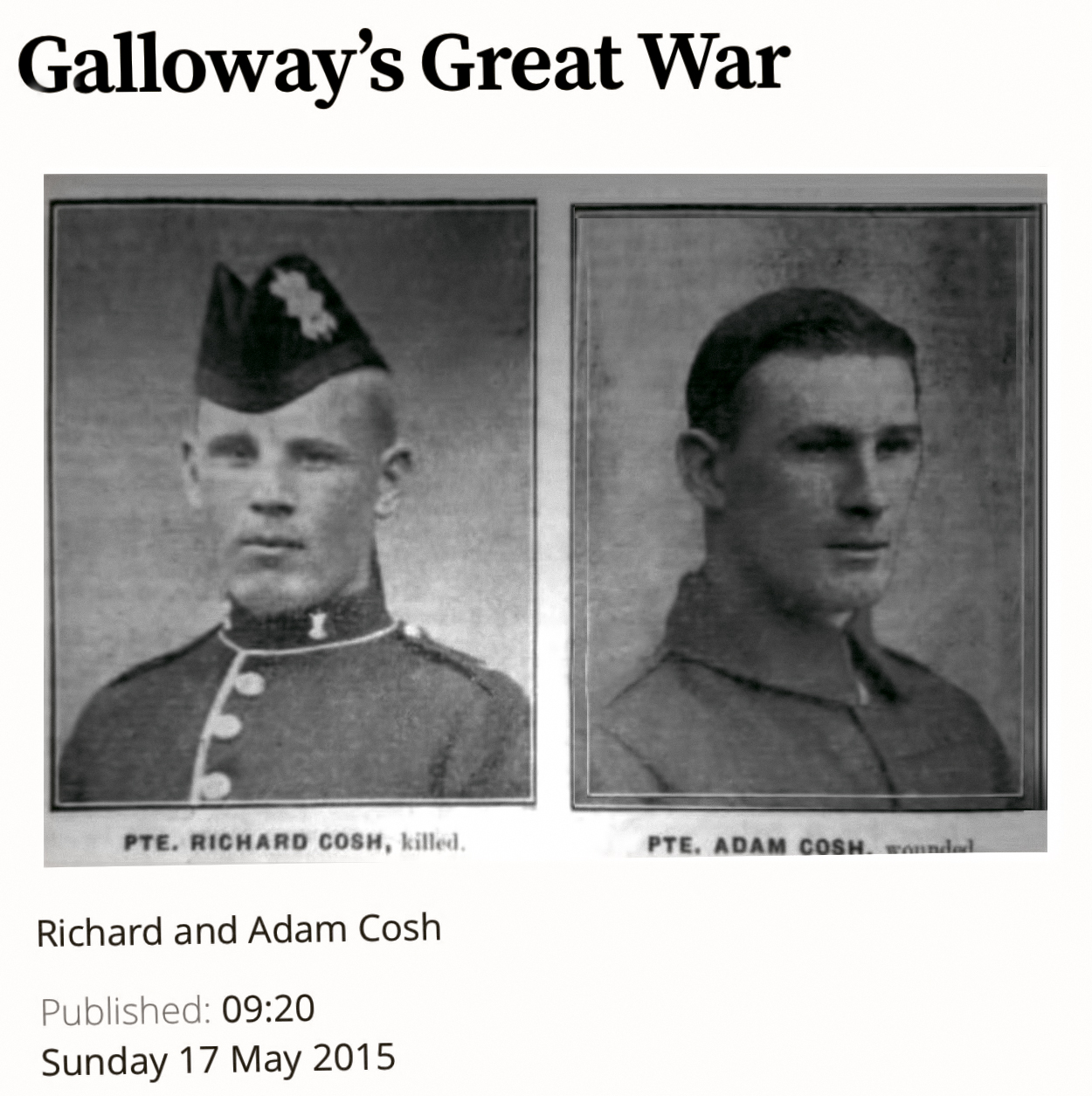
I wanted to broaden my skills from Photography to other areas of visual design. We studied very intensely and touched on areas of web design, illustration, page layout and video.

adobe-certified-associate-in-visual-design-using-adobe-photoshop-2

I managed to touch on the subject of InDesign PDF interactive files. I need to improve image resolution (as pixelation was evident in my experimental work in abstract expressionism).

InDesign has more control over export file size and resolution than Acrobat only.

Full print resolution files can be used at 300 PPI with great user control over file size reduction.

The (Photographer’s) Apprentice

I’ve been working with a professional photographer, and Managing Director of the Studios and Training Centre based near London (end of the Metropolitan line).

I had planned to spend a day working in support of a training course on still life but plans changed. Instead, I can readily relate to prior experiences.
Another option is to do something with other activities during the Assessment Period:

A)  Adobe certification training in Visual Design with Photoshop (mentioned above)
and/or
B) An Open Day “interview” with the marketing manager for a national charity. We established the charity would willingly use my photographic support.

PHO701: Week 12 Proposal and Audience in Practice Tutorials Submit Proposal and Portfolio

Week 12

I didn’t think I’d catch-up by this point (with technical circumstances previously mentioned).

Well, I’d never have planned it this way. Working up to the 11th hour to get my project proposal assignment completed and then with little time to spare assembling a work in progress portfolio. 

Positions and Practice Research Project v1_Redacted

(no project dates and costs)

Developmental Portfolio

(work in progress portfolio assignment)

The work was quite challenging, but there again, I suppose it is meant to be. It can be quite a balancing act, trying to get some decent resolution images together within a file size constraint. If I did this again, which am sure I will do shortly, I would allocate time for image sizing.

Well, there we are, it’s down to experience, that’s something we certainly gain in abundance.

For the project proposal, the most extraordinary thing for me was managing to summarise the bulk of the work in just 600 words when there was a 1500 word allocation. Of course, when I looked through my notes and mind map, there was still plenty to add, and I got there.

In retrospect, you’d think that starting early and building in contingency would solve the deadline problem. However, the information we gain in support is progressively administered to us. First attempts can be added to with each passing week.

My planned project ideas seemed so confident at the beginning, but then my plans were shaken from the foundations. I seriously began to doubt my choice. In my own terms, the Academic worth needed to be apparent. What sustained the original was a degree of preparation combined with a planned commemoration in Perth Scotland. I had considered project ideas that were totally different, but something in my soul took me back to the Commemorative Historical work. I thought more and more seriously about what would be needed to make it work.

A breakthrough came with the introduction of genetic analysis that has enabled me to bridge between the present generations and those who took part in a significant world event, over 100 years ago. The original commemorative history I’d focused on, has been retained, but for reasons of story. The DNA side has caused several changes not least, shifting emphasis to my maternal line on learning how mitochondrial DNA and X-chromosomes pass between generations. The focus remained on the same world event. I’m aware still that the whole thing could be thrown up in the air as I progress through the course and I steep myself in photographic theory and art.

Quite a revelation for me in terms of my approach was the example set through an, in conversation, interview with Ian Walker, surrealist and academic critic. Ian is a seasoned critic and demonstrated, by Guest Lecture, how I needed to strengthen my own analysis and critique. Ian can discern what is surreal from what only looks surreal. Also, not all of the work of a particular surrealist may be to one’s taste giving room to express a personal view. Ian also demonstrated how fairly everyday settings, containing the right elements, introduce the surreal. For me, surrealism had been simply an example of artists freedom of expression while pushing the boundaries of public acceptance.

PHO701: Week 9 Introducing Critical Theory Submit Oral Presentation

Well here we are Week 9 and the Oral Presentation has been submitted (redirects to my portfolio site).

Fingers crossed for good luck. Best wishes to fellow students. This is our first assessment. There are two more during August (which begins tomorrow. Where does the time go when you are engaged in something like this).

I’ve been catching up with the Guest Presentations on research theory and abstract photography. In the first Welby’s presentation challenged my thinking as of course I thought I already knew plenty on the subject.

Welby presented a broad range of methods. broader than the formal methods I’d previously learned.

He focussed on methodologies appropraite to the arts. Thank you, Welby.

I have been working through the course in reverse order while catching up from being away on my project.

I was quietly provoked by the Finnish Abstract work presented by Laura Nissenen. The student audience had been given direction earlier in the course to find something meaningful in Abstract if they were going to continue with it. In a sense this put them off continuing. Laura’s advice was to go ahead anyway and follow one’s path. In my case I’m on an
earlier module. Did I want to be hammering out the argument in favour of abstract work in the future modules? While work should continue to evolve (and intuitively is the word on the street following Sian’s recent lecture), then I probably need to be applying constraints at the soonest.
Maybe Abstract, in my case, is self-involved and what I do needs to reach out more. I intend to run Abstract and Close-up photography side by side on my proposed project. These methods are creative and stand-in for not being able to recreate large scale scenes from France and Flanders and as a research question and benchmark these methods on a defined narrative project already researched. I know at the outset, the outcome cannot be definitive, but it seems increasing more so with the time that it is my destiny, after all, to do this work. I would hope any failings would not be critical. and that to make findings more widely definitive continuation of this research would need to take place in a variety of other contexts than my historical, anthropological one.

PHO701: Week 8 Contexts and Strategies in Practice

So my last week shoot took place at the Black Watch (Royal Highland Regiment) Association Castle and Museum in Perth. Thank you to all the accommodating staff who gave access to the archives and more particularly put up with me popping up with my camera all throughout my time there. Although the volunteers are not necessarily connected to the former regiment, their welcoming ways, and how they took time out to talk with me was outstanding.

There was a quiet, moving ceremony for the Black Watch soldiers that fell on that day 100 years earlier. Eight thousand crosses had already been laid and 1,000 more remained and for only three months of war. I represented my family and laid a simple wooden cross with a poppy in memory of Adam Cosh. The cross was laid alongside three others on that day. It was quite apt. Adam’s elder sister is my great grandmother Helen. As permitted under Scottish Law, as a child, I laid laid her body to rest in the cemetery on the hill between Gelston and Castle Douglas.

In the soldiers’ prayer is the line, “To fight and not to heed the wounds”. This was quite moving when read out as both Adam and his brother Richard were wounded, time and time again and continued to fight to the end. As perhaps the last of a group of true warriors, repeatedly returned to battle until finally the price was paid.

In the case of Adam, he perished in the last battle before the opposing army consolidated and retreated, abandoning their lines and the tide of the war began to turn towards its conclusion.

Others families I listened to during the visit, had impactful stories of their own to tell. In one case the family had only a few words, merely naming and identifying their family member. They reached out to help make links. Another with an interest in nursing, rightly represented the efforts of nurses and also recalled how women stood in the streets of Dundee, wailing at the loss of a whole generation of able-bodied young men. The current generations combine in being the last to retain the connection with people from this historical past.

Royal patronage continues — the castle and museum displays marker stones to this effect.

PHO701: Week 6 Draft Oral Presentations (live presentations for formative feedback)

Draft Version of my Oral Presentation

At last, my draft presentation is ready to view and is available here:: Oral Presentation

Further refinement is necessary to shorten the play length by 40 seconds and to rebuild the file with lower resolution photographs to get the filesize down.

The present draft shows an audio symbol throughout and serves to mark this for me as an early draft.

Beginnings – I came back to photography later on

Experimenting with media, a TEST ONLY file Beginnings been made ahead of the review presentations and serves to explain how I was gripped by photography.

Love is Real Not Fade AwayGreiving

IMG_0852The following link Taster is an end to end production TEST ONLY at this early stage, ahead of the review of our presentations.

Summary

Some media have been combined that provide a 30s clip relating to the project. Now I’ve tested out the tools on desktop and have worked out the linkages and controls I can now focus on incorporating salient content.
I was asked to write a related piece, a conversation recalled from many years ago about the subject of my new project. I place the text here alongside the Taster video. The length of text means it will be excluded from the Oral.

I wrote this:

Scottish Roll of Honour, Scottish National War Memorial, Edinburgh Castle
circa 1976. On the return home and now with my Father, and him talking about the visit I’d just made there. The Memorial is a great outpouring of the Scottish people for the many relatives lost in the War.

Father:
Did you see the book?
Their names are listed there.
I went with my Mother when I was just a young boy. We looked through so many pages. And found both their names, Richard Cosh death 29 Nov 1914 The Black Watch (Royal Highlanders) Pte, and Adam Cosh death 19 Jul 1918 The Black Watch (Royal Highlanders) A/Sgt.
It was a long time ago and I didn’t know them. We’d never met.
I’d only heard my Mother talk about the boys. The Brothers that died in the War.
I went back once to see them again. It was with your Mother.
The book was still there and we found them. We saw their names.

… about Richard and Adam Cosh, The Black Watch Regiment (Royal Highlanders).
Inscription:
“The souls of the righteous are in the hand of God, and there shall no torment touch them.”

PHO701: Week 5 Power and Responsibilities

I have learned to use the triangle approach in assessing aspects of photography, such as power and impact.

Also, I’ve become aware of objectification of the subject and amongst other gazes, the male gaze. I’ve taken on board aspects relating to minors amongst other vulnerable groups, including people of disability. I’ve taken on board how the photographic supply chain runs through various parties from photographer/sponsor to end-users along with an element of repurposing of the original intent.

I also read (or re-read) the AOP Publication Beyond the Lens, which in a sense although a realistic portrayal of photographic practice does invite a slightly cynical view of the economics of the profession. Remuneration is very much in decline for the individual photographer.

PHO701: Week 4 Collaboration (group project)

Already Week 4 and collaboration is underway.

Looking For Derges

I joined a group just in time. The other two members had established a framework for exchanging images of place and other places with the intent of creating an imaginary third place from these.
The lead for the idea had been impressed by the camera-less work of artist Susan Derges. Moreover, it was necessary to catch up with the artist’s work. Fortunately, the group had done the artist research, and so we settled and watched two feature videos.
We met online as a collaboration group and soon after the practical work was started outside in dappled sunlight. Soon a set of images were created and contributed to the group.

In a broader introductory exercise, everyone had contributed a single image with accompanying text/sentence. I’d chosen loneliness, an epidemic of the current age in which the lonely and the rest of society seem destined to drive themselves apart.
So back in the dappled light, I picked single petals of a daisy, buttercup and violet along with a single strand of grass and tip of a fern frond. Somehow I felt I’d managed to incorporate the loneliness theme. I took my version of a petri dish, in this case, an inverted cake tin lid, from Betty’s, the contents of which had been rather good I recall. I’d wanted to include water and pick up surface tension effects on edges, reflections and texture from the tin and shadow in the water. Ultimately I flooded the dish and watched for the natural elements to group together. I tried to force this I suppose and only served to start to clean the canvas as it were, so ultimately images homed in on single elements.
So I had set up a macro lens and was soon photographing. Initially, I started with single water droplets on the tin and looked for the observer in the reflection (from Derges the observer observed) but the droplets soon dried out. Another droplet was placed almost directly on top of the water stain. As I worked in the outdoors, dust and pollen fell onto the miniature set. A couple of reasonably deep themes emerged, signs of things past, now replaced and dust as a metaphor for our mortality and pollen as a metaphor for renewal and replacement.
At this stage, I was shooting images with layering in mind. All contributors did this. We then layered the layers where each image was two layers in its own right.
Probably the effect was busier than the more simplified images captured by Derges, but with a more extended project, we could have worked to simplify.
Here is an image from the collaboration in which I was mindful of Derges work, e.g. of Gibbous Moon and Ash (trees). In the following, one photographer’s image with marigolds, a more subtle background from another photographer’s image of rock texture, layered with my photograph based on water droplets.

The collaboration had been seamless as we synchronised our efforts, and as a postgraduate group, we adapted easily to the need to cooperate and help each other. We recognised and adhered to deadlines. We attended three webinar meetings, including the final presentation with other groups and our module tutor. We received a reasonably warm reception for the final work, which was viewed as an ultimate collaboration in stills photography.

PHO701: Week 2 Multiple Media & Interdisciplinary Practices

Week 2

Interdisciplinary practice already present in my practice. How this might be expanded through other disciplines, media and critical contexts.

Interdisciplinary practice

The Cinemagraph and Slo Mo video are two practices I’d be reasonably comfortable to incorporate alongside my photographic work – of course if it made sense to do so.

aperture blur camera camera lens
Photo by Pixabay on Pexels.com


PHO701: Week 1 The Global Image Reflection

sky earth galaxy universe
Photo by Pixabay on Pexels.com

Week 1 The Global Image: How does the global nature of photography relate to my practices?

A current portfolio in the abstract relates to the centenary commemoration of fallen soldiers from World War I 1914-1918. A Visual narrative supports a book. A standalone book of images is envisaged or set of images accompanying the text.

The narrative is of brothers Richard and Adam, initially living and working in rural Scotland. It portrays how their environment led them on to the dire conditions of the battlefields of mainland Europe where they perished. When surviving austere social and economic times in rural farming communities, the brothers had previously and separately visited Canada and lands to the east beyond Europe.

The visual images of this portfolio are intended to be abstract creations derived from photographs related to place and are intended to characterise the light, shade, textures and colour tones present. Where in retrospect we traditionally view such past in monochrome or at most recoloured images, those people in their time, still experienced the fullness of their lives in the full presence of colour. Historic monochrome imagery alongside a keen appreciation of colour in our present-day lives is something we share globally. Colour would have been seen by ancestors a century ago. A strong intent is to feature colour within this portfolio.

Themes interwoven within this narrative are idealism, romanticism, in particular, bringing attention to the limitations this presents and will go on to incorporate religious elements in the symbolic or cultural aspect. Again these should translate to the global perspective.

Perception and change are also relevant to this work. From our present-day vantage point, our beliefs and our standards have changed over a view of this past. Global cultures will vary in a variety of ways, this resulting from different stages of social, cultural and economic development and so the portfolio should read differently in different parts of the world.

PHO701: Positions & Practice (overview): Photography Course Hub Blog


The module at a glance:

Week 1 The Global Image
Week 2 Interdisciplinary Practices
Week 3 Rethinking Photographers
Week 4 Collaboration (group project)
Week 5 Power and Responsibilities
Week 6 Draft Oral Presentations
(live presentations for formative feedback)

Week 7 Introducing Contexts and Strategies (micro project)
Tutorials
Week 8 Contexts and Strategies in Practice
Week 9 Introducing Critical Theory Submit Oral Presentation
Week 10 Critical Theory in Practice
Week 11 Introducing Proposal and Audience
Week 12 Proposal and Audience in Practice Tutorials
Submit Proposal and Portfolio

via PHO701: Positions & Practice (overview): Photography Course Hub