Watch this video and comment.
Reviewed but notes currently in notebook.
Falmouth Flexible Master of Arts Photography Course
Watch this video and comment.
Reviewed but notes currently in notebook.
Watch this Guest Lecture video and comment.
This is a lecture designed to help artists/photographers take their work forward and is based on experience in the art market and photography competitions.

The idea is to think of the product and object product quality. Lower quality can be of greater value. Long-lasting ink helps as does a small edition size where 3 might be better than 20 is unique. Start with low prices and grow with later editions after sell out.
Consider mounting so collectors can store as archival photographs and longevity affects price.
Another consideration is to prepare a statement for later to be condensed. Have own words ready to go.
It’s better to have updates on the website rather than separate CV. It is valid to have an interchange say with other students and record their interpretation of work. It is very different to only the artist’s own words and less emotional and personal.
Social media should be about you and promote others exhibitions. Link back to the website.
Advice from an RA talk was given. Then different types of gallery were classified.
In another part of the guest lecture consideration and advice was given over Competitions (and residencies) and of Collectives where people foster creativity and show together.


Watch this Guest Lecture video and comment.
Christiane set-up Photomonitor and explained how this was set-up from her getting involved in Pluck and Portfolio and a desire to find out what was on. across a range of areas over and above the large institutions. She would advise in how to set up a niche.
Gaps were found in the offerings of:
Christiane’s requirement was UK and Ireland centric, for artists and emerging writers and all in an up to date guide of what’s on now. Here need was to bring people to photography and go and see it, think about it and spread the word. All without ads and is free.
The result in 2011 was www.photomonitor.co.uk. From the front page, key links are the Portfolio link written by the artist rather than mediated, there are listings sometimes with reading more depending on the gallery and their subscription. There are Reviews including of live exhibitions. Interviews talking to artists. Essays that have been researched. Auctions cover smaller upcoming auctions. Collections are interviews. Book reviews cover self-published and large publishers.
Christiane encourages artists to take a break and listen to others.
In terms of making a publication the 5 Years’ statistics were given:

The right hand column draws funding and that pays for commissioning the items on the right as community members.
In summary there are many many opportunities to see work that is shared.
Commissioned pieces are paid at 20p a word to a maximum as a budget constraint. 500 words on a screen are practical.
Commissioning is wider than London covering Wales and Ireland. Timeliness is key as mentioned to get people to the exhibitions. Social media is important for sharing.
t: @photomonitor
Christiane talked about potential for growing Photomonitor including into streaming of live audience talks.
Some Inspiring Platforms were listed:

Anyone with new ideas is encouraged to get in contact.
It is always exciting to see the smaller business venture establish itself and succeed. Any personal involvement would be to read Photomonitor and assess how it stands alongside say for example, major gallery memberships.
The online element is approached as a Portfolio website and as Instagram for marketing (planned) not to mention this blog site created for the MA Photography course.
There is still more to discover in Part 2 of Christiane’s guest lecture.
The video can be found here.
Alex is a Commercial Photographer working over several decades on marketing and publicity for film and television.
He described how this work is delineated and gave examples of commissioned work, a concept sheet and a mood board.


As we as students have learned to do, Alex for the first time was faced with making a presentation of; his own influences; what brought him to photography and which book and photographic names encouraged him to become a Commercial photographer, one who brings his own artistic integrity.
Key aspects of career had been: the opening up of the closed shop practices that existed prior to the Thatcher political era, and the impact of the transition to digital on technical and business practice.
The practicalities of commercial practice were illuminated. The passion Alex has for his subject is clear.
Personally, what was said resonated clearly with some fairly recent education on the film industry. This industry is active in the local region around London.
Copious notes were taken. I shan’t dwell on this lecture even though it was thoroughly enjoyed as a contrasting practice to my own. Seeing Alex’s work and getting such insight into his contrasting practice was a great help in understanding my own practice.
Sarah is a lecturer at London’s LCC
Here is the lecture. The main photographic project is based on letters between sisters over a hidden relationship that of a secret transgender female Ken married to one of the sisters known as aunt Hazel. All this was at a time when there was no recognition or language to frame identities.


Identity was sympathetically dealt with and Ken becomes K(ay) and her or she.

There is a book “Ken – to be destroyed”. This began as a small personal project but created an unexpected level of interest. The conversation led to working on the project and exhibiting in Liverpool. There were uncertainties from gaps in the texts.
Sarah found more including family photographs. As she worked with the materials this led to working physically in the darkroom as a natural extension of handling physical materials. The working with a family archive was a first for Sarah.
The work is robust having nowadays a universal message of identity. The work presents well as small groups of images and as a book.
The book was a collaboration with Val Williams who helped with the edit that combined family archive material with Sarah’s work. Working collaboratively proved very useful.
Both Sarah and today’s host began their artistic lives as painters.
The personal aspects were seen to be of interest to audiences. There is a universality of family with all the problems family present that viewers can insert themselves into.
Another aspect of the German Jewish family is the next piece of work. It is still, based on family history but now covers the Holocaust. The project is approached from a very personal perspective and in an intimate way. An album carried on the Kindertransport is a material source for this new work.
Sarah’s project was allowed to develop and that is important compared to planning exactly how the work should be from the outset.
A point in common is the use of family archive photographs. High-resolution scanning, alternative processing of the images and concentrating on the surface condition are strong elements of Sarah’s work. Obliteration of identity became a step in which aunt was translated into clothing only or into the uncle.
This compares with using the photos for the final photo project which are scanned for smaller size reproduction. The idea was not to overwhelm the abstract images at the core of the project. Recently one image from the archive was layered with an image of mitochondrial glow and connecting thus with an ancestor from the maternal line. This has a key significance.
The history of a family is also common as is the impact of 20th-century war.
Photographs Sarah Davidmann from Falmouth Guest Lecture
The video can be watched here.
An Argentinian photographer based in Wales from Newport University, Bruno is now based in Paris.

Bruno photographed in a dance club above a place he waited in. Using flash created an aesthetic he seemed to use extensively but disliked so turned to black and white.

This reduced the number of images and was more hands-on in developing and printing. He preferred the timeless look with few signs of the modern world.
In another project, Bruno contrasted a small Spanish village that represented his culture with Castilla La Mancha. He followed the places visited by fictional character Don Quixote (and Sancho Panza). This required a lot of travel by foot and sometimes other means.
A book was published, Grief and Sorrow.
The project took 4 years and Bruno needed to obtain part funding for an otherwise self funded project.
Bruno started some editorial work that allowed him to maintain complete control. He tried to work collaboratively and started to create some staged images. The outcome was that some staged images looked un-staged and vice versa.
Here is the library link to the book.
The story of two people who tried to keep the last Abertillery newspaper alive. A commission was offered by the BBC but they would not let Bruno create a film without any previous video skills. In the end, he acted as director and collaborated with a videographer.
Apart from the film, there was an exhibition in Cardiff that included a recreation of the newspaper office. A phone would ring and a voice would direct the viewer around the office.
Julian from the Dynamic is helping to write part of the book. Seven months were spent filming. At the end of this Bruno was very tired and took off a whole of September to rest.
Bruno’s inspiration for storytelling comes from film and literature.
Bruno, S. (2019) The Dynamic Duo. Wales: BBC TWO. Available at: https://www.bbc.co.uk/programmes/m00098mm.
Andy Hughes is an artist based in Cornwall and he investigates the relationships between consumption, plastic waste and the defilement of the land and sea. Hughes is interested in radical conceptions of materialism and the implications this has for politics, ecology and the everyday way we think of ourselves, others, and the world.
As preparation, the audience was asked to watch the film Plastic Scoop on Vimeo. There is also a Zine about this film. It is on Issuu.
Following the viewings above the immediate question must be about the Video Documentary and Video Gamification post that introduced Verdun a successful WW1 game on XBox. There is a possibility of cutting scenes into the photo project. Given the work is about the What and less so about the How, then this could become a diversion. The intent would as always be to contextualise the Abstract Expressionistic images at the core of the project to give the viewer more scope to follow the theme or themes.
Plastic Scoop above is a collaborative effort taking 6 months to create and demonstrates the scope to be largely beyond that of a Final Major Project FMP.
A summary is provided here of some of the main points from Andy’s guest lecture and with particular reference to MA Major Project practice.
Early work was in part didactic as a way was sought of helping campaigns. The way an artist works is different though.
The book Novascene (Lovelock, 2019) was given as a recommended reading in terms of the theme connecting the past, present and future. Lovelock is the author of the Gaia Principle.
It was noted that in Aboriginal culture, thinking does not have to be linear as in Western culture. The image below depicts the concentric and a representation of thinking moving in any number of ways.

The area around Castleford which Andy has a childhood connection with transformed from coal mining to businesses’ that feature single-use materials (McDonalds and KFC).
Interest was found in the sport of surfing and this led to an awareness of beach litter. In photographing surfing comparison was drawn between the UK and the classic portrayal of surfing in sun-baked climes.
A new series of work was created using colourful plastic waste.
Also, in travels to the USA an unravelling golf ball was shot and in the background is the menace of a polluting plant.
Work was also made based on the waste found at outdoor events such as Glastonbury.
As an artist, there is a connection with making and so still life photographs of waste were combined with paintings.
Nostalgia was raised as a topic. Nostalgia is popular at the moment as it makes people feel comfortable in uncomfortable times.
At various points, during the presentation, there was a prescience: subjects photographed (e.g. rat, glove, stick) photographed as the same composition decades earlier.

In a comment about carbon usage, it was noted that Photography has in its DNA this thing about travel. So what can be done to limit the carbon footprint?
Working on plastic scoop meant spending 6 months in the studio and that limited travel.
There was work currently close to being exhibited. There is the whole question of how you keep in contact with the curator as there is a balance. Big-name artists can probably call the shots while the lesser-known have to be more patient.
Lovelock, J. and Appleyard, B. (2019) Novascene The Coming Age of Hyperintelligence. Kindle. UK: Penguin Random House. Available at: http://www.penguin.co.uk.
Artist website: https://laurapannack.com/
The website has a shop portal with items that can be purchased. There is also an image of the week blog which Laura endeavours to update each Thursday or best she can.

Laura is an artist whose work is based on portraiture. At first, there appears to be no overlap with the photo project, yet when archive images are included for contextualisation, then there the overlap may become apparent. Laura makes her own portraits of course, where those with a connection to the photo project are from the family archive.
The introduction – a social documentary photographer, producing self-initiated, private projects for Laura.
Two questions – how do we make work? Why do we make work? Laura’s work is Fine Art, Social Documentary.
She was encouraged to try every genre while studying at university. Having a younger sister enabled Laura to explore an interest in teenagers especially given there was access. Noted characteristics of teenagers were awareness and lack of self-awareness.
Laura is engaged in commissioned artworks and short term projects. She always has a desire to learn about her subjects. Consideration is given to “what is it that interests me about the subject?” Working on a commission means working to a deadline, which depending on the individual, can be really useful. It has often led to good research done on time and the commission ensures work is completed.
One commission Digital Self Esteem, Selfies and self-worth, related to the selfie culture and was produced for the Saatchi Gallery. This used two-way mirrors and allowed the teen to settle their gaze on themselves for 20 minutes for each shot. Another commission Separation, What does Brexit mean for love, was for the BJP. The first thing was to realise a limitation over politics of not being well-read enough or intellectual enough. It made sense to go back to what the artist knew and the work rested on relationships and love. Tests were made using a latex screen in a studio. Photographs depicted couples likely to be torn apart by one of them having to return to their country of origin. The chosen approach was not too controversial.
In determining the working method, there are the following: what’s your voice? What is your sense of style?
Sometimes it is a relief to not to think too deeply, but normally Laura does research long and hard.
We were challenged to think about our sense of style and comment on what our signature style is.
Sometimes you can look at an artist’s work and recognise the style. You then may wonder if they will ever break out and do something dramatically different, do something really wild.
Hockney was able to paint on an iPad and was able to take the risk. HE can do this as he has done everything else so well.
Sometimes it has been a case of learning the hard way. You need to be clear about your reason for approaching people.
Portfolio reviews are an excellent way of gaining feedback and need to be structured: what is your reaction to this and why, then how can improvement?
Young British naturists was a long term project and involved an immense amount of relationship building, organising and planning. The personal project gave the opportunity to take control. “We’ll be shooting over here if you can gather”. Then when a shot seemed likely, the lighting was set-up.
Over a two week shoot, 36 rolls of film were used, but due to a camera fault, only one image was salvaged. A great deal of care was taken to adjust the positions because of the nudity.
Purity ran over eight years. The intent was to bring out love, family, traditions and femininity within the Jewish community. Preparation included working in local clubs to get into the community. However, barriers remained – Jewish women did not want to be photographed. The work initially focused on three families but this reduced down (or was reduced to) just one. Photographing meant going back to the same room every time.
Youth Without Age, An exploration of the fragility of life derived from a sense of age slowly advancing. Sketchbooks were kept. The subjects also sketched. Old Romanian films and theatre productions were watched. Cynically, perhaps other artists work was analysed e.g Alec Soth and his use of water.
Just be with people and shoot. A voice in the back of the head kept asking, “Why are you shooting”.
Some projects ran over 8 or 9 years, while with others it was a case of just shoot.
A visual notebook is kept with images stored on Dropbox. Here they are always available for inspiration. This is useful when making new commissions.
One project involved selecting a railway destination at random i.e. selected with eyes closed. A day would be spent shooting at the selected location. The weekly image blog is updated every Thursday with one picture with a reason why.
Laura is a guest on A Small Voice podcast.
Nick Dunmur on video.
Students are able to join the AOP. I met Nick at the 2018 Birmingham Photography Show. The guest lecture is well-timed as the Forth cohort begin to take their work public.
Copyright automatically belongs to you. Exceptions exist for images used in the US which need to be registered with the US Copyright Office USCO.
Cover exists for 70 years from the end of the year the author survives.
Assign is like selling your house. License is like rent.
Copyright exceptions:
Other exceptions:
Edges are not clearly defined and funny is subjective.
If you blew up a Crewdson print and put it on your wall, you’d have to safeguard it from anyone else seeing it. That would be difficult to get away with.
A fee can be paid to the IPO for orphan work in case there is a later challenge,
Different ways of contracting exist in different areas.
… are the basis of charging
BUR wants to start at a daily rate. You’ll never negotiate up from a low figure but may wish to negotiate down from a higher figure.
There are many titles and only a few publishers. They may offer you a contract. It is not an employment contract.
First British Serial Rights FSBR would say cover one issue and thereafter the photographer regains the copyright for Second British Serial Rights. Check if Syndication is mentioned as this could cause your work to be reused. Check if a fee is mentioned and whether or not the fee level is acceptable.
If versions of paperwork appear then check and refute anything that is out of line. Anything issued once the work has started is post-contract and not acceptable.
Assert your moral right to be credited as the creator of your own work. Assert in writing. They are obliged to give you credit. You may have knocked off a percentage of the fee for this so it would be a loss.
You have a right to prevent derogatory use of your work, for example with a portrait if they resize an image to fit a box or crop an edge off and it makes your work look amateurish. Similarly, you do not want someone else’s work to be attributed as yours as it may affect your professionalism and stop a client from hiring you.
There is a right of the commissioner to prevent publication. A newly married couple could return from honeymoon to find their wedding photos all over social media before they have even seen the photographs.
Moral right cannot be sold but can be wavered.
Put a statement on your website to assert your moral rights.
When a contract is given to you it may be boilerplate and not be suited to your contract. Rebut if it is wrong. The person issuing the contract typically has a second, third and fourth version where you cannot agree.
Read everything in a contract before you agree or sign. Send copies of your terms to different departments as finance may never talk to the creative group. If you give them a PDF include a layer to remind them of the terms of use. Otherwise, include a terms file with the JPEG.
These plug into Lightroom. There is a plugin to populate an image with meta-data. Another to track and manage image use.
This is the link to the Guest Lecture video.
Caroline studied Visual Anthropology for her MA. She now teaches (third-year student photographers) and is researching for her PhD.
Two main projects were discussed:
The first project shown was about studios based initially in India. On a personal note as a Studio worker, it remains true that the MA Project is conducted outside of the studio environment.
By re-visiting India, to re-photograph what was revealed were the numbers of studios impacted by digital, and how this led to closures. Backgrounds had been traditional Victorian (photography had been a Victorian export to the colony).
The project themes were; studios, the owners, and the transition eventually from photographic film. Some research objectives firmed up during the project. In order to get permission to photograph the studio owner Caroline needed to agree to being photographed. This made the genre Autoethnographic. There were many norms to be learned in making the work. Communication and cultural norms had to be learned.
The work moved from studio to studio, following recommendations. Interviews were to be had with owners, their families. The work spread wider as the story and structure were forming.
Studio owners made a living but may have had to also sell gems or even slippers. There is a clear commercial side to photography in addition to the academic.
Caroline was very open about her work. The work went through a transitional phase and entered a liminal space. She adopted socially engaged conversations.
Cultural aspects mentioned:
Each point involved an unexpected re-interpretation or potential misunderstanding.
While the work was being made and interviews were obtained a notebook was kept that became part of the published work.
As an autoethnographer, it took time to learn. Knowing the kinds of questions to ask is important.
The work went public and was exhibited in Jaipur. Initially, there was a book made on Blurb with a page layout of; photo, photo, notebook, notebook.
After a series of annual trips, it became clear that Autoethnographic communities needed to be more accessible i.e. within walking distance. Carolin’s work turned to the Turkish community in London. This project examines Turkish studio practice, English studio practice and the emerging mix of the two.
Access to the subject is key to our MA students. The work still has to be true to the students’ ambitions and be authentic.
All photographs courtesy Caroline Molloy Autoenthnographer from Falmouth University guest lecture (research).
Early mention was made of this guest lecture in a 121 session blogged here.
David is a scientist breaking free into a world in which he makes art.
As always an important element of these resources is to identify with practice in the Final photo project.
David summarised three projects using these bullets which served as a useful summary:
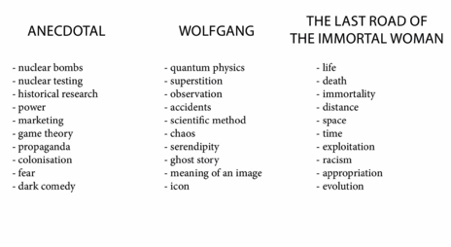
Project summary – David Fathi
David’s art allows him to take up his interest in the areas of knowledge, politics and science.
Three works are presented: Of these the first two projects, Anecdotal and Wolfgang are books. The next project, The Last Road …” moved on to become an installation.
In presenting Wolfgang in different contexts, David began to explore the installation as a way of publicly showing “The Last Road …”.
David felt he could have continued on in the vein he started (in some respects poking fun) but he was driven to do more serious work. Whilst earlier did poke fun it was also factual.
The work relating to Henretta Lacks, controlled the viewer experience as the installation layout meant the viewer walked between Dark landscapes with Hela cells opposite Intimidating text. A video played at the exit end in this liminal space. The video comprised film stills with an audio track that played louder closer up.
The migration to installations fell out from presenting Wolfgang creatively in numerous settings. Don’t let the form of archives seduce you. It is a danger. Maintain control. Control also by viewer walking between Dark landscape/Hela cells opposite Intimidating text. Video at the end shows film stills. The music gets louder with proximity.
Examples of stills given included the Film Godzilla as metaphor for the atomic bomb.

The talk highlighted ideas of balanced pairs:
Some take-away advice was “Don’t let the form of archives seduce you. It is a danger. Maintain control of your work”.
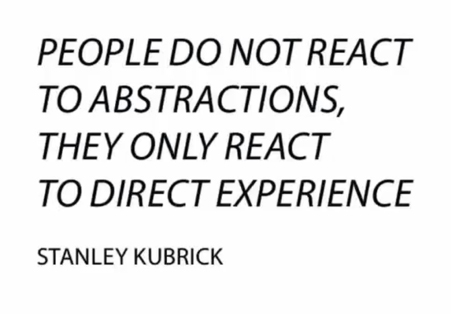
On the subject of abstraction, David quoted an observation by Stanley Kubrick:
Be self-aware of one’s art and the impact it may have. Stay true to one’s intent.
It is important to remain aware that work can transition from a book publication to an installation
This video was returned to on 16 October. This lecture tunes in to the representation of people through community collaborative practice.
I then relate Judy Harrison’s work to my practice to find out what I can take from it.

Studying at college with what were to become famous names such as Martin Parr and others, Judy was in good company. Judy’s work showed a great deal of social concern around the topic of identity, migration and racism. Her work also featured themes of strong women in farming and in the pottery industry.
Judy’s work showed genuine concern for people as she spent time talking with them. Examples here were the women working on farms. Judy noted the importance of engaging with the women who were her subjects. This was part of slowing down. She did not want to take advantage of her subjects.
An element of rephotography existed as Judy often returned to the original places and so was aware of changes that had occurred.
Judy instigated the setting up of workshops in migrant communities and by lending cameras, and by showing how to use them her subjects were able to document their own identities. This was a lengthy venture in which Judy was involved for 15 years.
The collaborative work toured and exhibited nationally.
Work began to locate in a third space, between shooting indoors and outdoors. Her collaborators were able to bring gestures of performance and create images of self-expression. People were given a voice. She would often go back over the years. The children had grown into adults and now had their own children.
Judy then became concerned to document place, people and school. Her concern was to mend a cultural divide, through a literacy project.
Her work changed to that of the decline in the potteries and she became deeply ingrained in the remaining industry and alludes to the sensory experience in that working environment with the smell of clay and dust.
Judy is an advocate of making work on photographic film as a means of slowing down. This compares with the Final photo project. As a photographer, 35mm film use has been readopted. However, its use is infrequent. The digital practice is unavoidable in the Final photo project where unseen data on the digital sensor is key. Slowing down still occurs but this occurs at the post-processing of image art in the digital darkroom.
The work is not about Nostalgia. Is nostalgia a negative?
Obtain a balance between others’ interests and the photographer’s interests.
Collaboration is encouraged by the University. A challenge is knowing how to mark the work. Family archive prints are a newly introduced part of my project as I seek direction in mixing art with photographs others can identify with. If seen as collaboration it is in the context of using historical records.
Photographs – courtesy Judy Harrison from Falmouth University Guest Lecture
This was another video in the initial backlog of lectures that had gone unmentioned/undiscovered for reason(s) unknown.
Jon Tonks is a British photographer based in the UK. His work focuses on telling stories about people’s lives shaped by history and geography. With an MA in Documentary Photography & Photojournalism from London College of Communication, his work has been featured in The New York Times, The Guardian, Sunday Times, Telegraph and FT Weekend Magazines, the British Journal of Photography and more. He has been shortlisted for the Taylor Wessing National Portrait Prize three times, twice for the Terry O’Neill Award, and in 2014, Tonks was presented with the Vic Odden Award by the Royal Photographic Society for his first book Empire – a journey across the South Atlantic exploring life on four remote British Overseas Territories. The book was hailed by Martin Parr as one of his best books of the year. His work is now in a number of private collections, both in the UK and abroad, including The Hyman Collection of British photography, and the Houston Museum of Fine Arts, Texas. https://www.jontonks.com/
Projects discussed:
Jon’s work followed on from his photojournalism. He worked for a local newspaper for a while but it was very limiting. At this point, he turned to his study of the lesser-known Empire. Following portfolio review was asked to do something more exciting so went back to revisit. He showed the book dummy at University.
The experience in Jon’s case was he didn’t know what the outcomes might be for his work. Work just snowballed.
It can help to go to Photo Fairs and Portfolio Reviews, but these can be harsh and will reduce some people to tears.
Jon started with simple portraits. One a group of boys and a bicycle was put forward as a Taylor Wessing entry.
Tonks’ Falklands book was published by Dewe Lewis. The layout was of simple two page spreads with a photo on one page with the text opposite. A specialist was used to do the map artwork. Almost by surprise, the Falklands book sold out. A second edition was created, of which there are some left.
Doing the projects again, they’d be done in a slightly different manner.
Projects can take 6 years, 7 years and evolve.
Release forms were used with the Ascension project but this evolved to asking permission and taking contact details if the work was to be used in a commercial sense. What the work does is represent things as what are. Everyone knew why the photographer was there and what he was doing.
Self-funded projects were possible through weddings and some documentary work for the Nokia brand. Tonks relocated from London to cheaper areas. He felt he missed some openings and events.
There is the idea of pitching to a newspaper and building up a relationship. It is difficult to do it with full-time commissions.
The new location in Bath it quite centrally placed. Being local you get to pick up work there.
It is important to realise the kind of photographer you aren’t. Realise what you’re good at and not so good at. Try to remain focussed like an arrow.
Working with an agency can be very very interesting in bringing support https://www.togetherassociates.com/artist/jon-tonks/stills/
Photographs – Jon Tonks from Falmouth Guest Lecture
This guest lecture took place on 2 October 2019.
Paula is from Spain, studied Law while being mentored in street and documentary photography. She travelled to London to study for a certificate at Central Saint Martins, then she studied her MA at the University of Westminster. She now lectures and is researching for her PhD.
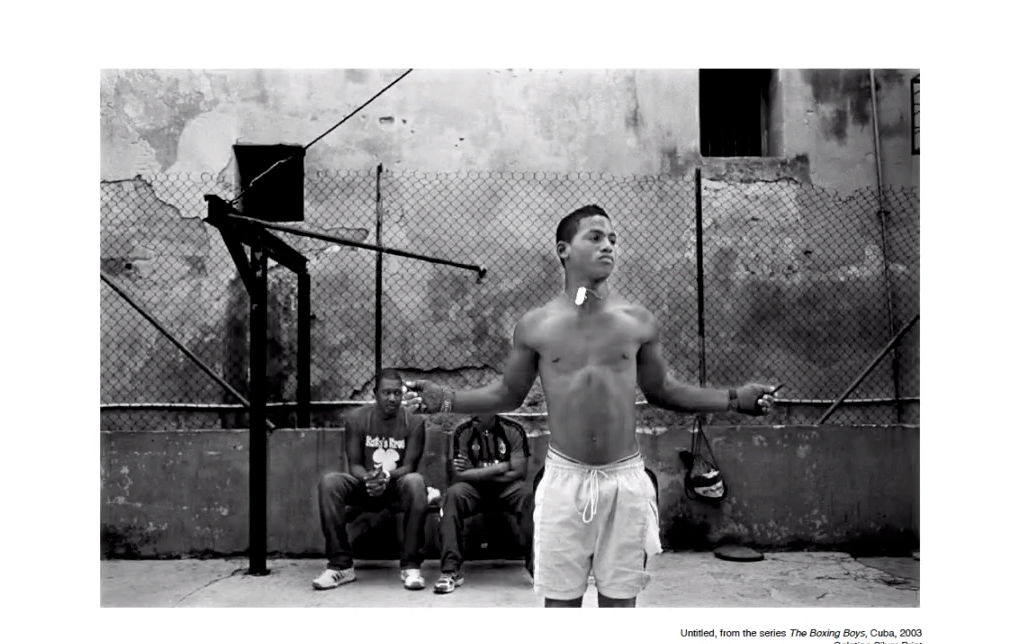
Until taking up academic studies, her work did not have a subject specialism, but it does now.
She described her projects and these have found success.
Homes of political activists in Cuba. The spaces were photographed and pictures published alongside an outtake from the associated interview.

When Europe was going through a massive recession, day to day decisions were being made in the European Parliament buildings by faceless people. The work photographs the office spaces where these people operate.
As the furniture of a futuristic style was featured the aluminium prints were made at different sizes to keep the furniture to scale in the photographs. creating a kind of typology.
The work was also published in a newspaper format. This made sense as most people would only be aware of the European Parliament from the newspapers or television.
The newspaper added context around the location of the buildings photographed. Installation shots were made that show the newspaper being read.
In Andora in the Pyrenees, there is a transformation being made to a winter holiday resort. The project photographs the human intrusions built into the natural landscape. These are sometimes brutal and generally, look out of place and especially so in the summer.

A project photographed in the aftermath of the ETA ceasefire in the Basque region. A thousand people died and there was extortion of small businesses.
The project photographed graphic still life scenes of seafood brutalised in different ways as a metaphor for what had gone on.

Helena is a muse from Greek literature. She was written about by a man and desired by men who would go crazy over her. The project gave voice to Helena and alls here to respond in an evocative conceptual work.

This was the most personal project and most poetic. It is of fragile family memories and the photographs which hide identity, are left unexplained.

The Followers project uses archive photographs from the Czech secret police archives detailing who a person met, where and what time. There was a style of photography where the camera was not put to the eye. There is a striking similarity to social media profiles where we now give away the information for free so it can be used by the authorities as and when they need to. The work uses 35mm film photography with pictures taken in the secret service style, in the same places but of people photographing themselves on smartphone or tablet.

Think about aluminium prints as a publication method.
After the MA the photographer became very busy making numerous projects but has had to slow down during her PhD.
Make interview recordings and include excerpts alongside an exhibition.
When making is Work in Progress, the photographer had already gone public and had the completed work lined up for a group exhibition in May 2020. Being active so is a way of taking an idea to completion.
The following statements are recorded as thinking points rather than being prescriptive advice.
There is a consistent visual language, for work made across a range of different subjects.
For Caterina (our host), during her studies, there was a need to create a consistent visual language as if that was important.
The work evolved organically from Pure Documentary to Conceptual, to Pure Conceptual,
Watch back on the video and comment.
Nigel Ready CRJ here worked on a book on his FMP worked with Victoria.
We’re now into the new year 2020 and a good time to have looked back at this video of the making of a book on the landscapes of Seamus Heaney, for now, MA graduate Nigel Ready.
There is more activity with Victoria who is returning to give another talk in her series followed shortly afterwards with a review session which has been ‘booked’.
Addressed during the break has been the limited numbers of pictures available to publish and so this has been worked on. Still not satisfied, there are now more images where each theme has a limited to draw upon. Making a book is going to be a big challenge notwithstanding having hand bound a book already for the course.
Challenges also are cover embossing / cover image as that craft has not been tried out.
What follows are some key points and a few images that serve to remind.
Apart from the introductory slide showing some of the scope of Victoria’s work, the others cover: the brief, reply, embossing of cover, the outake with shovel that determined something of the cover design.
This outlines some of the points when working with a book designer.
The brief in the slide above was accompanied by a tight edit. The reply slide content widens what the book designer gets to see for the edit.
At the early stage the photographer has cropped in to images and they have a significance that can be lost on the viewer. The scope was quickly reduced to poet Seamus Heaney. Victoria twice used web resources to get a feel of the poet speaking/reading his poetry and of the styles of cover others had used before taking inspiration from Nigel’s photos.
Resolve what you are saying.
Determine emotional response and voice.
Allow wider selection to depict the subtleties of a complex subject. This used 150 photographs. It was only 64 at the start.
Get a feel (YouTube readings).
Work always starts with the photography and cases of two images saying the same thing reduced to one image.
Choose top images in editing down.
Made pairings and made a run (narrative).
Narrative shouldn’t be forced.
Go by the run of the images. Outcomes could be adjust, re-create or reshoot. Probably best is to stick to the run where possible?
Title VERSO inspired by listening to the poet. Digging the earth and turning the soil, turning words and in bookmaking verso is the left had turned page. So a name and a narrative.
Developments led to borders and lines and visual themes.
Some photographs remain personal to the photographer yet fall outside the narrative e.g. being not moody enough. These are separated out.
With a PDF and printed pages, many hours are spent re-arranging pages and tweaking.
Next were design features. The photography informs the design, Accompanied by the Google search of visual language others have used.
Decide on graphics and type to create a mood and tone. The cover design was embossed as ploughed fields with typography inspired by the poet’s gravestone.
The starting position was alluded to at the top of this blog. Book experience has included being published in a group photographic project, and having learned how images are laid out and paired up, along with an awareness of typography being important as well as transitions etc. Finally, rudimentary making has been done by way of a practice book, a dummy and an exhibition pamphlet. A number of other books have been witnessed being reviewed.
In essence, the subject matter of design has many varied parts and practice is neat but fairly elementary, especially compared to what is on the shelves of the bookshop.
An attempt will be made at preparing a piece of work needed for the meeting with Victoria. The base question is whether there is enough image content to fill a book in a consistent manner.
Related activity around a module end and the lead in to a book and an exhibition was an experience gained. The challenge is over what can be done in the available time and being ready.
I went back to watch this Guest Lecture video and make observations.
Sarah’s many projects are formed though collaboration in the making. The work is very much out in the public domain. This was true of the Pickpocket performance work that used a professional pickpocket to set-up a reverse pickpocket as a means to training artists who are always being asked to contribute their work without a fee.
The many other works were also collaborations, mainly with the emergency services, regarding training for riots or fire, gunfire and explosions. These are dynamic interactions in the real world and end up in print.
An observation Sarah makes is around social coding and stereotyping in the scenes used for practice. Whether this is the type of furniture in a room or being briefed that a mother went to the shops and left her children in the flat where the fire is (an intention being to help stop fire fighters from identifying personally with the circumstances).
Advice included a point about get your work out there and show your work or it will never take off. It will remain under your bed.
The art business is very hierarchical in Britain when it comes to accepting photographic art. You don’t want to fall into the trap of making painterly work. Presumably, this relates to the photographer adapting to the gallery market instead of staying true to the foundations of their work.
The session ends with a call to making physical prints, Even small prints rather than exhibition size. Make them and move them around. This is especially important in an online environment such as our MA course.
Photographs – Sarah Pickering from Falmouth video lecture
Here is the link to the video for this case study.

#Advice
This case study contextualises Gideon’s work which like Lixenburg’s is published over several platforms Exhibition, Film, Publication and Web once public interest had been established. Their work evolved over the longer timeframe.
This gives us the idea that our own work might gain traction and so we have been forewarned. There is also the reality of what we can achieve in 6 months and how we should involve others early to go public with more than one route.
There is quite a lot of useful advice on FMP production given by relating to Gideon Mendels project Djangal (jungle camp in Calais).
His work presented a problem of camp interns being offended by photographers. Instead Gideon decided like in an earlier project on flooding to gather the artefacts left over and rephotograph as well as create an installation.

He made several visits over a few months to do the photography which is consistent with our available time on our FMP.
This sets a standard for Falmouth FMP students, I imagine is the idea. In a sense, the previous module led us to practice and Landings 2019 organising experience also helped. In spite of having not known about this case study at the outset, it was stumbled upon, I was naturally set to propose several publication routes. Had I known of the Case studies in time, I could have watched them before making my proposal as it would have reinforced my ideas.
Interestingly Mendel settled on a floating style with objects photographed in the studio on black or white backgrounds. This is very similar to my newly developed approach in photographing Fauna here.
Bibliography
Photographs – Gideon Mendel from the Falmouth FMP video lecture
This guest lecture took place September 2019.
This video provides a case study of Dana’s work. She started off with a commissioned piece for a newspaper. The quality of the portraiture led to funding to revisit the US over 20 years. The work culminated in a collaboration that resulted in a compelling presentation through the web.
The use of a large format 5 by 4 field camera made Dana’s work special and led to the making of beautiful large scale prints. I don’t think MA students would be expected to accomplish 20 years of success in 6 months remaining. However, it is worthwhile remembering where beautiful portfolio images can lead and so to be both motivated and aware of what can transpire. Our very best work we realise will not happen in a rush at the end of our studies but has to be built up over the months ahead. We need to have already begun.
The use of film would not work for me. At present, the only portraits I have come from the family archive as my work reaches back over a century.
 Critical Research Journal