This blog post refers to the idea of taking the work outside of the white cube exhibition space, using facsimile mounted prints in a display box.
It was recommended at the Arles critique last year that a new box is made and while open to the idea, it was decided to investigate. This was done by researching the methods for making a clamshell and flip lid boxes.
Having handmade a box in the past it has been clear how much of a challenge such a simple intention can become. Research has been conducted and shows a range of techniques from simple paper folding through to the use of guillotine and cast iron press.
There are many minor considerations that affect the construction and finish – tiny triangular nicks and unexpected cuts and folds to cover corner spaces and raised section to keep out light and dust. This is quite an enterprise. The tooling is an expensive consideration as is attending a centre such as London Book Arts.
Design: woohoo
Box-making cut details
So what about drawing on the resources of a firm that offers custom made boxes. The factors come into play are cost etc. At a 5,000 piece run the box I’d need would be approximately £1 per box. That’s too many boxes and too high an outlay. At a single box the cost is £50 – it is almost better re-ordering the original DNA test kit.
To show how subtle the flip-top box is to make a PDF design has been attached:
Here is the dummy box using the above plan to work out print constraints, folding, scale, weight, strength and glueing:
Two items have been held up pending 10 weeks of illness then need to create portfolio work.
These are the Video that should have been made over the break and the Critical Review of Practice CRoP.
These have been taken together, but oddly manage to support the work. The following PDF is the mind map. A CRoP is a CRoP but it has to be about something so the overview of working practice and methodology is given as a mind map. The CRoP requirement (or part of) has been mapped onto it and requires further development like issuing a draft. However, there is some referencing to other practitioners still in research. Despite having this for earlier incarnations of the work (in earlier study Modules) the work has progressed on so time for the update.
To an extent I can argue about originality and a need to mask off external influences as the work is quite unique in its standing as a branch of Art based on Science. As blogged previously I’m never surprised anymore to find original thought crop up in other places of which two examples could be cited.
Top left hand in the mind map is the Critical Review of Practice from an earlier module assignment.
The bottom left hand is a storyboard outline for a useful video resource that is being created. (This proved very helpful to visitors to the summer exhibition).
Above this is the connection to the CRoP linked to Ghost Abstract Figurative Themes. While Ghosts per se have been dropped since the review with a book designer, the landscapes remain ghost images.
Practice location top right is the piece being updated for this dynamic project. It does need to settle down urgently prints, book, portable exhibition and talk to be worked on.
There is quite a challenge here as none of the work has been subcontracted to printers or anyone else so all of the skills from the photography through to all branches of making have been absorbed and this alongside all of the marked assignment work. For anyone wishing to embark on an MA Photography Course they may wish to consider how much work to outsource to specialists. Personally, outsourcing the Book making to an online offering is not preferred over an artists book dummy and hiring a book designer would lose some of the original intent to someone else’s view of what the market would stand. The work is still too dynamic for this.
Bottom right is the remainder of the CRoP assignment requirement, which pertains to the public showing.
In terms of evidencing the work as mentioned here in an FMP lecture video then on the subject of gaining public feedback, there is a need to reach out to practitioners to elicit attendance or somehow provide comment on the work.
I now have a date of the Easter Weekend for showing the work over four days at Amersham Studios tradesecrets.live Only now can approaches be made by reaching out.
As image-making is fundamental and has been a major focus, work has been flooding forward and is now starting to receive critique (two critiques were missed through technology issues).
There is scope for an earlier pop-up exhibition at the same location. No promises yet. Details will be published and a campaign run via Instagram account foto_graphical and Facebook.
Overall, an exciting period of practice development.
Concluding, is the intense period of reading and learning putting substance behind research based practice. Going are the days of creating themes in support of project narratives.
For visual language development samples of themes have been created.
Father mitochondria layered on mother image (mitochondria as transmitter). Biological markers ready to be layered in next stage.
Stills dropped out of newsreel of 100 years ago montaged into project examples
Family archive motherline photograph layered with glow image (mitochondria)
graphic development of DNA and cellular imagery and text
A rather busy and very worthwhile period indeed.
Three months of work to finish off a professional portfolio of high quality to be taken public Reacquainting with the MA Photography requirements caused a close look at example work created so far.
There were then many ups and downs hinging on the practice of being fully digital in the making. With much time spent in the digital darkroom the methodology was fully re-examined and especially following the digital imaging Symposium at Westminster University.
The Symposium was good and gave access to several key scientists in skincare and medical forensics. For those that know about the project the relevance should be clear. Much was confirmed around the artist’s assumptions of biological science as applied here.
The quality of the work then came under deep scrutiny anticipating cramming a lifework into a meagre 10MB PDF file without undue loss of image quality. The answer is InDesign and the methods documented in the FMP block.
However, any signs of a borderline quality entering the process and the situation will only worsen. Were there signs in current work?
Previous bad experience of transferring to mobile working and lack of connectivity in the Scottish Highlands led to a deliverable quality issue. It was never planned to be like that – the cohort will remember those events.
In an attempt to avoid technical issues deep scrutiny was performed on the work. A solarisation filter is quick to pick up on banding faults and pixelation (not in the original but from processing).
How to resolve this? Some very detailed analysis and comparison trials showed how and where different algorithms broke down affecting an unacceptable number of images.
During the last week of the “break” or so called University Assessment Period, and to which this blog post pertains work continued urgently to sort out technical issues. A number of workshops and external resources were called upon and a growing amount of time was soaked up.
This continued into Week 13. The current blog post is a retrospective. That is how important it was to resolve quality, instigate testing and build a professional approach to practice. Time normally spent learning and researching art and photography began to make way to working the critical methodology during the FMP blocks.
It would be great to have visual examples accompanying this post but for now it is important to continue making and delivering images elsewhere. Return later when priorities resolve.
There has been much catching up to do. After 10 weeks of being slain by the aftereffects of two bouts of flu, it is sad to note the passing of two more family members in the run-up to year-end.
In a way, the losses underline the importance of the project being made complete to pass on to others. The pay-off would be in gathering the technique that others may wish to use with their own, alongside forever unfolding events on a world stage, whether that be a 9/11 or something else.
The intention is to deliver something art-based (rhyme or graphic text or image titles) over the upcoming period between terms as noted in the Final Proposal. An intention is to experiment to discover if contextualisation and visual language can be built with Recombinant Rhymes or DNA Art.
The idea is to use imagination in selecting words like TELEOLOGICAL that contain DNA base letters ACGT and combine them for effect, perhaps making a video with a reading of a rhyme. Words are intended to be selected for their connection to narratives of the project.
Select from the following ACGT words for some connected meaning:
Examples:
Advocating
Fracturing conflagrations
Countervailing
Lethargic contagiousness
Interestingly, the validated list contains the terms Abstracting and Photographic.
Project naming
In short, “Motherline” is the name presently chosen. This is less politically charged than the earlier proposed project name “Matriarchy”.
Matriarchy like patriarchy has political overtones, so is not so attuned to the themes of the work.
Themes occur in several sets subdivided. First, are the now consistent outputs of the work, and second, the themes of visual narrative explored and third the set of the subject matter placed before the camera.
In turn, we have:
Out of abstraction, the theme set subdivided into
place as landscape/seascape/mountains of heritage and theatre of war;
ghosts ever more recurring;
depictions of inner/outer space.
Out of the physical and psychoanalytical, the theme sets are around language/communication and intent:
science mitochondrial DNA,
war,
the phenomenological – the weird/eerie/uncanny
Examples of the above can be found in this portfolio:
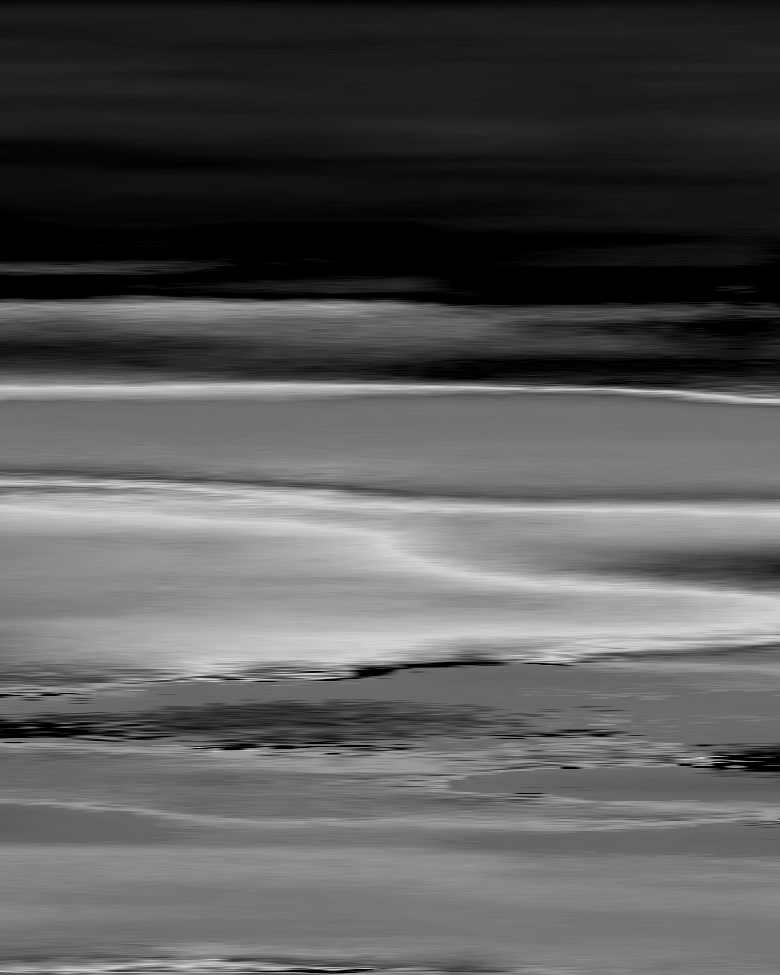
Portfolio by Michael Turner
There is the theme set of the subject and photography:
healing wounds,
museum (military and medicine),
family archive,
video (gaming and broadcast)
Generative art.
Examples of some of the above are also in this portfolio.
Portfolio by Michael Turner
In retrospect, this presents the analytical. To think in deconstructivist terms as in Derrida, it would make sense to home in on that which conveys the main feelings. There again Art Science (Artsci) as described by Arthur Millar brings scientific method back into scope. The latter demands more resolution by the artist. Millar points to the history of the avant-garde. The art world and gallery system had rejected impressionism and the likes of Picasso as surrealist. Artists then built alliances later their work being more established it became more widely accepted. Millar might argue the case for art-science as the new avant-garde.
In the case of accepting Millar, then the project proceeds as
Family Constellations
Family Constellations have allowed freedom from entanglement with ancestors and their narratives of loss in a war.
FMP Experimental
View the following as experimental imagery that is work in progress. This is not the end product of publishable standard at this early point.
The work is intended to be positioned within Modernism PHO705: Modernism. As abstract it may fit into the Art-Science avant-garde as a branch of Modernism.
The implementation is still open at an early stage. Developments in one direction are towards overlapping archive ancestry images of motherline and mtDNA glow images.
To go ahead, work needs to be resolved. As these firm, vestiges are present in other approaches.
War imagery, either from Museum exhibits or from video archives footage. There is the style of Natalia Goncherova with angels and flying machines compressed into the frame in a very claustrophobic way (as in her lithographs).
Science, as molecular biology, animation and Generative Art.
Further influences begin with Albert Steiglitz and images similar to cloud formations. This is closest to my type of work of any of the above approaches.
by Steiglitz
There persists influence from Picasso, in breaking bounds then Rachel Howard in terms of the hidden brush of gravity abstract style.
Thoughts about Resolution
More wayward approaches need to be set aside where project intent risks being diluted i.e avoid any negative impact.
The strong influence going into the Final Major Project FMP has been to resolve the visual language to make the abstract accessible to the viewer. This was achieved in a summer exhibition although the martial narrative need not be enforced was a consideration.
Having just stated that though, the war theme is necessary otherwise we lose the linkage and orphan the themes of place foreign and theme of ghosts recurrent.
As current research continues into Phenomenology and mtDNA, a break is taken to cast ahead to publication. The work has to be taken to the public and is still experimental as shown in PHO705: WEEK 9 REFLECTION. Some of the making stages in the plan will arrive soon enough.
It makes sense to gather some direction even though the desire is there to complete work in progress reading as mentioned in PHO705: WEEK 10 REFLECTION.
Thinking through one idea here has a purpose of creating a Strawman. This will have enough form or structure or clarify the artistic design. This idea is about a book and starts with Ghost images. These creations appear fleetingly and have to be captured before they disappear. There is a need to conquer this and to avoid there being no work of this type to show. Apparitions are always welcome to this work but the nature of creating them is open to the random. A perhaps predictable but nevertheless still surprising element of this randomness occurred during a period of distraction in which Ghost images began to appear in other made work, outside of the main project. Perhaps these intrusions are just another type of Ghost, linked to the main project by occurring during the project timescale.
In the previous module, an attempt was made to help progress by restricting image scope to abstract Landscape. At first, this was a mistaken choice. As with Ghosts, Landscapes are also subject to random process but nevertheless, they regularly feature in the work.
The experience was somewhat worrying as having restricted scope to landscape the theme was worked towards for a solid two weeks and the worst – no Landscape could be made. Letting intuition take over the method of obtaining the desired result was finally fathomed. A way of making at will was settled on which largely depended on recognising the kind of processed starting image that might work. There is an earlier Landscape representation with horizontals and verticals that would have been readily obtained from the start, which may still feature as published work, but what it had led to was a more imaginative scene that required more sophisticated processing more akin to perspective images as compared to earlier flatter images.
All this is taken as a lesson learned around the intuitive making versus something closely allied to a ‘commissioned’ approach.
The Week 9 reflection above turned up a Ghost of the kind sought. But what if that was it? in this case, it might be necessary to showcase the image as a full-page and in a process of categorisation accompany it with earlier ghost images as a plate of smaller inserts.
There is a process of categorisation that would work equally as well with the works other representations (seascapes/mountainscapes and spaces inner/outer). Each theme is linked phenomenologically with narratives of the work but each would stand as page layouts again of main plate and plate of earlier images at a smaller scale.
This is not the final piece, but thus far it has an appeal. It leads to making and it does so in a structured way and way familiar to the author and in some respects reflective of Victorian categorisation schemes e.g. in Botany.
To take this a stage further is to keep a keen eye on an Exhibition element of publication. Having learned from visits of a knowledgeable public to a Summer exhibition of recent work, the idea would be to take from this experience the things that worked well with the audiences especially around sequenced narrative and incorporate it into the same book design mentioned above. A book section that parallels an Exhibition.
There then becomes a substantive element of making to propose and gather feedback on from the University regards the standards of the MA Photography course. It would also be necessary to maintain balance, i.e. not try and squeeze a long term project into the remaining time on the MA.
What this is about is the practicalities of making images of publishable standard, about a book and about an exhibition.
There are extras planned either to assist the design such as using ISSUU as a template for hand, bookbinding. Or, to help create impactfully contextualisation by making moving stills and or a video. This created the atmosphere at the earlier summer exhibition.
The exhibition has some elements that are rooted such as the available space and the possibility for lunchtime pop-ups during appropriate photographic training sessions. Some elements would be more aspirational at present, such as making society presentations at one or both societies with which there is an affiliation. This is a likely outcome but does not have to happen within the timeframe of the MA, it can follow on. Another group or in fact two groups have made approaches although generally so and not so much around a specific project.
The aspirational elements represent To-do action if something is to be achieved. For the purpose of the MA and continuity, it might make sense to negotiate with the various societies and groups, the further taking of the work to public view but time this to allow freedom to complete substantive work for the MA without too much self-imposed overload.
Having recently communicated progress and details of research themes for the Major Project, the action has triggered several responses in terms of recommended reads, both from a Supervisor and here a Tutor from a Guest Group Critique.
Recommendations made were an essay (Middleton, 2005), a White Cube Diaries (Anderson, 2013) publication with visual examples of the uncanny. Finally, Photography and the Optical Unconscious. (Smith, 2017)
Photography and the Optical Unconcious
Return to blog here once the reference has been read.
Revenant 1 by Michael Turner
Photography and the Uncanny
In the essay/thesis Photography and the Uncanny (Middleton, 2005), acute observations are made regarding photography as seen through a lens of psychoanalysis. This references Barthes and in the semiotic a mix of symbolic and imaginary then the presence of Death in the photograph.
The photo-project though has a different emphasis being based on a theme of healing, mitochondrial DNA as an information carrier and a collapse of time that enables identification with ancestors. There is an element of the Double of those who are contemporary and those who existed in the past.
The essay considered specific photographs in an endeavour to seek out the uncanny but turned to the theory of photography instead. (ibid)
In the photo project, the abstract process is consistent in creating uncanny outcomes. Randomness exists as intuition barely provided direction of the likely outcome although with practice the source images begin to yield clues. The practice of abstraction allows work to continue on an image until an outcome or outcomes become certain. In other words, like a search for the uncanny, the work can continue until the mind’s eye detects an endpoint categorisation of interest.
Consideration is given to aesthetics and the return of the repressed in an unfamiliar guise (ibid). Certainly, for the photo project, the outcomes or images derived from abstraction are recognised when being created. There is a sense of loss to which ghost images easily connect. As a place, there are types of terrain that attribute easily to the past home, to the coastal areas and sea and the presence of mountains. Finally, the emergence of inner spaces and outer spaces with similar aesthetics relate well to the theme of microbiology. In conclusion, thus far, there is a crossover as well as substantial differences. The key is most likely easier as the attribution of the abstracted images to painting more than to photography even if the data captured is done so through photography.
There may well be a connection to the unconscious and the drives (ibid) However, the effect sought is not revulsion but more of the weighty personal experience and the joy of healing and the identification that it now brings.
The return of the familiar (ibid) is a fascinating concept as identification in the photo project is with those who were lost who ought to have been known and it is the impact of this loss on those who existed within living memory and of the places that were once a shared homeland. There is though the presence of an obscured element (ibid). Indeed the photographs taken for the project do offer (although the possibility of) the unfamiliar and novel perspective of reality (ibid), even if this is not a rigorous definition of the uncanny in photography.
What is written about Photography and the Uncanny (ibid) holds true for the photo project. The uncanny is a latent presence in photography (ibid) and not all photographs are uncanny yet the medium embodies the criteria necessary to construct it as uncanny (ibid), This may well ally to the idea of the abstraction process being akin to painting which certainly has the required elements of making as relating to the above “necessary to construct”.
The lifeless object as animate (ibid) can be seen to parallel the photo project. in which there is a glow representation of warmth and health and life attached to the otherwise Dead photograph even when of a live subject making connections to the Dead though spectres or visions of the past.
Again there is correspondence in the mechanical eye being able in some ways to usurp the supremacy of the eye (ibid). The photo project relies on the digital sensor capturing data not readily apparent to the eye until processed (enhanced) during a post-processing phase.
In terms of Freud and the fateful (ibid), there is no decisive moment although perhaps there is a decisive era in which to act before all living memory of a certain past is forever lost. As such the photographic practice needs to be performed as there is a sense that this is a life’s work or indeed one’s fate.
The uncanny imagery created through practice does have a likeness to the photographer having an unconscious knowledge that intuitively (ibid) an image could be made and may do so with the presence of the calculated chance.
The photo project has a sense of the double, the person in the contemporary being linked by identical mitochondrial DNA to the person discovered in the past. When the “double” is symbolically viewed as “the uncanny harbinger of death” (ibid) then this must raise serious concern. In a sense, there is a harbinger effect. By not completing this life’s work, the spectre of found ancestors will finally be lost. Also, the photograph becomes not so much what it is a picture of, but what it can represent (ibid), indeed by the abstract post process.
“Photography, therefore, appears to distort concepts of reality and time, the photograph being both an instance of (stopped) time, the past, existing within the continuum of the present, and the conflation of the past and the present can produce an unnerving effect.” (ibid). This effect is experienced in the photo project but rather than unnerving there is another emotional response considered thus far as identification with ancestors.
What is clear is that when the personal element is removed a template should be possible to create for others to use in their own particular circumstances. If an example was constructed it could be the unborn child, on growing up identifying say with a parent who perished in an event such as 9/11. Any other catastrophic event on a world stage ought to create possibilities for the adoption of the technique.
“the photograph of the missing being, as Sontag says, will touch me like the delayed rays of a star.” quoted in (ibid) This nicely equates to the photo project, of the missing persons discovered, and of the inner/outer space depictions that appear in some of the abstracted images.
Also, the comment (ibid) “The nature of the medium as an indexical imprint of the object means that any photographed object or person has a ghostly presence53, an uncanniness that might be likened to the return of the dead”
In the photo project, the photo is of a living person who identifies with the ghostly presence of the ancestor. As for the tension of the implicit and lack of explicit (ibid) the photo project can appear more didactic than this as a ghost appears as a ghost image. In that sense a figurative image from the abstract. That much is unresolved in the photo project.
The White Cube Diaries
The Uncanny has been described as something simultaneously familiar and foreign. (Anderson, 2013) A product of intellectual uncertainty Jentsch quoted in (ibid).
In Freudian terms, Unheimlich represents everything that was intended to remain secret that has come out into the open (ibid). There is more than one interpretation to be found in the references here and elsewhere.
When we encounter these things there is provoked a suppressed primordial fear, resulting in intellectual uncertainty and causes a great sense of repulsion and distress. (ibid)
While objects so designed create distress and repulsion, they may lead to fascination and allure, (ibid)
Smith, S. M. and Sliwinski, S. (2017) Photography and the Optical Unconcious. eBook. Chicago, US: Duke University Press. Available at: https://lccn.loc.gov/2016048393.
Research has become focussed on the Psychoanalytical for example in terms of ghosts. And as below the ideas of Science in Art have been explored.
Work in Progress: There are some textbooks to finish researching.
To Do: Other books on the history and development of abstract art, hanging over from a previous module. The importance here is to more fully develop an understanding of the evolution of the art. Also, there is a desire to contrast and compare with other artists abstract work to fix in place the photo project.
A collection of FMP photographs has been catalogued and are in the backlog queue and production rate has picked up. Photography of healing continues and images are being processed. In one case it was a relief to obtain the first Ghost image of this series:
Week 9 Revenant 1 by Michael Turner
Another image is of a graphic type and serves as a representation from DNA testing and might be expected to form an image layer as part of the contextualising process.
Week 9 DNA Analysis by Michael Turner
Some colour images have also been made while ideas are being formed. As such they are individual examples of technique or aesthetic stylisation. The main priority has been to maintain practice – concentrated periods are need to explore and develop the image types.
Here is this week’s example of a glow image:
Week 9 Untitled by Michael Turner
This week’s example of an abstract Landscape image:
Week 9 Landscape by Michael Turner
A rendition of a pure abstract in Week 8 harks back to the saturated colour theme from earlier portfolios. There is a personal joy to this image as at exhibition in the summer there were requests for two such images to be made complete with a third. This looks like the missing third image:
Week 9 Colour Abstract by Michael Turner
At present these are partial works and it is plain to see there is no attempt at consistency as ideas remain open. Once the direction is decided the work can properly proceed.
Social interaction occurred in making this week and was a joy too. This continues to be motivational. The making is also a pleasant break from the reading and research.
This post connects an earlier technological career with an analysis of this scene as a motivator in the current photo project and stands alongside the more psychoanalytical regarding the strangeness of abstract images created.
In creating the post the photo project became more connected. Answers were found to questions such as how animations at the cellular and molecular levels were resolved. Further validation and extension of an understanding of Biology occurred. This allows the topics to spoken of with greater clarity. The connection between Biology and Art was explored and parallels drawn with art forms such as poetry and music.
It is clear that recent medical progress is so significant that we have entered a new era and as we do so we witness the integration of Art, Science, Engineering and Technology into a new field simply described as Research.
Guest Lectures
One of two Guest Lectures was blogged as the Week 8 lecture was replayed in Week 9. Guest Lecture with Andy Hughes. Andy talked about the environment in terms of plastics and global warming as well as the making of a film using a gaming platform.
Here is the lecture. The main photographic project is based on letters between sisters over a hidden relationship that of a secret transgender female Ken married to one of the sisters known as aunt Hazel. All this was at a time when there was no recognition or language to frame identities.
Identity was sympathetically dealt with and Ken becomes K(ay) and her or she.
There is a book “Ken – to be destroyed”. This began as a small personal project but created an unexpected level of interest. The conversation led to working on the project and exhibiting in Liverpool. There were uncertainties from gaps in the texts.
Sarah found more including family photographs. As she worked with the materials this led to working physically in the darkroom as a natural extension of handling physical materials. The working with a family archive was a first for Sarah.
The work is robust having nowadays a universal message of identity. The work presents well as small groups of images and as a book.
The book was a collaboration with Val Williams who helped with the edit that combined family archive material with Sarah’s work. Working collaboratively proved very useful.
Both Sarah and today’s host began their artistic lives as painters.
The personal aspects were seen to be of interest to audiences. There is a universality of family with all the problems family present that viewers can insert themselves into.
Another aspect of the German Jewish family is the next piece of work. It is still, based on family history but now covers the Holocaust. The project is approached from a very personal perspective and in an intimate way. An album carried on the Kindertransport is a material source for this new work.
Final Photo Project
Sarah’s project was allowed to develop and that is important compared to planning exactly how the work should be from the outset.
A point in common is the use of family archive photographs. High-resolution scanning, alternative processing of the images and concentrating on the surface condition are strong elements of Sarah’s work. Obliteration of identity became a step in which aunt was translated into clothing only or into the uncle.
This compares with using the photos for the final photo project which are scanned for smaller size reproduction. The idea was not to overwhelm the abstract images at the core of the project. Recently one image from the archive was layered with an image of mitochondrial glow and connecting thus with an ancestor from the maternal line. This has a key significance.
The history of a family is also common as is the impact of 20th-century war.
Bibliography
Photographs Sarah Davidmann from Falmouth Guest Lecture
This research arises from a connection established with a geneticist. The value here is in the development of visual language for contextualisation of the photo project.
Mitotic Division is examined by augmented reality with the following app and educational workbook:
Note: Select English under the triple bar menu
The emphasis moved closer towards an interest in mitochondria explored in another recent blog post. While there is an abundance of archive images that explore the matriarchal lines of family, the visual context around genetics is being developed having been more restricted materially and in terms of ideas, which are constantly being expanded.
Use
The pdf says to print off the guidance – the app seems to work when reading the graphics directly from the screen graphics when Adobe Acrobat (or another reader is used).
In pursuing a World War 1 theme, or having done so, it would make sense to expand on the photo projects context by building a stock of images and other research. This was done earlier at IWM Duxford (IWM, 2019) and The Black Watch Castle and Museum Perth. These visits proved useful in contextualising abstract work.
Options have recently been generated to expand themes in new directions in other words, other than military. In the interests of keeping shooting, it would be useful to visit a number of sites.
This reading is used to extend research-driven practice into Family Constellations
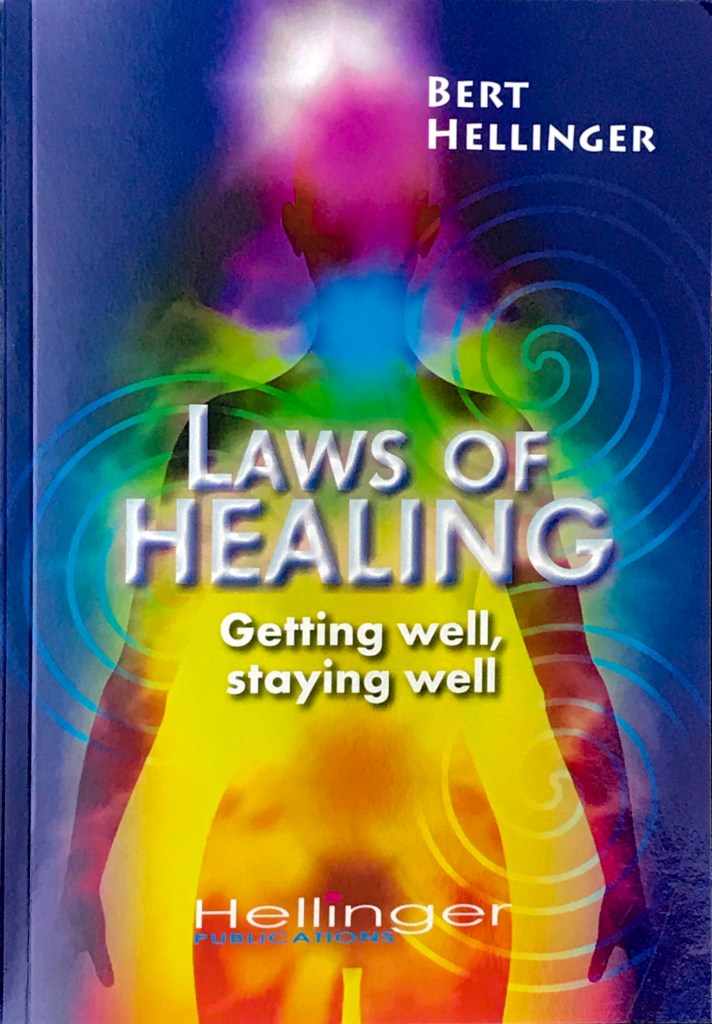
(Hellinger, 2011) (Ulsamer, no date) (Preiss, 2012)
A Return to Family Constellation Research
Family Constellation is now on the second iteration of research in connection with this photographic practice. When looked at before, the emphasis was on the title word Therapy: Family Constellation Therapy used to describe a group or individual interaction under the guidance of a facilitator. In this sense, it appeared to have a disconnect with Family and mitochondria.
In the interests of promoting the research-driven photographic practice, Family Constellation is now subjected to a more critical appraisal.
First indications are positive. Who we are as a dependance on who we came from, which does connect with the current project. A search for love in these connections is said to satisfy the soul and allow the individual in the present to become free of ant entanglement and give focus to their own life or in other terms from the method, give birth to themselves.
The language does appear unscientific, that of a guru yet on a commercial level selling a product or more accurately a service that works on a psychological basis in a manner perhaps Yoga does for the physical and spiritual.
At a cursory level, it is easy to dismiss Family Constellation unless the reader of it is happy to believe in its principles. Acceptance of approaches to help individuals grow into management roles in a business context is probably very similar and more familiar. Trust in strategies such as Transactional Analysis PAC or Emotional Intelligence EI is normally readily established. Other areas are more difficult to accept for some such as Myers Briggs categorisations which seem to be wholeheartedly accepted or are accepted within a collection of similar strategies, with outlined limitations or in the opposite and quite commonly outright rejected, potentially as a threat of some sort regarding manipulation. And so with Family Constellations, there appears to be the same kind of barriers to acceptance. Not being so well known a technique it may be more difficult for it to gain widespread acceptance. The feeling is there is bound to be and seems to be a body of followers.
If we take the above as an a priori position and set about to prove or disprove, then we have a way of moving forward. More reading is required.
Summary
Going into this research with an open mind is quite revealing. What is clear from (Preiss , 2012) is that a number of family situations documented here could or can be linked to the family narratives of the Photographic Project e.g. Relationships (Preiss, 2012, Loc 3081) with heavy fates. What is offered is a way of maintaining a healthy link to family in the past in such a way as to gain release from entanglement and become free from it and do so in a respectful and healing manner.
From a set on non-academic texts of all things has come a realisation that there can now be a disconnect with the heavy load of the past carried through the project. In fact, in radical terms, it becomes possible to disconnect from the subject matter, which has not been feasible until now.
Already the project has been on a trajectory away from the military endeavours of the past to family photography archive and flora.
Investment and Direction
To take the photo project and stop dead with it would be brave if not risky a move. Such a move would also mean having to write off costly investments relating to the original subject.
If the themes of empathy and loss were to be set aside, there still remains the artistic interest in abstraction as the natural expression of the author and the ever-growing theme around mitochondria, photographing healing and movement into creating art from a science of Biology.
Hear hangs a major decision. A decision needs to be made.
Staying with the methods developed for making abstract work is the decision. More emphasis is beginning to be placed on the mitochondrial theme. Research is also being conducted into the themes of spectres or ghosts and into the weird and eerie to draw out those elements.
The latter is base on the appearance of landscapes, seascapes and consistently but more frequently the appearance of ghost images.
Bibliography
Preiss, I. T. (2012) Family Constellations Revealed. 2nd Editio. Antwerp, Belgium: Indra Torsten Preiss.
Hellinger, B. (2011) Laws of Healing. Bischofswiesen, Germany: Hellinger Publications.
Ulsamer, B. (no date) The Art and Practice of Family Constellations. Edited by C. Beaumont. Kindle Unlimited.
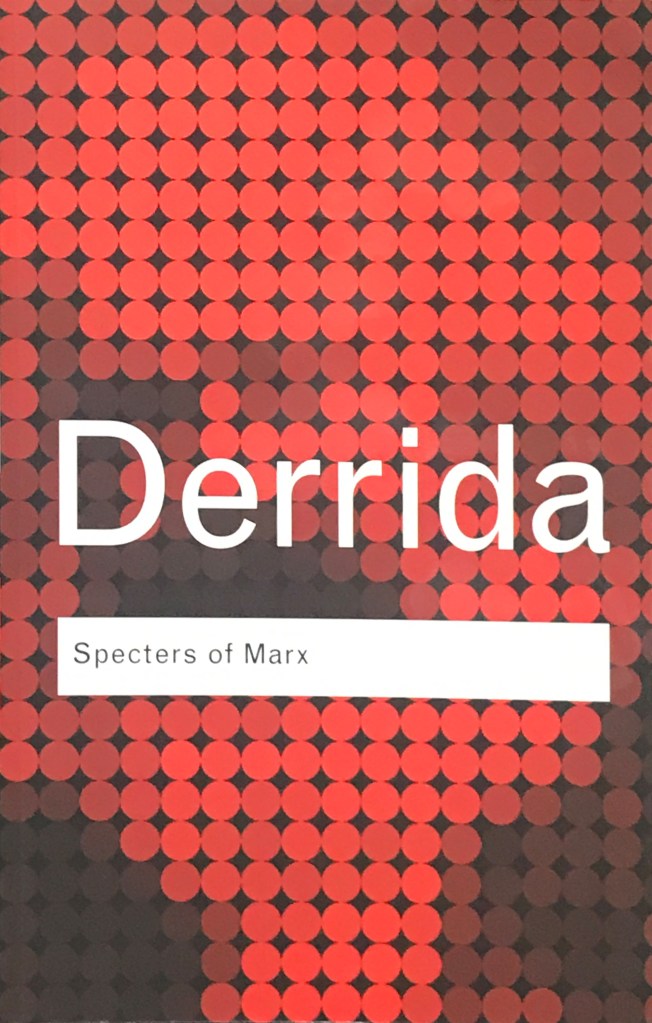
This reading is used to extend research-driven practice into Themes of Politics and History. (Derrida, 1994)
The blog title has been chosen as a phenomenology of personal experience in relation to objects. And the Simulacrum as a means by which the camera creates a version of reality. From the photograph of healing glow a version of reality abstracted in a direction based on personal experience of place and of people.
And so “… to render an account of, the effects of ghosts, of simulacra, of ‘synthetic images’, …” (Derrida, 1994) Page 94.
In discussing exorcism as a means of creating death and its comparison to a Coroner issuing a certificate in which that which was living is no longer alive. “… the dead can often be more powerful than the living …” (Derrida, 1994) Page 60.
There are many references within the text with some connection to the appearance of ghost images amongst the abstract work of the photographic project.
Out of original photographs of healing sites, there appeared from time to time an occasional ghost image. In the previous module, there was a flood of such images. This leads to the question being asked about the appearance of ghosts. There is a strong emotional effect in finding spectres and while they can be seen by the author, they were also clearly spotted by visitors to an exhibition of the work.
Derrida is a renowned philosopher who in writing about the spectre of Marx, yes in a context of the fall of communism, covers throughout the text the theme of apparitions.
In a discussion of the phenomenological and of the simulacrum there appears the following observation:
“For there is no ghost, there is never any becoming-specter of the spirit without at least an appearance of flesh, in a space of invisible visibility, like the dis-appearing of an apparition. For there to be (a) ghost, there must be a return to the body, but to a body that is more abstract than ever” P 157.
The photographic project takes that which may be invisible and makes it visible and does so from flesh and in making an abstract form. As Derrida contemplates the Specters of Marx, then so the project contemplates the spectres of ancestors. The theme thus far has been versed not as those lost but of those who suffered their loss. The mother who lost her son or soldier who lost a brother.
“Mourning always follows a trauma” (Derrida, 1994) Page 121 strikes a chord. On discovering the trauma of those previously not known there followed no doubt a form of mourning, even if displaced from the family it directly impacted onto to those who uncovered the events.
As quoted (ibid) forms of trauma, the classification of which is attributed to Freud include psychological trauma (the power of the unconscious over the conscious ego), and biological trauma. In the photo project, psychological trauma could be linked to the unconscious element of creating abstract imagery including ghost images, while the biological may be responsible for creating identification and the effect on the body. If so, these are powerful creative processes.
On writing on “Time is out of joint”, as Derrida wrestles with an interpretation of “… one time in the past, how would it be valid for all times?” (ibid) Page 61 again one is reminded of the photo project having a theme from mitochondria being unchanged for thousands of years and so of 100 years of history being collapsed into a moment.
By pure coincidence the last portfolio exhibited was monochrome with the red of blood – the cover of this book is monochrome and red.
Ghost Dance
Ghost Dance. (McMullen, 1983)” Through the experiences of two women in Paris and London, Ghost Dance offers a stunning analysis of the complexity of our conceptions of ghosts memory and the past.” – IMDB. This arthouse film is available on YouTube and features Jacques Derrida as himself.
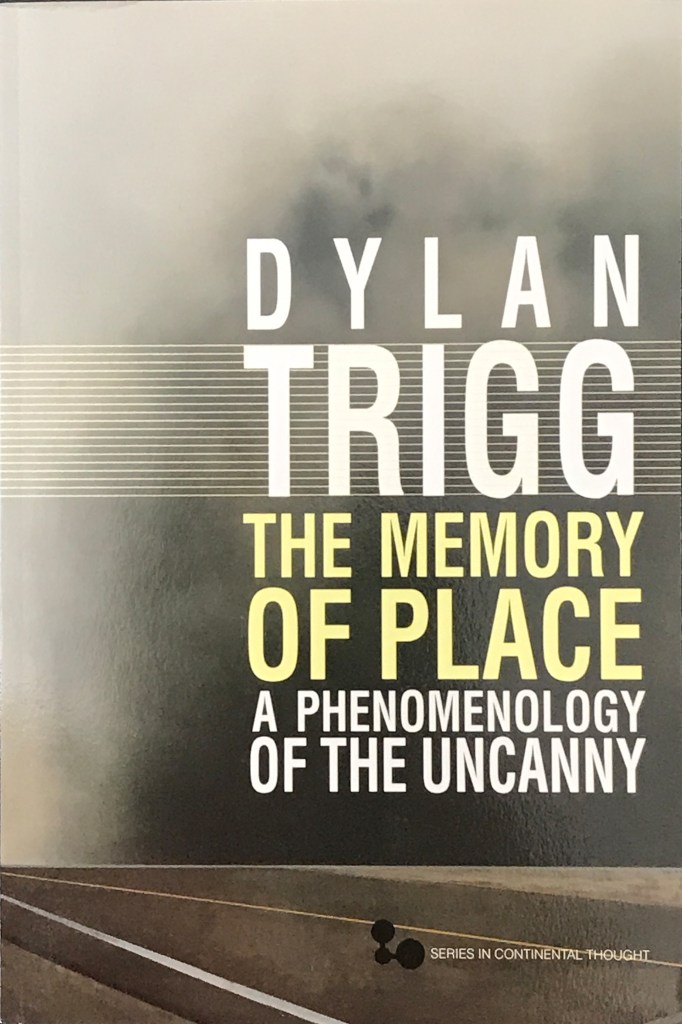
This reading is used to extend research-driven practice into Beyond the Unheimlich (Fisher, 2016)
The Weird
A quality of the weird is the presence that does not belong. (Fisher, 2016) Page 61
The subject matter here is uncanny and although it is an essay about literature falling into the categories of the weird or eerie, the text relates to the photo project and the author’s experience. In creating imagery in the abstract, an image, that is strangely familiar emerges. The photograph of healing that translated into a seascape, reminiscent of the mudflats off of the Solway Coast. This place is in the southern Scottish lands, once lived in and where the historic research and photography was conducted. The German unheimlich relates to a feeling of the creepy. Unheimlich is used by Freud as a such creates a bias in meaning. This makes it difficult to focus on variations in the translation, it seems. Unhomely is one preferred example overtaken by Freud’s writing.
An obstruction found by (Fisher, 2016) Page 8 is an association with the genres of Horror and Science Fiction from which the author goes on to write of the common feature of “The strange – not the horrific.” and then to highlight the fascination for what “lies beyond standard perception, cognition and experience.”
Although abstract outputs of the photo project often have a sense of that which is there that would not be expected to be there, the result when colourful creates a sense of pleasure in the viewer as sensed at a recent Exhibition at which additional work, that which did not make the final edit, was shown.
In (Fisher, 2016) Page 39 there is a quotation from Zizek observing a condition of overtaking or “transference to find ourselves at a later point which we have already been.” The photo project, by contrast, collapses time into a moment. The present becomes linked to a past time one hundred years ago. Simultaneously, those from one hundred years ago transfer into the contemporary moment and this is where a psychological identification takes place from the present to those from the past. In this, the dead remain dead but the story that their lives contained becomes present. There is a knowing that their wounds healed by the same source of mitochondria that our connected flesh experience in healing.
(ibid) Page 40. Unlike in the 1969 novella, Behold the Man, the prospect of transporting back 2000 years to live the life of Christ including his crucifixion is barred. The photo project theme is based on common mitochondria passed down the maternal line. There would need to be a connection through the matriarchy back to Mary Magdelaine would never become proven. Such events are of course far beyond the project scope which only has certainty over a recorded history of one hundred years.
As the earlier form of the project had taken shape and images had been made, there was an uncanny Exhibition experience where Rachel Howard’s paintings (Howard, 2018), were seen to have distinct visual similarities. Howard’s paintings carried the Catholic theme of Christ’s crucifixion. This was blogged in a previous module and whilst there was an overwhelming experience of the weird, it was an example of coincidence. Photo image post-processing had a similar effect to an easel based art in which gravity acted on paint. Nevertheless, an unheimlich experience.
In (Fisher, 2016) Page 45 mention is made “There is another type of weird effect that is generated by strange loops”. In human biology, the mitochondria are set apart from the nuclear DNA within the cell. In the inter-spacial region, the mitochondrial DNA form loops, and act as the energy powerhouses of the bodies cells. There they create ATP molecules for energy storage and transfer. The mitochondria have been captured by the human cells and adapted to life there. However, the mitochondria are an ancient form of cellular structure that exists in a bacterial world where they are able to exist independently. (Cowell, 2019) Within the sperm, mitichondria power the race to the unfertilised egg. This endeavour is not rewarded as the egg with its own mitochondria overpower it.
Finally, on the subject of the weird, (Fisher, 2016) Page 58 describes how “we must attend to the strange folds, burrows and passageways of Inland Empire’s weird architectures. Here, there is a crossover into the miniature world of human biology. The loops that mitochondria form, increase the surface area through a crinkled effect of cristae. The outer membrane only is adapted to allow the passage of very small molecules into the mitochondria. Then through the various complex effects enzymes allow glucose to split into carbon components at the surface as the Kleb citric cycle takes place. During the process, an unequal potential is created between the outside and inside of the mitochondria whereupon further enzymes allow some of the processed results to reenter the mitochondria through multiple narrow channels. There is an expiration process, in which carbon dioxide and water are released. What is weird and striking is the architecture of restricted access and limited re-entry and uncanny parallel to the architecture of the fictional world in the Inland Empire.
Again, this is weird or unheimlich.
The Eerie
“The sensation of the eerie clings to certain kinds of physical spaces or landscapes.” (Fisher, 2016) Page 61
In the photo project, as post-processing unfolds, there evolve such spaces or landscapes. As with the eerie cry and its effect on the imagination, there may be a hint of something being missing. In the photo project, the spaces created are devoid of people yet their mark may be found on the landscape.
Update: reading into the eerie recommenced in the Christmas break.
(Fisher, 2016) Page 97″Repeatedly throughout his fiction, Garner points to the eerie power of the landscape, reminding us of the ways in which physical spaces condition perception, and of the ways in which particular terrains are stained by traumatic events” … “the mythic is part of the virtual infrastructure which makes human life as such possible”:
An interesting comment in (Fisher, 2016) Page 109:
“There are ghosts in the machine, and we are they, and they are we.”
Of portrayal in the film Interstellar (Fisher, 2016) Page 121:
“The immediate temptation here is to dismiss this (portrayal) as nothing more than kitsch sentimentality. Part of the power of Interstellar, however, comes from its readiness to take risks appearing to be naive, as well as emotionally and conceptually excessive.”
Clearly, there are potential traps of kitsch etc to be avoided in the photo project.
Fisher, M. (2016) The Weird and the Eerie. London, [England]: Repeater Books. Available at: https://www.repeaterbooks.com.
Howard, R. (2018) Repetition is Truth via Dolorosa. Edited by A. C. Beard Jason. London: Other Criteria Books. Available at: https://www.newportstreetgallery.com.
With the renewed focus called for in today’s Module Leader Group Critique that students drive their work forward as a research-driven practice, then it makes good sense to ramp up on this in the blog.
Research that ran strongly in an earlier module runs a lower level of engagement after a busy period of making and so the time is right to conduct more in-depth analysis.
A recent blog post highlighted areas of research interest, omitted sadly from the proposal by way of four texts.
My subject blog was being swamped by notes on technical issues. I decided to segregate these to keep the focus on the main blog on FMP Photography.
A number of improvements have been made to help manage the technical environment. A purchased WordPress update aligned the Dashboard to the Education version used by and documented by the University. I’d only recently become aware of the version differences which are quite major.
This blog is now much more visual after finding out how to adopt the recommendation to use WordPress plug-in MetaSlider.
Other additions include a Tag cloud, and a category list, to help the reader (or marker) select specific information. Language conversion was nice to have and easily added, as was giving the reader edit capability on their comments. A social network connection is pending decision and likely to be linked to the planned 2020 campaign to take the work to the public.
Backups and File Storage
Blog
The blog has now been set up for automatic back-up using the plug-in Updraft Plus. Some additional storage needed to be purchased.
Archive Catalog
Local Disk to Disk
For my archive catalog, the 32-bit utility Scooter Software Beyond Compare stopped working and has now been updated to 64 bit in a free upgrade to be compatible with the computer OS. I can resume copying the attached disk to a second attached disk.
Attached disk to Cloud
Locally held disk storage really needed an offsite backup. Backblaze has been set-up and is running the first backup, hopefully in under the 22 days first quoted.
The Course Calendar on Smartphone and Computer
Canvas appointments defaulted to no Alert on a smartphone. This is now being hand amended.
The computer calendar had not been synchronizing Canvas entries. This has now been addressed. Planning ahead is now much easier. Unfortunately, the computer-style calendar does not allow you to set Alerts for Canvas appointments. The get-around is to set an alert on the smartphone which then syncs across to the computer.
Oddly, the smartphone started to display double entries. This no longer happened after suppressing on the smartphone one of the many Calendars.
Major update to blog structure
I’m now back on the tracks following the restructuring of this blog for best practice. Introduction of blog Categories and Tags has meant tidying up older posts i.e. those from earlier modules as they begin to appear as public search results (external and marking). The time penalty should hopefully pay off.
During my FMP it is good to start more fully leveraging the power of the blog. This is really powerful from the Admin Dashboard which I’ve recently gained access to (for internal management of posts). From Week 5 on it will be best to only go back to make earlier ad hoc change as and when on an opportunity basis. I do now need to really increase my focus on new content, contextualization and project development.
Caroline studied Visual Anthropology for her MA. She now teaches (third-year student photographers) and is researching for her PhD.
Two main projects were discussed:
The Untouched Copy and
The Deportment Guide – photographs from a flea market but with identity hidden by hard cropping tops of heads)
[metaslider id=3387 cssclass=””]
The first project shown was about studios based initially in India. On a personal note as a Studio worker, it remains true that the MA Project is conducted outside of the studio environment.
By re-visiting India, to re-photograph what was revealed were the numbers of studios impacted by digital, and how this led to closures. Backgrounds had been traditional Victorian (photography had been a Victorian export to the colony).
The project themes were; studios, the owners, and the transition eventually from photographic film. Some research objectives firmed up during the project. In order to get permission to photograph the studio owner Caroline needed to agree to being photographed. This made the genre Autoethnographic. There were many norms to be learned in making the work. Communication and cultural norms had to be learned.
The work moved from studio to studio, following recommendations. Interviews were to be had with owners, their families. The work spread wider as the story and structure were forming.
Studio owners made a living but may have had to also sell gems or even slippers. There is a clear commercial side to photography in addition to the academic.
Caroline was very open about her work. The work went through a transitional phase and entered a liminal space. She adopted socially engaged conversations.
Cultural aspects mentioned:
Sending a business card with a model’s photo (not her own)
Mother Teresa played down by the official photographer
Owner not wanting to be photographed with flowers
Photograph me I’ll photograph you
A backdrop of English garden scene
Each point involved an unexpected re-interpretation or potential misunderstanding.
While the work was being made and interviews were obtained a notebook was kept that became part of the published work.
As an autoethnographer, it took time to learn. Knowing the kinds of questions to ask is important.
The work went public and was exhibited in Jaipur. Initially, there was a book made on Blurb with a page layout of; photo, photo, notebook, notebook.
After a series of annual trips, it became clear that Autoethnographic communities needed to be more accessible i.e. within walking distance. Carolin’s work turned to the Turkish community in London. This project examines Turkish studio practice, English studio practice and the emerging mix of the two.
Access to the subject is key to our MA students. The work still has to be true to the students’ ambitions and be authentic.
Bibliography
All photographs courtesy Caroline Molloy Autoenthnographer from Falmouth University guest lecture (research).







 Critical Research Journal