note: this section contains many links that are marked as requiring login through Falmouth University. Readers from other institutions may be able to gain access via their home institution.
note: also references have developed throughout the module and what appears here is a round up of some given references from the module. They mostly appear at the bottom of the page. These become true references when researched and critically linked to my practice. As most of this occurs outside of the list here,
I started to take a more informed view, where like advertisements before I tried to cut out external influences, knowing it was not entirely possible, I’d referred to driving in France and not recognising the branding of a distant store – Carrefour. This observation demonstrates how I am conditioned by my home territory and branding and advertising. There had been an intent to jealously maintain creative originality which I now view as isolating myself from culture. This probably explains why I often think so differently. Confident in my ways I need not be afraid to engage and now in thirst I drink down with vigour.
Two realisations that have built and built that brings me closer to research and the references.
Interconnectedness (a web)
First I imagine my work to be like others work, to be within a web. So I began to reach out and in research and increasingly contextualise and position my work. This rejects denial of influence and sustains cultural growth. Through this module I begin to become cultured in visual arts? I’ve had to have time for this transformation to occur and so as I paused for thought, just as I started to finalise the development of our three assignments, then the realisation took increased force. Such change must become lifelong.
Reason (a way of thinking and doing)
A piece of writing, designed to support our development, I found by serendipity.
The advice is from a remote lecturer whom I listened to as Guest Lecturer, met and heard present. This absolutely helps make real. The advice given: reasons why we should, as here write down those fleeting thoughts. and pursue them making them significant if that is where they lead. The article describes in effect the nature of the creative process and departures into new ways of thinking.
TV and Video
Having discovered these library resources earlier in the module (Genius of Photography then) I return to them to refresh knowledge or at least use these to provide a path back into deeper research. I prefer to gain context in a simpler form at the beginning , but mostly here today, after or during reading. Such is the unfolding of events.
Specifically on Berger, shortly after his death, there was a radio broadcast series presented by his dear friend and that features his voice. It is good to dip into these programmes – BBC Radio 4 Book of the Week Episodes 1 to 6
I’ve found my way into the Journals resource via Falmouth University. I was able to pick up the journals on two visits to the Penryn Library. But, obviously my research hadn’t fully extended as far as online EBSCO and other resources. This “find” can be leveraged further in the upcoming modules of the course. For now it is a nice to have feature to browse.
Fox, Howard (1989) ‘Avant-Garde in the Eighties’ in Connor, Stephen Postmodernist Culture: An Introduction to Theories of the Contemporary. (New York: Blackwell).
Unbeknown to myself as author I was keeping two blog posts running on this topic. How can this even happen?! Anyway the other post can be found at the following WebPage URL.
Week 12
Social and cultural elements underpinning my work concern place and absence of persons related, the loss of able bodied young men from a farming family. Outpouring withheld those who remained quietly lived out their lives in peace.
Two things happened within the social structure: local migration, west to east; settlement within Burn’s poetic landscape; focus on a place of Christian adoption and fishing employment; early globalisation with travel reaching out to Canada, United States and India,
Themes exist within my practice and work expanded in Week 11 to cover an underlying basis of social connection based on biology represented as epigenesis. Here are the themes corresponding to the structure of my Critical Review and edit of my Work in Progress WIP Portfolio:
Commemorative – somber mood
Celebration of life – unseeing eye
Faded memory
Narrative – photogram and captioning
Biology – epigenesis
I realise now I need to order this list and in the CR introduce these and us subheading to add structure at the outset then proceed having scoped this for the reader. No big surprises or unexplained diversions.
At present I improve contextualisation practice as all the learning and all the reading begin to take hold. My moments of realisation become intensified but deadlines do loom. Keeping a balance between assignments is paramount, acting before everything has sunk in better. Suddenly from a smouldering the course as experience has once more ignited and again engagement is on fire.
Week 11
In the past weeks (Week 5 to 10), experimental inputs have been included in my work motivated by portfolio creation rather than collection of single images. I return now to capture a new concept about making based on my philosophical research into life as represented by our healing glow. Perhaps what follows can be classified as wild idea or maybe free thinking. On this occasion instead of letting intuition have full reign I plan out the making steps ahead of time – a discipline encouraged by the existence of the blog. I have yet to make and see the visual result – it might not work out, let me see. Images created better be good or I will have wasted my time.
Poppies are Red
Poppies are Red?
I’d be excited to experiment with an interchange between form and shape. I have it in mind to revisit some separate abstraction from the past and use it to stage the work. The reason for wanting to try this out is to extend the intent of taking photographic representation deplete or deconstruct it further. I capture glow and remove details but trace remains, and some viewers recognise it. So make a radial 3D image (I need to remember how I did this before). It is derived from the camera sensor. The end result is a 2D surface or print. In clinical terms there is a comparison between the images from an MRI scan built up in slices and the microscope sample as a single slice. I find that a little off-putting for some reason so will stick to my image making.
Image Deconstruction to Trace of Glow
Normalise the colour balance (key to moving from single image to images that collocate), process in strips of 5 (I get two or three matching successes), processes out the distractions and emphasise the warmth and glow.
Introduce a processing step into this beginning workflow. Translate the image into a radial 3D form as I’ve practiced in the past (as a sideline to a small worlds project).
Conduct the invisible paint brush work and layering. A recent move here has been to introduce a high resolution tablet. There is better scope for artistry – I have to prove I’m capable. I know people who are and even though I love to collaborate I’d never convince them and besides, for now I insist on my own original work. Maybe after the MA I can collaborate.
These deconstructionist effects now disguise the trace but it is still there more as an emotional element that direct physical one. Some abstractionists maintain photographic trace. In philosophical terms, there is a metaphor here for epigenesis, that complex state of human development where the genotype (DNA) is converted into the phenotype (the physical organism that we become). So this is a nod to the complex bio/chemical transformation that no one in human endeavour has yet been able to map. The new making step, step 2 as deconstruction is maybe the reverse of human development phenotype back to genotype. Nevertheless it is metaphor of so called prosaic isomorphism. DNA strands do map to the physical as in family resemblance transmitted, hence the isomorphic. We can’t follow the mapping, but there has to be a map of some sort. That much established, if only it were prosaic – a dull process. Instead it is highly complex and full of obscuring details, overwhelmed by unknowns. Hence the exotic and so, the term exotic isomorphism.
I set this observation aside and concentrate on the craft of making visual metaphor. It’s much simpler and is more in line with Occam’s razor – given several choices (many of which may be complex) then taking the simpler option is usually the best strategy.
Light Transmission
Something that settled with me that I didn’t make explicit and that stared back at me after a face to face critique held in Falmouth, is to do with reflected light versus transmitted light.
It goes like this. From a photograph usually of a wound or marking, I go into the digital darkroom and do all my processing as transmitted light. This is where I get first evidence of glow. If I continue to work the image and try to be creative in introducing depth and marks then in that environment it is still transmitted light. Control is exercised over environmental lighting and screen calibration here.
Turning for a moment to the taking of the photograph. Again there is environment and much more controlled these days. A mix of external light and flash light directed at the subject do two things a) reflect from surface and b) penetrate the surface, pick up colour there, then reflect back at the lens. Then when there is a wound there is an additional concentration of blood supply infused into the damaged area as part of the repair. It feels warm to the touch and emits a glow. This later bit is what manages to sidestep the filter designed to cut out infra red from entering the camera sensor.
So you might ask, why not shoot with an IR conversion? Apart from not wanting to destroy a perfectly good camera and besides, which wavelength conversion should be selected – it is a bit left to chance. What I actually use is a natural blend of visible and IR in my picture aesthetic. Another development I’m starting is to use light metering to measure natural and flash exposure and obtain a measure of colour temperature.
So some photographic artists construct the sets of their images with weeks of effort. I’m starting down a clinical route of gaining consistency. It offers the possibility of tracking healing as other factors than the wound progress are eliminated or at least controlled. Do I really want to do this? Well, I don’t want to shut out the possibility.
Finally, if you follow all this, then it is only natural that the images sing in the context of a display monitor or light box I suppose. This becomes more readily apparent in comparing print to monitor. The monitor forces enough light through and with enough dynamic range to make an effective job of exhibiting.
That’s not to give up on the paper medium. It’s enough to get a result on display at the moment without diverting off into repeat printing on a vast range of paper types. I’m thinking metal print might be worth a go. I’ve no clue at present it being only 18 months from my being a print virgin, as they say, whoever they are.
Week 5 to 10
I’m not going to pretend that I updated project development, religiously each week. I got up a head of steam and set to in making progress. I return at the end of a burst of activity to reflect on developments.
In reverse or mixed order, order doesn’t matter here:
Make hand drawn glyphs that emphasise symmetry and blend into the image. Symmetry is pleasing to the eye and helps disguise an inability to sketch to a high standard – my practice is more geometric than aesthetic. I let the camera provide the aesthetic input by pointing and framing. Symmetry is also metaphor for the double helix structure of DNA. Semiology through this introduction of signs is an aid to guiding the viewer to help them get some narrative from what might otherwise be a series of smudges or indefinite smokey forms with call and response captions.
From the visit to the Institute of Photography I’d shot 35mm and 5 by 4 film and processed and scanned the films. I returned to digital and started to process strips of my digital images. Why? I always processed individual images and got widely varying results and now wanted to go beyond square crop as a link, to images processed together that have an increased likelihood of being able to collocate. This actually works quite well. I used to find as single image. maybe 1 in 6 would respond well to my actions. Now with consistent lighting and processing as strips I go on to produce 2 or three images that do go together each time. So far so good. In my portfolio, I have an established pattern of three images then blank to break the sequence and so on, so this production method works for me.
I restarted image creation in Week 2 of the module and at first got decorative results. They were good – I thought so but in review I was being persuaded to the sombre style of Mark Rothko. I appreciate his work highly, and I gain a consistent look and feel from this but cant fully let go as I am conflicted by my intent of representing the fact that they (ancestors) lived out their lives in colour and yet representations in book and film are mainly in black and white. Here the image is a separate thing to the subjects who once lived. I prefer the image to have closer connection to their lives.
I process an image into several layers and recombine. With a bit of luck it works and creates a sense of foreground depth with layers of patterning or marks. When this is successful the viewer response it terrific. Very encouraging. However, I’m also aware that mastering the aesthetic can produce fantastic image collections, yet it is all for nought if there is no evidence of underlying purpose or strong narrative sequence.
Something that occurred and really inspired and has yet to take shape is to go back to an inspirational scientific film of viral invasion of the human body. My link to this is the pictorial aspect of healing glow. In this film, what unfolds is a takeover of the cell nucleus through spoofing, followed by the defences we mount shown as body constructs of tiny molecular machines. This battle has raged since bacteria first inhabited the earth and our mitochondria, the very same, has fought its corner for millions of years and survived, and so we developed and continue to live on. Such is the power of scientific development the it can be shown. I’ve put this very imaginative inspiration on the back burner until I find out what to do with it. In film format, maybe that job has already been done by someone else and doesn’t need me to translate it to stills. Never say never.
Week 4
This weeks developments have much more to do with culture and communication and takes from advertising the direct ways in which dominant readings are created. Having said that the ideas work for literature, and pictorial imagery and whilst it is not immediately apparent for Abstract work the same ideas apply and as author I simply need to consider this and apply myself. As a self confessed rejectionist of advertising which of course is impossible to fully be, I begin to acknowledge the effect of advertising and from my reading this week, realise there is a lot my practice can gain from being more savvy about ads, so for now I’m a convert to advertising. For me this is a turnaround.
The following question and responses below are based on the Week 4 Webinar preparation form.
In the webinar this week you will be considering the intent and authorship of your own practice and how you construct your work for a presumed audience and context.
Intent – the work I do makes common over family as diaspora. This is where it starts and continues from.
Under the MA, there is influence to take this forward and expand context.
A major element of the taught work I thought initially I could not use in my work at least until I translate what I’ve learnt from pictorial work into abstract imagery.
Authorship – this for me has been a challenge for some visual projects.
Although some reasonably successful approaches have been developed (see abstract categories below), there remains the next big challenge, to continue to home in on and author a consistent set of images. To some photographers this might be natural. For me it is a key developmental point and this week’s studies have drawn back a veil.
Presumed audience – this starts out as family and extended family
Context – recently the book returned as strong context (I had tried to move the work way beyond this to challenge myself. I have to consider the signification in other contexts). A possible exhibition is a strong maybe.
You will informally present your thoughts and relevant examples of your practice to your peers and tutor. You should try to contextualise your reflections with other relevant visual material and critical ideas.
<examples> portfolio is best example for now
Identify aspects of this week’s content that have / could influence your own developing practice.
Main influence this week is reading of Photography and Cinema – David Campney, two key aspect arising from discussion of
Narrative, photo presentation film La Jette
Also, moved to the fore by Representation – Stuart Hall – strengthens my ideas around culture, society, communication
For example, you might choose to:
Examine your own work in the context of any common / disparate interpretations emerging in the forum: So Where is the Author Now?
The taught part was on case studies around advertising. I rejected advertising up until now as a poorly regulated/implemented endeavour. I might change if adverts teach me how to get my work to transmit signifiers guided by author intent.
Reflect on any important peer feedback you received in the forum: Viewers Make Meaning.
A photograph was posted without title or explanation and was commented upon by a fellow student. Although compared to my norm this was different photography – different abstraction – different intent – yet same theme emerged! This confirms author interpretation carries forward naturally into work.
Provide examples of relevant practices you think are successful in achieving their intent.
Abstract method 1 is readily supported and works. It works again in combination with further layering and it is trace. It connects with critical reviewer is the sense I get. As commented recently, I can create such representations quite simply now and for the MA I was looking do achieve something more challenging.
Abstract method 2 is successful in creating visually stimulating (beautiful) images. It works in combination with Abstract method 1 in toning down. These images tend not to fit the theme in call and response titling of trauma and are more inclined to celebration of a theme of life’s force.
From ongoing experimentation variations in abstract style have been introduced this week
Abstract method 3 monochromatic from 1 or 2 with optional colour filter
In the time the current form of work has run, we encounter the first spillage of artist blood from a little mishap. Trauma – Minor – Ignore i.e. get back on with things. In fact there were two separate mishaps. No injury whatsoever throughout the quiet winter period then suddenly, ouch and ouch.
First occurrence – Artist Blood with Water (dramatic presentation loses some delicate edge texture)First occurrence – Artist Blood with Water (preferred representation) Trauma – Minor – IgnoreTrauma – Minor – Ignore
and
Abstract method 4 monochrome from 1 or 2 with spot colour.
Trauma – Minor – Ignore
Narrative Call and Response works really well: brief, dramatic in rhythm and to the point. Allows depiction of mental trauma.
Lighting the skin – discussion took place in a studio context of gelled lighting and skin tone (for different models). Actually, I might bring out the gels as a way of enhancing my work.
Explain why you think this is.
Images don’t naturally make narrative, but video does. Book with written narrative and photographs with text does create narrative. Abstractions with landscape appearance is a form of imagery readily signified to viewers and takes om more effect with layering (as depth).
Discuss the intent of your own work and reflect on how successful you think this is.
Recognise gaps in childhood communication loved ones to child. Complete those gaps many decades later.
Analyse the audience and context in which your work should be viewed.
Family or by identification other families.
Education
Evaluate how meaning might change with context.
Let’s get the core solidly set and plan for other contexts what I term MA “influenced” contextualisation.
Week 3
So work was made that develops the imagery but looking back from Week 4 the author has still to target signifier-signified when placing before the viewer.
Disparate thoughts at this stage were initial panic at not shooting trauma (there simply was none). A fallback position of physical impressions came about through Alumni influencers. The same influencers triggered ideas on layering which I felt was a necessary future inclusion to more clearly transmit intent. A formative idea that needs thinking through properly for plausible contexts.
Each image has a summary comment in the title as a reminder to the author of discussion in three reviews.
Glow ! At last the glow is back. Perhaps novelty styled but image elements can be used.Combined abstraction – creates interest and consistent signification
Glow – low key effect
Impression – mismatches trauma theme (but colours loved by author)
Too decorative
Week 2
Materiality
In terms of development my ideas became much more unconstrained and I hesitate to say wild. Here for now I’ll mention my anti-frame perspective as clearly photographs are conventionally framed but I try for creative reasons to resist this. Whether that is a good thing must depend on the distraction caused versus the support it gives to the work.
Other ideas of form may or may not relate to framing. Printing on silk I want to try out. The fact I could wear my work would be the ultimate identification.
Printing somehow on a ball must be possible although involve tricky convolution. But why, that would be making a self serving point of trying to be too clever and ought to be resisted. Too many such diversions will surely dilute my work and make it gadgety.
I’d like to make my own installation by way of a gallery model. The return to the material. This could work and I could distribute my gallery top others rather than expect them to travel to a location. There would be scope for relevant technology with weblink to media via QR code.
On framing I diverted into a photograph as Mobius strip. That would need to be carefully designed but again is this a distraction? Trying to be too creative, in effect trying to show off? This type presentation would be a bit structured and really I’d prefer the print on silk method.
A subsequent wilder thought I probably wouldn’t take further would be robotic presentation of images like a juke box effect. At least though here there is link to the narrative as the War concerned was in my interpretation a war enabled by mechanisation.
Do please excuse these wild musings and feel free to comment.
Review of images and Artists intent
I need to cross refer here to the section on Barrett. This is where the practice ideas evolved within the Contextualisation section.
Week 1 Forum: Where Are You Now?
A summary response was given with links out to my text and images. Tutor feedback (thank you) led to a longer reply. Here we go:
The blog post from me, created during the assessment period is given in text form here .
I started out with Commemorative Historical work implemented as Close-up and Conceptual photography. The same theme moved to Abstract Impressionism. I continue to refine that work in technique to increase the standard of finish and consistency. Meanwhile, I continue to photograph intuitively for a change whilst exploring different avenues.
Feedback: Had I looked at the work of Mark Rothko? I have now. Also there was comment about giving consideration to moving image and sound. My reply is next.
I had added to the blog a Week 1 section in preparation for meeting and mention it here as there is a section on psychological impact as experienced when in discussion about the intentional hidden meaning in my work.
Mark Rothko I looked up and I immediately get why you mention his still or silent Abstract Expressionism.I love the work of painters and always thought if my work could almost be passed off as painting then the job was well done.
I waver now in this objective. Why? I am learning through the course the additive and subtractive nature of these visual media and so discern between them having become more informed. I hope this doesn’t spoil my enthusiasm.
I have begun to realise the impossibility of making groundbreaking creative work. I always later find someone else has also explored the technique. This is to say I work with a freedom without knowing of these other works, without taking influence from them. As I learn more and gain greater discernment this will close off my chances of creating something entirely new.
Contrary to this, I’m always tuned to the possibility of collaborating although this is not absolutely the correct term here.
Let me look deeper into Rothko’s work.
Sound, yes sound. I created a short moving stills piece with sound way back in our first module. It was raw but I found it so powerful. I’ve looked since at the ability of the mind to create colour in response to sound. Sound and moving stills can be such an effective thing to work with. I did learn about it on a course but haven’t practiced much, but would love to. I’ve since heard live and experienced the work of former painter and now performance artist Bill Jackson photographer whom I met last year. By chance he picked up on my work on Instagram. He is one of two artists who follow me which I find amazing. I always get why they like certain items I post.
Let me look up the link to the short (short) I mentioned. It is on Vimeo. Here we are, there were two items I created:
Title: Taster this was devised to set the emotional context of my project. It was rough and ready then dropped for the assignments as we are discouraged from using sound and I understand the explanations as to why. I’d definitely want to include sound in any future work like an exhibition though.
Photography the Shape Shifter
Modernism and Postmodernism
Vincent Van Gogh is the father of Modernism in Art ? True or False ?
True for Painting (e.g. by way of making marks), but not for Photography (e.g. reproducibility)
Introduction
I have two purposes immediately below: to appraise my practice and to prepare work ahead of this week’s Tutor meeting.
My Practice
My portfolio developed during the last module is evidently work in progress and certainly would benefit from more thought and analysis.
When I look at this, I immediately bias towards editing and technical refinement as I seek a common visual consistency.
Also though from the thematic standpoint, I need to resolve some things. I wrestle with these thoughts going into Informing Contexts module. This is my opportunity to test for worthwhile endeavour.
My work has addressed physical trauma as healing. As they (ancestors) became wounded and healed we pick up injury and heal. This parallels to create feelings of personal identification with those who were lost, and the loss, and maybe not the exact right word, the concealed loss. I refer to the gaps in communication made to self as child but which I now understand. Communication completing thus, decades after the event is a powerful and magical experience, or at least as personal experience.
Visually a particular kind of abstraction generally results in my work and is distinct. The origin of the injury is not apparent.
Before moving on, before going much deeper into this with a second important form of visual representation, something challenging has emerged. A successful project will have a message that is simple and clear. The viewer should get it.
Repeated attempts my making direct communication are not complete. A few months ago my expression of the emergent work ran deep. I’m not surprised as the work is deep, emotionally deep.
Through simplified expression, and a selective silence, I reduce the risk of the viewer (listener/reviewer) making an Oppositional Reading. However, a root cause is still there. The challenge is not solved.
There is a learning prospect as the MA unfolds. That’s on the positive side. If a continuous process of adaption on my part doesn’t help the viewer get it i.e. not get the message of the purpose of the work, it will become increasingly difficult to sustain.
Returning to the project as is, the other branch of development relates to images styled in terms of Life’s Glow witnessed at body surface level and detected by a camera sensor where invisible to the eye and brought out in processing through the digital darkroom. There is an intentional hidden level of meaning, whereby a descendant – ancestor linkage is identified in which materially and in energy production (e.g. warmth) is a direct one to one manifestation is established or some part of.
I don’t expect audience to get this without being primed. From my involvement in it I initially associated with ancestors missing from my life but whose siblings I’d met. That was an act of bonding. However I learned I had no connection in terms of Life’s Force. When I checked further, it was my father who had that connection, not me, and he is a direct biological descendant.
Then I learned, that my sisters had a fractional linkage of common connection.
Finally, I could steer back through my mothers line for my own direct connection. With some researcher input I discovered I did have a direct connection with relatives in the same world event, the Great War.
This shifted my attention to one of information based of records and on science and now I connect with other ancestors exploits and have learned of a different set of narratives including from newspaper articles of the time.
Although a different aspect of life, I could liken the experience to a (lesser) form of adopted child uncovering knowledge of their true birth parents. I use this description to illustrate the weight of the subject and eiher for feelings of acceptance or rejection. Those other than people we bond or connect with are brought into our lives with a stronger relevance and they may have as in my case simply been missing – I refer to gaps.
This latter piece led to initial ideas on the value as education. Here there is a problem as taking a person who has well formed bonds and then linking them in ways not previously accepted, could have repercussions.
In one discussion I had it was evident that the idea once conveyed allowed an exploration of thought. The individual concerned ranged across bonds in their own life and quickly made connections regarding their loss of loved ones. That had not been my intention and I’d not been ready for it so it was just as well we have a long term friendship. Potentially I had triggered raw thoughts and feelings. You just don’t know how these things will turn out. When it comes to individuals psychological resilience it is tricky and no doubt varies with proximity to loss and other connections such as births and other things like anniversaries. There are so many potential triggers.
Moment of Realisation
We know there are family interests that others outside the immediate family have no interest in, yet these others may be interested in comparing with their own family. I found this when presenting the early work to an audience. The group did not hold back and made helpful suggestions – things I could embellish the work with. As far as that goes, yes there are embellishments that can be made, so the audience showed support, a willing to say things to encourage project progression. This input in part came from an Arts Council sponsored University Lecturer and other eminent and respected individuals.
During my presentation I looked out at the audience in sensing and gained interaction with one individual. With a little interplay, conversation lit up after an initial reluctance. We related to their connection in their own family. Then a second audience member joined us and the wider audience looked on in interest.
On winding up for the break, someone came over and discussion continued as our experiences intersected. Then a magazine editor and book publisher/educational reviewer rallied to further discussion. They smilingly set me the challenge to develop the work to be published in their magazine.
Clearly work given freely and of a standard is of interest to them. They’d of course gotten in their pitch.
What did I learn:
Communication worked by seeking out grounds of common experience.
I’d uncovered about a 10% slice of the audience who engaged, that day.
Most others were neutral and appeared to enjoy witnessing the interaction.
Around 10% appeared oppositional, this given away in their clever questioning strategies. They were readily disarmed by the response.
Another individual told me their favourite image – always nice. That was encouraging. I’ll put that alongside a request for prints from another context, and prints in the style of another subject.
Original Scope
Before this project runs away with itself it seems prudent to recall the original scope as being family, who as a diaspora get this reach into the past and towards their culture as children. Beyond this a museum seemed interested at least in the text research (illustration photographs were not available to show at the time of meeting in the Curator department back in July 2018).
Comparison
I was going to make comparison with a simpler to explain project I have on the go then remembered a golden benchmark, Chloe Dewe Mathews work, Shot at Dawn.
The title says what it is about. Then everything photographed directly connects with the title. Everything said relates back to the same theme. We can argue, is that enough for successful work? Well no. It also has to be substantive. And of course the work is substantive.
If only my project had such clarity of thought and of presentation. I’ve got to determine if the gap can be closed.
All Pervasive Nature???
I have to comment on this and to be honest will need to go back over this weeks work to figure out where this comes from and understand what is required.
Unbeknown to myself as author I was keeping two blog posts running on this topic. How can this even happen?! Anyway the other post can be found at the following WebPage URL.
Week 12
Social and cultural elements underpinning my work concern place and absence of persons related, the loss of able-bodied young men from a farming family. Outpouring withheld, those who remained quietly lived out their lives in peace.
Two things happened within the social structure: local migration, west to east; settlement within Burn’s poetic landscape; focus on a place of Christian adoption and fishing employment; early globalisation with travel reaching out to Canada, United States and India,
Themes exist within my practice and work expanded in Week 11 to cover an underlying basis of social connection based on biology represented as epigenesis. Here are the themes corresponding to the structure of my Critical Review and edit of my Work in Progress WIP Portfolio:
Commemorative – somber mood
Celebration of life – unseeing eye
Faded memory
Narrative – photogram and captioning
Biology – epigenesis
I realise now I need to order this list and in the CR introduce these and us subheading to add structure at the outset then proceed having scoped this for the reader. No big surprises or unexplained diversions.
At present I improve contextualisation practice as all the learning and all the reading begin to take hold. My moments of realisation become intensified but deadlines do loom. Keeping a balance between assignments is paramount, acting before everything has sunk in better. Suddenly from a smouldering the course as experience has once more ignited and again engagement is on fire.
Week 11
In the past weeks (Week 5 to 10), experimental inputs have been included in my work motivated by portfolio creation rather than collection of single images. I return now to capture a new concept about making based on my philosophical research into life as represented by our healing glow. Perhaps what follows can be classified as wild idea or maybe free thinking. On this occasion instead of letting intuition have full reign I plan out the making steps ahead of time – a discipline encouraged by the existence of the blog. I have yet to make and see the visual result – it might not work out, let me see. Images created better be good or I will have wasted my time.
Poppies are Red
Poppies are Red?
I’d be excited to experiment with an interchange between form and shape. I have it in mind to revisit some separate abstraction from the past and use it to stage the work. The reason for wanting to try this out is to extend the intent of taking photographic representation deplete or deconstruct it further. I capture glow and remove details but trace remains, and some viewers recognise it. So make a radial 3D image (I need to remember how I did this before). It is derived from the camera sensor. The end result is a 2D surface or print. In clinical terms there is a comparison between the images from an MRI scan built up in slices and the microscope sample as a single slice. I find that a little off-putting for some reason so will stick to my image making.
Image Deconstruction to Trace of Glow
Normalise the colour balance (key to moving from single image to images that collocate), process in strips of 5 (I get two or three matching successes), processes out the distractions and emphasise the warmth and glow.
Introduce a processing step into this beginning workflow. Translate the image into a radial 3D form as I’ve practiced in the past (as a sideline to a small worlds project).
Conduct the invisible paint brush work and layering. A recent move here has been to introduce a high resolution tablet. There is better scope for artistry – I have to prove I’m capable. I know people who are and even though I love to collaborate I’d never convince them and besides, for now I insist on my own original work. Maybe after the MA I can collaborate.
These deconstructionist effects now disguise the trace but it is still there more as an emotional element that direct physical one. Some abstractionists maintain photographic trace. In philosophical terms, there is a metaphor here for epigenesis, that complex state of human development where the genotype (DNA) is converted into the phenotype (the physical organism that we become). So this is a nod to the complex bio/chemical transformation that no one in human endeavour has yet been able to map. The new making step, step 2 as deconstruction is maybe the reverse of human development phenotype back to genotype. Nevertheless it is metaphor of so called prosaic isomorphism. DNA strands do map to the physical as in family resemblance transmitted, hence the isomorphic. We can’t follow the mapping, but there has to be a map of some sort. That much established, if only it were prosaic – a dull process. Instead it is highly complex and full of obscuring details, overwhelmed by unknowns. Hence the exotic and so, the term exotic isomorphism.
I set this observation aside and concentrate on the craft of making a visual metaphor. There is scope to apply with Occam’s razor.
Light Transmission
Something that settled with me that I didn’t make explicit and that stared back at me after a face to face critique held in Falmouth, is to do with reflected light versus transmitted light.
It goes like this. From a photograph usually of a wound or marking, I go into the digital darkroom and do all my processing as transmitted light. This is where I get first evidence of glow. If I continue to work the image and try to be creative in introducing depth and marks then in that environment it is still transmitted light. Control is exercised over environmental lighting and screen calibration here.
Turning for a moment to the taking of the photograph. Again there is environment and much more controlled these days. A mix of external light and flash light directed at the subject do two things a) reflect from surface and b) penetrate the surface, pick up colour there, then reflect back at the lens. Then when there is a wound there is an additional concentration of blood supply infused into the damaged area as part of the repair. It feels warm to the touch and emits a glow. This later bit is what manages to sidestep the filter designed to cut out infra red from entering the camera sensor.
So you might ask, why not shoot with an IR conversion? Apart from not wanting to destroy a perfectly good camera and besides, which wavelength conversion should be selected – it is a bit left to chance. What I actually use is a natural blend of visible and IR in my picture aesthetic. Another development I’m starting is to use light metering to measure natural and flash exposure and obtain a measure of colour temperature.
So some photographic artists construct the sets of their images with weeks of effort. I’m starting down a clinical route of gaining consistency. It offers the possibility of tracking healing as other factors than the wound progress are eliminated or at least controlled. Do I really want to do this? Well, I don’t want to shut out the possibility.
Finally, if you follow all this, then it is only natural that the images sing in the context of a display monitor or light box I suppose. This becomes more readily apparent in comparing print to monitor. The monitor forces enough light through and with enough dynamic range to make an effective job of exhibiting.
That’s not to give up on the paper medium. It’s enough to get a result on display at the moment without diverting off into repeat printing on a vast range of paper types. I’m thinking metal print might be worth a go. I’ve no clue at present it being only 18 months from my being a print virgin, as they say, whoever they are.
Week 5 to 10
I’m not going to pretend that I updated project development, religiously each week. I got up a head of steam and set to in making progress. I return at the end of a burst of activity to reflect on developments.
In reverse or mixed order, order doesn’t matter here:
Make hand drawn glyphs that emphasise symmetry and blend into the image. Symmetry is pleasing to the eye and helps disguise an inability to sketch to a high standard – my practice is more geometric than aesthetic. I let the camera provide the aesthetic input by pointing and framing. Symmetry is also metaphor for the double helix structure of DNA. Semiology through this introduction of signs is an aid to guiding the viewer to help them get some narrative from what might otherwise be a series of smudges or indefinite smokey forms with call and response captions.
From the visit to the Institute of Photography I’d shot 35mm and 5 by 4 film and processed and scanned the films. I returned to digital and started to process strips of my digital images. Why? I always processed individual images and got widely varying results and now wanted to go beyond square crop as a link, to images processed together that have an increased likelihood of being able to collocate. This actually works quite well. I used to find as single image. maybe 1 in 6 would respond well to my actions. Now with consistent lighting and processing as strips I go on to produce 2 or three images that do go together each time. So far so good. In my portfolio, I have an established pattern of three images then blank to break the sequence and so on, so this production method works for me.
I restarted image creation in Week 2 of the module and at first got decorative results. They were good – I thought so but in review I was being persuaded to the sombre style of Mark Rothko. I appreciate his work highly, and I gain a consistent look and feel from this but cant fully let go as I am conflicted by my intent of representing the fact that they (ancestors) lived out their lives in colour and yet representations in book and film are mainly in black and white. Here the image is a separate thing to the subjects who once lived. I prefer the image to have closer connection to their lives.
I process an image into several layers and recombine. With a bit of luck it works and creates a sense of foreground depth with layers of patterning or marks. When this is successful the viewer response it terrific. Very encouraging. However, I’m also aware that mastering the aesthetic can produce fantastic image collections, yet it is all for nought if there is no evidence of underlying purpose or strong narrative sequence.
Something that occurred and really inspired and has yet to take shape is to go back to an inspirational scientific film of viral invasion of the human body. My link to this is the pictorial aspect of healing glow. In this film, what unfolds is a takeover of the cell nucleus through spoofing, followed by the defences we mount shown as body constructs of tiny molecular machines. This battle has raged since bacteria first inhabited the earth and our mitochondria, the very same, has fought its corner for millions of years and survived, and so we developed and continue to live on. Such is the power of scientific development the it can be shown. I’ve put this very imaginative inspiration on the back burner until I find out what to do with it. In film format, maybe that job has already been done by someone else and doesn’t need me to translate it to stills. Never say never.
Week 4
This weeks developments have much more to do with culture and communication and takes from advertising the direct ways in which dominant readings are created. Having said that the ideas work for literature, and pictorial imagery and whilst it is not immediately apparent for Abstract work the same ideas apply and as author I simply need to consider this and apply myself. As a self confessed rejectionist of advertising which of course is impossible to fully be, I begin to acknowledge the effect of advertising and from my reading this week, realise there is a lot my practice can gain from being more savvy about ads, so for now I’m a convert to advertising. For me this is a turnaround.
The following question and responses below are based on the Week 4 Webinar preparation form.
In the webinar this week you will be considering the intent and authorship of your own practice and how you construct your work for a presumed audience and context.
Intent – the work I do makes common over family as diaspora. This is where it starts and continues from.
Under the MA, there is influence to take this forward and expand context.
A major element of the taught work I thought initially I could not use in my work at least until I translate what I’ve learnt from pictorial work into abstract imagery.
Authorship – this for me has been a challenge for some visual projects.
Although some reasonably successful approaches have been developed (see abstract categories below), there remains the next big challenge, to continue to home in on and author a consistent set of images. To some photographers this might be natural. For me it is a key developmental point and this week’s studies have drawn back a veil.
Presumed audience – this starts out as family and extended family
Context – recently the book returned as strong context (I had tried to move the work way beyond this to challenge myself. I have to consider the signification in other contexts). A possible exhibition is a strong maybe.
You will informally present your thoughts and relevant examples of your practice to your peers and tutor. You should try to contextualise your reflections with other relevant visual material and critical ideas.
<examples> portfolio is best example for now
Identify aspects of this week’s content that have / could influence your own developing practice.
Main influence this week is reading of Photography and Cinema – David Campney, two key aspect arising from discussion of
Narrative, photo presentation film La Jette
Also, moved to the fore by Representation – Stuart Hall – strengthens my ideas around culture, society, communication
For example, you might choose to:
Examine your own work in the context of any common / disparate interpretations emerging in the forum: So Where is the Author Now?
The taught part was on case studies around advertising. I rejected advertising up until now as a poorly regulated/implemented endeavour. I might change if adverts teach me how to get my work to transmit signifiers guided by author intent.
Reflect on any important peer feedback you received in the forum: Viewers Make Meaning.
A photograph was posted without title or explanation and was commented upon by a fellow student. Although compared to my norm this was different photography – different abstraction – different intent – yet same theme emerged! This confirms author interpretation carries forward naturally into work.
Provide examples of relevant practices you think are successful in achieving their intent.
Abstract method 1 is readily supported and works. It works again in combination with further layering and it is trace. It connects with critical reviewer is the sense I get. As commented recently, I can create such representations quite simply now and for the MA I was looking do achieve something more challenging.
Abstract method 2 is successful in creating visually stimulating (beautiful) images. It works in combination with Abstract method 1 in toning down. These images tend not to fit the theme in call and response titling of trauma and are more inclined to celebration of a theme of life’s force.
From ongoing experimentation variations in abstract style have been introduced this week
Abstract method 3 monochromatic from 1 or 2 with optional colour filter.
In the time the current form of work has run, we encounter the first spillage of artist blood from a little mishap. Trauma – Minor – Ignore i.e. get back on with things. In fact there were two separate mishaps. No injury whatsoever throughout the quiet winter period then suddenly, ouch and ouch.
First occurrence – Artist Blood with Water (dramatic presentation loses some delicate edge texture)First occurrence – Artist Blood with Water (preferred representation) Trauma – Minor – IgnoreTrauma – Minor – Ignore
and
Abstract method 4 monochrome from 1 or 2 with spot colour.
Trauma – Minor – Ignore
Narrative Call and Response works really well: brief, dramatic in rhythm and to the point. Allows depiction of mental trauma.
Lighting the skin – discussion took place in a studio context of gelled lighting and skin tone (for different models). Actually, I might bring out the gels as a way of enhancing my work.
Explain why you think this is.
Images don’t naturally make narrative, but video does. Book with written narrative and photographs with text does create narrative. Abstractions with landscape appearance is a form of imagery readily signified to viewers and takes om more effect with layering (as depth).
Discuss the intent of your own work and reflect on how successful you think this is.
Recognise gaps in childhood communication loved ones to child. Complete those gaps many decades later.
Analyse the audience and context in which your work should be viewed.
Family or by identification other families.
Education
Evaluate how meaning might change with context.
Let’s get the core solidly set and plan for other contexts what I term MA “influenced” contextualisation.
Week 3
So work was made that develops the imagery but looking back from Week 4 the author has still to target signifier-signified when placing before the viewer.
Disparate thoughts at this stage were initial panic at not shooting trauma (there simply was none). A fallback position of physical impressions came about through Alumni influencers. The same influencers triggered ideas on layering which I felt was a necessary future inclusion to more clearly transmit intent. A formative idea that needs thinking through properly for plausible contexts.
Each image has a summary comment in the title as a reminder to the author of discussion in three reviews.
Glow ! At last the glow is back. Perhaps novelty styled but image elements can be used.Combined abstraction – creates interest and consistent signification
Glow – low key effect
Impression – mismatches trauma theme (but colours loved by author)
Too decorative
Week 2
Materiality
In terms of development my ideas became much more unconstrained and I hesitate to say wild. Here for now I’ll mention my anti-frame perspective as clearly photographs are conventionally framed but I try for creative reasons to resist this. Whether that is a good thing must depend on the distraction caused versus the support it gives to the work.
Other ideas of form may or may not relate to framing. Printing on silk I want to try out. The fact I could wear my work would be the ultimate identification.
Printing somehow on a ball must be possible although involve tricky convolution. But why, that would be making a self serving point of trying to be too clever and ought to be resisted. Too many such diversions will surely dilute my work and make it gadgety.
I’d like to make my own installation by way of a gallery model. The return to the material. This could work and I could distribute my gallery top others rather than expect them to travel to a location. There would be scope for relevant technology with weblink to media via QR code.
On framing I diverted into a photograph as Mobius strip. That would need to be carefully designed but again is this a distraction? Trying to be too creative, in effect trying to show off? This type presentation would be a bit structured and really I’d prefer the print on silk method.
A subsequent wilder thought I probably wouldn’t take further would be robotic presentation of images like a juke box effect. At least though here there is link to the narrative as the War concerned was in my interpretation a war enabled by mechanisation.
Do please excuse these wild musings and feel free to comment.
Review of images and Artists intent
I need to cross refer here to the section on Barrett. This is where the practice ideas evolved within the Contextualisation section.
Week 1 Forum: Where Are You Now?
A summary response was given with links out to my text and images. Tutor feedback (thank you) led to a longer reply. Here we go:
The blog post from me, created during the assessment period is given in text form here .
I started out with Commemorative Historical work implemented as Close-up and Conceptual photography. The same theme moved to Abstract Impressionism. I continue to refine the technique to increase the standard of finish and consistency. Meanwhile, I continue to photograph intuitively for a change whilst exploring different avenues.
Feedback: Had I looked at the work of Mark Rothko? I have now. Also there was comment about giving consideration to moving image and sound. My reply is next.
I had added to the blog a Week 1 section in preparation for meeting and mention it here as there is a section on psychological impact as experienced when in discussion about the intentional hidden meaning in my work.
Mark Rothko I looked up and I immediately get why you mention his still or silent Abstract Expressionism.I love the work of painters and always thought if my work could almost be passed off as painting then the job was well done.
I waver now in this objective. Why? I am learning through the course the additive and subtractive nature of these visual media and so discern between them having become more informed. I hope this doesn’t spoil my enthusiasm.
I have begun to realise the impossibility of making groundbreaking creative work. I always later find someone else has also explored the technique. This is to say I work with a freedom without knowing of these other works, without taking influence from them. As I learn more and gain greater discernment this will close off my chances of creating something entirely new.
Contrary to this, I’m always tuned to the possibility of collaborating although this is not absolutely the correct term here.
Let me look deeper into Rothko’s work.
Sound, yes sound. I created a short moving stills piece with rational way back in our first module. It was raw, but I found it so compelling. I’ve looked since at the ability of the mind to create colour in response to sound. Sound and moving stills can be such a useful thing to work with. I did learn about it on a course but haven’t practised much, but would love to. I’ve since heard live and experienced the work of former painter and now performance artist Bill Jackson photographer whom I met last year. By chance, he picked up on my work on Instagram. He is one of two artists who follow me, which I find amazing. I always get why they like certain items I post.
Let me look up the link to the short (short) I mentioned. It is on Vimeo. Here we are, there were two items I created:
Title: Taster this was devised to set the emotional context of my project. It was rough and ready then dropped for the assignments as we are discouraged from using sound, and I understand the explanations as to why. I’d definitely want to include sound in any future work as an exhibition though.
Photography the Shape Shifter
Modernism and Postmodernism
Vincent Van Gogh is the father of Modernism in Art ? True or False ?
True for Painting (e.g. by way of making marks), but not for Photography (e.g. reproducibility)
Introduction
I have two purposes immediately below: to appraise my practice and to prepare work ahead of this week’s Tutor meeting.
My Practice
My portfolio developed during the last module is evidently work in progress and certainly would benefit from more thought and analysis.
When I look at this, I immediately bias towards editing and technical refinement as I seek a common visual consistency.
Also though from the thematic standpoint, I need to resolve some things. I wrestle with these thoughts going into Informing Contexts module. This is my opportunity to test for worthwhile endeavour.
My work has addressed physical trauma as healing. As they (ancestors) became wounded and healed we pick up injury and heal. This parallels to create feelings of personal identification with those who were lost, and the loss, and maybe not the exact right word, the concealed loss. I refer to the gaps in communication made to self as child but which I now understand. Communication completing thus, decades after the event is a powerful and magical experience, or at least as personal experience.
Visually a particular kind of abstraction generally results in my work and is distinct. The origin of the injury is not apparent.
Before moving on, before going much deeper into this with a second important form of visual representation, something challenging has emerged. A successful project will have a message that is simple and clear. The viewer should get it.
Repeated attempts my making direct communication are not complete. A few months ago my expression of the emergent work ran deep. I’m not surprised as the work is deep, emotionally deep.
Through simplified expression, and a selective silence, I reduce the risk of the viewer (listener/reviewer) making an Oppositional Reading. However, a root cause is still there. The challenge is not solved.
There is a learning prospect as the MA unfolds. That’s on the positive side. If a continuous process of adaption on my part doesn’t help the viewer get it i.e. not get the message of the purpose of the work, it will become increasingly difficult to sustain.
Returning to the project as is, the other branch of development relates to images styled in terms of Life’s Glow witnessed at body surface level and detected by a camera sensor where invisible to the eye and brought out in processing through the digital darkroom. There is an intentional hidden level of meaning, whereby a descendant – ancestor linkage is identified in which materially and in energy production (e.g. warmth) is a direct one to one manifestation is established or some part of.
I don’t expect audience to get this without being primed. From my involvement in it I initially associated with ancestors missing from my life but whose siblings I’d met. That was an act of bonding. However I learned I had no connection in terms of Life’s Force. When I checked further, it was my father who had that connection, not me, and he is a direct biological descendant.
Then I learned, that my sisters had a fractional linkage of common connection.
Finally, I could steer back through my mothers line for my own direct connection. With some researcher input I discovered I did have a direct connection with relatives in the same world event, the Great War.
This shifted my attention to one of information based of records and on science and now I connect with other ancestors exploits and have learned of a different set of narratives including from newspaper articles of the time.
Although a different aspect of life, I could liken the experience to a (lesser) form of adopted child uncovering knowledge of their true birth parents. I use this description to illustrate the weight of the subject and eiher for feelings of acceptance or rejection. Those other than people we bond or connect with are brought into our lives with a stronger relevance and they may have as in my case simply been missing – I refer to gaps.
This latter piece led to initial ideas on the value as education. Here there is a problem as taking a person who has well formed bonds and then linking them in ways not previously accepted, could have repercussions.
In one discussion I had it was evident that the idea once conveyed allowed an exploration of thought. The individual concerned ranged across bonds in their own life and quickly made connections regarding their loss of loved ones. That had not been my intention and I’d not been ready for it so it was just as well we have a long term friendship. Potentially I had triggered raw thoughts and feelings. You just don’t know how these things will turn out. When it comes to individuals psychological resilience it is tricky and no doubt varies with proximity to loss and other connections such as births and other things like anniversaries. There are so many potential triggers.
Moment of Realisation
We know there are family interests that others outside the immediate family have no interest in, yet these others may be interested in comparing with their own family. I found this when presenting the early work to an audience. The group did not hold back and made helpful suggestions – things I could embellish the work with. As far as that goes, yes there are embellishments that can be made, so the audience showed support, a willing to say things to encourage project progression. This input in part came from an Arts Council sponsored University Lecturer and other eminent and respected individuals.
During my presentation I looked out at the audience in sensing and gained interaction with one individual. With a little interplay, conversation lit up after an initial reluctance. We related to their connection in their own family. Then a second audience member joined us and the wider audience looked on in interest.
On winding up for the break, someone came over and discussion continued as our experiences intersected. Then a magazine editor and book publisher/educational reviewer rallied to further discussion. They smilingly set me the challenge to develop the work to be published in their magazine.
Clearly work given freely and of a standard is of interest to them. They’d of course gotten in their pitch.
What I learnt:
Communication worked by seeking out grounds of common experience.
I’d uncovered about a 10% slice of the audience who engaged, that day.
Most others were neutral and appeared to enjoy witnessing the interaction.
Around 10% appeared oppositional, this given away in their clever questioning strategies. They were readily disarmed by the response.
Another individual told me their favourite image – always nice. That was encouraging. I’ll put that alongside a request for prints from another context, and prints in the style of another subject.
Original Scope
Before this project runs away with itself it seems prudent to recall the original scope as being family, who as a diaspora get this reach into the past and towards their culture as children. Beyond this a museum seemed interested at least in the text research (illustration photographs were not available to show at the time of meeting in the Curator department back in July 2018).
Comparison
I was going to make comparison with a simpler to explain project I have on the go then remembered a golden benchmark, Chloe Dewe Mathews work, Shot at Dawn.
The title says what it is about. Then everything photographed directly connects with the title. Everything said relates back to the same theme. We can argue, is that enough for successful work? Well no. It also has to be substantive. And of course the work is substantive.
If only my project had such clarity of thought and of presentation. I’ve got to determine if the gap can be closed.
All Pervasive Nature???
I have to comment on this and to be honest will need to go back over this weeks work to figure out where this comes from and understand what is required.
It was all in the melting pot at this stage and a very uphill struggle at times. Engaging with the language of Roland Barthes translated from the French is made more difficult than is necessary, at least that was how I felt. Consecutive to this, I read Susan Sontag On Camera multiple times in the hope of extracting something of value for my practice. Maybe if there is very little or no overlap with practice then the work does become a labour.
When I returned to Camera Lucida I improbably discovered that by reading the last paragraph in the book first I at last made progress. I’d noticed this effect first when reading an interview with Jeff Wall. Nothing said struck any chord with my practice. When I turned to reverse reading two things happened:
comprehension. Ideas that made complete sense were then seen to be developed,
surprisingly many paragraphs were left hanging and this demanded attention and so the preceding paragraph had to be consumed.
Anyway, it worked better and allowed progess to be made again.
Revisiting print size
I’ve been sensitive about large scale printing of small scale subject matter (after all I would not wish for massive trauma only monitoring minor happenings and latterly memory of body from contact pressure). Now having read of Gurky’s large scale work in the Journal American Photo (Jan 1, 2015) I’m caused to analyse and challenge this. The first module sensitised me to low res pixelated image presentation. But I do not say a flat no to large scale prints. In fact I have some testing on the go using Artificial Intelligence AI software and can print up to a limit of 18ft using roll paper. Initial results were encouraging but I need time to do more over my return to materiality (a nod towards Carol Squiers ICP exhibition What is a Photograph?
Mark Rothko Chapel a Week 5 visit to this research topic
In terms of his life’s work snd how this impacts my Practice:
The phenomenology of perception is key to Mark Rothko’s work where this concerns the structures of experience and consciousness. There may be a risk in engaging in this world and so a hidden warning. At his peak, Mark Rothko died of a drug overdose in New York. It was this day exactly 49 years ago on the 25 February 1970.
This anniversary and many other coincidences around my work can lead to fetishisation – a false attribution. It goes on – by accidentally touch typing one letter to the right on this keyboard just now, “his” translated to jod before autocorrecting to god.
Rothko’s work moving again into my consciousness has a rational explanation. The timing of so many of these events can be harder to explain. Religious context moved to the fore twice last year in conversation with Olympia and Pastor Prince whom I met separately. My own work can become obsessive which requires one to chill out. An original manifestation of my practice changed to abstract expressionism. This helped normalise sustained emotional outpouring. Now the tears have been wiped away. In the written word this may seem overstated but feelings ran deep and challenged who I am as a person.
Rothko’s work becomes a performance work. The paintings emerge around floor level and are large scale so as to envelop the viewer. The paintings have no central focus, paint being evenly spread from edge to edge, and corner to corner. Upon closer inspection the viewer becomes immersed as layers of colour reveal at the edge transitions. In the context of the chapel the work provides a sacral experience and you begin to comprehend how some become enveloped in the here and now and are given cause to weep.
Sadly, the viewer may experience the “imminence and transcendence of the tragic in human existence”. I tend to express this as the motivation to create work but the intent towards the viewer could be quite the opposite. This holding two opposing ideas in mind simultaneously might be taken as fetishisation. I’m obviously conflicted and have a task to sort this out. The emotional impact was originally my punctum insofar as I understood this by the close of the first module.
It has been hinted at various times that we learn first about ourselves as practitioners in doing this MA Photography course. On that score and in light of the return to fetishisation, I would draw a parallel with my other professional practice outside of photography. Here, some are trained to think in linear terms, and go step by step through a problem solving it. In my personal experience, I had to learn to carry many states at once. I liken this to waves lapping a sandy beach. As the waves retreat, water, returns to the sea along many tributaries at once or even soaks into the sand as one.
It is clear that the artist has control over the terms and conditions of the work and its contextualisation.
Mark Rothko Chapel a week 2/3 visitation to this research topic
Here is one of the earlier videos watched on Rothko’s Abstract Expressionism (Mark Rothko (video) | Abstract Expressionism | Khan Academy, 2014): note: no frame; floor height and viewer stands “within’ the work; effect is painted all over rather than a core with corners and edges of less importance; and no frame. Not action painting like Pollock.
From a previous mention, Mark’s son on video Rothko Chapel (Rothko, 2015) acted as guide to the Rothko Chapel. He talked about his father’s work and how visitors of all faiths sit and experience the black and purple wall paintings and how many have been moved to tears.
The sentiment to his work differs from mine as I struggle to hone my message towards a celebration of life. At present it doesn’t always translate that way as my motivation to doing the work gets in the way of the message. In other words I try to separate the motivation that drives me to do the work from the voice I wish to express – they are almost opposites and voice is opposite too to Rothko’s work.
Let me read the PDF and gain from a comparative analysis.
Rothko, C. (2015) TCA Rothko Chapel Video on Vimeo. Available at: https://vimeo.com/127754629 (Accessed: 25 February 2019).
Week 4 Critical Thinking
Film Documentaries
Some documentary films were consumed Hidden Histories: WW1’s Forgotten Photographs (‘Hidden Histories: WW1’s Forgotten Photographs · BoB’, 2014)and The Genius of Photography (‘The Genius of Photography 1800-1914 Fixing the Shadows · BoB’, 2009)
Week 3 Critical Review – Reflective Thinking
As the next week of study begins (Week 4), I realise the Week I’m leaving behind needed some finishing off. I’d got distracted by making work and setting up the framework for the week to come and realise I need to act on advice and read to inform my work.
Of several books I’ve majored on this week, only one Campany(Campany, 2008)resonated enough to impact on my photographic practice. We’d previously been informed how comparing a medium (photography) with another medium (in my case this week Cinema), you begin to discover the essential nature of photography.
I’m going to set aside Barthes (Barthes and Howard, 1980)and Sontag (Sontag, 1977)
Before departing into the insights gained from Photography and cinema, I should also not broader aspects at this time whilst enumerating the sources I’d been to during research and study. Resources checked out following a library webinar include:
[A] insightful definitions of photographic genre (Szarkowski, 1980)
It seems wrong to categorise my work as Abstract in the vanilla sense as to be abstract it should not trace to a source, at least that is how I interpret and feel about it. I forever give away hints that tie the image back to the subject photographed. A closer genre I think, has to be Abstract Expressionism. I’m not fully settled on this as I do not wholly find expression in the negative, being more of the happy photographer aligned to the glow of life’s force and healing and the conceptual idea of impression upon the skin as analogy to photography, the latter being more in the realm of intellectual pursuit.
Also, a review during the week, highlighted the closeness of portfolio introductory images to the theme of title and captions used, and I agree. I can see a split now opening wide and I have to think whether to pursue trauma in its physical and mental modes, the theme that created for me the punctum that elevated the work above its previous status of illustration.
Trauma does depend on there being minor injury and when this falls away the subject matter becomes sparse. At first, I diverted towards the above mentioned theme of “Impressions”. Since then, there have been two instances of minor injury, one to me, the second to a close other. It is difficult at times as the taking needs another photographer really for perfection and ease of working whilst it remains slightly weird to be recording injury although by now it is understood and becoming tolerated. This new subject matter has led to a variation or economy of approach. As often now said, I follow the direction a photograph will move in based on practice, developed skill and latest informed intent. There are usually several points in the image making where multiple images can result. It does require a higher degree of image and file management. The approach is quite exciting though, as the photograph may lead to an image that invokes landscape, or incorporates the glow I so often seek or may demand comparison as monochrome. In fact the last image I made went off on the monochrome trajectory but with spot colour to let the eye rest and remind of injury.
In a sentence, several images worked/made from the base photograph. I wonder what my tutors would make of that? To find out I need to create something to view.
[B] access to hi res photography sources (Artstor, 2019)
I’ve been able to check the look of war photography, and as it happened around the American Civil War. This archive material so often is in the sepia style when I declared early on in my practice that they lived their lives in colour and so I would honour that in my representations based on their worlds. This did rather drive me to the logical extreme of highly saturated work. The colours are trace if not somewhat overwhelming but visually interesting. It is a specialised branch of my practice and has evolved due to studying this MA Photography course. It is marmite according to the responses received but hey, I like it. I like it a lot. It has a very strong aesthetic and is trace and solidly linked to trauma and healing.
Week 3 Informed Context:
Photograph and Cinema – Stillness
Photography has developed a trend towards slowing down alongside the burgeoning of the Fine Art market. I should note this as my Practice is not vernacular.
Photograph and Cinema – Paper Cinema
My practice is likely to take on the context of a book and it would be very worthwhile revisiting this chapter later.
Something I seem to have and is seen as a feature of cinema is the mingling of real and imaginary; present and past; the probable and the improbable. Possibly my practice contains less of the latter, or maybe it does have probability in the balance.(Campany, 2008, p62)
My work is intended to be didactic in that it may be adopted by a museum or be used as an example for genetics teaching. The aleatoric or presence of chance exists in the making process, but is guided by learning the art. (Campany, 2008, p67)
I should check which of these film shots applies to my photography and image making:
If moving still is used (it is anticipated) then consider dissolves etc (Campany, 2008, p83)
Photograph and Cinema – Photography in Film /
As noted by Barthes and recorded in Campaney underlying the stillness of photography is Death. Indeed that theme underlies the loss in my narrative and again as memory is lost as other pass. (Campany, 2008, p96)
The photo novel La Jetee I find has resonance with my practice. “European filmmakers since 1945 include memory, history, war, identity, loss, desire and uncertainty” as themes and many of these apply. (Campany, 2008, p96)
Taking La Jetee a step further is is described in terms of “the patchy nature of the imagination and promise of redemption” (Campany, 2008, p101). The former is a very strong theme of my abstraction process. I need to think how redemption applies or could be applied.
Photograph and Cinema – Art and the Film Still
Trompe l’oeile addresses the details that give realism to cinema/stills.(Campany, 2008, p119). I need to consider this aspect as I largely remove detail to spare the viewer, and improves the aesthetic. However, I wonder if the additional layer of lines of poetry for example would compensate if included visually in support of the abstractions.
There seems to be a problem of stills not carrying forward narrative meanings. (Campany, 2008, p135). Perhaps the origins of my work in a narrative text clouded this for me as photographer and I should give narrative more attention. So far, a title and call and response captions are all I use. Note to self, to think this through further.
Sontag, S. (1977) On Photography. Penguin Bo. Penguin Modern Classics.
Szarkowski, J. (1980) ‘Introduction [IN] The photographer’s eye’, in Szarkowski, J. (ed.) The photographer’s eye. London: Secker and Warburg, pp. 6–11.
Think about your work each week under the following headings:
1: Aim of the work
What are you trying to say or express with your work? What is its ‘intent’ (this will change from week to week, but in the final Critical Review should explicitly refer to your Work in Progress Portfolio). Refer to your research here – does anyone else try to explore similar issues?
The intent is to close a gap in communication made to me as a child where those missing were never mentioned and hence the gap, and how it has been possible decades later to recognise these gaps and magically fill in these gaps.
The intent is to relate myself and family as a diaspora to events of the past and to a culture left behind – a family healed.
The intent is to reference specific others in the past and through reflected trauma in the main create the closest of ties to ancestor.
How did you try achieve this intention? What does the work look like? What is it’s subject matter?. Is it successful? Why? How does it differ?
The work had three and this week another, so three strands of abstract imagery now based upon-
Trauma (healing) – Life’s Force (glow ) – and Impression (as image captured)
The images become consistent and yet have different characteristics:
Trauma both mental and physical take on a depiction upon which the injury as it was photographed allows the eye to settle. There is trace yet is unlikely that reality would reach out to the viewer.
Glow is apparent as an indicator of health and well being and localises to subject areas photographed and varies with shadow effect and source lighting or now use of flash.
Impression is the transitory mark left upon the body as a trace of some object.
There are two levels of abstract processing now often combined in my work. There are edges and marks with horizontal landscape and vertical atmosphere and combined where visible reference to tartan.
The second level is immediately noticed by the high saturation levels of colours. These are trace, being present in or reflected from the subject. As in the darkroom level s are reduced to allow glow to emerge, it is when the colours are again raised that the glow appears and the colour saturate.
I combine the techniques for different purposes mainly presentational.
As I experiment the work becomes more unified and some early images as in my last WIP Portfolio, which were remakes to fit the course constraints did not entirely fit in. In a sense they looked different, a little more bland than the originals and by then I’d started to manage colours to a theme that started with a earlier title Poppies are Red … (of course Himalayan poppies are also blue).
Given how long I’ve been working on these abstracts I am taken aback by how eye catching the images can be and so initial signs and impact for me are really good as I sense there is mileage in a project that indeed has a life of its own either inside or outside of the MA Photography Course.
That is the excitement of the practice that keep me working with it. Indeed there are already areas of improvement for real success if the work is to get out there.
During the assessment period I worked with colour and with luminosity and in other work for competition I seen increased recognition and I now start to develop further and apply these growing skills to my practice to make better work.
I started photographing again during Week 2 and by the end of the week new work was emerging from the Digital Darkroom.
3: Reflection: Research/Awareness
What/who has informed this work? Intent? Aesthetic? Subject matter? Are there any photographers who work in a similar way? (e.g. aesthetically, technically, conceptually etc.). Refer to your research here
The written narratives and many discussions within family and the academic research conducted by my wife all combined with visits to place and earlier work towards publishing a book.
There are other artists I have since discovered who make work with some visual references and mostly they are painters. Much of what I do is wholly unique and creative and exists and emerges from a world of digital computation and digital image processing.
Some references randomly connected with my work through religion, first through superstition then through conversations that I have now learned to classify as fetishistism. No not of a sexual perversity nature but of assigning powers to objects and happenings where in truth coincidence is more the likely action.
4: Reflection/Evaluation
Do you think your work is successful? Why? Are these any images that were less successful? How did this inform the development of ideas and practice?
As work in progress my practice needs numerous adaptions. Aside from the basis which is solid and integrating, I need to work on how I talk about it and need to be sensitive to not guiding others overly in any artists statement or in applying titles.
I sometimes think of strands within the work and yet when I take my gold standard of presentation Chloe Dewe Mathews Shot at Dawn, I have some way to go. I met Chloe and have spoken although not about this practice more on an earlier group book project as she reviewed the work Commissioned by Ruskin College Oxford, and feeling I know the artist at a more interactive level then her work is my choice, even if not abstract.
A look at my last WIP Portfolio is telling in its own right, (Turner, 2018). It has evolved as presented and ripe for further exciting creative inputs, The work is sustainable.
Significant close readings or re-readings this week are noted
Sontag (Sontag, 1977)
Suffice to say I’ve read and re-read and read again with help from the Audible reading. Usually I’m not in a position to take notes so for this resource, I’m only too glad to have broken through the barrier presented by the writing style and can do text searches as particular messages come to mind that need referencing to page level.
I also found another work and skim read this piece relating to a communication made for Amnesty International (Sontag, 2004). As my work has a background of loss in a war then this and a second reference on images of war (Stallabrass, 2013). I parked these for when I move apart from my emotional involvement with narratives and start to reach out to established references to contextualize my work. In the latter for example there is modern day example of captured prisoner torture method where by comparison my ancestor was captured but had no complaint and lived on a long life after the war.ß
Barthes (Barthes and Howard, no date)
So far I’ve read Part 1 and begun Part 2 in the available time, so intend of course to return.
Since reading this work again, I’ve been looking at my photography and that of other differently, and by the time of the Week 2 Group Seminar I was reading others photographs differently. I can now combine the aspects of detail and evidence of a concocted theme (not best) and how signs of accidental inclusions and uncontrived detail have powerful repercussions.
Within the area of Indexicality I got a much clearer understanding of Studium and Punctum
Barrett (Barrett, 2010)
Ah. I’m becoming progressively more organized and somehow in getting here I’ve mislaid some notes on this reading and have to skim back over. Lesson learnt I feel. Ah ha! Eureka ! A second reading has been transformative. The rambling list of musings (my first feeling) in the reference I’ve this time related closely to my practice and gained ideas and reinforcement of other ideas. This has been a top read and I say has really helped me. As I go into this it starts of as mere reflection, then catches fire as I see the writing in terms of my practice.
Week 2 Terry Barrett Principles of Interpreting Photographs
Danto’s theory of art and interpretation is referenced.
Photographs carry more credibility than other kinds of
images and especially require interpretation.
This is to draw upon the cognitive value.
Photography is persuasive and we need to check what we consume
Turn image into language an important consideration.
Rorty is quoted and draws together Photography and Poetry. And books and music emotions we have felt in our and others experiences.
Thoughts – Feelings – Actions over seen and experience.
The photograph as altered
Stop looking through a photograph … it is not a beach … it is a constructed image.
The Photograph as opinion
Be guided by feeling when interpreting
Goodman referenced in terms of feeling being more fundamental or important than cold intellectual endeavour.
Feeling and thought as false dichotomy
Indexicality in terms of light reflecting. Barthes referenced That which has been as Realist theory.
Notions pof Realist versus Conventionalist of factual and fictional: factual and metaphorical.
My practice is metaphorical.
We are reminded of the subtractive medium verses the additive medium in photograph versus painting.
The Photograph we are reminded is cut from a larger context.
The instantaneous nature of photography references Barthes a photograph is like death.
In uniqueness, selectivity instantness and credibility Modernism is mentioned as we live in a Post Modernist social environment.
Mention os made of post modernists playing off of modernist ideas.
The content of the photograph is considered and subject matter is different to subject. Mapplethorpe’s flowers are about sensuality.
The Form of my practice is determined in the digital darkroom. Any my context is causal around identification and closing a gap of 100 years. And the content of my work expresses healing and repair of wounds. I also mustn’t let language over-determine my photographs meaning.
Where my work is presented alters meaning: compare with the image of the living embryo then it shown on a placard in a demonstration.
I need to be aware that judgements formed may prevent other judgements.
Critical activities around my work in describing, interpreting, judging and theorising are interrelated and interdependent. I must try this in my Tutor presentations.
My work may lead to many non-unified interpretations so I will look out for other insights.
My work is definitely based in culture both my own technological culture and that of diaspora in family reunited. And in abstract the images result from other images both photograph and imagined.
There is also a world view in my work as a human family (biology) and of ongoing unceasing warfare.
My work in a way is diagrammatically close to Rorschach inkblots, but sign intrude to bring the images back to nearer what hey are our at least so as a group of images and other supporting signs (text).
I must accept that my work may take on meanings I did not mean. However, yes I try to create visually stimulating work that goes together. I have to realise any artist statement once out can take on meanings and other meanings. My work may have my intent as part of overall linguistic, cultural and artistic conventions operative at the time my work is produced. I should be aware I may put readers of intent into a passive mode and rob the viewer of the joy.
I must look out for viewers and readers interpretations as more or less reasonable, convincing, informative and enlightening.
Some interpretations made may be better than others or simply wrong especially if they do not interplay with other interpretations from tradition or previous. In this my work has to be relevant.
i shall too be aware of self satisfying ramblings if personal narratives are not made relative to the image being interpreted. I was guilty myself this week on critiquing a wolf with forest within as person made from typography. I was triggered but not relevant.
Hopefully my works critics will focus on my work and not me.
I should look out for individual critique and group critique.
For some reason Barrett then goes off on a major critique of Sally Mann’s children’s sexuality. Perhaps that could have been lessened.
Interpretation is self correcting within the group.
I have receive critique for my work and regularly about the statement but also about the images. i must encourage or invite others to link interpretations with others.
Berger (Berger, 2013)
The photograph as trace and innocent transcription.
This was an interesting read that advised we miss so much of a Photograph when viewing it as Fine Art. Through stages of developmental argument about the difference between Photography and Painting what’s not in being important as a photograph is an instance from a continuum versus art is placement within the frame.
Art transforms particular into the universal. Not photography is uses constructs. No transforming. NOW The degree to which I believe this is worth looking at can be judged by all that I am willingly NOT showing.
The argument develops towards use of photography within the Ideological Struggle. If there is such an ideology in my work it would be some aspect of loss and the futility of war.
So I am as yet facing the dichotomy of my work as art. For Fine Art I think at present the Photography has developed in its acceptance by museum or gallery curators and so photographs today do get room in galleries where Fine Art is displayed. Fine Art only by association but recognition nevertheless. Here is an example of the National Gallery written up in The Times (Campbell-Johnston, 2012)
Bibliography
Barrett, T. (2010) ‘Principles for Interpreting Photographs’, in Swinnen, J. and Deneulin, L. (eds) The Weight of Photography. Brussels, pp. 147–172.
Barthes, R. and Howard, R. (no date) Camera lucida: reflections on photography. London: Vintage.
Berger, J. (2013) ‘Understanding a photograph’, in Berger, J. and Dyer, G. (eds) Understanding a photograph. London: Penguin Classics, pp. 17–21.
Sontag, S. (1977) On Photography. Penguin Bo. Penguin Modern Classics.
Sontag, S. (2004) Regarding the pain of others. London: Penguin.
Stallabrass, J. (ed.) (2013) Memory of fire: images of war and the war of images. Maidstone: Photoworks.
Week 1 Contextualisation
Only brief notes at present as I start to assimilate the rush of information. All of these references I have consumed and need to digest either by way of a write-up here or by incorporation in other part of this Critical Review Journal CRJ.
Mark Rothko
Gary Fabian Millar
Technological Modernity
Medical Practice references Week 1 Photography Photographies
David Hockney
Vincent Van Gogh
Antony Gormley
FT Life of a song podcast
Formerly called FT Arts. Description by Financial times. October 2010 to April 2018.
It was all in the melting pot at this stage and a very uphill struggle at times. Engaging with the language of Roland Barthes translated from the French is made more difficult than is necessary, at least that was how I felt. Consecutive to this, I read Susan Sontag On Camera multiple times in the hope of extracting something of value for my practice. Maybe if there is very little or no overlap with practice then the work does become a labour.
When I returned to Camera Lucida I improbably discovered that by reading the last paragraph in the book first I at last made progress. I’d noticed this effect first when reading an interview with Jeff Wall. Nothing said struck any chord with my practice. When I turned to reverse reading two things happened:
comprehension. Ideas that made complete sense were then seen to be developed,
surprisingly many paragraphs were left hanging and this demanded attention and so the preceding paragraph had to be consumed.
Anyway, it worked better and allowed progess to be made again.
Revisiting print size
I’ve been sensitive about large scale printing of small scale subject matter (after all I would not wish for massive trauma only monitoring minor happenings and latterly memory of body from contact pressure). Now having read of Gurky’s large scale work in the Journal American Photo (Jan 1, 2015) I’m caused to analyse and challenge this. The first module sensitised me to low res pixelated image presentation. But I do not say a flat no to large scale prints. In fact I have some testing on the go using Artificial Intelligence AI software and can print up to a limit of 18ft using roll paper. Initial results were encouraging but I need time to do more over my return to materiality (a nod towards Carol Squiers ICP exhibition What is a Photograph?
Mark Rothko Chapel a Week 5 visit to this research topic
In terms of his life’s work snd how this impacts my Practice:
The phenomenology of perception is key to Mark Rothko’s work where this concerns the structures of experience and consciousness. There may be a risk in engaging in this world and so a hidden warning. At his peak, Mark Rothko died of a drug overdose in New York. It was this day exactly 49 years ago on the 25 February 1970.
This anniversary and many other coincidences around my work can lead to fetishisation – a false attribution. It goes on – by accidentally touch typing one letter to the right on this keyboard just now, “his” translated to jod before autocorrecting to god.
Rothko’s work moving again into my consciousness has a rational explanation. The timing of so many of these events can be harder to explain. Religious context moved to the fore twice last year in conversation with Olympia and Pastor Prince whom I met separately. My own work can become obsessive which requires one to chill out. An original manifestation of my practice changed to abstract expressionism. This helped normalise sustained emotional outpouring. Now the tears have been wiped away. In the written word this may seem overstated but feelings ran deep and challenged who I am as a person.
Rothko’s work becomes a performance work. The paintings emerge around floor level and are large scale so as to envelop the viewer. The paintings have no central focus, paint being evenly spread from edge to edge, and corner to corner. Upon closer inspection the viewer becomes immersed as layers of colour reveal at the edge transitions. In the context of the chapel the work provides a sacral experience and you begin to comprehend how some become enveloped in the here and now and are given cause to weep.
Sadly, the viewer may experience the “imminence and transcendence of the tragic in human existence”. I tend to express this as the motivation to create work but the intent towards the viewer could be quite the opposite. This holding two opposing ideas in mind simultaneously might be taken as fetishisation. I’m obviously conflicted and have a task to sort this out. The emotional impact was originally my punctum insofar as I understood this by the close of the first module.
It has been hinted at various times that we learn first about ourselves as practitioners in doing this MA Photography course. On that score and in light of the return to fetishisation, I would draw a parallel with my other professional practice outside of photography. Here, some are trained to think in linear terms, and go step by step through a problem solving it. In my personal experience, I had to learn to carry many states at once. I liken this to waves lapping a sandy beach. As the waves retreat, water, returns to the sea along many tributaries at once or even soaks into the sand as one.
It is clear that the artist has control over the terms and conditions of the work and its contextualisation.
Mark Rothko Chapel a week 2/3 visitation to this research topic
Here is one of the earlier videos watched on Rothko’s Abstract Expressionism (Mark Rothko (video) | Abstract Expressionism | Khan Academy, 2014): note: no frame; floor height and viewer stands “within’ the work; effect is painted all over rather than a core with corners and edges of less importance; and no frame. Not action painting like Pollock.
From a previous mention, Mark’s son on video Rothko Chapel (Rothko, 2015) acted as guide to the Rothko Chapel. He talked about his father’s work and how visitors of all faiths sit and experience the black and purple wall paintings and how many have been moved to tears.
The sentiment to his work differs from mine as I struggle to hone my message towards a celebration of life. At present it doesn’t always translate that way as my motivation to doing the work gets in the way of the message. In other words I try to separate the motivation that drives me to do the work from the voice I wish to express – they are almost opposites and voice is opposite too to Rothko’s work.
Let me read the PDF and gain from a comparative analysis.
Rothko, C. (2015) TCA Rothko Chapel Video on Vimeo. Available at: https://vimeo.com/127754629 (Accessed: 25 February 2019).
Week 4 Critical Thinking
Film Documentaries
Some documentary films were consumed Hidden Histories: WW1’s Forgotten Photographs (‘Hidden Histories: WW1’s Forgotten Photographs · BoB’, 2014)and The Genius of Photography (‘The Genius of Photography 1800-1914 Fixing the Shadows · BoB’, 2009)
Week 3 Critical Review – Reflective Thinking
As the next week of study begins (Week 4), I realise the Week I’m leaving behind needed some finishing off. I’d got distracted by making work and setting up the framework for the week to come and realise I need to act on advice and read to inform my work.
Of several books I’ve majored on this week, only one Campany(Campany, 2008)resonated enough to impact on my photographic practice. We’d previously been informed how comparing a medium (photography) with another medium (in my case this week Cinema), you begin to discover the essential nature of photography.
I’m going to set aside Barthes (Barthes and Howard, 1980) and Sontag (Sontag, 1977)
Before departing into the insights gained from Photography and cinema, I should also not broader aspects at this time whilst enumerating the sources I’d been to during research and study. Resources checked out following a library webinar include:
[A] insightful definitions of photographic genre (Szarkowski, 1980)
It seems wrong to categorise my work as Abstract in the vanilla sense as to be abstract it should not trace to a source, at least that is how I interpret and feel about it. I forever give away hints that tie the image back to the subject photographed. A closer genre I think, has to be Abstract Expressionism. I’m not fully settled on this as I do not wholly find expression in the negative, being more of the happy photographer aligned to the glow of life’s force and healing and the conceptual idea of impression upon the skin as analogy to photography, the latter being more in the realm of intellectual pursuit.
Also, a review during the week, highlighted the closeness of portfolio introductory images to the theme of title and captions used, and I agree. I can see a split now opening wide and I have to think whether to pursue trauma in its physical and mental modes, the theme that created for me the punctum that elevated the work above its previous status of illustration.
Trauma does depend on there being minor injury and when this falls away the subject matter becomes sparse. At first, I diverted towards the above mentioned theme of “Impressions”. Since then, there have been two instances of minor injury, one to me, the second to a close other. It is difficult at times as the taking needs another photographer really for perfection and ease of working whilst it remains slightly weird to be recording injury although by now it is understood and becoming tolerated. This new subject matter has led to a variation or economy of approach. As often now said, I follow the direction a photograph will move in based on practice, developed skill and latest informed intent. There are usually several points in the image making where multiple images can result. It does require a higher degree of image and file management. The approach is quite exciting though, as the photograph may lead to an image that invokes landscape, or incorporates the glow I so often seek or may demand comparison as monochrome. In fact the last image I made went off on the monochrome trajectory but with spot colour to let the eye rest and remind of injury.
In a sentence, several images worked/made from the base photograph. I wonder what my tutors would make of that? To find out I need to create something to view.
[B] access to hi res photography sources (Artstor, 2019)
I’ve been able to check the look of war photography, and as it happened around the American Civil War. This archive material so often is in the sepia style when I declared early on in my practice that they lived their lives in colour and so I would honour that in my representations based on their worlds. This did rather drive me to the logical extreme of highly saturated work. The colours are trace if not somewhat overwhelming but visually interesting. It is a specialised branch of my practice and has evolved due to studying this MA Photography course. It is marmite according to the responses received but hey, I like it. I like it a lot. It has a very strong aesthetic and is trace and solidly linked to trauma and healing.
Week 3 Informed Context:
Photograph and Cinema – Stillness
Photography has developed a trend towards slowing down alongside the burgeoning of the Fine Art market. I should note this as my Practice is not vernacular.
Photograph and Cinema – Paper Cinema
My practice is likely to take on the context of a book and it would be very worthwhile revisiting this chapter later.
Something I seem to have and is seen as a feature of cinema is the mingling of real and imaginary; present and past; the probable and the improbable. Possibly my practice contains less of the latter, or maybe it does have probability in the balance.(Campany, 2008, p62)
My work is intended to be didactic in that it may be adopted by a museum or be used as an example for genetics teaching. The aleatoric or presence of chance exists in the making process, but is guided by learning the art. (Campany, 2008, p67)
I should check which of these film shots applies to my photography and image making:
If moving still is used (it is anticipated) then consider dissolves etc (Campany, 2008, p83)
Photograph and Cinema – Photography in Film /
As noted by Barthes and recorded in Campaney underlying the stillness of photography is Death. Indeed that theme underlies the loss in my narrative and again as memory is lost as other pass. (Campany, 2008, p96)
The photo novel La Jetee I find has resonance with my practice. “European filmmakers since 1945 include memory, history, war, identity, loss, desire and uncertainty” as themes and many of these apply. (Campany, 2008, p96)
Taking La Jetee a step further is is described in terms of “the patchy nature of the imagination and promise of redemption” (Campany, 2008, p101). The former is a very strong theme of my abstraction process. I need to think how redemption applies or could be applied.
Photograph and Cinema – Art and the Film Still
Trompe l’oeile addresses the details that give realism to cinema/stills.(Campany, 2008, p119). I need to consider this aspect as I largely remove detail to spare the viewer, and improves the aesthetic. However, I wonder if the additional layer of lines of poetry for example would compensate if included visually in support of the abstractions.
There seems to be a problem of stills not carrying forward narrative meanings. (Campany, 2008, p135). Perhaps the origins of my work in a narrative text clouded this for me as photographer and I should give narrative more attention. So far, a title and call and response captions are all I use. Note to self, to think this through further.
Sontag, S. (1977) On Photography. Penguin Bo. Penguin Modern Classics.
Szarkowski, J. (1980) ‘Introduction [IN] The photographer’s eye’, in Szarkowski, J. (ed.) The photographer’s eye. London: Secker and Warburg, pp. 6–11.
Think about your work each week under the following headings:
1: Aim of the work
What are you trying to say or express with your work? What is its ‘intent’ (this will change from week to week, but in the final Critical Review should explicitly refer to your Work in Progress Portfolio). Refer to your research here – does anyone else try to explore similar issues?
The intent is to close a gap in communication made to me as a child where those missing were never mentioned and hence the gap, and how it has been possible decades later to recognise these gaps and magically fill in these gaps.
The intent is to relate myself and family as a diaspora to events of the past and to a culture left behind – a family healed.
The intent is to reference specific others in the past and through reflected trauma in the main create the closest of ties to ancestor.
How did you try achieve this intention? What does the work look like? What is it’s subject matter?. Is it successful? Why? How does it differ?
The work had three and this week another, so three strands of abstract imagery now based upon-
Trauma (healing) – Life’s Force (glow ) – and Impression (as image captured)
The images become consistent and yet have different characteristics:
Trauma both mental and physical take on a depiction upon which the injury as it was photographed allows the eye to settle. There is trace yet is unlikely that reality would reach out to the viewer.
Glow is apparent as an indicator of health and well being and localises to subject areas photographed and varies with shadow effect and source lighting or now use of flash.
Impression is the transitory mark left upon the body as a trace of some object.
There are two levels of abstract processing now often combined in my work. There are edges and marks with horizontal landscape and vertical atmosphere and combined where visible reference to tartan.
The second level is immediately noticed by the high saturation levels of colours. These are trace, being present in or reflected from the subject. As in the darkroom level s are reduced to allow glow to emerge, it is when the colours are again raised that the glow appears and the colour saturate.
I combine the techniques for different purposes mainly presentational.
As I experiment the work becomes more unified and some early images as in my last WIP Portfolio, which were remakes to fit the course constraints did not entirely fit in. In a sense they looked different, a little more bland than the originals and by then I’d started to manage colours to a theme that started with a earlier title Poppies are Red … (of course Himalayan poppies are also blue).
Given how long I’ve been working on these abstracts I am taken aback by how eye catching the images can be and so initial signs and impact for me are really good as I sense there is mileage in a project that indeed has a life of its own either inside or outside of the MA Photography Course.
That is the excitement of the practice that keep me working with it. Indeed there are already areas of improvement for real success if the work is to get out there.
During the assessment period I worked with colour and with luminosity and in other work for competition I seen increased recognition and I now start to develop further and apply these growing skills to my practice to make better work.
I started photographing again during Week 2 and by the end of the week new work was emerging from the Digital Darkroom.
3: Reflection: Research/Awareness
What/who has informed this work? Intent? Aesthetic? Subject matter? Are there any photographers who work in a similar way? (e.g. aesthetically, technically, conceptually etc.). Refer to your research here
The written narratives and many discussions within family and the academic research conducted by my wife all combined with visits to place and earlier work towards publishing a book.
There are other artists I have since discovered who make work with some visual references and mostly they are painters. Much of what I do is wholly unique and creative and exists and emerges from a world of digital computation and digital image processing.
Some references randomly connected with my work through religion, first through superstition then through conversations that I have now learned to classify as fetishistism. No not of a sexual perversity nature but of assigning powers to objects and happenings where in truth coincidence is more the likely action.
4: Reflection/Evaluation
Do you think your work is successful? Why? Are these any images that were less successful? How did this inform the development of ideas and practice?
As work in progress my practice needs numerous adaptions. Aside from the basis which is solid and integrating, I need to work on how I talk about it and need to be sensitive to not guiding others overly in any artists statement or in applying titles.
I sometimes think of strands within the work and yet when I take my gold standard of presentation Chloe Dewe Mathews Shot at Dawn, I have some way to go. I met Chloe and have spoken although not about this practice more on an earlier group book project as she reviewed the work Commissioned by Ruskin College Oxford, and feeling I know the artist at a more interactive level then her work is my choice, even if not abstract.
A look at my last WIP Portfolio is telling in its own right, (Turner, 2018). It has evolved as presented and ripe for further exciting creative inputs, The work is sustainable.
Significant close readings or re-readings this week are noted
Sontag (Sontag, 1977)
Suffice to say I’ve read and re-read and read again with help from the Audible reading. Usually I’m not in a position to take notes so for this resource, I’m only too glad to have broken through the barrier presented by the writing style and can do text searches as particular messages come to mind that need referencing to page level.
I also found another work and skim read this piece relating to a communication made for Amnesty International (Sontag, 2004). As my work has a background of loss in a war then this and a second reference on images of war (Stallabrass, 2013). I parked these for when I move apart from my emotional involvement with narratives and start to reach out to established references to contextualize my work. In the latter for example there is modern day example of captured prisoner torture method where by comparison my ancestor was captured but had no complaint and lived on a long life after the war.ß
Barthes (Barthes and Howard, no date)
So far I’ve read Part 1 and begun Part 2 in the available time, so intend of course to return.
Since reading this work again, I’ve been looking at my photography and that of other differently, and by the time of the Week 2 Group Seminar I was reading others photographs differently. I can now combine the aspects of detail and evidence of a concocted theme (not best) and how signs of accidental inclusions and uncontrived detail have powerful repercussions.
Within the area of Indexicality I got a much clearer understanding of Studium and Punctum
Barrett (Barrett, 2010)
Ah. I’m becoming progressively more organized and somehow in getting here I’ve mislaid some notes on this reading and have to skim back over. Lesson learnt I feel. Ah ha! Eureka ! A second reading has been transformative. The rambling list of musings (my first feeling) in the reference I’ve this time related closely to my practice and gained ideas and reinforcement of other ideas. This has been a top read and I say has really helped me. As I go into this it starts of as mere reflection, then catches fire as I see the writing in terms of my practice.
Week 2 Terry Barrett Principles of Interpreting Photographs
Danto’s theory of art and interpretation is referenced.
Photographs carry more credibility than other kinds of
images and especially require interpretation.
This is to draw upon the cognitive value.
Photography is persuasive and we need to check what we consume
Turn image into language an important consideration.
Rorty is quoted and draws together Photography and Poetry. And books and music emotions we have felt in our and others experiences.
Thoughts – Feelings – Actions over seen and experience.
The photograph as altered
Stop looking through a photograph … it is not a beach … it is a constructed image.
The Photograph as opinion
Be guided by feeling when interpreting
Goodman referenced in terms of feeling being more fundamental or important than cold intellectual endeavour.
Feeling and thought as false dichotomy
Indexicality in terms of light reflecting. Barthes referenced That which has been as Realist theory.
Notions pof Realist versus Conventionalist of factual and fictional: factual and metaphorical.
My practice is metaphorical.
We are reminded of the subtractive medium verses the additive medium in photograph versus painting.
The Photograph we are reminded is cut from a larger context.
The instantaneous nature of photography references Barthes a photograph is like death.
In uniqueness, selectivity instantness and credibility Modernism is mentioned as we live in a Post Modernist social environment.
Mention os made of post modernists playing off of modernist ideas.
The content of the photograph is considered and subject matter is different to subject. Mapplethorpe’s flowers are about sensuality.
The Form of my practice is determined in the digital darkroom. Any my context is causal around identification and closing a gap of 100 years. And the content of my work expresses healing and repair of wounds. I also mustn’t let language over-determine my photographs meaning.
Where my work is presented alters meaning: compare with the image of the living embryo then it shown on a placard in a demonstration.
I need to be aware that judgements formed may prevent other judgements.
Critical activities around my work in describing, interpreting, judging and theorising are interrelated and interdependent. I must try this in my Tutor presentations.
My work may lead to many non-unified interpretations so I will look out for other insights.
My work is definitely based in culture both my own technological culture and that of diaspora in family reunited. And in abstract the images result from other images both photograph and imagined.
There is also a world view in my work as a human family (biology) and of ongoing unceasing warfare.
My work in a way is diagrammatically close to Rorschach inkblots, but sign intrude to bring the images back to nearer what hey are our at least so as a group of images and other supporting signs (text).
I must accept that my work may take on meanings I did not mean. However, yes I try to create visually stimulating work that goes together. I have to realise any artist statement once out can take on meanings and other meanings. My work may have my intent as part of overall linguistic, cultural and artistic conventions operative at the time my work is produced. I should be aware I may put readers of intent into a passive mode and rob the viewer of the joy.
I must look out for viewers and readers interpretations as more or less reasonable, convincing, informative and enlightening.
Some interpretations made may be better than others or simply wrong especially if they do not interplay with other interpretations from tradition or previous. In this my work has to be relevant.
i shall too be aware of self satisfying ramblings if personal narratives are not made relative to the image being interpreted. I was guilty myself this week on critiquing a wolf with forest within as person made from typography. I was triggered but not relevant.
Hopefully my works critics will focus on my work and not me.
I should look out for individual critique and group critique.
For some reason Barrett then goes off on a major critique of Sally Mann’s children’s sexuality. Perhaps that could have been lessened.
Interpretation is self correcting within the group.
I have receive critique for my work and regularly about the statement but also about the images. i must encourage or invite others to link interpretations with others.
Berger (Berger, 2013)
The photograph as trace and innocent transcription.
This was an interesting read that advised we miss so much of a Photograph when viewing it as Fine Art. Through stages of developmental argument about the difference between Photography and Painting what’s not in being important as a photograph is an instance from a continuum versus art is placement within the frame.
Art transforms particular into the universal. Not photography is uses constructs. No transforming. NOW The degree to which I believe this is worth looking at can be judged by all that I am willingly NOT showing.
The argument develops towards use of photography within the Ideological Struggle. If there is such an ideology in my work it would be some aspect of loss and the futility of war.
So I am as yet facing the dichotomy of my work as art. For Fine Art I think at present the Photography has developed in its acceptance by museum or gallery curators and so photographs today do get room in galleries where Fine Art is displayed. Fine Art only by association but recognition nevertheless. Here is an example of the National Gallery written up in The Times (Campbell-Johnston, 2012)
Bibliography
Barrett, T. (2010) ‘Principles for Interpreting Photographs’, in Swinnen, J. and Deneulin, L. (eds) The Weight of Photography. Brussels, pp. 147–172.
Barthes, R. and Howard, R. (no date) Camera lucida: reflections on photography. London: Vintage.
Berger, J. (2013) ‘Understanding a photograph’, in Berger, J. and Dyer, G. (eds) Understanding a photograph. London: Penguin Classics, pp. 17–21.
Sontag, S. (1977) On Photography. Penguin Bo. Penguin Modern Classics.
Sontag, S. (2004) Regarding the pain of others. London: Penguin.
Stallabrass, J. (ed.) (2013) Memory of fire: images of war and the war of images. Maidstone: Photoworks.
Week 1 Contextualisation
Only brief notes at present as I start to assimilate the rush of information. All of these references I have consumed and need to digest either by way of a write-up here or by incorporation in other part of this Critical Review Journal CRJ.
Mark Rothko
Gary Fabian Millar
Technological Modernity
Medical Practice references Week 1 Photography Photographies
David Hockney
Vincent Van Gogh
Antony Gormley
FT Life of a song podcast
Formerly called FT Arts. Description by Financial times. October 2010 to April 2018.
Week 11 Activity Peer Review Presentations and Feedback
Transcript
I talk about my abstract expressionistic, even surreal work originally related to commemoration. I cover aspects of our existence around our glow which I record and relate to others. I mention care over unintended consequence of identification with events present, in the past and laid open to the future. I mention only a few of the painters or photographers I draw on, then break down the making, into different branches of intent and include the main trade-offs made at for me this halfway point in the course.
This work in the abstract, serves to commemorate family unknown to me as a child. They were never spoken of having died during the Great War, yet I knew their close relatives and I lived within the same culture of Southern Scotland.
I detect and visualise the glow that we emit, myself and close family members and trace back into history each of our various links and this led me to special narratives of the circumstances of the land they left behind and the circumstances they met with, in France and Flanders.
I take photographs of healing and the glow of life aided by the camera and how it detects this when the eye may not, and I remove distraction by removing detail, a kind of insect eye view perhaps just as other species tune into light and heat differently to humans. In the digital darkroom through processing I meet my intent. Detail is distraction. It is the glow I seek out.
If I shake a hand and feel a warmth, that becomes a physical experience that links through biology to certain ancestors long past. In this way I identify with them and experience a connection. Within my project I can portray that connection as an image, and it serves to remind me of them. As a conceptual work it is replicable across other individuals and their own histories. A selfish interest becomes generic. In my experience this work has already had a uniting effect on a family as it had become widely dispersed. It has reacquired focus.
I discovered an unintended psychological impact, where in the current time a person I know well enquired then was caused to think of the recent loss of close ones. They were brave as feeling was raw and yet they gained solace as their own life force had propagated to ensure survival.
There is a highly complex analysis and yet the discovery was made of a simpler connection that people can use to guide their perceptions of family. We incline to such social constructs as patriarchy for example. The work makes visible lines of social connection at variance with bonds made through close biological connection.
Unlike the work of Chloe Dewe Mathews commissioned by Ruskin College ahead of a centenary commemoration, passed in November, my work started 20 years earlier and with this conceptual work and imagery it will reach far into the future and has the power to bond people who wish to take it up.
Branches of the work exist:
Some images I make, take on horizontals (for me of landscape) and verticals (again for me linked to environment) and there can at times be an uncanny linkage to the paintings of Rachel Howard, from Repetition is Truth via Dolorosa – Newport Street Gallery 2018.
An intent of my theme becomes subtle as it is partly lost in layering and in the development of the work but still can reoccur. These are linked to Scottish cultural themes of blue as a national colour and of tartan as worn by family today and in the past. This is becoming less obvious and less enforced in the work as time goes on.
Another branch of work has become conflicted. They lived their lives in colour and colour represents in us today a vibrancy of our lives and begins to make way to more sombre tone in keeping with sad events.
I used monochrome within a colour sequence to acknowledge moments of mental trauma. I accompany portfolio work with call and response captions and intend this be developed in a rhythmical sense almost as if chant. The interruption of the sequence with monochrome imagery was an alert to mental trauma.
I implement such things almost as intentional hidden layers of meaning. I resist over-simplification as say demonstrated in advertising when an actor as Wordsworth scribbled down, “I went outside and walked about a bit” which after sipping the featured beverage transformed to “I wandered lonely as a cloud”. We’d have to say too that Shakespeare’s work would be a lot easier to read if written in standard Daily Mirror newspaper language.
My visual work is not meant to be pretentious, so moderate layering of meaning only is allowed in order to add some discernment.
Another recent branch of imagery is the sombre monochrome mentioned now sees the addition of glyphs or photograms as original intent. I find now that visual consistency is created throughout when using the sombre style. Before I’d introduced consistency through a square crop which may see a return. It will take some reckoning to fully accept this divergence from original intent from “they lived out their lives in colour”. At present I’m conflicted over adoption of art as an experience, the theme in Rothko’s work. Whilst there seems to be choice, I continue to address the small markings of floor to ceiling height painting (Rothko Chapel) compared to small subject photography and limitations of clinical style photographic matter. Microscopy has been tried, then improved and consistent lighting, yet for what I am doing there are the compromises we all get in close-up work where there is movement.
As my work is not made in camera, and I have a lot of images now comprising mild injury or latterly when injury ran out, memory of impressions on body. I can process more images for the edit (always sensible) before finally resolving the sombre versus celebration.
A further branch of my current work are images as imaginings of faded memory. These serve several viewpoints. From home those remain look out over the sea and remember. Those in the theatre of war gain faded memories of home alongside murky imagery of the battlefield resolved in the mind of myself as author across a century elapsed.
Experience in the presence of artillery gives me special insight into this as surreal. I repeatedly saw a shell explode, then heard the explosion but then heard the gun fire. It is indeed a strange environment far removed from our normal experiences. I cannot but help this relating me to my project. Such things may intuitively help my work along, and in all hope transfer to the viewer through a feeling of authenticity. It does not have to be spelled out.
Another part of Rothko’s work compared to my own is he chose to paint in a partial monobloc style going from edge to canvas edge, right into the corners without central focus. Whereas my work adopts injury or marking as metaphor for the soldier’s experience and serves a purpose of guiding the viewers eye.
As I engage more with the academic side of the course, I find the message I give over the motivation for the work, sometimes becomes mixed with themes of celebration of life of the healing and the glow.
I need time to resolve my decision of sombre and consistent versus celebration and colour. As of today, I will have a portfolio of work in progress which may conflict. If I remain true to myself, I would not be overly happy to start emulating Rothko yet why reject the learning opportunity of this even if it turns out to be a temporary diversion from plan?
I can demonstrate a consistency based on Rothko yet risk a mixed portfolio. At this moment I show a willingness to take onboard learning. Even if it looks like a setback for now at a halfway point, full resolution is still a year away and so I take the risk and the learning opportunity.
As always, the more recent introductions are less settled. With growing practice in making I can hone the visual language. This is true of the introduction of glyphs. They are intended as signs to guide the viewer and help create some visual narrative.
When I look back, I started with natural philosophy as a base, with ideas of the spatial and temporal with themes of information bearing and light and heat detection entering in.
I can recognise algorithm characteristics in digital and I attempt to exploit these when taking a photograph and making an image. In doing so I follow intuition as I seek to make my own art.
I’m very committed to this work as a highly personalised family experience and hope to develop it into book form, with plans of opening it out and generalising the work as an educational piece for entry into a museum context. Here individual narratives of relatives bring to life otherwise dry historical records making any museum visit more engaging to the visitor. Already the principles established create a level of resistance to change in thinking, is what I sense, yet in winning through it soon becomes apparent there is a method here that guides further research into history. It is unique in connecting people through initial lines of enquiry that are seen to expand areas of historical research.
The present time seems opportune for making the work as modern methods get used nowadays in the making of images and again in the support of research. Even in quite recent times, only large institutions could have afforded the means which are more widely distributed today.
I hope you have enjoyed some or perhaps most of this presentation and in anticipation thank you for listening through to the end and I would most certainly value any insights you may be able to give to help me improve my work.
Above is the attempt at the task I decided to submit. Ideally it would have been scheduled to happen during the week to allow a second pass edit, slide re-sequence and captioning.
Week 11 Activity Peer Review Presentations and Feedback
Transcript
I talk about my abstract expressionistic, even surreal work originally related to commemoration. I cover aspects of our existence around our glow which I record and relate to others. I mention care over unintended consequence of identification with events present, in the past and laid open to the future. I mention only a few of the painters or photographers I draw on, then break down the making, into different branches of intent and include the main trade-offs made at for me this halfway point in the course.
This work in the abstract, serves to commemorate family unknown to me as a child. They were never spoken of having died during the Great War, yet I knew their close relatives and I lived within the same culture of Southern Scotland.
I detect and visualise the glow that we emit, myself and close family members and trace back into history each of our various links and this led me to special narratives of the circumstances of the land they left behind and the circumstances they met with, in France and Flanders.
I take photographs of healing and the glow of life aided by the camera and how it detects this when the eye may not, and I remove distraction by removing detail, a kind of insect eye view perhaps just as other species tune into light and heat differently to humans. In the digital darkroom through processing I meet my intent. Detail is distraction. It is the glow I seek out.
If I shake a hand and feel a warmth, that becomes a physical experience that links through biology to certain ancestors long past. In this way I identify with them and experience a connection. Within my project I can portray that connection as an image, and it serves to remind me of them. As a conceptual work it is replicable across other individuals and their own histories. A selfish interest becomes generic. In my experience this work has already had a uniting effect on a family as it had become widely dispersed. It has reacquired focus.
I discovered an unintended psychological impact. In the present, a person I know well enquired then was caused to think of the recent loss of close ones. They were brave as the feeling was raw, and yet they gained solace as their own life force had propagated to ensure survival.
There is a highly complex analysis and yet the discovery was made of a simpler connection that people can use to guide their perceptions of family. We incline to such social constructs as patriarchy for example. The work makes visible lines of social connection at variance with bonds made through close biological connection.
Unlike the work of Chloe Dewe Mathews commissioned by Ruskin College ahead of a centenary commemoration, passed in November, my work started 20 years earlier and with this conceptual work and imagery it will reach far into the future and has the power to bond people who wish to take it up.
Branches of the work exist:
Some images I make, take on horizontals (for me of landscape) and verticals (again for me linked to environment) and there can at times be an uncanny linkage to the paintings of Rachel Howard, from Repetition is Truth via Dolorosa – Newport Street Gallery 2018.
An intent of my theme becomes subtle as it is partly lost in layering and in the development of the work but still can reoccur. These are linked to Scottish cultural themes of blue as a national colour and of tartan as worn by family today and in the past. This is becoming less obvious and less enforced in the work as time goes on.
Another branch of work has become conflicted. They lived their lives in colour and colour represents in us today a vibrancy of our lives and begins to make way to more sombre tone in keeping with sad events.
I used monochrome within a colour sequence to acknowledge moments of mental trauma. I accompany portfolio work with call and response captions and intend this be developed in a rhythmical sense almost as if chant. The interruption of the sequence with monochrome imagery was an alert to mental trauma.
I implement such things almost as intentional hidden layers of meaning. I resist over-simplification as say demonstrated in advertising when an actor as Wordsworth scribbled down, “I went outside and walked about a bit” which after sipping the featured beverage transformed to “I wandered lonely as a cloud”. We’d have to say too that Shakespeare’s work would be a lot easier to read if written in standard Daily Mirror newspaper language.
My visual work is not meant to be pretentious, so moderate layering of meaning only is allowed in order to add some discernment.
Another recent branch of imagery is the sombre monochrome mentioned now sees the addition of glyphs or photograms as original intent. I find now that visual consistency is created throughout when using the sombre style. Before I’d introduced consistency through a square crop which may see a return. It will take some reckoning to fully accept this divergence from original intent from “they lived out their lives in colour”. At present I’m conflicted over adoption of art as an experience, the theme in Rothko’s work. Whilst there seems to be choice, I continue to address the small markings of floor to ceiling height painting (Rothko Chapel) compared to small subject photography and limitations of clinical style photographic matter. Microscopy has been tried, then improved and consistent lighting, yet for what I am doing there are the compromises we all get in close-up work where there is movement.
As my work is not made in camera, and I have a lot of images now comprising mild injury or latterly when injury ran out, memory of impressions on body. I can process more images for the edit (always sensible) before finally resolving the sombre versus celebration.
A further branch of my current work are images as imaginings of faded memory. These serve several viewpoints. From home those remain look out over the sea and remember. Those in the theatre of war gain faded memories of home alongside murky imagery of the battlefield resolved in the mind of myself as author across a century elapsed.
Experience in the presence of artillery gives me special insight into this as surreal. I repeatedly saw a shell explode, then heard the explosion but then heard the gun fire. It is indeed a strange environment far removed from our normal experiences. I cannot but help this relating me to my project. Such things may intuitively help my work along, and in all hope transfer to the viewer through a feeling of authenticity. It does not have to be spelled out.
Another part of Rothko’s work compared to my own is he chose to paint in a partial monobloc style going from edge to canvas edge, right into the corners without central focus. Whereas my work adopts injury or marking as metaphor for the soldier’s experience and serves a purpose of guiding the viewers eye.
As I engage more with the academic side of the course, I find the message I give over the motivation for the work, sometimes becomes mixed with themes of celebration of life of the healing and the glow.
I need time to resolve my decision of sombre and consistent versus celebration and colour. As of today, I will have a portfolio of work in progress which may conflict. If I remain true to myself, I would not be overly happy to start emulating Rothko yet why reject the learning opportunity of this even if it turns out to be a temporary diversion from plan?
I can demonstrate a consistency based on Rothko yet risk a mixed portfolio. At this moment I show a willingness to take onboard learning. Even if it looks like a setback for now at a halfway point, full resolution is still a year away and so I take the risk and the learning opportunity.
As always, the more recent introductions are less settled. With growing practice in making I can hone the visual language. This is true of the introduction of glyphs. They are intended as signs to guide the viewer and help create some visual narrative.
When I look back, I started with natural philosophy as a base, with ideas of the spatial and temporal with themes of information bearing and light and heat detection entering in.
I can recognise algorithm characteristics in digital and I attempt to exploit these when taking a photograph and making an image. In doing so I follow intuition as I seek to make my own art.
I’m very committed to this work as a highly personalised family experience and hope to develop it into book form, with plans of opening it out and generalising the work as an educational piece for entry into a museum context. Here individual narratives of relatives bring to life otherwise dry historical records making any museum visit more engaging to the visitor. Already the principles established create a level of resistance to change in thinking, is what I sense, yet in winning through it soon becomes apparent there is a method here that guides further research into history. It is unique in connecting people through initial lines of enquiry that are seen to expand areas of historical research.
The present time seems opportune for making the work as modern methods get used nowadays in the making of images and again in the support of research. Even in quite recent times, only large institutions could have afforded the means which are more widely distributed today.
I hope you have enjoyed some or perhaps most of this presentation and in anticipation thank you for listening through to the end and I would most certainly value any insights you may be able to give to help me improve my work.
Above is the attempt at the task I decided to submit. Ideally it would have been scheduled to happen during the week to allow a second pass edit, slide re-sequence and captioning.
My independent reflection leaves me in a mild state of shock. This passion I call photography, turns to obssession and if sustained becomes unhealthy. We all go through it and for me I have to recognise the onset and start to de-commit in order to restore or maintain life balance.
So after an intense period invluding catching up from the Falmouth visit whilst the course ran on, I got up to date, more so in the previous 8 weeks but engaged a bit less with the material content of the course to address my perceived shortfall in finished work. The 140 injury photographs had resulted in a dozen or so images and I needed more for the portfolio edit. That is the main assignment score so cant be left to chance.
I’ve taken. time to engage over the ElliotHalls Amsterdam – Falmouth University blog collaboration and done some Peer to Peer engagement – a great way of progressing.
As I turn back to the course and the option of making a video I reflect on the images made this week. They address the strange translation of injury into landscape – don’t ask, it happens when I apply intuition to my work and it serves to address the intent of memories faded. The results created with consistency of method I find magical as I work groups of images that go together. As my work is compared to painters and to Mark Rothko I become increasingly aware of differences of constraint. The painter can paint from floor height to ceiling height especially in the context of art as an experience and make as many marks as is necessary. My work where it involves injury on a small scale, doesn’t adapt to microscopy and now matter how expensive the camera resolution is the known limitation. My this week work I am happy with as being highly imaginative and connected to intent but at a small scale. The creation of depth with appropriate perspective I am amazed at getting. Enlarge the images and they break down, first taking on a style akin to a cartoon filter effect, which is far from my direction.
Also, in fine boomerang fashion I’ve listened and followed taking others perceptions onboard and got visually consistent images which with more polish would be fine, yet there is a but. I’ve gone into a fog and have emerged at a place that wrong for my intent. The sombre mood of Rothko style work for me parallels only the motivation for my doing my work. The outcomes I want are colour. They lived their lives (in the past in the Great War) in colour but we represent them in black and white. I have always had the intent of a perspective of a coloured past. The other pillar of my work is a celebration of life and that definitely demands colour and vibrancy. I maintain my bond with them but celebrate freedom out of their sacrifice.
Week 10 Activity Positioning Practice
Week 10 Presentation Pictures Like Poems
We listened to Jeff Wall in a gallery surrounded by his work, talk in reflective mood. This wa in the form of a video that interleaved his thought about his photography with the gallery team working hard to set up an exhibition.
Here are some observations I made from this, although on a second viewing / reading. On the first viewing, with no introduction, I had wondered who this stranger was until around 5 minutes in I realised we had seen some of his constructed images earlier in the module.
Wall has an interest in painting photography and cinematography and discusses art. He is able to objectify the photograph and at the same time objectify people within the photograph.
He avoids talking in the inclusive style preferring to exercise his own voice. He creates a reference between the photograph and himself and leaves it to the reader to accept the parallel experience.
He relates to the enjoyment and liking of good work. And he talks occasionally in an instructional manner.
Also, he creates a benchmark in photography of the snapshot to which all other photographs must compare. Then he references the idea of straight photography to which he relates the constructed scene.
He’s concerned with happenings and often as accident, through his involvement in the slow process of making. He has an interest in participation and involvement and relates this to scenes that relate to existence or that which existed.
He considers the love of imagery and in the practical dealing with things, observing them and liking them. He has a concern for appearance. He perceives the world as a set of relations either created or found in which there is the dynamic changing of content over time.
He expresses a resistance to fixed beliefs and to conformity and seems to entertain elements of doubt concerning uniqueness, complication or complexity and idealism.
He has a wide interest in art which he studied at school as art history and yet somehow did not become an art historian. Wall does not believe in the old in photography only in the contemporary interpretation.
He is concerned by causal aspects of photography, such as the photograph as illusion, in the looking through, as well as the effect of accompanying text or indeed its absence. He also relates causally to photography in its making and the resulting feeling of confirmation that he is observant the happiness that he gains.
Week 10 Module Leader Sessions
These sessions have to be the highlight of this course module. Contact time is very impressive. The first session is usually difficult being so early in the week with the work still to be engaged with yet it does provide context for a quick start. I fell over this week on scouted ahead to the Jeff Wall reflective. He’d not featured on on my known list and it took 5 minutes to realise he was the photographer who likes to construct snap shots if I may put it so bluntly. Although Wall is an esteemed academic, in my usual manner I resist placing photographers of pedestals.
So that is not to say I could not or on second viewing learn from his unique experience and insights. Such is the delight of this quick start to the week’s study.
In the next session, I gained from numerous reminders over key information designed to assist our success on the course.It is hard to overstress the importance of this as otherwise the online delivery and engagement falls off into the abstract.
The last session is my favourite and easier to enjoy as by then I will have prepared and engaged in Tutor sessions. As we are able to engage with our own and another Tutor, I gain a great deal of insight and see much more work of others. This is so important to my development and hopefully I can give insight to others. Having been through this readies one to participate here and begin to reflect on the week gone by and its learning points.
My independent reflection leaves me in a mild state of shock. This passion I call photography, turns to obssession and if sustained becomes unhealthy. We all go through it and for me I have to recognise the onset and start to de-commit in order to restore or maintain life balance.
So after an intense period invluding catching up from the Falmouth visit whilst the course ran on, I got up to date, more so in the previous 8 weeks but engaged a bit less with the material content of the course to address my perceived shortfall in finished work. The 140 injury photographs had resulted in a dozen or so images and I needed more for the portfolio edit. That is the main assignment score so cant be left to chance.
I’ve taken. time to engage over the ElliotHalls Amsterdam – Falmouth University blog collaboration and done some Peer to Peer engagement – a great way of progressing.
As I turn back to the course and the option of making a video I reflect on the images made this week. They address the strange translation of injury into landscape – don’t ask, it happens when I apply intuition to my work and it serves to address the intent of memories faded. The results created with consistency of method I find magical as I work groups of images that go together. As my work is compared to painters and to Mark Rothko I become increasingly aware of differences of constraint. The painter can paint from floor height to ceiling height especially in the context of art as an experience and make as many marks as is necessary. My work where it involves injury on a small scale, doesn’t adapt to microscopy and now matter how expensive the camera resolution is the known limitation. My this week work I am happy with as being highly imaginative and connected to intent but at a small scale. The creation of depth with appropriate perspective I am amazed at getting. Enlarge the images and they break down, first taking on a style akin to a cartoon filter effect, which is far from my direction.
Also, in fine boomerang fashion I’ve listened and followed taking others perceptions onboard and got visually consistent images which with more polish would be fine, yet there is a but. I’ve gone into a fog and have emerged at a place that wrong for my intent. The sombre mood of Rothko style work for me parallels only the motivation for my doing my work. The outcomes I want are colour. They lived their lives (in the past in the Great War) in colour but we represent them in black and white. I have always had the intent of a perspective of a coloured past. The other pillar of my work is a celebration of life and that definitely demands colour and vibrancy. I maintain my bond with them but celebrate freedom out of their sacrifice.
Week 10 Activity Positioning Practice
Week 10 Presentation Pictures Like Poems
We listened to Jeff Wall in a gallery surrounded by his work, talk in reflective mood. This wa in the form of a video that interleaved his thought about his photography with the gallery team working hard to set up an exhibition.
Here are some observations I made from this, although on a second viewing / reading. On the first viewing, with no introduction, I had wondered who this stranger was until around 5 minutes in I realised we had seen some of his constructed images earlier in the module.
Wall has an interest in painting photography and cinematography and discusses art. He is able to objectify the photograph and at the same time objectify people within the photograph.
He avoids talking in the inclusive style preferring to exercise his own voice. He creates a reference between the photograph and himself and leaves it to the reader to accept the parallel experience.
He relates to the enjoyment and liking of good work. And he talks occasionally in an instructional manner.
Also, he creates a benchmark in photography of the snapshot to which all other photographs must compare. Then he references the idea of straight photography to which he relates the constructed scene.
He’s concerned with happenings and often as accident, through his involvement in the slow process of making. He has an interest in participation and involvement and relates this to scenes that relate to existence or that which existed.
He considers the love of imagery and in the practical dealing with things, observing them and liking them. He has a concern for appearance. He perceives the world as a set of relations either created or found in which there is the dynamic changing of content over time.
He expresses a resistance to fixed beliefs and to conformity and seems to entertain elements of doubt concerning uniqueness, complication or complexity and idealism.
He has a wide interest in art which he studied at school as art history and yet somehow did not become an art historian. Wall does not believe in the old in photography only in a contemporary interpretation.
He is concerned by causal aspects of photography, such as the photograph as illusion, in the looking through, as well as the effect of accompanying text or indeed its absence. He also relates causally to photography in its making and the resulting feeling of confirmation that he is observant the happiness that he gains.
Week 10 Module Leader Sessions
These sessions have to be the highlight of this course module. Contact time is very impressive. The first session is usually difficult being so early in the week with the work still to be engaged with yet it does provide context for a quick start. I fell over this week on scouted ahead to the Jeff Wall reflective. He’d not featured on on my known list and it took 5 minutes to realise he was the photographer who likes to construct snap shots if I may put it so bluntly. Although Wall is an esteemed academic, in my usual manner I resist placing photographers of pedestals.
So that is not to say I could not or on second viewing learn from his unique experience and insights. Such is the delight of this quick start to the week’s study.
In the next session, I gained from numerous reminders over key information designed to assist our success on the course.It is hard to overstress the importance of this as otherwise the online delivery and engagement falls off into the abstract.
The last session is my favourite and easier to enjoy as by then I will have prepared and engaged in Tutor sessions. As we are able to engage with our own and another Tutor, I gain a great deal of insight and see much more work of others. This is so important to my development and hopefully I can give insight to others. Having been through this readies one to participate here and begin to reflect on the week gone by and its learning points.
I’d got on with my reading and kept switching the theme from advertising, to politics and propaganda to the interpretation of oil paintings. That was quite a breadth of material, and I’d love to be able to just sit and read and read and read. Well actually, yes I have been regularly dipping in and out of one reading or another.
Week 9 Webinar Contexts of Consumption
Here, if I talk from experience of my part in 2018 group exhibitions.
[A] Identify and research a real-life group exhibition that you feel your work would fit into.
I was part of a group project from the outset. Although I’d expected a book I hadn’t contemplated the exhibitions. In the charge of experienced hands it was a great group experience.
[B] What is the curatorial intent of the exhibition?
People and events on specific routes through London. It gained significance as the Grenfell tower disaster happened on our shift. So too did the terrorist action on London Bridge where the public were run over and hacked by weapons. The next event was much more of the every day, the project we shadowed delayed so substantially the contemporary nature of the work was dented. You could never plan for all these events. It was a good 6 months or more of effort but we worked at incredible pace. That was amazing, I still have to pinch myself.
[C] Why would your work be included in it?
As major contributor there was one reason. Being invited by the editor to spend the day shooting and lunching with him must have also helped. Being a willing partner in other accompanied shoots helped team building and helped gain recognition.
[D] How would the reviewers relate your practice to the other works shown?
Reviewers included Zelda Cheatle, Martin Parr foundation and others then Chloe Dewe Mathews. By proxy I was told about the power of recognising a situation and capturing it being a powerful thing. Some images, even though not my best worked because in a book you have page matching and the editorial intent could be recognised.
[E] What is the most appropriate means for the public consumption of your work?
Book, taster exhibition and full exhibition wth opening night were all appropriate. Other surprises included my written work being included in a journal as an individual amongst other group member entries. I think that happened twice.
I attended two tutorials. In the first I was able to gain something that allowed me to enter the second better prepared.
Week 9 Independent Reflection
[A] Who writes interpretation material for galleries / museums?
[B] What do you notice about this voice or voices?
[C] Does it speak to you?
[A] Curators (and others not stated here at the moment)
[B] It is all upside and why not. Given the power to curate, why pick bad work?
[C] The material may or may not speak to me. I’m broad minded enough to patiently listen and apply interpretation. I don’t seek out all of the material all of the time. I might opt for preserving original thought and bypass the material and read it afterwards having gained personal experience. If I was leading a group to an exhibition say I’d be honour bound to do the homework and read the materials to be able to handle queries or to garner interest. If I was securing funding to attend I’d have to do my due diligence and read the materials.
Week 9 Module Leader Office Hours
Another very valuable week of support to those who could make it. Contact opportunities are full time equivalent.
Week 9 Independent Reading Contemporary Cultures of Display
Week 9 Independent Reading Contemporary Cultures of Display
[A] How do photographs acquire value and meaning?
[B] Is ‘art’ separate from society?
[C] Is contemporary ‘art’ photography different from earlier forms of ‘art’ photography?
Sadly I cannot engage with this fully as the reading link leads to a library meta dataset of information about the book but certainly no download link – tried another browser still no luck.
Let me try without the resource.
[A] I covered most of this in the preceding section. Repetition of task is detected.
[B] Art exists within sections of society and at any point in time may not be displayed and copies as illustrations on books or catalogues could serve to remind. Art can’t be read without reference to society or culture. It can be looked at and looked though or be ignored especially if it is not noted for its popularity. It’s just that it may not always be accessible. Propaganda art is going to be out there in the faces of the public in some instances on the side of political campaign buses.
[C] Yes Contemporary art photography is different to earlier forms. It’s intent may be more defined in order to distinguish it in a sea of images. However, time may need to pass, I usually say a hundred years from now, for the latent meaning to become more fully apparent. Contemporary work may also now be digital something not invented in time for earlier forms. Earlier forms will have had a chance to be exposed to exhibition and commentary by curator or critic. Contemporary work may be waiting its day.
Week 9 Introduction Enter the Academy
[A] What is ‘art’ and who has the authority to decide what is ‘good art’?
[B] Do we place value upon these artefacts? How and Why?
[C] Is photography ‘art’ or the ‘plastic verification of a fact’ (De Zayas, 1913)?
[A] Marshall McLuhan is my go to source for the definition of Art and sometimes incorrect attribution goes to Andy Warhol. “Art is what you can get away with”.
For me going back to this week has given me a tough lecture to crack.
I watched the recording several times over. I got almost to the point of parsing each sentence to follow what was said. Maybe I’m tired, maybe too many distractions from the current week forum based on the videos we created. I entered a fog. At at some point I’ll emerge from it.
An earlier piece by different author was also a challenge and in the end I read the last paragraph then progressed step by step to the first page and remarkably it engaged me. Perhaps that’s it. Not every lecture will have the same relevance to individual practice.
[B] In my independent reading and at another week of the course I did dive into art and value. I can relate to that as a parallel to the lecture. Works of art gain cultural value through ownership which makes then causes access to become scarce. With equal works of art say by two different authors one may gain acceptance in the gallery world, the other not. Politics of the art world can determine selection and hence value. Once a work makes it to the gallery walls and is in the company of other work or even just the space of the gallery then importance is assigned. Even provocative bad work can find it’s place and as in Damien Hirst’s work the public may be astonished at what gets displayed and so are by now used to good and bad in their perception. But, once there, the work gains something that makes it desirable to art buyers.
In Hirst’s case his cheeky chappy repartee allows him to survive onslaught and in such a disarming way. Every piece of art is going to have its detractors, so realising this the artsist can be easily forewarned or forearmed. In emerging generations where they have grown up through school much more as co-collaborators a group can easily form around a work and free discussion and a common creed can act to strengthen the work against opposition just by being ready with the argument and a healthy disrespect for formality or formal argument.
[C] As for art or plastic, the answer is straightforward. Photography is both. Let’s pin down a single piece or body of work and answer that. Even then, there is all the ambiguity of contexts and reader experiences. Photography as a subject is now such a wide thing it resists being pigeonholed.
I’d got on with my reading and kept switching theme from advertising, to politics and propaganda to interpretation of oil paintings. That was quite a breadth of material and I’d love to be able to just sit and read and read and read. Well actually, yes I have been regularly dipping in and out of one reading or another.
Week 9 Webinar Contexts of Consumption
Here, if I talk from experience of my part in 2018 group exhibitions.
[A] Identify and research a real-life group exhibition that you feel your work would fit into.
I was part of a group project from the outset. Although I’d expected a book I hadn’t contemplated the exhibitions. In the charge of experienced hands it was a great group experience.
[B] What is the curatorial intent of the exhibition?
People and events on specific routes through London. It gained significance as the Grenfell tower disaster happened on our shift. So too did the terrorist action on London Bridge where the public were run over and hacked by weapons. The next event was much more of the every day, the project we shadowed delayed so substantially the contemporary nature of the work was dented. You could never plan for all these events. It was a good 6 months or more of effort but we worked at incredible pace. That was amazing, I still have to pinch myself.
[C] Why would your work be included in it?
As major contributor there was one reason. Being invited by the editor to spend the day shooting and lunching with him must have also helped. Being a willing partner in other accompanied shoots helped team building and helped gain recognition.
[D] How would the reviewers relate your practice to the other works shown?
Reviewers included Zelda Cheatle, Martin Parr foundation and others then Chloe Dewe Mathews. By proxy I was told about the power of recognising a situation and capturing it being a powerful thing. Some images, even though not my best worked because in a book you have page matching and the editorial intent could be recognised.
[E] What is the most appropriate means for the public consumption of your work?
Book, taster exhibition and full exhibition wth opening night were all appropriate. Other surprises included my written work being included in a journal as an individual amongst other group member entries. I think that happened twice.
I attended two tutorials. In the first I was able to gain something that allowed me to enter the second better prepared.
Week 9 Independent Reflection
[A] Who writes interpretation material for galleries / museums?
[B] What do you notice about this voice or voices?
[C] Does it speak to you?
[A] Curators (and others not stated here at the moment)
[B] It is all upside and why not. Given the power to curate, why pick bad work?
[C] The material may or may not speak to me. I’m broad minded enough to patiently listen and apply interpretation. I don’t seek out all of the material all of the time. I might opt for preserving original thought and bypass the material and read it afterwards having gained personal experience. If I was leading a group to an exhibition say I’d be honour bound to do the homework and read the materials to be able to handle queries or to garner interest. If I was securing funding to attend I’d have to do my due diligence and read the materials.
Week 9 Module Leader Office Hours
Another very valuable week of support to those who could make it. Contact opportunities are full time equivalent.
Week 9 Independent Reading Contemporary Cultures of Display
Week 9 Independent Reading Contemporary Cultures of Display
[A] How do photographs acquire value and meaning?
[B] Is ‘art’ separate from society?
[C] Is contemporary ‘art’ photography different from earlier forms of ‘art’ photography?
Sadly I cannot engage with this fully as the reading link leads to a library meta dataset of information about the book but certainly no download link – tried another browser still no luck.
Let me try without the resource.
[A] I covered most of this in the preceding section. Repetition of task is detected.
[B] Art exists within sections of society and at any point in time may not be displayed and copies as illustrations on books or catalogues could serve to remind. Art can’t be read without reference to society or culture. It can be looked at and looked though or be ignored especially if it is not noted for its popularity. It’s just that it may not always be accessible. Propaganda art is going to be out there in the faces of the public in some instances on the side of political campaign buses.
[C] Yes Contemporary art photography is different to earlier forms. It’s intent may be more defined in order to distinguish it in a sea of images. However, time may need to pass, I usually say a hundred years from now, for the latent meaning to become more fully apparent. Contemporary work may also now be digital something not invented in time for earlier forms. Earlier forms will have had a chance to be exposed to exhibition and commentary by curator or critic. Contemporary work may be waiting its day.
Week 9 Introduction Enter the Academy
[A] What is ‘art’ and who has the authority to decide what is ‘good art’?
[B] Do we place value upon these artefacts? How and Why?
[C] Is photography ‘art’ or the ‘plastic verification of a fact’ (De Zayas, 1913)?
[A] Marshall McLuhan is my go to source for the definition of Art and sometimes incorrect attribution goes to Andy Warhol. “Art is what you can get away with”.
For me going back to this week has given me a tough lecture to crack.
I watched the recording several times over. I got almost to the point of parsing each sentence to follow what was said. Maybe I’m tired, maybe too many distractions from the current week forum based on the videos we created. I entered a fog. At at some point I’ll emerge from it.
An earlier piece by different author was also a challenge and in the end I read the last paragraph then progressed step by step to the first page and remarkably it engaged me. Perhaps that’s it. Not every lecture will have the same relevance to individual practice.
[B] In my independent reading and at another week of the course I did dive into art and value. I can relate to that as a parallel to the lecture. Works of art gain cultural value through ownership which makes then causes access to become scarce. With equal works of art say by two different authors one may gain acceptance in the gallery world, the other not. Politics of the art world can determine selection and hence value. Once a work makes it to the gallery walls and is in the company of other work or even just the space of the gallery then importance is assigned. Even provocative bad work can find it’s place and as in Damien Hirst’s work the public may be astonished at what gets displayed and so are by now used to good and bad in their perception. But, once there, the work gains something that makes it desirable to art buyers.
In Hirst’s case his cheeky chappy repartee allows him to survive onslaught and in such a disarming way. Every piece of art is going to have its detractors, so realising this the artsist can be easily forewarned or forearmed. In emerging generations where they have grown up through school much more as co-collaborators a group can easily form around a work and free discussion and a common creed can act to strengthen the work against opposition just by being ready with the argument and a healthy disrespect for formality or formal argument.
[C] As for art or plastic, the answer is straightforward. Photography is both. Let’s pin down a single piece or body of work and answer that. Even then, there is all the ambiguity of contexts and reader experiences. Photography as a subject is now such a wide thing it resists being pigeonholed.
Reflection (this paragraph is due to move to the relevant blog post)
With work piling up fast again I’ve pressed ahead this week. At Week 5 I’d finally got organised over the coursework finishing on a Friday rather than the Sunday (or later) and this left time for reading activity. I do need to do more research into Mark Rothko. Attendance at the FFTheLivingImage took 7 days out of my schedule and put me behind again. Week 6 work I’ve only part covered at present. The tactic adopted is the simple one of keeping up to date with the current (live) work and go back to earlier sections of the course and catch-up. The pressure is on with a video due to be made for Peer review in the short term. Not mentioned is Week 7. It was reserved for Tutorials which I engaged with and wrote up but probably need to revisit for some finishing touches including doing more i.e. re-issuing the draft Critical Review.
Week 8 Resources and Responsibilities
A quick read ahead of Benjamin (Benjamin, 1982) has helped to distil something of the theme and intent of this week’s study.
A particular element of my portfolio project continues to be authenticity. Therefore it was with interest I read, “the Revolutionary strength of Dadaism lay in testing art for its authenticity. [ibid, page 23]. This gives me some comfort as a starting position.
I also take note in nourishing my work in respect of technical progress in reading the claim that, “… intellectual production cannot become politically useful until … competence … has been surmounted.” [ibid, page 24]. A direct interpretation might be of photographic technical competence, but it runs much deeper. As a photographic author it is necessary to understand the production quality of work and be able to do a lot more than simply represent, instead take control and change aspects of the methods of creating imagery and as a means of instructing other authors of the same.
This takes something that runs deep in my work and places it front and centre more in the realm of the political or of propaganda.
If I take a first stab at this interpretation it would be that in much the same way as our Jewish friends are committed to never letting the memory of the Holocaust die, then the same with my work, the loss of dear ancestors, who remain alive in living family today should not be forgotten. In a way the raw outpourings of the Scottish people and then decades of silence of hidden loss, the gaps I refer to, makes ongoing memory a challenge and so my works effort. My work transmits beyond centenary commemorations of 2014-2018 and lives with descendants just as mitochondrial DNA passes down to them.
Such loss and sacrifice and the brave deeds must be remembered with each new generation and whilst we celebrate our lives, we should not allow world events to take such a turn in the future. As sure as history repeats itself then that is the eternal risk.
Finally from this reference, and I had had not expected such a reading to be so transformative, I quote and reflect upon a referral, “The excellent Lichtenberg said: ‘It is not what a man is convinced of that matters, but what his convictions make of him’”[ibid, page 27]. By such process I need to ensure that my work on this MA Photography course leads me to exercise voice through my transformed photographs as abstract expressionism and in intent through art as an experience.
We, I in particular should do and create within my sphere of influence and make work that helps to ensure successive generations remember. This is not too dissimilar to how painter Rachel Howard (Howard Rachel, 2018) draws attention to the repetition of mistake from Christ’s crucifixion through to torture at Abu Ghraib supporting the doubt that we will ever learn.
Bibliiography
Benjamin, W. (1982) ‘The Author as Producer [IN] Thinking photography’, in Burgin, V. (ed.) Thinking photography. London: Macmillan.
Howard Rachel (2018) Repetition is truth via Dolorosa. Edited by A. C. Beard Jason. London: Other Criteria Books. Available at: newportstreetgallery.com.
Week 8 What Can Photography Do
Week 8 CRJ Independent Reflection
Week 8 Activity Aesthetic or Anaesthetic
The particular body of work that aims to convey a particular message and that is relevant to my practice has to be:
Rachel Howard Repetition is Truth via Dolrosa, Newport Street Gallery London – exhibition now closed.
The work at first is of Catholic significance, in using the journey of Christ along Dolorosa carrying the cross to the site of crucifixion on the hill at Calvary.
The visual language of the paintings immediately resonated with images I’d abstracted from Photographs and had posted online and part included in my submission to Falmouth University for this MA Photography course. In showing my images to Olympia who worked there, she was amazed by the similarities of paintings and abstracts. Conversation continued about belief in God, attempts by a dark force to frustrate work and how this work was my life’s mission. Very heavy indeed. An interesting diversion over an ongoing series of coincidences. Coincidences which threatened my engagement and continuation in photography continued into my first two modules of this course.
The paintings of Howard are intended to influence the audience and those in political power. The work addresses repetition of inhumanity first directed towards Christ and then towards prisoners of the US tortured at Abu Ghraib.
The work in exhibition was successful in its metaphor for the twelve stages of the cross as the viewer is required to walk from one large scale painting to another traversing rooms as if retracing Christ’s footsteps. This may become more apparent afterwards if b=not at the time. The reference to Abu Ghraib is through the vertical lines on the paintings sometimes descending to a painted area representing the box used in torture.Those tortured were required to stand on the box, wear a hood and had electrodes attached to sensitive areas of the body.
The paintings are light and airy and have a sense of the impending. You imagine the artist doubts whether humankind will ever learn from mistakes through repetition of cruel behaviour as if part if human nature and human history.
With the backing of Damien Hirst (they both attended Goldsmiths College University of London), Howard’s work takes on additional significance given the installation work Hirst is known for: including cutting mother and calf from nose to tail for one exhibit at the Tate Modern and doing roughly the same with a shark in a tank. This theme of butchery resonates strangely with Howard’s work.
It was possible to walk into the gallery and leave without effect, but for me, as soon as the enquiring mind engaged and the communication began the work transmitted. Then my own work was cast in the shadow of Howard’s intent and so much so that I wrote to the gallery afterwards. More follows.
Week 8 Presentation The Environment and the Eye
Week 8 Independent Reading Good Intentions
[A] The main ideas/points/arguments you think Sischy makes about Salgado’s work?
[B] Whether you agree or disagree with this view and why?
[C] Any issues raised that apply to your own practice?
[A] There is a blatant dislike that serves to sour our appreciation of Salgado. [B] As we learned elsewhere, the Galleries and Curatorial system self serves in its selection of work that drives artists/photographers to make work that they would publish. There is nothing said by Salgrado that one can take in and decide upon independently. It is the mission of Sischy to taint Salgado with the choices that the Gallery system has decided upon. In allowing his work to be managed by the Gslleries Salgado has put his trust in their discernment. It seems clear that his trust may have been mistaken.
[A] There is a theme in Sischy’s argument that a Brazilian photographer has no or limited right to represent other nationals. [B] That is an opinion I could agree or disagree with independently, case by case.
[A] There is an undermining of Salgado’s work as being restricted to the type of magazine that no longer has any appreciable sway in the modern world in which television prevails. With such reduced demand it would seem that Salgado is ideally positioned to swamp the market.
[A] The beauty that the photograph is often referred to as creating and is present in Salgado’s work is deemed to create indifference.as anesthetisation leads to anaesthetisation of feeling. [B]Well this of course is the exact thing that television has been found to do. Through passive engagement, and lightness of touch on thought processes television which has taken over paralyses the viewer who simply stares back at the screen.
[A] Biblical themes are seen to enter Salgado’s work. [B] This is no more than the photograph being a window on the photographers soul. Why should Salgado be less immune to this than any other?
[A] There is a challenge that depicting suffering can be read in the light of God’s will, implying and so it shall be that people shall suffer.
[A] Salgado is criticised for being a symbolist rather than portraitist. [B] We have not been shown visual examples of Salgado’s work for this to become apparent. I can accept it as true and yet keep an open mind.
[A] / [B] Salgado’s work is self-directed, and how wonderful and liberating that can be. It is then judged as anesthetisation as opposed to reportage, If it were to be reportage then for this level of work surely there would be a sponsor, a commissioning editor and a picture editor. By which definition reportage is manipulated and controlled by others in return for a payment. IT is hard to blame the photographer for the direction their personal projects take.
[A] Salgado’s work of people is likened to the language of Landscape photography of the picturesque rather than portraiture. [B] There is one equality in photography and that is light and the use of light. If used incorrectly a poor image may be created of little consequence. A good light is beautiful wherever it falls in this world. And so to make a photograph that communicates a god 9beautiful light is a necessary thing.
[A] Comparison is made with other photographers, smith and Hine. It appears that some reservation is retained over Smith’s work and Hine is applauded for the outcome of Child Labor Law changes.[b] There is by metamorphosis an implication that Hine was responsible for the change, yet how true is that really?
[A] Sentimentalism is said to be apparent In Salgado’s work. [B] Surely that is something resolved between the photographer and the viewer and not to be tainted by the critic?
[C] My work could be deemed as naïve if it wanted to change the world especially as there is no track record of experience in such weighty matters. What started out as a dedication to family and has the possibility to pass down generations including those yet to come may have some credence.
[C] My work could be deemed to contain items of revulsion, as after all that is a part of my punctum, in making the work worthwhile. There is a delicate balance within pieces of my imagery. Largely the photograph containing revulsion is highly disguised and distracts and may be seen as introducing beauty. However, there is trace and so the mind can focus on the mixture rather than pure anesthetisation.
[C] Biblical themes did begin to enter my work and in particular the sign of the Christian cross was often apparent. I realise now that I had been open to viewing such images and in the subconscious and using intuition the cross did start to appear in my photographs. A case of seeing what you want to see. I feel this is now tempered and a level of self-awareness has since developed that counters an increase in iconography.
[C] Whether my work is iconographic or not, I can’t say. It is certainly metaphorical but I’m not sure that is at all the same thing.
[C] My own work may have a sentimentalism, but such is the nature of remembering, communication of lost messages across the decades and the family as audience. Perhaps others may view such in the light of their own family experiences.
Week 8 Module Leader Sessions
These sessions have expanded beyond their original remit to include reviews of the work in the current week, crits, practice session and special lectures e.g. the series to date has include The Gaze Part I and Landscape photography.
This has to be one of the greatest value adds of the two year MA Photography course Informing Contexts module. Not all students attend maybe concentrating hard on work and family commitments or doing individual research.
Week 8 Forum An Agent of Change
Photography in concert with other forms of communication including video, military recordings and media conferences, interviews and reports brought the US to a ceasefire after the Highway of Death destruction and killing in the retreat of Iraqi forces from Kuwait occupation.
Whilst shocking subject material should be censored, we have become so accustomed by exposure and it is increasingly more difficult to shock. I’m remined of the extremes of creating shock in which Marina Abramovic stood naked before a table of implements at a gallery in Belgrade and invited the audience to do whatever they wished to her.. She walked away dripping with blood and tears. On another occasion she carved a communist star into her abdomen. We are so immune to shock it takes such extremes of Performance Art to induce shock in an audience.
Week 8 Introduction Responses and Responsibilities
[A] What images provoke a sense of responsibility for you?
[B] How do they achieve this?
[C] Are they merely propaganda?
Another difficult reading with an accompanying barrage of questions. Here are answer to the headline ones.
[A] Not an image but a series of factual reports for me are what caused the nation to reject Prime Minister Tony Blair and his government as dangerous incompetents and thus they were voted out of power. Perhaps the exercise of restraint after the Highways of Death (Highway 80 and Highway 8) killing of a retreating column of military said more than actual raw images of horror.
[B] Having proven the power to destroy a military force then afterwards holding back on killing showed a greater humanity.
[C] Whilst many images are propaganda as discrete soundbites, they do fail to shock as hinted at constantly throughout the video lecture. Many younger members of society are probably immune to destructive forces by exposure to war video games. Players get to experience the excitement and feeling of power, and of camaraderie when in opposition to an enemy. They “die” using up one of their lives. Older generations may remain silent. In other words, different demographics have different values and responses.
Returning to the question: propaganda or not? I couldn’t say. Media profit yes. Filling that eternally emptying broadcast bandwidth with something new, yes. I’m reminded of the phrase “Drop the Dead Donkey”.
Reflection (this paragraph is due to move to the relevant blog post)
With work piling up fast again I’ve pressed ahead this week. At Week 5 I’d finally got organised over the coursework finishing on a Friday rather than the Sunday (or later) and this left time for reading activity. I do need to do more research into Mark Rothko. Attendance at the FFTheLivingImage took 7 days out of my schedule and put me behind again. Week 6 work I’ve only part covered at present. The tactic adopted is the simple one of keeping up to date with the current (live) work and go back to earlier sections of the course and catch-up. The pressure is on with a video due to be made for Peer review in the short term. Not mentioned is Week 7. It was reserved for Tutorials which I engaged with and wrote up but probably need to revisit for some finishing touches including doing more i.e. re-issuing the draft Critical Review.
Week 8 Resources and Responsibilities
A quick read ahead of Benjamin (Benjamin, 1982) has helped to distil something of the theme and intent of this week’s study.
A particular element of my portfolio project continues to be authenticity. Therefore it was with interest I read, “the Revolutionary strength of Dadaism lay in testing art for its authenticity. [ibid, page 23]. This gives me some comfort as a starting position.
I also take note in nourishing my work in respect of technical progress in reading the claim that, “… intellectual production cannot become politically useful until … competence … has been surmounted.” [ibid, page 24]. A direct interpretation might be of photographic technical competence, but it runs much deeper. As a photographic author it is necessary to understand the production quality of work and be able to do a lot more than simply represent, instead take control and change aspects of the methods of creating imagery and as a means of instructing other authors of the same.
This takes something that runs deep in my work and places it front and centre more in the realm of the political or of propaganda.
If I take a first stab at this interpretation it would be that in much the same way as our Jewish friends are committed to never letting the memory of the Holocaust die, then the same with my work, the loss of dear ancestors, who remain alive in living family today should not be forgotten. In a way the raw outpourings of the Scottish people and then decades of silence of hidden loss, the gaps I refer to, makes ongoing memory a challenge and so my works effort. My work transmits beyond centenary commemorations of 2014-2018 and lives with descendants just as mitochondrial DNA passes down to them.
Such loss and sacrifice and the brave deeds must be remembered with each new generation and whilst we celebrate our lives, we should not allow world events to take such a turn in the future. As sure as history repeats itself then that is the eternal risk.
Finally from this reference, and I had had not expected such a reading to be so transformative, I quote and reflect upon a referral, “The excellent Lichtenberg said: ‘It is not what a man is convinced of that matters, but what his convictions make of him’”[ibid, page 27]. By such process I need to ensure that my work on this MA Photography course leads me to exercise voice through my transformed photographs as abstract expressionism and in intent through art as an experience.
We, I in particular should do and create within my sphere of influence and make work that helps to ensure successive generations remember. This is not too dissimilar to how painter Rachel Howard (Howard Rachel, 2018) draws attention to the repetition of mistake from Christ’s crucifixion through to torture at Abu Ghraib supporting the doubt that we will ever learn.
Bibliiography
Benjamin, W. (1982) ‘The Author as Producer [IN] Thinking photography’, in Burgin, V. (ed.) Thinking photography. London: Macmillan.
Howard Rachel (2018) Repetition is truth via Dolorosa. Edited by A. C. Beard Jason. London: Other Criteria Books. Available at: newportstreetgallery.com.
Week 8 What Can Photography Do
Week 8 CRJ Independent Reflection
Week 8 Activity Aesthetic or Anaesthetic
The particular body of work that aims to convey a particular message and that is relevant to my practice has to be:
Rachel Howard Repetition is Truth via Dolrosa, Newport Street Gallery London – exhibition now closed.
The work at first is of Catholic significance, in using the journey of Christ along Dolorosa carrying the cross to the site of crucifixion on the hill at Calvary.
The visual language of the paintings immediately resonated with images I’d abstracted from Photographs and had posted online and part included in my submission to Falmouth University for this MA Photography course. In showing my images to Olympia who worked there, she was amazed by the similarities of paintings and abstracts. Conversation continued about belief in God, attempts by a dark force to frustrate work and how this work was my life’s mission. Very heavy indeed. An interesting diversion over an ongoing series of coincidences. Coincidences which threatened my engagement and continuation in photography continued into my first two modules of this course.
The paintings of Howard are intended to influence the audience and those in political power. The work addresses repetition of inhumanity first directed towards Christ and then towards prisoners of the US tortured at Abu Ghraib.
The work in exhibition was successful in its metaphor for the twelve stages of the cross as the viewer is required to walk from one large scale painting to another traversing rooms as if retracing Christ’s footsteps. This may become more apparent afterwards if b=not at the time. The reference to Abu Ghraib is through the vertical lines on the paintings sometimes descending to a painted area representing the box used in torture.Those tortured were required to stand on the box, wear a hood and had electrodes attached to sensitive areas of the body.
The paintings are light and airy and have a sense of the impending. You imagine the artist doubts whether humankind will ever learn from mistakes through repetition of cruel behaviour as if part if human nature and human history.
With the backing of Damien Hirst (they both attended Goldsmiths College University of London), Howard’s work takes on additional significance given the installation work Hirst is known for: including cutting mother and calf from nose to tail for one exhibit at the Tate Modern and doing roughly the same with a shark in a tank. This theme of butchery resonates strangely with Howard’s work.
It was possible to walk into the gallery and leave without effect, but for me, as soon as the enquiring mind engaged and the communication began the work transmitted. Then my own work was cast in the shadow of Howard’s intent and so much so that I wrote to the gallery afterwards. More follows.
Week 8 Presentation The Environment and the Eye
Week 8 Independent Reading Good Intentions
[A] The main ideas / points / arguments you think Sischy makes about Salgado’s work?
[B] Whether you agree or disagree with this view and why?
[C] Any issues raised that apply to your own practice?
[A] There is a blatant dislike that serves to sour our appreciation of Salgado. [B] As we learned elsewhere, the Galleries and Curatorial system self serves in its selection of work that drives artists/photographers to make work that they would publish. There is nothing said by Salgrado that one can take in and decide upon independently. It is the mission of Sischy to taint Salgado with the choices that the Gallery system has decided upon. In allowing his work to be managed by the Gslleries Salgado has put his trust in their discernment. It seems clear that his trust may have been mistaken.
[A] There is a theme in Sischy’s argument that a Brazilian photographer has no or limited right to represent other nationals. [B] That is an opinion I could agree or disagree with independently, case by case.
[A] There is an undermining of Salgado’s work as being restricted to the type of magazine that no longer has any appreciable sway in the modern world in which television prevails. With such reduced demand it would seem that Salgado is ideally positioned to swamp the market.
[A] The beauty that the photograph is often referred to as creating and is present in Salgado’s work is deemed to create indifference.as anesthetisation leads to anaesthetisation of feeling. [B]Well this of course is the exact thing that television has been found to do. Through passive engagement, and lightness of touch on thought processes television which has taken over paralyses the viewer who simply stares back at the screen.
[A] Biblical themes are seen to enter Salgado’s work. [B] This is no more than the photograph being a window on the photographers soul. Why should Salgado be less immune to this than any other?
[A] There is a challenge that depicting suffering can be read in the light of God’s will, implying and so it shall be that people shall suffer.
[A] Salgado is criticised for being a symbolist rather than portraitist. [B] We have not been shown visual examples of Salgado’s work for this to become apparent. I can accept it as true and yet keep an open mind.
[A] / [B] Salgado’s work is self-directed, and how wonderful and liberating that can be. It is then judged as anesthetisation as opposed to reportage, If it were to be reportage then for this level of work surely there would be a sponsor, a commissioning editor and a picture editor. By which definition reportage is manipulated and controlled by others in return for a payment. IT is hard to blame the photographer for the direction their personal projects take.
[A] Salgado’s work of people is likened to the language of Landscape photography of the picturesque rather than portraiture. [B] There is one equality in photography and that is light and the use of light. If used incorrectly a poor image may be created of little consequence. A good light is beautiful wherever it falls in this world. And so to make a photograph that communicates a god 9beautiful light is a necessary thing.
[A] Comparison is made with other photographers, smith and Hine. It appears that some reservation is retained over Smith’s work and Hine is applauded for the outcome of Child Labor Law changes.[b] There is by metamorphosis an implication that Hine was responsible for the change, yet how true is that really?
[A] Sentimentalism is said to be apparent In Salgado’s work. [B] Surely that is something resolved between the photographer and the viewer and not to be tainted by the critic?
[C] My work could be deemed as naïve if it wanted to change the world especially as there is no track record of experience in such weighty matters. What started out as a dedication to family and has the possibility to pass down generations including those yet to come may have some credence.
[C] My work could be deemed to contain items of revulsion, as after all that is a part of my punctum, in making the work worthwhile. There is a delicate balance within pieces of my imagery. Largely the photograph containing revulsion is highly disguised and distracts and may be seen as introducing beauty. However, there is trace and so the mind can focus on the mixture rather than pure anesthetisation.
[C] Biblical themes did begin to enter my work and in particular the sign of the Christian cross was often apparent. I realise now that I had been open to viewing such images and in the subconscious and using intuition the cross did start to appear in my photographs. A case of seeing what you want to see. I feel this is now tempered and a level of self-awareness has since developed that counters an increase in iconography.
[C] Whether my work is iconographic or not, I can’t say. It is certainly metaphorical but I’m not sure that is at all the same thing.
[C] My own work may have a sentimentalism, but such is the nature of remembering, communication of lost messages across the decades and the family as audience. Perhaps others may view such in the light of their own family experiences.
Week 8 Module Leader Sessions
These sessions have expanded beyond their original remit to include reviews of the work in the current week, crits, practice session and special lectures e.g. the series to date has include The Gaze Part I and Landscape photography.
This has to be one of the greatest value adds of the two year MA Photography course Informing Contexts module. Not all students attend maybe concentrating hard on work and family commitments or doing individual research.
Week 8 Forum An Agent of Change
Photography in concert with other forms of communication including video, military recordings and media conferences, interviews and reports brought the US to a ceasefire after the Highway of Death destruction and killing in the retreat of Iraqi forces from Kuwait occupation.
Whilst shocking subject material should be censored, we have become so accustomed by exposure and it is increasingly more difficult to shock. I’m remined of the extremes of creating shock in which Marina Abramovic stood naked before a table of implements at a gallery in Belgrade and invited the audience to do whatever they wished to her.. She walked away dripping with blood and tears. On another occasion she carved a communist star into her abdomen. We are so immune to shock it takes such extremes of Performance Art to induce shock in an audience.
Week 8 Introduction Responses and Responsibilities
[A] What images provoke a sense of responsibility for you?
[B] How do they achieve this?
[C] Are they merely propaganda?
Another difficult reading with an accompanying barrage of questions. Here are answer to the headline ones.
[A] Not an image but a series of factual reports for me are what caused the nation to reject Prime Minister Tony Blair and his government as dangerous incompetents and thus they were voted out of power. Perhaps the exercise of restraint after the Highways of Death (Highway 80 and Highway 8) killing of a retreating column of military said more than actual raw images of horror.
[B] Having proven the power to destroy a military force then afterwards holding back on killing showed a greater humanity.
[C] Whilst many images are propaganda as discrete soundbites, they do fail to shock as hinted at constantly throughout the video lecture. Many younger members of society are probably immune to destructive forces by exposure to war video games. Players get to experience the excitement and feeling of power, and of camaraderie when in opposition to an enemy. They “die” using up one of their lives. Older generations may remain silent. In other words, different demographics have different values and responses.
Returning to the question: propaganda or not? I couldn’t say. Media profit yes. Filling that eternally emptying broadcast bandwidth with something new, yes. I’m reminded of the phrase “Drop the Dead Donkey”.
Some asides (if these weren’t written about it would have seemed a rather sparse week – in fact, it was a really packed week)
Finally I’m back, after last week and the weekend away at the Falmouth Flexible Living Image meet-up and Symposium. On arriving back it was straight into a Module Leader briefing. Whilst away I did a boutique apartment shoot and gained feedback from the hotel owner.
Shot on B&W film, machine developed, scanned and processed – Michael Turner
About the apartment photos “they have inspired me to be a bit more experimental … Love the dressing gowns in the wardrobe especially and the bath”.
As noted in the past it is good to have a change from the abstract work, in a way to demonstrate to myself that I can handle a camera (or film camera in this case). Thanks to the Workshop support, it was possible then to go on and to use the craft and do the full end to end workflow – the return to materiality.
Social Media was used to tweet the Symposium as @fotographical on #FFTheLivingImage on Twitter.
Tutor 1-2-1 Meeting
Due to non-availability and diary clash, I swapped Tutors for this and got back together with my original Tutor from the very first module.
Discussion was focussed on preparation of the video presentation due in 8 April for peer review. The process is staged like this: draft a new version of the Critical Review section 1 intent; then write-up sections 2, 3 and 4 positioning the work with references and giving it contextualisation. Review this along the way and use it as the basis of the video we need to submit.
Points picked in Tutor review were:
Include a quote in an early paragraph.
Include a “bad” image (to demonstrate being critical)
Include other practitioners
Read Representations of Trauma
Bibliography
Module Leader Review
A group of students had prepared two key images and statement of intent.
Here are my two images and Intent
Portfolio Abstract Impressionism
“Bravery and sad events unspoken. Remembering those who gave, through the glow that is life’s force.”
Michael Turner
Time for Concern Of Physical Trauma ignored
Mitochondrial DNA fought for existence in the early days of life on Earth. My portfolio example is a trace of survival from those commemorated through self and close others alive today. Our mDNA: converts nutrients to energy; powers the cells that defend, heal and repair our bodies. And so we reflect light and emit the heat recorded here. We celebrate through true physical manifestation and our warmth that is life’s glow.
A Time for Celebration Connected as Colour Emitted
Module Leader Office Hours – Briefing
I attended the Monday evening briefing and obtained direction over two upcoming meetings this week that required preparation.
The Critical Review … the Intention of my work is … in section 1 was discussed. No sooner said than done two images and draft were presented in a midweek review.
Some asides (if these weren’t written about it would have seemed a rather sparse week – in fact it was a really packed week)
Finally I’m back, after last week and the weekend away at the Falmouth Flexible Living Image meet-up and Symposium. On arriving back it was straight into a Module Leader briefing. Whilst away I did a boutique apartment shoot and gained feedback from the hotel owner.
Shot on B&W film, machine developed, scanned and processed – Michael Turner
About the apartment photos “they have inspired me to be a bit more experimental … Love the dressing gowns in the wardrobe especially and the bath”.
As noted in the past it is good to have a change from the abstract work, in a way to demonstrate to myself that I can handle a camera (or film camera in this case). Thanks to the Workshop support, it was possible then to go on and to use the craft and do the full end to end workflow – the return to materiality.
Social Media was used to tweet the Symposium as @fotographical on #FFTheLivingImage on Twitter.
Tutor 1-2-1 Meeting
Due to non-availability and diary clash, I swapped Tutors for this and got back together with my original Tutor from the very first module.
Discussion was focussed on preparation of the video presentation due in 8 April for peer review. The process is staged like this: draft a new version of the Critical Review section 1 intent; then write-up sections 2, 3 and 4 positioning the work with references and giving it contextualisation. Review this along the way and use it as the basis of the video we need to submit.
Points picked in Tutor review were:
Include a quote in an early paragraph.
Include a “bad” image (to demonstrate being critical)
Include other practitioners
Read Representations of Trauma
Bibliography
Module Leader Review
A group of students had prepared two key images and statement of intent.
Here are my two images and Intent
Portfolio Abstract Impressionism
“Bravery and sad events unspoken. Remembering those who gave, through the glow that is life’s force.”
Michael Turner
Time for Concern Of Physical Trauma ignored
Mitochondrial DNA fought for existence in the early days of life on Earth. My portfolio example is a trace of survival from those commemorated through self and close others alive today. Our mDNA: converts nutrients to energy; powers the cells that defend, heal and repair our bodies. And so we reflect light and emit the heat recorded here. We celebrate through true physical manifestation and our warmth that is life’s glow.
A Time for Celebration Connected as Colour Emitted
Module Leader Office Hours – Briefing
I attended the Monday evening briefing and obtained direction over two upcoming meetings this week that required preparation.
The Critical Review … the Intention of my work is … in section 1 was discussed. No sooner said than done two images and draft were presented in a midweek review.
I started reading Mythologies by Roland Barthes and found interest in a chapter on Blind and Dumb criticism and have been pleased to start listening to an allied BBC production on 21st Century Mythologies for Omnibus. (Conrad, 2014)
Bibliography
Conrad, P. (2014) 21st Century Mythologies – Omnibus, Part 1 – [object Object] – BBC Sounds. Available at: https://www.bbc.co.uk/sounds/play/b04wy810 (Accessed: 24 March 2019).
Week 6 Webinar: Power Corrupts, Absolute Power Corrupts Absolutely
Okay, so this is an accepted truism, and while it might not be absolute, there is no shortage of corruption highlighted by the media. Insofar as the webinar was concerned, I was still away visiting the University and also saw no online invitations, but I may have been distracted in materiality and physical location with others from the course. I need to return to this to give it justice. I’ve recorded much already below, and it covers the example points proffered, but not wholly or exclusively. As I detect the possibility of repetition, I have to leave this and jump back to Week 9 or risk the ebb and flow of falling behind and catching up. I continue to organise and act to keep the course under control, for surely it needs it. I sense students as well as staff feel the pressures of this all year round commitment and still somehow find an overall life balance.
Week 6 Independent Reflection
Reflect on:
Any ideas that particularly interested or challenged you.
Whether or not your ideas have changed.
How you assess ‘intimacy and distance’.
I’m challenged by the insistence on the West being a homogeneous entity as my opening position. The assumption of homogeneity gives a false realism and an impression of greater dominance than truly deserved.
The main change for me has been in paying attention to the past and raking up ideas of life in a former time left almost forgotten. Oddly, my project intent bridges across many of the middle years in which for example the magazine of the week has operated.
I’m not sure about intimacy and distance as I’ve yet to locate/relocate the quote. It is probably a graphic and not a text item. For me to process it is best to have all written presentation included as text. I’ll revisit the slides but there is a time penalty involved I cannot afford at present if I am to keep up / catch-up after time at the University as the course rolled on. As you can see I’m not a fan of texts being fragmented and showcased at different levels of storage particularly for a course with online delivery. I cry for modernisation which will not/cannot be realised, I guess.
Write a brief summary in your research journal, taking into account:
How your practice may (or may not) be seen as adhering to a specific ideology.
The potential impact of this given the subsequent meaning and reception your practice might attract. From whom?
Any power negotiations within your own practice.
Your practice in the context of other visual practices and theoretical points.
The ideology I adopt is that of connecting with my ancestral relations where I can still reach across living memory to those affected by war but who remained silent as now I realise gaps of people and lack of outpouring over loss of which I’m now aware. As a member of a diaspora and with direct familial connection I feel a certainty in describing my cause if it may be so called.
Already the work in both parts, a written narrative of academic standard and a visual work of growing independence, there is a drawing together of family divided and now a translation to a new generation. In this act I can gauge the degree of connectedness and discern the level of male cultural identification as opposed to biological inheritance. In the sea of images there is a place for narratives and art as substitute for pure dry historical record and especially as we live in a visual age.
There is again a certainty or solidity within practice that this work will endure with or without the MA Photography course, and I state this as plain fact rather than a rejectionist view. If I change practice, rather than sustain practice it will be a natural development from doing too much of the same and desire for change which I sometimes relieve by continuing to shoot on a broader front. The course MA Photography creates tension both helping along the professional development of practice which is much appreciated yet also through constraints and rules about production, best work that may have been completed by now becomes highly constrained by a set of production rules, which I go along with. Such is the educational awards system. It is not a complaint, more something to negotiate and a reason to be patient over and allow time for development to be realised. A shorter sharper intense MA of 9 months might have been more compatible with my practice. Nevertheless I aim to listen and absorb as much as possible for as long as I can sustain focus. No-one said this course would be easy and I would not want it to be, especially for true practice development. For those with an eye on value then how can we complain at receiving two years of full time education packed in so? There is a lot to be commended and challenges to be sustained.
In terms of other visual practices there is now a long known thing of my work being likened to paintings. Despite the differences we are familiar with, the one gap I have to be aware of is that painters can paint a floor to ceiling canvas as an art experience making as many small marks as they wish, but as my photographs are of miniature scale, the camera quickly runs out of pixels and so I adapt my work and introduce AI lately and other photographic techniques around lighting and microscopy at times to help maintain resolution at the art as experience painterly scale. Also, work on bodily glow is better presented much more effectively as light emitted rather than reflected. Later finding 20 light boxes for exhibition purposes could be a constraint on optimal presentation. I wonder if the university would help a campaign to have emitted light presentation methods in the IoP gallery space for example? The work at least demands wet C-type print methods.
I rapidly approached the point of obtaining enough photographs by widening scope from trauma to non-exclusively photographing physical memory through retention of contact pressure marks on the body – no injury required to record bodily glow and still connect to the past as physical manifestation. At last progress. During the quieter Winter months less was happening due to physical inactivity, I suppose. Now at the present level with 140 photographs from Week 2 to 7 and only a handful pressed into production – done to meet critique timescales and weekly webinar reviews. There has now been an advance in the digital darkroom. There is a form of mass production of groups of like photographs constructed into one massive image file at the start. With consistency in light during taking and application of identical processing steps across the set in digital processing I now work on five images at time. I got to this after using film and developing and scanning it at Falmouth. I’ve adopted the trial for digital. This could conceivably expand to 20 images at a time, and keep within file size limitations. This constitutes a new preprocessing step. The composite image is then divided back down into individual 5 x 4 tiles for crafting to be applied. There is less control at this stage, at present, as creative direction is taken from reading each image, but collocates start to abound. As I learn the craft even more and refine the outcomes to my intent I should find my preferred style and obtain the required edit. In retrospect I needed more to find consistent sets of images than fuss over handcrafting each stage of each image. So now white balance as one step is for the composite rather than individual images. Whilst technically there is a measurement difference, across images of consistency, there is little to argue and besides the final stage of crafting creates wide changes in direction of final appearance.
I only wrote so much on this point as it is a recent innovation in my practice that produces results and overall there is a freeing up to lend time to the creative processes standardising steps that adapt to standardisation without compromising work. At a simple level too I have gained control over storage and workflow and even have introduced discipline into auditing image heritage and end use. At the start of the course with fewer images they were easier to control informally, but as the enterprise has grown, so discipline and control have become necessary especially around deadlines.
This is still only a stage in the ongoing practice development and even now my original intent to layer in appropriate glyphs has begun to happen. There are some exciting decisions to make as I proceed towards image and text narrative. Currently I use call and response captions for effect. Now visual scope increases.
I should not forget the value add from the course most recently of advertising practice influences and as yet I do not know what more there is to follow in influential course content in the next 14 weeks duration, not to mention advances though ongoing crits.
Whether all this answers the question directly posed above or not, I am pleased to have been triggered into writing all this down as it marks for me personally a significant progress and I can now challenge and adapt my creative and production ideas.
Overall, I am pleased to be able to sustain balanced effort between learning and doing, continually making new examples of work within practice, and not forgetting to keep on shooting photographs across multiple genres as a way to sustain and remain motivated.
Week 6 Activity: And When I am Formulated, Sprawling on a Pin
I don’t have any problem with Grundberg particularly. 1988 is now a long time ago in relation to change in the world. In those days, no worldwide web, no globalisation, very little competition and very expensive air travel. It takes some focus to remember how it was, By then certainly, we had an Open University and so a growing empowerment of working people who before were excluded by class.
As I wrote in my blog, modern day Britain is an integrated multicultural society, more so than ever before. As such I see variety and am not inclined to be pressed into pigeon holing individuals by place, by race, by gender or religion. Also, of the 195 countries English is the most rapidly adopted language but even then only 1 billion in a world population 7.56 billion. What I’m saying is the West as such is not a dominant whole as we like to think but is an amalgamation of many things: many countries, languages, cultures. Amongst these remain cultural tensions like between nordic countries and that’s just one example.
Also as blogged, I have been in a highly visual state and need a break right now before piling back into creative image production, especially when catching up after a period visiting the University for workshops and weekend symposium as the course rolled on uninterrupted. I choose not to turn up unsettling images that lie best forgotten for me for now.
Week 6 Presentation: National Geographic – Representing, Re-Presenting, Reproducing
We talk of things National Geographic in much higher terms and language than the natural level of the matter itself. It seems therefore to be a concern relating to Western consciousness.
I neither flicked through nor read the National Geographic preferring to listen to articles of the digital subscription and then voted by not renewing. It was maybe for me a source of language experience. How I decoupled from the visuals is dumfounding now as a photographic student.
As for moving pyramids together then simple lens choice does this anyway, so why question positional adjustment by other means? Editorial intent seems to be what is found objectionable. For me my photographs are steered in the direction I pre-visualise and see. I am in control of my work, it is not left to the camera to fully determine.
The expression used by Baudrillard appears contorted or overly clever in processing a double negative as a positive. Such is the power of logic. The meaning could have been obscured by further layers of logic and result in the same assertion i.e. that the simulacrum is true. In line with Barthes Punctum, here I might suggest a new term the Stimulacrum. Don’t ask, as the well-intended comment will likely result in a long explanation (of book chapter proportions?).
Britain is a well integrated multicultural society, and as such it is difficult for me to imagine non Western people. The assumption of a Western people in its own right is not intended to deny people their heritage. In the worlds 195 countries, the fastest growing language, English, has only 980 million speakers. I do not perceive a Western dominant entity. I believe it true that genetically I may have greater similarity with people of Oriental descent than near neighbours of English descent. By such I resist being led into pigeon holing others as the lecture appears to insist.
National Geographic Society policy, I would view as a laudable objective. To maintain such would require constant and strong leadership over the decades and involve a level of editorial process that was formal and effective under publication deadlines. I think if you run such a complex venture then ideological control is going to be a constant challenge. If the drift was so immense why wait over a century to take issue with pictorial content. Besides change in the world is a constant and so perceptions from last century may have been suited to the audience and culture then and it would have been impossible to predict future intolerance. Magazines are largely disposable in public hands and destined for the waste. So to refer to the 1976 edition cannot be a norm as only major libraries would hold the copy and then it would be displayed mostly to an individual on special request. Is it in the past and time to move on?
As for my work, I make little of power relations but feel the pressure building to adopt such. If I were to liken loss of my ancestors to the means of Jewish communities in keeping alive the memory of the Holocaust, of which I have no problem, then in the background you could argue for my work, that I keep alive memory of the Scottish cause in the Great War, it being another mistake of self inflicted loss we must avoid. In representing a national cause if that is what my work takes on then as part of the diaspora I have a natural voice for this work. In truth we are talking about background influence and family as the initial audience.
My work being in the abstract is non representational. It is more a human biological connection down the generations that will terminate as females of the line, no longer happen to be born, as dictated by factors such as chance or through a preponderance of males.
Abstract expressionism is used to parallel narratives and so continuation of the gene is what is paramount.
How anthropology relates therefore is tricky. Are we to assume that subjects photographed object and hand unspoken complaint over to the west to wrestle with and tie itself in knots?
As for the exotic, do we reckon the subjects themselves believe they are exotic or perhaps the are merely down to earth folk? How do they view western photographers, maybe with excitement, enjoyment and fun? How wealthy are the visitors really? They can maybe afford to stay a while but the residents of the lands can stay indefinitely. And who is to say with all the complaint about modern living that the subjects by comparison experience a simpler, less stressful existence.
Surely in the West we are the ones slaved to society?
The stereotype I detect is expressed as academic or informed language. I’ve taken a turn away from the visual for now having been so immersed of late. Insofar as seeking out objectionable material, I prefer to let any such images rest for now. Also, I find a lot of roads lead back to American culture, again which I choose not to engage with, out of choice.
The May 1985 cover photograph of the Vickers Vimy is interesting as the aircraft depicted has a single prop, whereas the original aircraft had wing mounted props. I’m sure there is a rational explanation.
Week 6 Independent Reading: Decoding National Geographic
When the significant shift in a magazine’s presentation of photography has a timeline hidden a mixing in an archive presentation in a gallery, this act obscures progression. When aesthetic choices are made in curating an exhibition it then falls short compared to the presentation of that properly researched. This in critical context then undermines the value of the work. in the Grunberg article (Grundberg, 1998)There is a sense of the development of photography from black and white into the era of Kodachrome colour. At the exhibition at the V&A Museum of the RPS Archive collection there is a display that demonstrates by example the impact of the development of colour film in. a series of works that pop. The colour work is consistent and beautifully coloured almost as a croyon colour effect. I have a film camera loaded with some right now and am looking for an opportunity to shoot the roll and get to experience what it can do. I think this connects with my practice as parallel practice that informs the main body of work emergent.
Grundberg (ibid) indicates advice on curation regarding curatorial practice in particular over using archive photographs. When we create a Final Major Project FMP, we will be faced with the possibility of selecting archive work previously unpublished.
If I disagree with Grundberg, it is probably over the ease with which he adopts a popular mass culture perspective categorising American’s as having set charateristics especially over the consumption of coffee table magazines. He also engenders national competition indicating the Europeans did a better job over the Images of Bamum curated by Geary. Presumably there is a veiled point design to cause the US establishment react to consistently produce top notch work.
Another point affecting my work is the edit, being able to mix two themes of commemoration with celebration of life. They collocate but differ in photographic style.
No Module Leader session rather a face to face critique was attended during the Falmouth Flexible Living Image week and weekend Symposium.
Week 6 Forum: Are You Drowning Yet
Reflect on the contexts which are open to disseminate photographs today, eg, print portfolio, book, magazine, Internet, zine and gallery. I’m inclined to think outside of the box and have learned various approaches beyond the traditional contexts which have been the subject of an earlier module assignment. Also, to reduced repetition here is something new.
Virtual Environments
[A] 3D virtual environments
[B] 3D social environments
[C] Stereogram
[D] Interactive environments
[E] Pop up exhibition
[F] Model making
[G] Textile print
[H] Clothing
* Provide specific examples to support your comments.
[A] The possibilities scoped and cost and availability of tools have been checked out. [B] As is my want and based on previous experience I have reentered the 3D world in Second Life. This is with the intent of creating a visual space for visual experience. Other viewer options have been experienced. [C] For materiality 3D stereograms and cardboard viewer from the London Stereographic Company (of Brian May fame) work well enough. [D] The context allows detection using sensors or interaction between exhibit and smartphone. [E] Model making is another material approach. Instead of having to attend a gallery a folding miniature gallery space might be created but linked to an electronic device and /or a set of prints. * Evaluate their success or failure. [A] Image quality image problem and fiddly so not for all.[B] Proven by the Victorians and a personal favourite of mine, this is a great way of inducing visual exploration. Instead of the eye resting it is free to roam directing gaze at will picking out detail.
* Outline how each context might ‘assign new meanings’ to the work. * Identify and reflect on ways in which this might inform the optimal context for viewing your own practice. Comment on the posts of your peers throughout the week as you consider the content of the presentations. Continue to refine and evaluate your own practice and prepare for the webinar.
Week 6 Introduction: A Sea of Images
What ‘ordinary’ images you make.
Being pedantic here I’ll answer in full knowledge of the difference between made images and photographs.
Amongst other things the eye has become trained in seeing the mundane. Especially unique passing scenes not to be repeated and subjects taken from a different perspective. Ordinary pictures are the preserve although not exclusively, of the smartphone. With a DSLR camera it has the power to remind to make something of deemed significance or art.
An ordinary image though, would start out as more or less any photograph without title, captioning or hashtag or other material context. To each individual reader a fleeting personal meaning perhaps yet what of making common, where author intent is tuned into or partially tuned into by the reader. Most images start out as ordinary yet through the application of effort, those kept images those ordinary images for which there is some projected intent, through refinement and planned development and imagined context they become transformed and start to leave the realm of the ordinary.
How important a ‘mass existence’ is over a ‘unique existence’.
Who am I to judge the multiplicity of readings? Mass existence helps make common, and as cultural references develop they allow us to start communicating. Unique seems desirable but can place the work as other or niche and the work lend itself to adverse criticism, notoriety, an example of poor practice, that to be avoided and best not replicated.
Much changes over time so with mass existence there seems to be an implication of the contemporary.
How a reproduction can reach us in ‘our own situation’ today.
In a multitude of ways and in newly evolving ways.there
Whether or not you recycle and reproduce any cultural myths.
Is it still possible to be original?
How is it possible to know completely, and how self-aware are we? I’ve tried hard and no matter how hard, inevitably a discovery is made and so one learns not to be disappointed. Areas of taboo may be ripe for “exploitation”.
As much as ego drives originality discovery can readily prove the new idea to have been replicated elsewhere. There is scope for originality through technological innovation – at least that is my hope.
I started reading Mythologies by Roland Barthes and found interest in a chapter on Blind and Dumb criticism and have been pleased to start listening to an allied BBC production on 21st Century Mythologies for Omnibus. (Conrad, 2014)
Bibliography
Conrad, P. (2014) 21st Century Mythologies – Omnibus, Part 1 – [object Object] – BBC Sounds. Available at: https://www.bbc.co.uk/sounds/play/b04wy810 (Accessed: 24 March 2019).
Week 6 Webinar: Power Corrupts, Absolute Power Corrupts Absolutely
Okay, so this is an accepted truism and whilst it might not be an absolute there is no shortage of corruption highlighted by the media. Insofar as the webinar was concerned I was still away visiting the University and also saw no online invitations, but I may have been distracted in materiality and physical location with others from the course. I need to return to this to give it justice. I’ve recorded much already below and it covers the example points proffered, but not exclusively or completely. As I detect the possibility of repetition I have to leave this and jump back to Week 9 or risk the ebb and flow of falling behind and catching up. I continue to organise and act to keep the course under control, for surely it needs it. I sense students as well as staff feel the pressures of this all year round commitment and still somehow find an overall life balance.
Week 6 Independent Reflection
Reflect on:
Any ideas that particularly interested or challenged you.
Whether or not your ideas have changed.
How you assess ‘intimacy and distance’.
I’m challenged by the insistence on the West being a homogeneous entity as my opening position. The assumption of homogeneity gives a false realism and an impression of greater dominance than truly deserved.
The main change for me has been in paying attention to the past and raking up ideas of life in a former time left almost forgotten. Oddly, my project intent bridges across many of the middle years in which for example the magazine of the week has operated.
I’m not sure about intimacy and distance as I’ve yet to locate/relocate the quote. It is probably a graphic and not a text item. For me to process it is best to have all written presentation included as text. I’ll revisit the slides but there is a time penalty involved I cannot afford at present if I am to keep up / catch-up after time at the University as the course rolled on. As you can see I’m not a fan of texts being fragmented and showcased at different levels of storage particularly for a course with online delivery. I cry for modernisation which will not/cannot be realised, I guess.
Write a brief summary in your research journal, taking into account:
How your practice may (or may not) be seen as adhering to a specific ideology.
The potential impact of this given the subsequent meaning and reception your practice might attract. From whom?
Any power negotiations within your own practice.
Your practice in the context of other visual practices and theoretical points.
The ideology I adopt is that of connecting with my ancestral relations where I can still reach across living memory to those affected by war but who remained silent as now I realise gaps of people and lack of outpouring over loss of which I’m now aware. As a member of a diaspora and with direct familial connection I feel a certainty in describing my cause if it may be so called.
Already the work in both parts, a written narrative of academic standard and a visual work of growing independence, there is a drawing together of family divided and now a translation to a new generation. In this act I can gauge the degree of connectedness and discern the level of male cultural identification as opposed to biological inheritance. In the sea of images there is a place for narratives and art as substitute for pure dry historical record and especially as we live in a visual age.
There is again a certainty or solidity within practice that this work will endure with or without the MA Photography course, and I state this as plain fact rather than a rejectionist view. If I change practice, rather than sustain practice it will be a natural development from doing too much of the same and desire for change which I sometimes relieve by continuing to shoot on a broader front. The course MA Photography creates tension both helping along the professional development of practice which is much appreciated yet also through constraints and rules about production, best work that may have been completed by now becomes highly constrained by a set of production rules, which I go along with. Such is the educational awards system. It is not a complaint, more something to negotiate and a reason to be patient over and allow time for development to be realised. A shorter sharper intense MA of 9 months might have been more compatible with my practice. Nevertheless I aim to listen and absorb as much as possible for as long as I can sustain focus. No-one said this course would be easy and I would not want it to be, especially for true practice development. For those with an eye on value then how can we complain at receiving two years of full time education packed in so? There is a lot to be commended and challenges to be sustained.
In terms of other visual practices there is now a long known thing of my work being likened to paintings. Despite the differences we are familiar with, the one gap I have to be aware of is that painters can paint a floor to ceiling canvas as an art experience making as many small marks as they wish, but as my photographs are of miniature scale, the camera quickly runs out of pixels and so I adapt my work and introduce AI lately and other photographic techniques around lighting and microscopy at times to help maintain resolution at the art as experience painterly scale. Also, work on bodily glow is better presented much more effectively as light emitted rather than reflected. Later finding 20 light boxes for exhibition purposes could be a constraint on optimal presentation. I wonder if the university would help a campaign to have emitted light presentation methods in the IoP gallery space for example? The work at least demands wet C-type print methods.
I rapidly approached the point of obtaining enough photographs by widening scope from trauma to non-exclusively photographing physical memory through retention of contact pressure marks on the body – no injury required to record bodily glow and still connect to the past as physical manifestation. At last progress. During the quieter Winter months less was happening due to physical inactivity, I suppose. Now at the present level with 140 photographs from Week 2 to 7 and only a handful pressed into production – done to meet critique timescales and weekly webinar reviews. There has now been an advance in the digital darkroom. There is a form of mass production of groups of like photographs constructed into one massive image file at the start. With consistency in light during taking and application of identical processing steps across the set in digital processing I now work on five images at time. I got to this after using film and developing and scanning it at Falmouth. I’ve adopted the trial for digital. This could conceivably expand to 20 images at a time, and keep within file size limitations. This constitutes a new preprocessing step. The composite image is then divided back down into individual 5 x 4 tiles for crafting to be applied. There is less control at this stage, at present, as creative direction is taken from reading each image, but collocates start to abound. As I learn the craft even more and refine the outcomes to my intent I should find my preferred style and obtain the required edit. In retrospect I needed more to find consistent sets of images than fuss over handcrafting each stage of each image. So now white balance as one step is for the composite rather than individual images. Whilst technically there is a measurement difference, across images of consistency, there is little to argue and besides the final stage of crafting creates wide changes in direction of final appearance.
I only wrote so much on this point as it is a recent innovation in my practice that produces results and overall there is a freeing up to lend time to the creative processes standardising steps that adapt to standardisation without compromising work. At a simple level too I have gained control over storage and workflow and even have introduced discipline into auditing image heritage and end use. At the start of the course with fewer images they were easier to control informally, but as the enterprise has grown, so discipline and control have become necessary especially around deadlines.
This is still only a stage in the ongoing practice development and even now my original intent to layer in appropriate glyphs has begun to happen. There are some exciting decisions to make as I proceed towards image and text narrative. Currently I use call and response captions for effect. Now visual scope increases.
I should not forget the value add from the course most recently of advertising practice influences and as yet I do not know what more there is to follow in influential course content in the next 14 weeks duration, not to mention advances though ongoing crtis.
Whether all this answers the question directly posed above or not, I am pleased to have been triggered into writing all this down as it marks for me personally a significant progress and I can now challenge and adapt my creative and production ideas.
Overall, I am pleased to be able to sustain balanced effort between learning and doing, continually making new examples of work within practice, and not forgetting to keep on shooting photographs across multiple genres as a way to sustain and remain motivated.
Week 6 Activity: And When I am Formulated, Sprawling on a Pin
I don’t have any problem with Grundberg particularly. 1988 is now a long time ago in relation to change in the world. In those days, no worldwide web, no globalisation, very little competition and very expensive air travel. It takes some focus to remember how it was, By then certainly, we had an Open University and so a growing empowerment of working people who before were excluded by class.
As I wrote in my blog, modern day Britain is an integrated multicultural society, more so than ever before. As such I see variety and am not inclined to be pressed into pigeon holing individuals by place, by race, by gender or religion. Also, of the 195 countries English is the most rapidly adopted language but even then only 1 billion in a world population 7.56 billion. What I’m saying is the West as such is not a dominant whole as we like to think but is an amalgamation of many things: many countries, languages, cultures. Amongst these remain cultural tensions like between nordic countries and that’s just one example.
Also as blogged, I have been in a highly visual state and need a break right now before piling back into creative image production, especially when catching up after a period visiting the University for workshops and weekend symposium as the course rolled on uninterrupted. I choose not to turn up unsettling images that lie best forgotten for me for now.
Week 6 Presentation: National Geographic – Representing, Re-Presenting, Reproducing
We talk of things National Geographic in much higher terms and language than the natural level of the matter itself. It seems therefore to be a concern relating to Western consciousness.
I neither flicked through nor read the National Geographic preferring to listen to articles of the digital subscription and then voted by not renewing. It was maybe for me a source of language experience. How I decoupled from the visuals is dumfounding now as a photographic student.
As for moving pyramids together then simple lens choice does this anyway, so why question positional adjustment by other means? Editorial intent seems to be what is found objectionable. For me my photographs are steered in the direction I pre-visualise and see. I am in control of my work, it is not left to the camera to fully determine.
The expression used by Baudrillard appears contorted or overly clever in processing a double negative as a positive. Such is the power of logic. The meaning could have been obscured by further layers of logic and result in the same assertion i.e. that the simulacrum is true. In line with Barthes Punctum, here I might suggest a new term the Stimulacrum. Don’t ask, as the well-intended comment will likely result in a long explanation (of book chapter proportions?).
Britain is a well integrated multicultural society, and as such it is difficult for me to imagine non Western people. The assumption of a Western people in its own right is not intended to deny people their heritage. In the worlds 195 countries, the fastest growing language, English, has only 980 million speakers. I do not perceive a Western dominant entity. I believe it true that genetically I may have greater similarity with people of Oriental descent than near neighbours of English descent. By such I resist being led into pigeon holing others as the lecture appears to insist.
National Geographic Society policy, I would view as a laudable objective. To maintain such would require constant and strong leadership over the decades and involve a level of editorial process that was formal and effective under publication deadlines. I think if you run such a complex venture then ideological control is going to be a constant challenge. If the drift was so immense why wait over a century to take issue with pictorial content. Besides change in the world is a constant and so perceptions from last century may have been suited to the audience and culture then and it would have been impossible to predict future intolerance. Magazines are largely disposable in public hands and destined for the waste. So to refer to the 1976 edition cannot be a norm as only major libraries would hold the copy and then it would be displayed mostly to an individual on special request. Is it in the past and time to move on?
As for my work, I make little of power relations but feel the pressure building to adopt such. If I were to liken loss of my ancestors to the means of Jewish communities in keeping alive the memory of the Holocaust, of which I have no problem, then in the background you could argue for my work, that I keep alive memory of the Scottish cause in the Great War, it being another mistake of self inflicted loss we must avoid. In representing a national cause if that is what my work takes on then as part of the diaspora I have a natural voice for this work. In truth we are talking about background influence and family as the initial audience.
My work being in the abstract is non representational. It is more a human biological connection down the generations that will terminate as females of the line, no longer happen to be born, as dictated by factors such as chance or through a preponderance of males.
Abstract expressionism is used to parallel narratives and so continuation of the gene is what is paramount.
How anthropology relates therefore is tricky. Are we to assume that subjects photographed object and hand unspoken complaint over to the west to wrestle with and tie itself in knots?
As for the exotic, do we reckon the subjects themselves believe they are exotic or perhaps the are merely down to earth folk? How do they view western photographers, maybe with excitement, enjoyment and fun? How wealthy are the visitors really? They can maybe afford to stay a while but the residents of the lands can stay indefinitely. And who is to say with all the complaint about modern living that the subjects by comparison experience a simpler, less stressful existence.
Surely in the West we are the ones slaved to society?
The stereotype I detect is expressed as academic or informed language. I’ve taken a turn away from the visual for now having been so immersed of late. Insofar as seeking out objectionable material, I prefer to let any such images rest for now. Also, I find a lot of roads lead back to American culture, again which I choose not to engage with, out of choice.
The May 1985 cover photograph of the Vickers Vimy is interesting as the aircraft depicted has a single prop, whereas the original aircraft had wing mounted props. I’m sure there is a rational explanation.
Week 6 Independent Reading: Decoding National Geographic
When the significant shift in a magazine’s presentation of photography has a timeline hidden a mixing in an archive presentation in a gallery, this act obscures progression. When aesthetic choices are made in curating an exhibition it then falls short compared to the presentation of that properly researched. This in critical context then undermines the value of the work. in the Grunberg article (Grundberg, 1998)There is a sense of the development of photography from black and white into the era of Kodachrome colour. At the exhibition at the V&A Museum of the RPS Archive collection there is a display that demonstrates by example the impact of the development of colour film in. a series of works that pop. The colour work is consistent and beautifully coloured almost as a croyon colour effect. I have a film camera loaded with some right now and am looking for an opportunity to shoot the roll and get to experience what it can do. I think this connects with my practice as parallel practice that informs the main body of work emergent.
Grundberg (ibid) indicates advice on curation regarding curatorial practice in particular over using archive photographs. When we create a Final Major Project FMP, we will be faced with the possibility of selecting archive work previously unpublished.
If I disagree with Grundberg, it is probably over the ease with which he adopts a popular mass culture perspective categorising American’s as having set charateristics especially over the consumption of coffee table magazines. He also engenders national competition indicating the Europeans did a better job over the Images of Bamum curated by Geary. Presumably there is a veiled point design to cause the US establishment react to consistently produce top notch work.
Another point affecting my work is the edit, being able to mix two themes of commemoration with celebration of life. They collocate but differ in photographic style.
No Module Leader session rather a face to face critique was attended during the Falmouth Flexible Living Image week and weekend Symposium.
Week 6 Forum: Are You Drowning Yet
Reflect on the contexts which are open to disseminate photographs today, eg, print portfolio, book, magazine, Internet, zine and gallery. I’m inclined to think outside of the box and have learned various approaches beyond the traditional contexts which have been the subject of an earlier module assignment. Also, to reduced repetition here is something new.
Virtual Environments
[A] 3D virtual environments
[B] 3D social environments
[C] Stereogram
[D] Interactive environments
[E] Pop up exhibition
[F] Model making
[G] Textile print
[H] Clothing
* Provide specific examples to support your comments.
[A] The possibilities scoped and cost and availability of tools have been checked out. [B] As is my want and based on previous experience I have reentered the 3D world in Second Life. This is with the intent of creating a visual space for visual experience. Other viewer options have been experienced. [C] For materiality 3D stereograms and cardboard viewer from the London Stereographic Company (of Brian May fame) work well enough. [D] The context allows detection using sensors or interaction between exhibit and smartphone. [E] Model making is another material approach. Instead of having to attend a gallery a folding miniature gallery space might be created but linked to an electronic device and /or a set of prints. * Evaluate their success or failure. [A] Image quality image problem and fiddly so not for all.[B] Proven by the Victorians and a personal favourite of mine, this is a great way of inducing visual exploration. Instead of the eye resting it is free to roam directing gaze at will picking out detail.
* Outline how each context might ‘assign new meanings’ to the work. * Identify and reflect on ways in which this might inform the optimal context for viewing your own practice. Comment on the posts of your peers throughout the week as you consider the content of the presentations. Continue to refine and evaluate your own practice and prepare for the webinar.
Week 6 Introduction: A Sea of Images
What ‘ordinary’ images you make.
Being pedantic here I’ll answer in full knowledge of the difference between made images and photographs.
Amongst other things the eye has become trained in seeing the mundane. Especially unique passing scenes not to be repeated and subjects taken from a different perspective. Ordinary pictures are the preserve although not exclusively, of the smartphone. With a DSLR camera it has the power to remind to make something of deemed significance or art.
An ordinary image though, would start out as more or less any photograph without title, captioning or hashtag or other material context. To each individual reader a fleeting personal meaning perhaps yet what of making common, where author intent is tuned into or partially tuned into by the reader. Most images start out as ordinary yet through the application of effort, those kept images those ordinary images for which there is some projected intent, through refinement and planned development and imagined context they become transformed and start to leave the realm of the ordinary.
How important a ‘mass existence’ is over a ‘unique existence’.
Who am I to judge the multiplicity of readings? Mass existence helps make common, and as cultural references develop they allow us to start communicating. Unique seems desirable but can place the work as other or niche and the work lend itself to adverse criticism, notoriety, an example of poor practice, that to be avoided and best not replicated.
Much changes over time so with mass existence there seems to be an implication of the contemporary.
How a reproduction can reach us in ‘our own situation’ today.
In a multitude of ways and in newly evolving ways.there
Whether or not you recycle and reproduce any cultural myths.
Is it still possible to be original?
How is it possible to know completely, and how self-aware are we? I’ve tried hard and no matter how hard, inevitably a discovery is made and so one learns not to be disappointed. Areas of taboo may be ripe for “exploitation”.
As much as ego drives originality discovery can readily prove the new idea to have been replicated elsewhere. There is scope for originality through technological innovation – at least that is my hope.
Week 5 Activity: Of Mother Nature and Marlboro Men
First to list these Landscape photography female role models:
Astrid McGechan, Cheryl Hamer, Marianthi Lainas, Margaret Soraya, Susan Brown, Fre Hocking and Morag (Mog) Paterson an Intentional Camera Movement ICM specialist from Castle Douglas in Southern Scotland who I met briefly back in November !
Resonance (or otherwise)
Ideas from the above resource that resonate. Rather than resonate actually, some of the content I found to be quite shocking. Here are some examples:
The nexus of the following: the major museums, art history, the art market and the loop of acceptance by photographers combine to deliberately cut out representation by women, formally stylise landscape work when there are detractors, and they exercise power to push aside photographers for political reasons.
The way the landscape marks former inhuman actions such as through a monument to miners, gunned down by the Colorado State militia intent on squashing a strike.
The way capital is made of the land has created a major force whether that is with regards energy or making of places such as Disneyland for the tourist trade.
I’m not sure how disingenuous the argument of viewing the landscape as a dynamic environment people use the land rather than the land being a primeval site. Planning of land use for feminist purpose and the reconsidering of land for women to use other than simply for going shopping was another example.
Female reproduction leading to perspectives of women as nature does seem dated.
Some of the language categories were interesting in terms of power: Public | Private | State | Government and in terms of aesthetic: Noble | Picturesque |Sublime | Mundane
Select an image:
I’ve selected the following image from Adbusters #142 The Metameme Insurrection from library.fxplus.ac.uk from within the Advertising Subject Guide. I hold no personal opinions about the subject of the campaign, the image being selected for the loud visual language that is readily apparent. Along with the text it makes a very tough point.
Meme image from Adbusters #142 The Metameme Insurrection
Activism is about as far removed from my ways as it is possible to get. This meme however right or wrong in intent, certainly does jar.
The whole thing looks highly political, and is full of the macho thing we read about in the resource above. Whereas that discussion related back to the 1920s Western Cowboy films and occupation of the land and male control over the landscape since, here we have a modern reference of counter-hegemony.
Week 5 Presentation 2: Just Giving?
This topic is about other and likely to cause debate for the simple reason that in society we are biased towards people like ourselves. We feel safer, more secure and confident (less stressed). We tend to be simply more at ease in the company of those like us:
same race,
same belief system,
same gender,
same intellect,
same politics,
same profession,
same wealth,
same power, and so the list goes on.
Enlightenment can lead to richer relationships, understanding and cohesion, but maybe this requires effort. One of the factors that defines human intelligence is laziness. We are driven to find easier ways that require less effort. Part of how we evolved.
It is being naturally human then to opt for an easier / lazy outlook and fall into feeling more comfortable with like people. This may have its dangers as without counter-hegemony groups can go on accepting leadership towards the mass polarised movement and the events we see unfold on the world stage.
Fairness
When basing societies on the principle of fairness, then some individuals are stronger than others, and should help the weak, some are richer than others and so should help the poor e.g. through taxes.
Given this is how society is organised then institutions are formed to provide this balance, but in doing so there is the so called transaction cost. Whilst I see this an overhead for example in monetary term, there are also the inefficiencies faced those in need of finding the help required.
Charity Organisation- as actor
At this point, my thought turns to the parties discussed in the presentation. The charities are institutions in their own right, and so introduce further transaction cost. To me this indicates inefficiency of the state institutions as far as the weak and poor finding the support that is needed and indicates a degree of lack of measurement and lack of planning.
This argument is saying that high transaction cost in the state provisioning and is met by charity by introducing further transaction cost. This next point as example is a bit different as legal powers are involved but serves to emphasise a point. If the police forces upon whom we depend for public safety were not able to execute their remit, then it would not be tolerated if vigilante groups set themselves up to take policing into their own hands. I’m not too happy with that connection, but hope the point translates. Even so, we learn of examples where vigilante groups operate or operated.
The presentation narrows the discussion to people of disability and probably does so as the topic is likely to generate a range of emotional responses alongside informed argument.
As a strategy it may be valid to decompose societal inequality down by case.
Advertising Agency – as actor
As for the ad agencies, they demonstrate how clever they are at their practice. Across the strategies they use we see an evolution of strategy and style. It is interesting to see how the minimalistic form has become more prevalent. In the case study, they are just agents of the Charities and so again area main contributor to the transaction cost. No matter how good they are we are talking about wastage.
Moral Dilemma (and excuses?)
Do I turn my back on those in need, certainly not. I’d begin with creating a strong environment for family to thrive in. In a sense this is one step towards alleviating the wider problem. Would I turn to those nearby, the elderly and recognise when they have times of need if I could make lives easier by offering some assistance from time to time? Yes. Do I gamble? No, but occasionally I will contribute by paying for a lottery ticket. Again though there is a transaction cost, of the Lottery Fund. My preference is to fund centrally like this as an additional level of tax, rather than evaluate individual charitable requests. As charitable causes go, much bad press is printed these days, over exploitation of power or misuse of funds.
Established Research in Giving
There was some post-doc research done at the University of Southampton to that analyse different social media strategies based on individuals as network nodes. Research was designed to optimise charitable campaigns/increase revenue. After receiving an online presentation on this work I did get to visit the University for further presentation and exhibition of the work. Southampton pride themselves on having on their staff, Tim Berners-Lee, inventor of the Worldwide web. Their motivation for conducting social media research becomes clear.
Maybe, there is a sense of moral idealism in the above response. Also, as a lifelong advertisement rejectionist (as far as that is possible), I’ve only recently become open to advertising, Will I change and start lashing out donations left, right and centre. Hmm, let’s see. Sadly, for now I’m in the advertising space out of self interest to learn how to make my practice sing. Maybe influence will become unavoidable.
Week 5 Presentation 1: The Body and the Land
In passing, I register having seen one of the Course Leader’s published Husbandry photographs that use the foil of viewer seeing back of person looking into a rural landscape. So now that much is explained in the presentation. What remains is a question about the presence of fabric draped across a. wall in the middle distance. If I were to use imagination, one reading might be about the landscape dressed as female attired to match the man who is gazing. Is that it?
Learning of the work of Helen Chadwick and nature images created from swabs of intimate body parts then I hold out a bit more comfort towards the acceptability of my own images of trauma and healing of the body.
Do we continue to imagine the land as a female “other”?
In a source below there is an assertion of frequent lapses into cliched and obsolete discourses of landscape, gender and identity
Can you find examples of this, or find exceptions?
As asserted below there is a tendency towards gendered expression of land amongst American-Irish film producers. In trying to find exceptions, I’d look towards history and earlier times in Scotland where a clan chief might well be a woman, or in early England where for example Boudicca ruled. This highlights a different era with different power base giving hope of finding exception. Amazon warrior women once ran their society, so again potentially different perspectives on gendered landscape. Interestingly these examples bind race into the discussion and are somewhat historical in context.
Summary
Whilst I’ve been mostly unaware and automatically accepting of the norn regarding gender descriptions of landscape, it is clear from independent research that there is a history to the topic even going back to ancient times. Also, there are feminist issues at play. I find from my research that there is widespread coverage in conferences and through many publications. From this sea of references it is sufficient at the moment to pull out some example phrases and the name of a conference or practitioner
Notes
Some thoughts on the topic:
… frequently lapses into cliched and obsolete discourses of landscape, gender and identity and is redolent of American-Irish …
Thoughts on landscape and gender, expressed through romanticism and poetry. Written about alongside race and identity. There are texts on gender and power in the landscape.
From Unframed Landscapes: Nature in Contemporary Art | NeMe
“Feminism in general, and ecofeminism in particular, have brought a new understanding of how gender has shaped the ways in which we see the environment. This has involved drawing attention to the ubiquitous binary coupling of women with nature and men with culture. Landscape art is deconstructed as mastery over nature that is evident in the rules of perspective and the stress on viewpoints for representing nature. Eco-feminists aspire to move beyond dualistic thinking and to establish relationships based not on hierarchy and domination, but on caring, respect, and awareness of interconnection.”
And
“The contemporary understanding of landscape includes the sense of it as ‘an ideological tool shaping the way in which we envision and construct the natural world.’ This aspect of landscape can be traced in the areas of gender, class, national identity and the exercise of colonial power.”
Historic connections between the landscape and women are studied by Dr Helen Damico. Damico has made important contributions to the study of women in Old English and Old Norse literature.
The topic has been addressed by a conference organised by the research project “Representing and Sensing Nature, Landscape and Gender” (Academy of Finland). (Gender, Nature and Culture (May 20-22, 2010, Helsinki, Finland), 2010)
Catherine Harper creates art connecting landscape and gender
Gazes in visual culture might be explained as being derivative of: an infant gaze of survival; adult gaze of reproduction.
Within my practice it is difficult to pinpoint how the gaze fits in, as the processes of the digital darkroom obscure the original photographic content of which trace is present in colour, shape or form. This is perhaps an example of a veiled gaze. In this image the gaze is out into a form of landscape. This image is based on impressions, the body as “photogram”, in which the physical world is imprinted.
Other gazes are cognitive and priming: reading emotion into words, seeing through by reading between the lines, looking into the soul in empathising, or reading ahead of thought process. Some of these have a visual element? Perhaps there are many other gazes when committing to memory or when casting back to living memory and so on. These “gazes” relate to the viewer making an interpretation of my practice. There are intentional hidden levels of meaning which with contextualisation may become apparent to the viewer.
So, my photographic work is based on metaphorical representations. Gaze is related to making meaning whilst exploring the images.
I wrote a bit more explanation about this within a section of the CRJ titled “Week 4 Module Leader / Group Tutorial” at this link
Week 5 Introduction: Gazing at Photographs
Alpern in her so called anthropological study, and despite her openness with the viewer (and critically not with the subjects), is actually spying on folk in their partial attire, recording elicit behaviours and in one image kissing with a client who is possibly recognisable.
You do wonder if all this doesn’t whet the desire in Alpern, creating excitement over what she might discover. Given her vantage point and frequency of visits to her hidden location, was she being opportunistic? What if she recognised a client as a relative or as a public figure? There was a game of chance unfolding and an excitement – it could all suddenly go beyond her ability to control.
As for the posed question over the inquisitive stare, this could be tricky. The photograph is a still so any stare within the scene will linger for always. The evidence of rudeness might be the reaction of the person being viewed and any shift that occurred in body language or posture. There is the role of the photographer present in the scene taking the picture whilst mediating and exercising a controlling influence.
As for the viewer of the photograph they can look at a still for as long as they wish and nothing will change unless they are engaged in detailed analysis and make a series of observations. What may happen is the viewer may undergo a physiological reaction over whatever is depicted in the still.
In life, a stare that lingers may be deemed rude if the slowing down to look results in a fast startled reaction. There may be a sudden transition from slow to startled response of the person gazing. By now both parties become fully aware of the situation and a consequent reaction will no doubt play out.
And regards when representation becomes fetishization, this may be a different matter. Hall in Representation (Hall, 2013, 258)discusses the fetish in terms of cover, or of both looking and not looking. I’d previously understood the subject in terms of applying special properties or powers to a representation that really did not exist.
If we take the former definition from Hall, then you could argue that Alpern was engaged in both looking and not looking and so was exhibiting fetishization.
Bibliography
Hall, S. (2013) ‘The Spectacle of the Other’, in Hall, S., Evens, J., and Sean, N. (eds) Representation. 2nd edn. London, [England], p. 258.
Week 5 Activity: Of Mother Nature and Marlboro Men
First to list these Landscape photography female role models:
Astrid McGechan, Cheryl Hamer, Marianthi Lainas, Margaret Soraya, Susan Brown, Fre Hocking and Morag (Mog) Paterson an Intentional Camera Movement ICM specialist from Castle Douglas in Southern Scotland who I met briefly back in November !
Resonance (or otherwise)
Ideas from the above resource that resonate. Rather than resonate actually, some of the content I found to be quite shocking. Here are some examples:
The nexus of the following: the major museums, art history, the art market and the loop of acceptance by photographers combine to deliberately cut out representation by women, formally stylise landscape work when there are detractors, and they exercise power to push aside photographers for political reasons.
The way the landscape marks former inhuman actions such as through a monument to miners, gunned down by the Colorado State militia intent on squashing a strike.
The way capital is made of the land has created a major force whether that is with regards energy or making of places such as Disneyland for the tourist trade.
I’m not sure how disingenuous the argument of viewing the landscape as a dynamic environment people use the land rather than the land being a primeval site. Planning of land use for feminist purpose and the reconsidering of land for women to use other than simply for going shopping was another example.
Female reproduction leading to perspectives of women as nature does seem dated.
Some of the language categories were interesting in terms of power: Public | Private | State | Government and in terms of aesthetic: Noble | Picturesque |Sublime | Mundane
Select an image:
I’ve selected the following image from Adbusters #142 The Metameme Insurrection from library.fxplus.ac.uk from within the Advertising Subject Guide. I hold no personal opinions about the subject of the campaign, the image being selected for the loud visual language that is readily apparent. Along with the text it makes a very tough point.
Meme image from Adbusters #142 The Metameme Insurrection
Activism is about as far removed from my ways as it is possible to get. This meme however right or wrong in intent, certainly does jar.
The whole thing looks highly political, and is full of the macho thing we read about in the resource above. Whereas that discussion related back to the 1920s Western Cowboy films and occupation of the land and male control over the landscape since, here we have a modern reference of counter-hegemony.
Week 5 Presentation 2: Just Giving?
This topic is about other and likely to cause debate for the simple reason that in society we are biased towards people like ourselves. We feel safer, more secure and confident (less stressed). We tend to be simply more at ease in the company of those like us:
same race,
same belief system,
same gender,
same intellect,
same politics,
same profession,
same wealth,
same power, and so the list goes on.
Enlightenment can lead to richer relationships, understanding and cohesion, but maybe this requires effort. One of the factors that defines human intelligence is laziness. We are driven to find easier ways that require less effort. Part of how we evolved.
It is being naturally human then to opt for an easier / lazy outlook and fall into feeling more comfortable with like people. This may have its dangers as without counter-hegemony groups can go on accepting leadership towards the mass polarised movement and the events we see unfold on the world stage.
Fairness
When basing societies on the principle of fairness, then some individuals are stronger than others, and should help the weak, some are richer than others and so should help the poor e.g. through taxes.
Given this is how society is organised then institutions are formed to provide this balance, but in doing so there is the so called transaction cost. Whilst I see this an overhead for example in monetary term, there are also the inefficiencies faced those in need of finding the help required.
Charity Organisation- as actor
At this point, my thought turns to the parties discussed in the presentation. The charities are institutions in their own right, and so introduce further transaction cost. To me this indicates inefficiency of the state institutions as far as the weak and poor finding the support that is needed and indicates a degree of lack of measurement and lack of planning.
This argument is saying that high transaction cost in the state provisioning and is met by charity by introducing further transaction cost. This next point as example is a bit different as legal powers are involved but serves to emphasise a point. If the police forces upon whom we depend for public safety were not able to execute their remit, then it would not be tolerated if vigilante groups set themselves up to take policing into their own hands. I’m not too happy with that connection, but hope the point translates. Even so, we learn of examples where vigilante groups operate or operated.
The presentation narrows the discussion to people of disability and probably does so as the topic is likely to generate a range of emotional responses alongside informed argument.
As a strategy it may be valid to decompose societal inequality down by case.
Advertising Agency – as actor
As for the ad agencies, they demonstrate how clever they are at their practice. Across the strategies they use we see an evolution of strategy and style. It is interesting to see how the minimalistic form has become more prevalent. In the case study, they are just agents of the Charities and so again area main contributor to the transaction cost. No matter how good they are we are talking about wastage.
Moral Dilemma (and excuses?)
Do I turn my back on those in need, certainly not. I’d begin with creating a strong environment for family to thrive in. In a sense this is one step towards alleviating the wider problem. Would I turn to those nearby, the elderly and recognise when they have times of need if I could make lives easier by offering some assistance from time to time? Yes. Do I gamble? No, but occasionally I will contribute by paying for a lottery ticket. Again though there is a transaction cost, of the Lottery Fund. My preference is to fund centrally like this as an additional level of tax, rather than evaluate individual charitable requests. As charitable causes go, much bad press is printed these days, over exploitation of power or misuse of funds.
Established Research in Giving
There was some post-doc research done at the University of Southampton to that analyse different social media strategies based on individuals as network nodes. Research was designed to optimise charitable campaigns/increase revenue. After receiving an online presentation on this work I did get to visit the University for further presentation and exhibition of the work. Southampton pride themselves on having on their staff, Tim Berners-Lee, inventor of the Worldwide web. Their motivation for conducting social media research becomes clear.
Maybe, there is a sense of moral idealism in the above response. Also, as a lifelong advertisement rejectionist (as far as that is possible), I’ve only recently become open to advertising, Will I change and start lashing out donations left, right and centre. Hmm, let’s see. Sadly, for now I’m in the advertising space out of self interest to learn how to make my practice sing. Maybe influence will become unavoidable.
Week 5 Presentation 1: The Body and the Land
In passing, I register having seen one of the Course Leader’s published Husbandry photographs that use the foil of viewer seeing back of person looking into a rural landscape. So now that much is explained in the presentation. What remains is a question about the presence of fabric draped across a. wall in the middle distance. If I were to use imagination, one reading might be about the landscape dressed as female attired to match the man who is gazing. Is that it?
Learning of the work of Helen Chadwick and nature images created from swabs of intimate body parts then I hold out a bit more comfort towards the acceptability of my own images of trauma and healing of the body.
Do we continue to imagine the land as a female “other”?
In a source below there is an assertion of frequent lapses into cliched and obsolete discourses of landscape, gender and identity
Can you find examples of this, or find exceptions?
As asserted below there is a tendency towards gendered expression of land amongst American-Irish film producers. In trying to find exceptions, I’d look towards history and earlier times in Scotland where a clan chief might well be a woman, or in early England where for example Boudicca ruled. This highlights a different era with different power base giving hope of finding exception. Amazon warrior women once ran their society, so again potentially different perspectives on gendered landscape. Interestingly these examples bind race into the discussion and are somewhat historical in context.
Summary
Whilst I’ve been mostly unaware and automatically accepting of the norn regarding gender descriptions of landscape, it is clear from independent research that there is a history to the topic even going back to ancient times. Also, there are feminist issues at play. I find from my research that there is widespread coverage in conferences and through many publications. From this sea of references it is sufficient at the moment to pull out some example phrases and the name of a conference or practitioner
Notes
Some thoughts on the topic:
… frequently lapses into cliched and obsolete discourses of landscape, gender and identity and is redolent of American-Irish …
Thoughts on landscape and gender, expressed through romanticism and poetry. Written about alongside race and identity. There are texts on gender and power in the landscape.
From Unframed Landscapes: Nature in Contemporary Art | NeMe
“Feminism in general, and ecofeminism in particular, have brought a new understanding of how gender has shaped the ways in which we see the environment. This has involved drawing attention to the ubiquitous binary coupling of women with nature and men with culture. Landscape art is deconstructed as mastery over nature that is evident in the rules of perspective and the stress on viewpoints for representing nature. Eco-feminists aspire to move beyond dualistic thinking and to establish relationships based not on hierarchy and domination, but on caring, respect, and awareness of interconnection.”
And
“The contemporary understanding of landscape includes the sense of it as ‘an ideological tool shaping the way in which we envision and construct the natural world.’ This aspect of landscape can be traced in the areas of gender, class, national identity and the exercise of colonial power.”
Historic connections between the landscape and women are studied by Dr Helen Damico. Damico has made important contributions to the study of women in Old English and Old Norse literature.
The topic has been addressed by a conference organised by the research project “Representing and Sensing Nature, Landscape and Gender” (Academy of Finland). (Gender, Nature and Culture (May 20-22, 2010, Helsinki, Finland), 2010)
Catherine Harper creates art connecting landscape and gender
Gazes in visual culture might be explained as being derivative of: an infant gaze of survival; adult gaze of reproduction.
Within my practice it is difficult to pinpoint how the gaze fits in, as the processes of the digital darkroom obscure the original photographic content of which trace is present in colour, shape or form. This is perhaps an example of a veiled gaze. In this image the gaze is out into a form of landscape. This image is based on impressions, the body as “photogram”, in which the physical world is imprinted.
Other gazes are cognitive and priming: reading emotion into words, seeing through by reading between the lines, looking into the soul in empathising, or reading ahead of thought process. Some of these have a visual element? Perhaps there are many other gazes when committing to memory or when casting back to living memory and so on. These “gazes” relate to the viewer making an interpretation of my practice. There are intentional hidden levels of meaning which with contextualisation may become apparent to the viewer.
So, my photographic work is based on metaphorical representations. Gaze is related to making meaning whilst exploring the images.
I wrote a bit more explanation about this within a section of the CRJ titled “Week 4 Module Leader / Group Tutorial” at this link
Week 5 Introduction: Gazing at Photographs
Alpern in her so called anthropological study, and despite her openness with the viewer (and critically not with the subjects), is actually spying on folk in their partial attire, recording elicit behaviours and in one image kissing with a client who is possibly recognisable.
You do wonder if all this doesn’t whet the desire in Alpern, creating excitement over what she might discover. Given her vantage point and frequency of visits to her hidden location, was she being opportunistic? What if she recognised a client as a relative or as a public figure? There was a game of chance unfolding and an excitement – it could all suddenly go beyond her ability to control.
As for the posed question over the inquisitive stare, this could be tricky. The photograph is a still so any stare within the scene will linger for always. The evidence of rudeness might be the reaction of the person being viewed and any shift that occurred in body language or posture. There is the role of the photographer present in the scene taking the picture whilst mediating and exercising a controlling influence.
As for the viewer of the photograph they can look at a still for as long as they wish and nothing will change unless they are engaged in detailed analysis and make a series of observations. What may happen is the viewer may undergo a physiological reaction over whatever is depicted in the still.
In the live, a stare that lingers may be deemed rude if the slowing down to look results in a fast startled reaction. There may be a sudden transition from slow to startled response of the person gazing. By now both parties become fully aware of the situation and a consequent reaction will no doubt play out.
And regards when representation becomes fetishization, this may be a different matter. Hall in Representation (Hall, 2013, 258)discusses the fetish in terms of cover, or of both looking and not looking. I’d previously understood the subject in terms of applying special properties or powers to a representation that really did not exist.
If we take the former definition from Hall, then you could argue that Alpern was engaged in both looking and not looking and so was exhibiting fetishization.
Bibliography
Hall, S. (2013) ‘The Spectacle of the Other’, in Hall, S., Evens, J., and Sean, N. (eds) Representation. 2nd edn. London, [England], p. 258.
I almost passed over blogging on this topic when, in fact, I attended all lectures, made copious notes in my logbook and often contributed to any questions discussions.
Two particularly fruitful sessions were those with university staff and tutors I was then able to go on and meet and listen to present at the almost week-long Face to Face event in Falmouth.
At the present hour, I will stick with my handwritten lecture notes as there is little extra added value in translating these into a blog post.
Week 6 to 10
A change in Blog structure, Reflections rejoin the weekly Coursework blogs and have somehow become closely allied with the weekly Tutor sessions.
As. is often the case with a filing cabinet, a single item might fit within more than one place (file pocket). For reasons of efficiency and in trying to keep up with the flood of information and activity, I do my reflection within the coursework blogs as thought is prompted there.
The overarching structure of the blog settles on:
Coursework activity
Development of Practice
Contextualisation
Week 5
Throughout the events this week, you have reflected on the nature of your gaze both as author and consumer of images.
Spend a few moments looking back on your reflective notes from the presentations, the Bright (1985) Article and the contributions and feedback of your peers on the forums.
Task:
Think about the following questions:
What is the ‘nature’ of your own photographic gaze?
How is the body represented to us?
Where do we see this?
Do we maintain views of individual bodies as ‘inferior’ or ‘dangerous’?
Then, write a brief summary in your research journal that reflects on your work in the context of:
Your own ‘look’.
How it might be interpreted, by whom and why?
Any ideas / visual practices you were particularly interested in.
Any ideas / visual practices challenged/shed new light on your existing practice.
Your work/ideas in the context of other visual practices and
critical insights.
My work/ideas in the context of other visual practices and critical approaches.
Student input in open forum focusses on gaze, photography and landscape.
Gaze seems to be described as a dynamic element of vision in terms of the first look, looking again, or looking more and searching. The gaze is mentioned sometimes in an apologetic manner with denial or admission to the fore. There are examples of fetishisation, perhaps if we take the definition of holding two conflicting ideas at once.
In the course presentations, the focus is broader covering landscape, gaze, photography and disability.
In the presentations, the gaze is covered in broader terms, including the sexualising nature of the gaze, and as such, it is talked about without reference to the author so can be more open. The presentations are therefore more expansive and roam across difficulties such as voyeurism and the exercise of power and aggression and how gaze may be lingering (with intent) and done to satisfy. It is the rare student that will own up to such behaviours.
The persons of disability aspect are covered and include the role of charity organisation or advertising agency (implied). Having recently learned about signifiers and admitting advertising as a role model may just be early in the week yet for this discussion to have caught up on the student side. There is a lot more to “mine” in student blogs if there were only the time. I may return to it.
My own ‘look’.
In photographic terms, my look is very directed in sensing minor trauma as happens from time to time, and the (ordinary) viewer (distinct from this analytical academic audience) may only realise through extended gaze at which point Barthes punctum is triggered. For my practice, I have developed an eagle eye for minor accidents/injury, and with family as subject to maintain the genetic narrative, they know what I’m about and never ready for when I pounce with the camera then plaster. They realise the work is published in the abstract and have read the book (reading gaze?) that my spouse and co-collaborator researched. As the course evolves, so do my photographs, now images and a body (sic) of work takes on a new life of its own.
How it might be interpreted, by whom and why?
Interpretation or acceptance is never going to be that easy amongst close family, even with cooperative understanding. I suppose it is a distraction from the conversation and seen as mildly intrusive. It is quite a challenge to get in focus the camera and get back out quickly. If necessary, I can sometimes offer first aid for minor cuts, bumps and grazes.
With self as subject, that too is a challenge as trying to capture some photographs really requires there to be a photographer present as it is quite a contortion even for the most straightforward arrangement.
In a conversation, the bluntest comment was from a public health professional who coined the term skin photography. Creepy, especially knowing what their work led them to. I prefer the definition of Body Art from the Tate website. I’m reminded of the surname Bucket, pronounced Bouquet.
One fellow hinted at a mildly symmetric abstract as female genitalia. I don’t want by accident to make a rude image, but really symmetry detracts from the narrative theme of collected photographs, title and captions.
Clinical photography shadows my work. What medics do is standardise on technique to record the progress of the disease, e.g. on the body surface. There is enough separation between medicine and art to be comfortable alongside standards of medical ethics and privacy of stored full-body photographs
Any ideas / visual practices I was particularly interested in and Any ideas / visual methods challenged/shed new light on your existing practice.
The Landscape presentation was interesting somewhat surprisingly. Without thinking it through, we probably don’t immediately think of Landscape as the male gaze. To a degree, I feel that this gaze interpretation references Art History rather than Contemporary practice. Once mentioned, it starts to communicate, although there are references better related to Art History. Interest in this course has to be Contemporary in intent (in the main).
The link for me is that my abstracted trauma imagery takes on a layered aesthetic in which I allow the viewer to sense depth and signifier of a seascape or landscape. Fading memories of home and dark scenes from the theatre of war are classic male gaze as the male fighter is the subject – there is the historical narrative of 100 years past, so I adopt the Art History view. One image to date has been representative of a relative (now signified is the female (mother) looking out on a veiled landscape to a sea that divides.
In one narrative, two out of 17 were sent into battle, so the gazes ought to be numerically in favour of the 15. However, the intensity is in the struggle. There is scope to work with this balance and gaze.
An interested art acquaintance enquired, of which there is a growing audience, and discussion about gaze rolled on awhile, and as their daughters final year project had been on the subject we realised she thought the conversation was about gays. That was quite surreal.
Your work/ideas in the context of other visual practices and critical approaches.
In terms of breakthrough, this week I looked again at the Art and expression of Mark Rothko’s work. This was a significant diversion into an area of personal research and understanding and very very worthwhile (thank you, Michelle). I’ve written about this elsewhere in the blog under the Week 5 Contextualization I recall.
There is more research, but I risk repeating myself here (bioglphs, photogram workshop, other practitioners usually painters).
In the analysis, I allow my interpretation of genetic inheritance to motivate Practice. Soon I will introduce this within the visual language.
In answering the set questions, if there is a hierarchy and there is a risk of any sort, it would lie in the unknown. The general rules of genetic inheritance are mostly accurate, not always enforced by nature. Then we make natural assumptions of propriety in the recorded relationships.
Week 4
Reflect on the content of this week’s presentations and the personal response you had to the images we discussed, as well as any different readings of the adverts you discussed in the forums. Reflect on the reaction to your work.
Write a passage in your research journal that reflects on:
The ‘intent’ of your work.
The strategies you use to achieve this intent.
Whether you think these strategies are successful and, if so, for whom?
Is photographic ambiguity an intent in its own right?
The intent of my work has been consistent and is already documented. What changed going into the week is one thing and change on exiting the week another, the latter being influenced by the week’s learnings.
Experimentation was vital at the start with colour control being achieved by spot colour (red injury) and colour filter on monochrome. These two new techniques were added to my digital darkroom processes for the practice.
Exciting the week, I now need to take on board semiology learnings, look more at adverts and try and adopt a common visual language. This aligns with a recent review.
My strategies emerge from the digital darkroom and reading of landscape works with the viewer when trauma is superimposed. That intent seems to work. It should work in the context of a book.
Ambiguity is a part of the work. It protects identity to some extent and transformation from trace is the way used of creating art. It will be challenging to closely align with the visual language of advertising in my abstracts, but nevertheless, there is something to take from it.
Position your work into a broader image world and viewing the community as you keep working and reflecting on your own practice in preparation for the webinar.
The broader image world I link with includes the work of painters in the main of which several have been mentioned in this blog. As always, I create work and then discover artists. The challenge I note is to do with scale and how painters can add as much texture or detail as necessary for whatever canvas size they choose.
Week 3
Throughout the activities this week, you have been required to reflect on how photographers construct their images to evoke an intended narrative or meaning – sometimes explicit and inter-textual and sometimes more open-ended and ambiguous. As Lori Pauli (2006: 135) notes: ‘In an era when all photographic representation has become suspect, these fictions encourage an interrogation or the “truth” of photographic representations’.
Spend a few moments looking back on your reflective notes from the Week 3 presentations, your reading, the contributions of your peers and feedback on your posts.
Tasks:
Reflect on:
Whether any of these ‘constructed’ approaches give you ideas to develop your own practice.
If so, why? What ideas?
Is our reading of a photographic ‘truth’ merely a symbolic construction itself?
I use layering and abstractions that may combine trace with the imaginings wish to portray. As a construction, I want to start developing textual or typographical references to drive the meaning forward. I’ve been asked to consider sound on several occasions, and this is likely to get included for potential gallery/exhibition.
As for truth, there is only an overlap of some degree between authors intent and the reader’s interpretation. That is the truth, and it will vary by context and by an individual.
In your research journal:
Find three photographs that interest you regarding multiple interpretations of the world and a ‘constructed’ approach.
Record the manner of their constructed nature.
Identify why you read them the way you do.
Position your own practice about this, both aesthetically and conceptually.
Okay, how to find constructed images. Let’s see.
Week 2
Throughout the activities this week, you have reflected on the culturally perceived veracity of the photograph, perhaps in opposition to other forms of visual communication.
Task: Spend a few moments looking back on your reflective notes from the two presentations, the Snyder & Allen (1975) article and the contributions of your peers to the forums so far. Take into account the following questions:
Did any ideas particularly interest you?
What challenged you?
Have your ideas changed?
Authenticity, for me, is vital when finding my voice. Active emotional elements are there and at times can overwhelm. As family as diaspora and in reconnecting with our culture is dominant and lives on in a new generation.
The main challenge for me has been the language. Either reference is typically outdated coming from the history of photography rather than being contemporary, or the presentation content is almost impenetrable where a half-hour lecture can take me over two hours of activity to digest. This then takes away from free time for reading, which is a shame.
Being acutely organised is a necessity and is challenged occasionally by the starting structure of the blog beginning to be outgrown. It all has to be kept on top of, or it would readily career out of control.
A personal challenge is in using citations both in using a software tool and given the variety of methods and knowing where to draw the line. That is about the experience. It is easy to get overly diligent and cite where it becomes an affectation rather than reliable support to a research base. I have to remind myself this is not a doctoral research degree and cite appropriately. I tend to over-record on maintained sources, which has a slowing down effect, but a price I pay to alleviate future risk. I have a bit of trouble with page-level citing.
As for my ideas changing, I did take a photogram approach to bodily contact instead of minor trauma. It gave another method of moving forward with practical making.
Write a brief summary in your research journal.
How might your work be (or not be) considered a ‘peculiar practice’?
Think about how the context affects how people view your work.
Reflect on your practice in the context of other visual methods and theoretical points.
A unique of my practice is the recording of injuries to the skin, which may seem somewhat weird but is a basis I use for creating my punctum.
IF I think about complementing my work with sound, then a gallery context demands or facilitates a different approach to a book or a Zine or a Journal. All of these are potentially extended contexts for my work.
My work is a form of art and uses a potent metaphor. Being photographic rather than painted, it sits better in a book than a painted work with surface texture.
Week 2 CRJ: Independent Reflection
Did any ideas particularly interest you?
What challenged you?
Have your ideas changed?
Write a brief summary in your research journal.
How might your work be (or not be) considered a ‘peculiar practice’?
Think about how the context affects how people view your work.
Reflect on your practice in the context of other visual methods and theoretical points.
Ideas briefly, that interested me were the definition or new definition received for Indexicality as Causal Relationship. (Snyder and Allen Neil Walsh, 1975).
To me on previous readings and research, Philosophy takes up the idea of Indexicality in terms of what is there that is unique to, in our case, Photography, that defines Photography. This began with Studium and a second concept that has driven my work to where it stands now the Punctum. (Barthes and Howard, 1980) Since I’ve conducted a brief language analysis and note that punctum is a foreign language word that has been used for centuries and that what we talk about is Barthes punctum.
It was also interesting to discuss Truth when looking at Authenticity. Clearly, there is no one truth but many attempts possible at the fact. In returning to this, I note from a later reading that there is no universal truth, only the intersection between the authors intent and the viewers reading.
Context is a challenge at present. As my work was initially intended as a book and I learned of other exciting means of getting my work out there, then complexion changed. The challenge I’m learning about is one of simplification of intent, something I continue to strive to get right affecting how I communicate about my work. While I rise to this challenge, which I find tough to get right, I now have other considerations to manage.
In a book context, I could manage the message, while in this academic environment we study in, I describe much deeper the intentionally hidden layers. I learn that intent mustn’t guide too much as the room must be there for the Viewer to make interpretation and should be allowed to go in their own direction with it.
Next is a rather exciting part of the extension of contexts where these call for supporting methods, from moving still, to the movie, to sound. I will always express the excitement of the child within and yet as I learned in my first module, the work needs to be focussed, contained in scope as to what I choose to do and make sure it is achievable within an MA. So I am thinking more substantial, being a bit more aspirational but with realism as to what might be achieved. I’d hate to create the video then discover there was no available means of playing it in whatever space.
My ideas had to change during Week 2, as over the inactive Winter period there have been fewer opportunities to capture that minor trauma and so have adapted and focussed on a healthy glow and now on the trace of objects imprinted on self as an analogy to photogram and photographed, and abstracted. With practice during the assessment period, I’ve been able to develop skills in controlling colour and in particular luminosity. The latter led to some recent competition successes, and I’ve now begun to apply a level of sophistication to the look of my images. This should evolve during the module. Some of the subject matter I capture in Photograph responds in the digital darkroom and some not. I improve my image selection as I go and have reverted to flash photography to cut out environmental lighting contamination.
In terms of peculiar practice, then if the work was viewed through the lens of clinical photography (Nayler, Jeremy (Institute of Child Health and Great Ormond Street, Hospital for Children NHS Trust, 2003), there could readily be negative feelings. In my experience, others who have some medical interest seem to engage without adverse reaction.
In reference ibid, there is the guidance that “it is not acceptable to use photographic tricks to enhance the outcomes of clinical outcomes”. I do not create clinical outcomes, instead, I create art. There is an enhancement as I seek out the glow in an image and increase the saturation to draw the colours back out.
In terms of general context, I have initially thought this through and written of it: book versus Zine, versus, Gallery etc. This is a developmental area and still quite early as I just started making the current batch of images only yesterday. Obviously, with two terms completed on a two-year course, my work cannot yet be viewed as complete, and some of the questions addressed here must wait for the action to unfold. I am grateful though to be prompted now on such matters as contexts rather than proceed irrecoverably down the path with little time to adjust.
I reflect on Clinical Practice as I seek to obtain higher quality images in a controlled environment. I may decamp to the photographic studio ultimately.
The visual practice I am drawn to and cannot avoid, and others tune into on my behalf is Painting. At a personal level, religion tried to enter the practice arena and discussions held had a very marked effect. The context was regarding paintings.
Not all is visual as culturally I seek to include poetry or parts thereof or inspiration or even my own writing. The rhythmical elements of music too are present on the perimeter of my practice and through lyrics has been present in the past.
In terms of the punctum I experience through my practice, I am guided to look for detail and visual elements that do not appear contrived where the punctum is or may be lost.
Bibliography
Barthes, R. and Howard, R. (1980) Camera lucida: reflections on photography. London: Vintage.
Nayler, Jeremy (Institute of Child Health and Great Ormond Street, Hospital for Children NHS Trust, L. (2003) Clinical Photography: A Guide for the Clinician, Clinical Photography: A Guide for the Clinician. JnPostgrad Med. 2003. Available at: http://www.jpgmonline.com/text.asp?2003/49/3/256/1145 (Accessed: 8 February 2019).
In this section, I cover a general response to Week 1 but start by addressing the following activity, which I’m glad to have found! I nearly overlooked it in my efforts to get organised
Week 1 CRJ Independent Reflection
The ontological nature of the ubiquitous photograph within its specific contexts of consumption, as it relates to my own practice.
Tasks:
Think about:
The ‘nature’ of my own photographic practice;
The importance of context in our reading of images;
Any ideas / visual practices I were particularly interested in;
Any ideas / visual practices that challenged/shed new light on your existing practice.
Write a brief summary in your research journal regarding:
Where you are now;
The ‘nature’ and intent of your practice;
What contexts your work could be consumed in;
Your training in the context of other visual practices and critical ideas.
I almost overlooked this reflective exercise as having been covered in other places my CRJ and in Canvas. The important thing here now relates to having gone back over reading, in particular, Sontag (Sontag, 1977)
My intent is abstract Impressionism related to intentionally hidden layers of meaning. This refers to genetic connections that establish connections that link over 100 years and creates closure. Gaps recognised are filled regarding communications made to me as a child. These gaps (feelings and people missed) and the filling of those gaps has become vital. A diaspora is reconnected with its culture, and a family is healed. Family members have made their trek back, and even the youngest family member now has made their first cultural visit. It is not solely due to this work, but its wider repercussions have been felt. Central to this is a family member, now of advanced years to whom a lot of this work is dedicated – the “Mother of all Fathers”.
I have become more acutely aware of what a photograph is, and the relationship, such as it is between painting and photography. This is of particular importance to my practice I quickly moved from photo to digital abstract art.
The main point I picked up on relating to context, refers to a common concern of how I communicate my message to the viewer if I still feel it is essential to guide their interpretation. In a museum context, if that were to be realised, this would need to be clear, in other settings, there could be different presentations (e-Zine, Book, Journal). Different have different capabilities or require different strategies for mixed media. Having once started working with other media moving still and sound and eliminated this from my work on course assignments, it has been prompted as a tutor comment, so I have to consider mixed media. I feel that could be quite a positive addition by I do need to build up my skill level as such, skills have gone dormant and remained so for a while. There is a necessity, and I personally would find it exciting. The challenge would be to reach professional quality in the remaining time.
A practice that I employ that is of particular interest is the one of a kind nature of my work as I feel that may increase its value as I am currently forced into destructive editing and it is difficult to repeat the steps and arrive at the same end image. A starting photograph can be looked at for promise in taking it into the post, and then there is a process of intuition that drives the development of the abstract. Therefore it is not formulaic – the process is open loop. Work can be set aside if it does not technically process.
I was particularly interested in the Squires Exhibition What is a Photograph, notwithstanding the exhibition title question not being answered. The contributors work though I take something from in terms of their ideas. This is much in the same way that I relate to the work of David Hockney (Hockney David, 1998)
My photography can be representational but always returns to the abstract, as observed as being my natural tendency or the natural style. In earlier times I strove to make the photograph almost appear to be painted. I do not use filters but use a mix of techniques. I mention this here as is often the case, others refer my work back to painting and painters (Millar and now Rothko). I have also related to (Howard).
I’m currently satisfied that my photography is a trace of the original subject. With bodily healing, the matter of minor trauma disappears, so in slow time there is a critical period (moment?), so timing is a consideration.
As in Sontag, the idea for the image is in the authors head before the shutter is released seems right. The categorisation of the work as Fine Art needs further consideration, although it is not that important to the author. Well having said that, not initially so. I’ve seen the argument in either direction as to whether photography is a fine art. I thought for a while it had gained such recognition, but for now, I conclude that Photography gained a new acceptance and is nowadays displayed in places where Fine Art is posted as noted in the Times article (Campbell-Johnston, 2012)
Hockney David (1998) David Hockney on Photography & Other Matters (Secret Knowledge) – YouTube, Sky Arts. Available at: https://www.youtube.com/watch?v=coGPeckNQZw (Accessed: 21 January 2019).
Sontag, S. (1977) On Photography. Penguin Bo. Penguin Modern Classics.
General Commentary on the Week
I ended the week on a high as I start to get the information sources under control. I’m happier to read a variety of resources having tried out the set-up I have here for making citations. I still have one or two unanswered questions: tags seem to be at blog post level yet I try to avoid a proliferation of posts of the same type, in attempting to keep them on a single page with the latest entry at the top. So can a tag be more local, at sentence level? Hoping yes. So having allocated tags, what is the mechanism for searching? I’m sure I’ll be able to look it up.
Things were slow while getting organised, but in the end, I enjoyed the week and started to view my work in a new light and started to get some fresh ideas together.
I was able to read/research and cite material and was able to express a more unobstructed view of my project though by being prompted by the coursework. What I need to do more of is draw in critical resources, provide balanced argument and move forward, and do this across a range of my own research to “put fuel in the tank”.
Intensified focus and improved organisation. There were so many seemingly disparate inputs.
Some things are settling down, over access to conferences and group etiquette within conferences.
For a while, I carried a question about modernism is art versus photography. It took a while to resolve as amongst the many sources that had become available I didn’t initially find my way back to the learning material (video). Here it is:
Modernism, Postmodernism (and back again) (Cosgrove, 2019)
I almost passed over blogging on this topic when, in fact, I attended all lectures, made copious notes in my logbook and often contributed to any questions discussions.
Two particularly fruitful sessions were those with university staff and tutors I was then able to go on and meet and listen to present at the almost week-long Face to Face event in Falmouth.
At the present hour, I will stick with my handwritten lecture notes as there is little extra added value in translating these into a blog post.
Week 6 to 10
A change in Blog structure, Reflections rejoin the weekly Coursework blogs and have somehow become closely allied with the weekly Tutor sessions.
As. is often the case with a filing cabinet, a single item might fit within more than one place (file pocket). For reasons of efficiency and in trying to keep up with the flood of information and activity, I do my reflection within the coursework blogs as thought is prompted there.
The overarching structure of the blog settles on:
Coursework activity
Development of Practice
Contextualisation
Week 5
Throughout the events this week, you have reflected on the nature of your gaze both as author and consumer of images.
Spend a few moments looking back on your reflective notes from the presentations, the Bright (1985) Article and the contributions and feedback of your peers on the forums.
Task:
Think about the following questions:
What is the ‘nature’ of your own photographic gaze?
How is the body represented to us?
Where do we see this?
Do we maintain views of individual bodies as ‘inferior’ or ‘dangerous’?
Then, write a brief summary in your research journal that reflects on your work in the context of:
Your own ‘look’.
How it might be interpreted, by whom and why?
Any ideas / visual practices you were particularly interested in.
Any ideas / visual practices challenged/shed new light on your existing practice.
Your work/ideas in the context of other visual practices and
critical insights.
My work/ideas in the context of other visual practices and critical approaches.
Student input in open forum focusses on gaze, photography and landscape.
Gaze seems to be described as a dynamic element of vision in terms of the first look, looking again, or looking more and searching. The gaze is mentioned sometimes in an apologetic manner with denial or admission to the fore. There are examples of fetishisation, perhaps if we take the definition of holding two conflicting ideas at once.
In the course presentations, the focus is broader covering landscape, gaze, photography and disability.
In the presentations, the gaze is covered in broader terms, including the sexualising nature of the gaze, and as such, it is talked about without reference to the author so can be more open. The presentations are therefore more expansive and roam across difficulties such as voyeurism and the exercise of power and aggression and how gaze may be lingering (with intent) and done to satisfy. It is the rare student that will own up to such behaviours.
The persons of disability aspect are covered and include the role of charity organisation or advertising agency (implied). Having recently learned about signifiers and admitting advertising as a role model may just be early in the week yet for this discussion to have caught up on the student side. There is a lot more to “mine” in student blogs if there were only the time. I may return to it.
My own ‘look’.
In photographic terms, my look is very directed in sensing minor trauma as happens from time to time, and the (ordinary) viewer (distinct from this analytical academic audience) may only realise through extended gaze at which point Barthes punctum is triggered. For my practice, I have developed an eagle eye for minor accidents/injury, and with family as subject to maintain the genetic narrative, they know what I’m about and never ready for when I pounce with the camera then plaster. They realise the work is published in the abstract and have read the book (reading gaze?) that my spouse and co-collaborator researched. As the course evolves, so do my photographs, now images and a body (sic) of work takes on a new life of its own.
How it might be interpreted, by whom and why?
Interpretation or acceptance is never going to be that easy amongst close family, even with cooperative understanding. I suppose it is a distraction from the conversation and seen as mildly intrusive. It is quite a challenge to get in focus the camera and get back out quickly. If necessary, I can sometimes offer first aid for minor cuts, bumps and grazes.
With self as subject, that too is a challenge as trying to capture some photographs really requires there to be a photographer present as it is quite a contortion even for the most straightforward arrangement.
In a conversation, the bluntest comment was from a public health professional who coined the term skin photography. Creepy, especially knowing what their work led them to. I prefer the definition of Body Art from the Tate website. I’m reminded of the surname Bucket, pronounced Bouquet.
One fellow hinted at a mildly symmetric abstract as female genitalia. I don’t want by accident to make a rude image, but really symmetry detracts from the narrative theme of collected photographs, title and captions.
Clinical photography shadows my work. What medics do is standardise on technique to record the progress of the disease, e.g. on the body surface. There is enough separation between medicine and art to be comfortable alongside standards of medical ethics and privacy of stored full-body photographs
Any ideas / visual practices I was particularly interested in and Any ideas / visual methods challenged/shed new light on your existing practice.
The Landscape presentation was engaging, somewhat surprisingly. Without thinking it through, we probably don’t immediately think of Landscape as the male gaze. To a degree, I feel that this gaze interpretation references Art History rather than Contemporary practice. Once mentioned, it starts to communicate, although there are references better related to Art History. Interest in this course has to be Contemporary in intent (in the main).
The link for me is that my abstracted trauma imagery takes on a layered aesthetic in which I allow the viewer to sense depth and signifier of a seascape or landscape. Fading memories of home and dark scenes from the theatre of war are classic male gaze as the male fighter is the subject – there is the historical narrative of 100 years past, so I adopt the Art History view. One image to date has been representative of a relative (now signified is the female (mother) looking out on a veiled landscape to a sea that divides.
In one narrative, two out of 17 were sent into battle, so the gazes ought to be numerically in favour of the 15. However, the intensity is in the struggle. There is scope to work with this balance and gaze.
An interested art acquaintance enquired, of which there is a growing audience, and discussion about gaze rolled on awhile, and as their daughters final year project had been on the subject we realised she thought the conversation was about gays. That was quite surreal.
Your work/ideas in the context of other visual practices and critical approaches.
In terms of breakthrough, this week, I looked again at the Art and expression of Mark Rothko’s work. This was a significant diversion into an area of personal research and understanding and very very worthwhile (thank you, Michelle). I’ve written about this elsewhere in the blog under the Week 5 Contextualization I recall.
There is more research, but I risk repeating myself here (bioglphs, photogram workshop, other practitioners usually painters).
In the analysis, I allow my interpretation of genetic inheritance to motivate Practice. Soon I will introduce this within the visual language.
In answering the set questions, if there is a hierarchy and there is a risk of any sort, it would lie in the unknown. The general rules of genetic inheritance are mostly accurate, not always enforced by nature. Then we make natural assumptions of propriety in the recorded relationships.
Week 4
Reflect on the content of this week’s presentations and the personal response you had to the images we discussed, as well as any different readings of the adverts you discussed in the forums. Reflect on the reaction to your work.
Write a passage in your research journal that reflects on:
The ‘intent’ of your work.
The strategies you use to achieve this intent.
Whether you think these strategies are successful and, if so, for whom?
Is photographic ambiguity an intent in its own right?
The intent of my work has been consistent and is already documented. What changed going into the week is one thing and change on exiting the week another, the latter being influenced by the week’s learnings.
Experimentation was vital at the start with colour control being achieved by spot colour (red injury) and colour filter on monochrome. These two new techniques were added to my digital darkroom processes for the practice.
Exciting the week, I now need to take on board semiology learnings, look more at adverts and try and adopt a common visual language. This aligns with a recent review.
My strategies emerge from the digital darkroom and reading of landscape works with the viewer when trauma is superimposed. That intent seems to work. It should work in the context of a book.
Ambiguity is a part of the work. It protects identity to some extent and transformation from trace is the method of creating art. It will be challenging to closely align with the visual language of advertising in my abstracts, but nevertheless, there is something to take from it.
Position your work into a broader image world and viewing the community as you keep working and reflecting on your own practice in preparation for the webinar.
The broader image world I link with includes the work of painters in the main of which several have been mentioned in this blog. As always, I create work and then discover artists. The challenge I note is to do with scale and how painters can add as much texture or detail as necessary for whatever canvas size they choose.
Week 3
Throughout the activities this week, you have been required to reflect on how photographers construct their images to evoke an intended narrative or meaning – sometimes explicit and inter-textual and sometimes more open-ended and ambiguous. As Lori Pauli (2006: 135) notes: ‘In an era when all photographic representation has become suspect, these fictions encourage an interrogation or the “truth” of photographic representations’.
Spend a few moments looking back on your reflective notes from the Week 3 presentations, your reading, the contributions of your peers and feedback on your posts.
Tasks:
Reflect on:
Whether any of these ‘constructed’ approaches give you ideas to develop your own practice.
If so, why? What ideas?
Is our reading of a photographic ‘truth’ merely a symbolic construction itself?
I use layering and abstractions that may combine trace with the imaginings wish to portray. As a construction, I want to start developing textual or typographical references to drive the meaning forward. I’ve been asked to consider sound on several occasions, and this is likely to get included for potential gallery/exhibition.
As for truth, there is only an overlap of some degree between authors intent and the reader’s interpretation. That is the truth, and it will vary by context and by an individual.
In your research journal:
Find three photographs that interest you regarding multiple interpretations of the world and a ‘constructed’ approach.
Record the manner of their constructed nature.
Identify why you read them the way you do.
Position your own practice about this, both aesthetically and conceptually.
Okay, how to find constructed images. Let’s see.
Week 2
Throughout the activities this week, you have reflected on the culturally perceived veracity of the photograph, perhaps in opposition to other forms of visual communication.
Task: Spend a few moments looking back on your reflective notes from the two presentations, the Snyder & Allen (1975) article and the contributions of your peers to the forums so far. Take into account the following questions:
Did any ideas particularly interest you?
What challenged you?
Have your ideas changed?
Authenticity, for me, is vital when finding my voice. Active emotional elements are there and at times can overwhelm. As family as diaspora and in reconnecting with our culture is dominant and lives on in a new generation.
The main challenge for me has been the language. Either reference is typically outdated coming from the history of photography rather than being contemporary, or the presentation content is almost impenetrable where a half-hour lecture can take me over two hours of activity to digest. This then takes away from free time for reading, which is a shame.
Being acutely organised is a necessity and is challenged occasionally by the starting structure of the blog beginning to be outgrown. It all has to be kept on top of, or it would readily career out of control.
A personal challenge is in using citations both in using a software tool and given the variety of methods and knowing where to draw the line. That is about the experience. It is easy to get overly diligent and cite where it becomes an affectation rather than reliable support to a research base. I have to remind myself this is not a doctoral research degree and cite appropriately. I tend to over-record on maintained sources, which has a slowing down effect, but a price I pay to alleviate future risk. I have a bit of trouble with page-level citing.
As for my ideas changing, I did take a photogram approach to bodily contact instead of minor trauma. It gave another method of moving forward with practical making.
Write a brief summary of your research journal.
How might your work be (or not be) considered a ‘peculiar practice’?
Think about how the context affects how people view your work.
Reflect on your practice in the context of other visual methods and theoretical points.
A unique of my practice is the recording of injuries to the skin, which may seem somewhat weird but is a basis I use for creating my punctum.
IF I think about complementing my work with sound, then a gallery context demands or facilitates a different approach to a book or a Zine or a Journal. All of these are potentially extended contexts for my work.
My work is a form of art and uses a potent metaphor. Being photographic rather than painted, it sits better in a book than a painted work with surface texture.
Week 2 CRJ: Independent Reflection
Did any ideas particularly interest you?
What challenged you?
Have your ideas changed?
Write a brief summary in your research journal.
How might your work be (or not be) considered a ‘peculiar practice’?
Think about how the context affects how people view your work.
Reflect on your practice in the context of other visual methods and theoretical points.
Ideas briefly, that interested me were the definition or new definition received for Indexicality as Causal Relationship. (Snyder and Allen Neil Walsh, 1975).
To me on previous readings and research, Philosophy takes up the idea of Indexicality in terms of what is there that is unique to, in our case, Photography, that defines Photography. This began with Studium and a second concept that has driven my work to where it stands now the Punctum. (Barthes and Howard, 1980) Since I’ve conducted a brief language analysis and note that punctum is a foreign language word that has been used for centuries and that what we talk about is Barthes punctum.
It was also interesting to discuss Truth when looking at Authenticity. Clearly, there is no one truth but many attempts possible at the fact. In returning to this, I note from a later reading that there is no universal truth, only the intersection between the authors intent and the viewers reading.
Context is a challenge at present. As my work was initially intended as a book and I learned of other exciting means of getting my work out there, then complexion changed. The challenge I’m learning about is one of simplification of intent, something I continue to strive to get right affecting how I communicate about my work. While I rise to this challenge, which I find tough to get right, I now have other considerations to manage.
In a book context, I could manage the message, while in this academic environment we study in, I describe much deeper the intentionally hidden layers. I learn that intent mustn’t guide too much as the room must be there for the Viewer to make interpretation and should be allowed to go in their own direction with it.
Next is a rather exciting part of the extension of contexts where these call for supporting methods, from moving still, to the movie, to sound. I will always express the excitement of the child within and yet as I learned in my first module, the work needs to be focussed, contained in scope as to what I choose to do and make sure it is achievable within an MA. So I am thinking more substantial, being a bit more aspirational but with realism as to what might be achieved. I’d hate to create the video then discover there was no available means of playing it in whatever space.
My ideas had to change during Week 2, as over the inactive Winter period there have been fewer opportunities to capture that minor trauma and so have adapted and focussed on a healthy glow and now on the trace of objects imprinted on self as an analogy to photogram and photographed, and abstracted. With practice during the assessment period, I’ve been able to develop skills in controlling colour and in particular luminosity. The latter led to some recent competition successes, and I’ve now begun to apply a level of sophistication to the look of my images. This should evolve during the module. Some of the subject matter I capture in Photograph responds in the digital darkroom and some not. I improve my image selection as I go and have reverted to flash photography to cut out environmental lighting contamination.
In terms of peculiar practice, then if the work was viewed through the lens of clinical photography (Nayler, Jeremy (Institute of Child Health and Great Ormond Street, Hospital for Children NHS Trust, 2003), there could readily be negative feelings. In my experience, others who have some medical interest seem to engage without adverse reaction.
In reference ibid, there is the guidance that “it is not acceptable to use photographic tricks to enhance the outcomes of clinical outcomes”. I do not create clinical outcomes. Instead, I create art. There is an enhancement as I seek out the glow in an image and increase the saturation to draw the colours back out.
In terms of general context, I have initially thought this through and written of it: book versus Zine, versus, Gallery etc. This is a developmental area and still quite early as I just started making the current batch of images only yesterday. Obviously, with two terms completed on a two-year course, my work cannot yet be viewed as complete, and some of the questions addressed here must wait for the action to unfold. I am grateful though to be prompted now on such matters as contexts rather than proceed irrecoverably down the path with little time to adjust.
I reflect on Clinical Practice as I seek to obtain higher quality images in a controlled environment. I may decamp to the photographic studio ultimately.
The visual practice I am drawn to and cannot avoid, and others tune into on my behalf is Painting. At a personal level, religion tried to enter the practice arena, and discussions held had a very marked effect. The context was regarding paintings.
Not all is visual as culturally I seek to include poetry or parts thereof or inspiration or even my own writing. The rhythmical elements of music too are present on the perimeter of my practice and through lyrics has been present in the past.
In terms of the punctum I experience through my practice, I am guided to look for detail and visual elements that do not appear contrived where the punctum is or may be lost.
Bibliography
Barthes, R. and Howard, R. (1980) Camera lucida: reflections on photography. London: Vintage.
Nayler, Jeremy (Institute of Child Health and Great Ormond Street, Hospital for Children NHS Trust, L. (2003) Clinical Photography: A Guide for the Clinician, Clinical Photography: A Guide for the Clinician. JnPostgrad Med. 2003. Available at: http://www.jpgmonline.com/text.asp?2003/49/3/256/1145 (Accessed: 8 February 2019).
In this section, I cover a general response to Week 1 but start by addressing the following activity, which I’m glad to have found! I nearly overlooked it in my efforts to get organised
Week 1 CRJ Independent Reflection
The ontological nature of the ubiquitous photograph within its specific contexts of consumption, as it relates to my own practice.
Tasks:
Think about:
The ‘nature’ of my own photographic practice;
The importance of context in our reading of images;
Any ideas / visual practices I were particularly interested in;
Any ideas / visual practices that challenged/shed new light on your existing practice.
Write a brief summary in your research journal regarding:
Where you are now;
The ‘nature’ and intent of your practice;
What contexts your work could be consumed in;
Your training in the context of other visual practices and critical ideas.
I almost overlooked this reflective exercise as having been covered in other places my CRJ and in Canvas. The important thing here now relates to having gone back over reading, in particular, Sontag (Sontag, 1977)
My intent is abstract Impressionism related to intentionally hidden layers of meaning. This refers to genetic connections that establish connections that link over 100 years and creates closure. Gaps recognised are filled regarding communications made to me as a child. These gaps (feelings and people missed) and the filling of those gaps has become vital. A diaspora is reconnected with its culture, and a family is healed. Family members have made their trek back, and even the youngest family member now has made their first cultural visit. It is not solely due to this work, but its wider repercussions have been felt. Central to this is a family member, now of advanced years to whom a lot of this work is dedicated – the “Mother of all Fathers”.
I have become more acutely aware of what a photograph is, and the relationship, such as it is between painting and photography. This is of particular importance to my practice. I quickly moved from photo to digital abstract art.
The main point I picked up on relating to context, refers to a common concern of how I communicate my message to the viewer if I still feel it is essential to guide their interpretation. In a museum context, if that were to be realised, this would need to be clear, in other settings, there could be different presentations (e-Zine, Book, Journal). Different have different capabilities or require different strategies for mixed media. Having once started working with other media moving still and sound and eliminated this from my work on course assignments, it has been prompted as a tutor comment, so I have to consider mixed media. I feel that could be quite a positive addition by I do need to build up my skill level as such, skills have gone dormant and remained so for a while. There is a necessity, and I personally would find it exciting. The challenge would be to reach professional quality in the remaining time.
A practice that I employ that is of particular interest is the one of a kind nature of my work as I feel that may increase its value as I am currently forced into destructive editing and it is difficult to repeat the steps and arrive at the same end image. A starting photograph can be looked at for promise in taking it into the post, and then there is a process of intuition that drives the development of the abstract. Therefore it is not formulaic – the process is open loop. Work can be set aside if it does not technically process.
I was particularly interested in the Squires Exhibition What is a Photograph, notwithstanding the exhibition title question not being answered. The contributors work though I take something from in terms of their ideas. This is much in the same way that I relate to the work of David Hockney (Hockney David, 1998)
My photography can be representational but always returns to the abstract, as observed as being my natural tendency or the natural style. In earlier times I strove to make the photograph almost appear to be painted. I do not use filters but use a mix of techniques. I mention this here as is often the case, others refer my work back to painting and painters (Millar and now Rothko). I have also related to (Howard).
I’m currently satisfied that my photography is a trace of the original subject. With bodily healing, the matter of minor trauma disappears, so in slow time there is a critical period (moment?), so timing is a consideration.
As in Sontag, the idea for the image is in the authors head before the shutter is released seems right. The categorisation of the work as Fine Art needs further consideration, although it is not that important to the author. Well having said that, not initially so. I’ve seen the argument in either direction as to whether photography is a fine art. I thought to myself for a while it had gained such recognition, but for now, I conclude that Photography gained a new acceptance and is nowadays displayed in places where Fine Art is posted as noted in the Times article (Campbell-Johnston, 2012)
Hockney David (1998) David Hockney on Photography & Other Matters (Secret Knowledge) – YouTube, Sky Arts. Available at: https://www.youtube.com/watch?v=coGPeckNQZw (Accessed: 21 January 2019).
Sontag, S. (1977) On Photography. Penguin Bo. Penguin Modern Classics.
General Commentary on the Week
I ended the week on a high as I start to get the information sources under control. I’m happier to read a variety of resources having tried out the set-up I have here for making citations. I still have one or two unanswered questions: tags seem to be at blog post level yet I try to avoid a proliferation of posts of the same type, in attempting to keep them on a single page with the latest entry at the top. So can a tag be more local, at sentence level? Hoping yes. So having allocated tags, what is the mechanism for searching? I’m sure I’ll be able to look it up.
Answered: During our FMP, we were invited to attend two meetings where the design of a blog was documented and discussed in detail. There was also a student demonstrating an exemplar, and this specifically highlighted the differences in WordPress dashboard (education version versus standard version we had used. Once this was resolved (in my case by an upgrade), then it was possible to use all of the controls and indeed start using Tags correctly in a blog. This did take a couple or more long days to resolve, in the end.
Things were slow while getting organised, but in the end, I enjoyed the week and started to view my work in a new light and started to get some fresh ideas together.
I was able to read/research and cite material and was able to express a more unobstructed view of my project though by being prompted by the coursework. What I need to do more of is draw in critical resources, provide balanced argument and move forward, and do this across a range of my own research to “put fuel in the tank”.
Intensified focus and improved organisation. There were so many seemingly disparate inputs.
Some things are settling down, over access to conferences and group etiquette within conferences.
For a while, I carried a question about modernism is art versus photography. It took a while to resolve as amongst the many sources that had become available I didn’t initially find my way back to the learning material (video). Here it is:
Modernism, Postmodernism (and back again) (Cosgrove, 2019)
In the webinar this week you will be considering the intent and authorship of your own practice and how you construct your work for a presumed audience and context.
Intent – the work I do makes common over family as diaspora. This is where it starts and continues.
Under the MA, there is influence to take this forward and expand context.
A major element of the taught work I thought initially I could not use in my work at least until I translate what I’ve learnt from pictorial work into abstract imagery.
Authorship???
Presumed audience – this starts out as family and extended family
Context – recently the book returned as strong context (I had tried to move the work way beyond this to challenge myself. I have to consider the signification in other contexts). A possible exhibition is a strong maybe.
You will informally present your thoughts and relevant examples of your practice to your peers and tutor. You should try to contextualise your reflections with other relevant visual material and critical ideas.
Identify aspects of this week’s content that have / could influence your own developing practice.
Main influence this week is reading of Photography and Cinema – David Campney
Narrative, La Jette
Also, Representation – Stuart Hall – in respect of culture, society, communication
For example, you might choose to:
Examine your own work in the context of any common / disparate interpretations emerging in the forum: So Where is the Author Now?
The taught part was on case studies around advertising. I rejected advertising up until now as a poorly regulated/implemented endeavour. I might change if adverts teach me how to get my work to transmit signifiers guided by author intent.
Reflect on any important peer feedback you received in the forum: Viewers Make Meaning.
Photograph posted and commented upon by a fellow student. Different photography – different abstraction – different intent – yet same theme emerged. This confirms author interpretation carries forward naturally into work.
Provide examples of relevant practices you think are successful in achieving their intent.
Abstract method 1 is readily supported and works. It works again in combination with further layering and it is trace. It connects with critical reviewer is the sense I get. As commented recently, I can create such representations quite simply now and for the MA I was looking do achieve something more challenging.
Abstract method 2 is successful in creating visually stimulating (beautiful) images. It works in combination with Abstract method 1 in toning down. These images tend not to fit the theme in call and response titling of trauma and are more inclined to celebration of a theme of life’s force.
From ongoing experimentation variations in abstract style have been introduced this week
Abstract method 3 monochromatic from 1 or 2 with optional colour filter and
Abstract method 4 monochrome from 1 or 2 with spot colour.
Narrative Call and Response works really well: brief, dramatic in rhythm and to the point. Allows depiction of mental trauma.
Lighting the skin – discussion took place in a studio context of gelled lighting and skin tone (for different models). Actually, I might bring out the gels as a way of enhancing my work.
Explain why you think this is.
Images don’t naturally make narrative, but video does. Book with written narrative and photographs with text does create narrative. Abstractions with landscape appearance is a form of imagery readily signified to viewers and takes om more effect with layering (as depth).
Discuss the intent of your own work and reflect on how successful you think this is.
Recognise gaps in childhood communication loved ones to child. Complete those gaps many decades later.
Analyse the audience and context in which your work should be viewed.
Family or by identification other families.
Education
Evaluate how meaning might change with context.
Let’s get the core solidly set and plan for other contexts what I term MA “influenced” contextualisation.
Week 4 CRJ: Independent Reflection
Week 4 Activity: Viewers Make Meaning
A fellow student wrote:
This is an enigmatic image which could carry multiple meanings. There are soft-edged abstract shapes in the foreground, on a background which itself appears to have a layer of soft blurring shadow – it reminded me of a rain storm crossing an expanse of water. On the ‘horizon’ a pinprick glow guided my eye like a distant ship or lighthouse, perhaps symbolic of a search. To me, this reflected a sense of lost-ness – a small dot in a large space. The kite-like shape seems to pull upwards as if wanting to lift, and the dark shape is underscored by a reddish version of a similar shape, like a reverse shadow. The lower part of the image, the tail of the ‘kite’, is slightly disjointed, and at first appears distorted by water or by an effect of technical interference. The darker shape perhaps shadows or masks something that the viewer is prevented from knowing fully.
Another fellow student wrote
Nice work Michael, added black and red to image constructs it a little more on a different plane. Seems it adds depth, and I don’t mean physically, I mean emotionally, it’s trying to show something.
Horizon pin light: ‘most very amazing!’ That tiny light speck as powerful a draw, if not more so than the black square. Malevich would be proud.
Author Summary
This image sits apart from my normal work being different photography, different abstraction and different initial intent. Surprisingly (or comfortingly?) the interpretation offered takes the theme right back to practice.
Waxing lyrical on the second review:
Sometimes stuff is intuitive and now having read the crit about emotional depth, I have to be honest and admit constructing the remark in response along the lines of seeking. Not knowing what. Knowing it is nearby. Removing and replacing. Leaving trace of having looked and not found.
Jesse reminds us in the P&P module of how sometimes the author writes of their photography in such imaginative terms that often do not convey through the actual image. #inturmoil
Earlier mention before of crossing over that mental border, resonates still. And you know, (there’s adopted phraseology), it is something that leaks out and almost unawares. Something to be feared. A desperation to never let go and yet in self defeat becomes inevitable.
Week 4 Presentation 2: ‘His’ and ‘Hers’ – The Gendered Ad
In this presentation we examined gendered advertisements of camera manufacturers and a watch manufacturer and in the former saw a range of objectification, and sexualisation of women and then recognition of independent women as a market and compared this to family themed advertising of a watches.
As for the watch advertisements of family, the photographs are divide by gender and with such a family biased message being given it is hard to claim the ads are more gendered than a family might ordinarily be. Maybe male bonding then female bonding might be taken as transmission of existing ideals of gender. This is probably the most neutral permutation of family members and avoids complications or questions yet promotes a continuation of a very conservative family unit. It does not challenge change in any way as it maintains a sense of status quo. It would become more political if women’s independence was to be promoted for the young girl with her mother. I mention this as many might claim there is still a long way to go is removing stereotypes. However, the stereotypes may be recognised by the readers the ads are aimed at and so satisfy a dominant reading.
An ad with interesting relationship to gender
As a convert to advertising only this week, it would be false to suddenly be very knowledgeable especially having only recently been introduced to semiotics in any detail. To be fair I did read about semiotics in Barthes Camera Lucida in an earlier term, but this is my first opportunity to practice, Accordingly, I’ve judged the following as an interesting gendered case but also one that at first seemed reasonably straightforward at by comparison to other cases that could have been used.
The chosen ad is for Harry Winston jewellery. The ad was placed in the Economist 1843 magazine
I’ll look out for signifier (denotational) and determine the signified (connotational).
Two diamond encrusted rings of generous size are featured. A quality desk with a collection of books with gold edging and a contrasting white page with illustration of a ring are shown. The text sends a message of rarity and the reader is invited to act and discover the classic collection. The brand comprises the names Harry and Winston.
The viewer is watch as if looking at a representation of their own desk. They are treated as though educated and knowledgeable and perhaps a professional from Law for example. The person addressed is deemed to be wealthy and in the current times could equally be a successful woman or successful man. The product is intended for a woman. A decision seems to be illustrated by the printed illustration of a ring and a choice perhaps is being considered over the alternative shapes. This perhaps indicates a very busy professional is being addressed and so to help them, they are already tuned to deciding as this is the expensive and quality product they should purchase and helpfully they are prompted to decide on their choice. What more help could be given to ease the purchase. Absence of pricing is only proper as it is clear with wealth it is not necessary to ask the price. The name Harry is famous in England as the nickname of a powerful King and is combined with the name Winston a vey respected British war leader. There is nothing ot question. The brand is very high quality.
The interesting thing that immediately catches your attention is that we have jewellery intended for a female but with opposite gender product branding. This must signify that the product is good enough for a named person to have put their own name to it. Nevertheless it is quite a masculine brand. Maybe it is aimed at the man as purchaser, given the higher numbers of wealthy professional men to women.
Week 4 Presentation 1: Looking for Signs
From this presentation on signs we determine the signifier (denotational) and the signified (connotational) and seek out a common visual language. It is important to become skilled in this reading to improve our own practice. Signs used in ads are full, and formed for optimum reading, whilst being frank or at least empathetic.
So how does this apply to my practice? In my portfolio I theme on remembering ancestors by relating present day injury abstracts to their trauma. Images form into several (potentially too many groups or sub themes) and has been noted in one critique. There is trauma/injury, there is a them of the life glow we emit as a direct biological representation of others in the past and there is trauma as highly coloured imagery that has a different fit again. There is another emerging representation from further experimentation at a time of reduced numbers of injuries. There is scope to analyse signified and signifier amongst these different visual representations as a way of achieving the objectives around signs in the previous paragraph.
There may be an element of the obvious yet there is need for growing awareness as intuitively and through review we can see that the visual language needs to be better formed.
Week 4 Module Leader Sessions
Week 4 Module Leader / Group Tutorial
We had an extended lecture on the subject of Gaze.
We looked at Scopic drive, and began by counting numerous gazes in a film clip from American Beauty. To the count we added the viewers gaze. The presentation illustrated forms of gaze and objectification with mention of feminist viewpoints with perspectives generally balanced.
Apart from more direct forms of gaze a really insidious form is that of the Imperial Gaze. I’d encountered the Imperial position more generally in terms of land use in some earlier studies. The Imperial Gaze, is something we are due to learn more about in Week 5.
We were presented with quite a lot of explicit sexualised material with different gender perspectives. Well, it is a liberal arts course that we study. Regarding the explicit, internet traffic is driven by pornography, I learned elsewhere. The images and ideas we encountered in the presentation were quite edgy but likely mild given that examples in the main were from released film clips and earlier era adverts. Attitudes had changed in the intervening period.
Throughout I was reminded of a Freudian interpretation of gaze, where as baby, we look out and yet are unable to control the things we see, being unable to move towards and interact. In terms of basic nurturing and survival I’d assume that the baby, irrespective of gender, would be attracted to its source of protection, warmth and food not even realising at the earliest stages that the mother is a separate entity. Babies in this argument are programmed for survival and behaviours are reinforced in the baby-mother bond.
This behavioural response initially carries forward into the growing individual. However, it then becomes difficult to exploit this argument further and so we have to turn to another explanation. There is the realisation that as human animals we are programmed for reproduction and hormonal differences then (usually) develop and according to gender, possibly modified by lifestyle and life’s pressures, i.e. how we live and behave amongst others we mix within and those we spectate.
Some species mate openly and the strategy for attraction and the use of dominance is open. In humans it is different. There is an argument around fertility where humans have the ability to reproduce all year round. There is then a behaviour where signs are hidden and this generally would mean covering up. So whilst nudity is quite natural it would not be welcomed if it gave away mating opportunity signs say. This would vary by individual no doubt. If we are programmed to recognise and react at a basal level without full cognition, other than guilt over societies generally acceptable levels of behaviour and where these are often legally enforceable. So a potentially dangerous game for the unruly. The consciousness mind is left to react to signs give through verbalisation and other physical behaviours. Dance is an overt example.
As described, this becomes a game with many uncertainties with risks of misinterpreting signals in respect of society or cultural norms. We now especially live in a developed society with economic advantages and choices not known in the past. Self actualisation and freedoms across a broad range of choices are now there to enjoy and such freedoms need to be upheld. Meanwhile modern life develops so fast it is not clear if the two or three generations it may take to adapt behaviour, is consistent with rates of change. Some will recall the summer of love and the accepted norms in the decade that followed alongside empowerment though new methods of birth control. We are only entering the third generation since those times and with living memory of the times, the impetus is to reject former ways, to castaway or even deny life’s earlier experiences in favour of progress.
Given the circumstances, you’d image there would be pressure all round even when trying to conform to new behaviours. Modern communications are awash with interest group impositions concerning (unenforced) Political correctness and new moral codes. If we return to the gaze then both natural display and natural reaction can fall foul of the modern standards.
Feminist viewpoints have been tested against these arguments or observations in the past alongside other points and still they may cause push back. That can be politic and done on principle. It might just be that reliance upon argument of the human animals programmed survival and reproduction behaviour is invalid if seen to be lenient, open to exploitation and if not representative of the cognitive minds ability to exercise self control. Particularly with the Gaze, it is difficult to know if it can always be or even should be stifled if it is what humans do.
Week 4 Module Leader Office Hours
The previous Friday Guest presentation by Matthew Murray was discussed. It was said that given the circumstances of upbringing our guest was a shining example of getting a break in the industry and making progress to the highest levels.
Our guest was seen to be very honest and open.
Starting as a child with a basic camera that created parallax errors and tended to cut off or hard crop portraits, he began a personal style that in recent years has gained popularity.
Normal practice would be to frame the portrait deliberately rather than leave the cropping to chance. It would be counter-intuitive to create such hard crops across the neck or slice through the top of the head. Photographers properly or classically trained would no doubt find this counter-intuitive and so missed the opportunity to use hard cropping as an established style.
Mention was made of this week’s reading, David Campany, Photography and Cinema (Campany, 2008). David was also a guest lecture and the recording should be in the archive <not found> .
The Face to Face at Falmouth was mentioned. There will still be lectures etc running as normal. It would make sense to front load work to fit it in. F2F attendance is optional.
A note had been sent out summarising the purpose of the different opportunities to connect with the course from Guest Lectures, and Group Tutorials through to Tutor Webinars.
I took this in two parts. First I had a lot of baggage around advertising and rejected it almost outright at the same time knowing it is impossible in practice to avoid advertising influence.
I then got back on track with the task of selecting example ads for oppositional, negotiated and dominant readings.
Part 1 – unravelling attitudes
I tend to tune out advertising as an intrusion on a valuable commodity, time.
I tend to stand back and view advertising from a structuralist perspective when it intrudes. When advertising claims are made they can often fail examination or be seen to include bias.
On an associated subject of branding, it is clear that meanings are consumed. When overseas it is not always possible to know what the brands are. Is the roadside Carrefour a supermarket chain or something else? I can’t find breakfast cereal on a shops shelves and settle for something different that is a little experimental. So abroad it becomes clear as to what it is we have absorbed at home without realising it. So we bring our own meaning and it might easily fail us.
Dominant reading would be that a particular brand of computing and mobile equipment is intuitive to use and designed around the person using the equipment. Competitors have sacrificed their business model for the data driven approach that pilfers personal data for financial advantage. This alone justifies paying more for the products.
Oppositional reading would-be towards money-making schemes that encourage selling a share in a property (equity release) in return for cash now. The advertising proceeds in the face of expert analysis that the industry is built on a poor foundation as there is insufficient funding long term to sustain these companies thus creating a climate of financial risk. The next big financial idea set to collapse over the next decade.
Negotiated reading, I initially thought would be the starting position for all advertising when giving advertising a chance. Of late, examination of a supplier’s claim was found to misrepresent. Even when given a chance suppliers can let themselves down. Online ordering and delivery from an internet market place was given a negotiated reading but again there were tricks being played. So even in shutting out advertising and letting it in only on special occasions, it sadly proved untrustworthy and is demoted to oppositional reading.
An aside really but an explanation as to why adverts get shut out:
In a money making advertising world there are many issues around data processing as well as variable pricing models and offers that disadvantage existing customers who must surely pay for the offers.So whatever picture and text is presented are the claims sustainable in practice.
An allied point is that of the individual paying for services that include standing charges and data charges and advertisers intrude on this serving advertisements.
Part 2 the task: oppositional, negotiated and dominant readings
Post made was lost in the act of saving. Here is the abbreviated version:
Clockwise from top: negotiated, oppositional, dominant.
Rafael Nadal advertising Giorgio Armani clothing was a negotiated reading in keeping an open mind over the male reading of an ad more likely aimed at the female fanbase?
The NETJETS ad had lots of signs of negotiated reading for a convenient family friendly service, nicely composed, turning to oppositional due to the frequency of private flights that go over at low altitude creating nuisance by distraction.
The watch ad, has text and styled image giving personal appeal leading to a dominant reading. At twenty grand a time piece though, the lack of calendar function is a downer.
Week 4 Introduction: Into the Image World
My practice is not from the world of advertising but images I create within practice and for competition do benefit from appropriate titling to guide the viewers attention, to aid their interpretation and occasionally to try to say something borderline profound if at all possible or simply entertaining.
A number of the examples of advertising we examined are a couple of decades old now and different in style to modern approaches. Probably the least avoidable adverts are on the walls of tube stations, or alongside escalators and inside carriages alongside the transport route map.
In that environment I’d be more interested in the move to electronic billboard advertising to figure out what new creative methods abound. In the case of illustrated strip advertising alongside the tube route maps over how innovative the advertiser can be in such a restrained space.
About Barthes (who continues to be quoted)
As I spend more time reading and make a closer pass of the work of Barthes the philosophy makes clear sense. In this case claims made, communicate. Elsewhere and by recollection it is understood that Barthes had a tendency to switch interest at will as he followed a smorgasbord of intellectual interests. What Barthes did produce on the subject of photography is insightful although ripe for revision. The technological world continues to march on. So what of the selfie or cameraphone photography and public news gathering / citizen journalism, the gradual fall of printed media, the rise of cinema, then video alongside television, as well as the internet and the worldwide web.
In the webinar this week you will be considering the intent and authorship of your own practice and how you construct your work for a presumed audience and context.
Intent – the work I do makes common over family as diaspora. This is where it starts and continues.
Under the MA, there is influence to take this forward and expand context.
A major element of the taught work I thought initially I could not use in my work at least until I translate what I’ve learnt from pictorial work into abstract imagery.
Authorship???
Presumed audience – this starts out as family and extended family
Context – recently the book returned as strong context (I had tried to move the work way beyond this to challenge myself. I have to consider the signification in other contexts). A possible exhibition is a strong maybe.
You will informally present your thoughts and relevant examples of your practice to your peers and tutor. You should try to contextualise your reflections with other relevant visual material and critical ideas.
Identify aspects of this week’s content that have / could influence your own developing practice.
Main influence this week is reading of Photography and Cinema – David Campney
Narrative, La Jette
Also, Representation – Stuart Hall – in respect of culture, society, communication
For example, you might choose to:
Examine your own work in the context of any common / disparate interpretations emerging in the forum: So Where is the Author Now?
The taught part was on case studies around advertising. I rejected advertising up until now as a poorly regulated/implemented endeavour. I might change if adverts teach me how to get my work to transmit signifiers guided by author intent.
Reflect on any important peer feedback you received in the forum: Viewers Make Meaning.
Photograph posted and commented upon by a fellow student. Different photography – different abstraction – different intent – yet same theme emerged. This confirms author interpretation carries forward naturally into work.
Provide examples of relevant practices you think are successful in achieving their intent.
Abstract method 1 is readily supported and works. It works again in combination with further layering and it is trace. It connects with critical reviewer is the sense I get. As commented recently, I can create such representations quite simply now and for the MA I was looking do achieve something more challenging.
Abstract method 2 is successful in creating visually stimulating (beautiful) images. It works in combination with Abstract method 1 in toning down. These images tend not to fit the theme in call and response titling of trauma and are more inclined to celebration of a theme of life’s force.
From ongoing experimentation variations in abstract style have been introduced this week
Abstract method 3 monochromatic from 1 or 2 with optional colour filter and
Abstract method 4 monochrome from 1 or 2 with spot colour.
Narrative Call and Response works really well: brief, dramatic in rhythm and to the point. Allows depiction of mental trauma.
Lighting the skin – discussion took place in a studio context of gelled lighting and skin tone (for different models). Actually, I might bring out the gels as a way of enhancing my work.
Explain why you think this is.
Images don’t naturally make a narrative, but video presentation does. Book with written narrative and photographs with text does create narrative. Abstractions with landscape appearance is a form of imagery readily signified to viewers and takes om more effect with layering (as depth).
Discuss the intent of your own work and reflect on how successful you think this is.
Recognise gaps in childhood communication loved ones to child. Complete those gaps many decades later.
Analyse the audience and context in which your work should be viewed.
Family or by identification other families.
Education
Evaluate how meaning might change with context.
Let’s get the core solidly set and plan for other contexts what I term MA “influenced” contextualisation.
Week 4 CRJ: Independent Reflection
Week 4 Activity: Viewers Make Meaning
A fellow student wrote:
This is an enigmatic image which could carry multiple meanings. There are soft-edged abstract shapes in the foreground, on a background which itself appears to have a layer of soft blurring shadow – it reminded me of a rain storm crossing an expanse of water. On the ‘horizon’ a pinprick glow guided my eye like a distant ship or lighthouse, perhaps symbolic of a search. To me, this reflected a sense of lost-ness – a small dot in a large space. The kite-like shape seems to pull upwards as if wanting to lift, and the dark shape is underscored by a reddish version of a similar shape, like a reverse shadow. The lower part of the image, the tail of the ‘kite’, is slightly disjointed, and at first appears distorted by water or by an effect of technical interference. The darker shape perhaps shadows or masks something that the viewer is prevented from knowing fully.
Another fellow student wrote
Nice work Michael, added black and red to image constructs it a little more on a different plane. Seems it adds depth, and I don’t mean physically, I mean emotionally, it’s trying to show something.
Horizon pin light: ‘most very amazing!’ That tiny light speck as powerful a draw, if not more so than the black square. Malevich would be proud.
Author Summary
This image sits apart from my normal work being different photography, different abstraction and different initial intent. Surprisingly (or comfortingly?) the interpretation offered takes the theme right back to practice.
Waxing lyrical on the second review:
Sometimes stuff is intuitive and now having read the crit about emotional depth, I have to be honest and admit constructing the remark in response along the lines of seeking. Not knowing what. Knowing it is nearby. Removing and replacing. Leaving trace of having looked and not found.
Jesse reminds us in the P&P module of how sometimes the author writes of their photography in such imaginative terms that often do not convey through the actual image. #inturmoil
Earlier mention before of crossing over that mental border, resonates still. And you know, (there’s adopted phraseology), it is something that leaks out and almost unawares. Something to be feared. A desperation to never let go and yet in self defeat becomes inevitable.
Week 4 Presentation 2: ‘His’ and ‘Hers’ – The Gendered Ad
In this presentation we examined gendered advertisements of camera manufacturers and a watch manufacturer and in the former saw a range of objectification, and sexualisation of women and then recognition of independent women as a market and compared this to family themed advertising of a watches.
As for the watch advertisements of family, the photographs are divide by gender and with such a family biased message being given it is hard to claim the ads are more gendered than a family might ordinarily be. Maybe male bonding then female bonding might be taken as transmission of existing ideals of gender. This is probably the most neutral permutation of family members and avoids complications or questions yet promotes a continuation of a very conservative family unit. It does not challenge change in any way as it maintains a sense of status quo. It would become more political if women’s independence was to be promoted for the young girl with her mother. I mention this as many might claim there is still a long way to go is removing stereotypes. However, the stereotypes may be recognised by the readers the ads are aimed at and so satisfy a dominant reading.
An ad with interesting relationship to gender
As a convert to advertising only this week, it would be false to suddenly be very knowledgeable especially having only recently been introduced to semiotics in any detail. To be fair I did read about semiotics in Barthes Camera Lucida in an earlier term, but this is my first opportunity to practice, Accordingly, I’ve judged the following as an interesting gendered case but also one that at first seemed reasonably straightforward at by comparison to other cases that could have been used.
The chosen ad is for Harry Winston jewellery. The ad was placed in the Economist 1843 magazine
I’ll look out for signifier (denotational) and determine the signified (connotational).
Two diamond encrusted rings of generous size are featured. A quality desk with a collection of books with gold edging and a contrasting white page with illustration of a ring are shown. The text sends a message of rarity and the reader is invited to act and discover the classic collection. The brand comprises the names Harry and Winston.
The viewer is watch as if looking at a representation of their own desk. They are treated as though educated and knowledgeable and perhaps a professional from Law for example. The person addressed is deemed to be wealthy and in the current times could equally be a successful woman or successful man. The product is intended for a woman. A decision seems to be illustrated by the printed illustration of a ring and a choice perhaps is being considered over the alternative shapes. This perhaps indicates a very busy professional is being addressed and so to help them, they are already tuned to deciding as this is the expensive and quality product they should purchase and helpfully they are prompted to decide on their choice. What more help could be given to ease the purchase. Absence of pricing is only proper as it is clear with wealth it is not necessary to ask the price. The name Harry is famous in England as the nickname of a powerful King and is combined with the name Winston a vey respected British war leader. There is nothing ot question. The brand is very high quality.
The interesting thing that immediately catches your attention is that we have jewellery intended for a female but with opposite gender product branding. This must signify that the product is good enough for a named person to have put their own name to it. Nevertheless it is quite a masculine brand. Maybe it is aimed at the man as purchaser, given the higher numbers of wealthy professional men to women.
Week 4 Presentation 1: Looking for Signs
From this presentation on signs we determine the signifier (denotational) and the signified (connotational) and seek out a common visual language. It is important to become skilled in this reading to improve our own practice. Signs used in ads are full, and formed for optimum reading, whilst being frank or at least empathetic.
So how does this apply to my practice? In my portfolio I theme on remembering ancestors by relating present day injury abstracts to their trauma. Images form into several (potentially too many groups or sub themes) and has been noted in one critique. There is trauma/injury, there is a them of the life glow we emit as a direct biological representation of others in the past and there is trauma as highly coloured imagery that has a different fit again. There is another emerging representation from further experimentation at a time of reduced numbers of injuries. There is scope to analyse signified and signifier amongst these different visual representations as a way of achieving the objectives around signs in the previous paragraph.
There may be an element of the obvious yet there is need for growing awareness as intuitively and through review we can see that the visual language needs to be better formed.
Week 4 Module Leader Sessions
Week 4 Module Leader / Group Tutorial
We had an extended lecture on the subject of Gaze.
We looked at Scopic drive, and began by counting numerous gazes in a film clip from American Beauty. To the count we added the viewers gaze. The presentation illustrated forms of gaze and objectification with mention of feminist viewpoints with perspectives generally balanced.
Apart from more direct forms of gaze a really insidious form is that of the Imperial Gaze. I’d encountered the Imperial position more generally in terms of land use in some earlier studies. The Imperial Gaze, is something we are due to learn more about in Week 5.
We were presented with quite a lot of explicit sexualised material with different gender perspectives. Well, it is a liberal arts course that we study. Regarding the explicit, internet traffic is driven by pornography, I learned elsewhere. The images and ideas we encountered in the presentation were quite edgy but likely mild given that examples in the main were from released film clips and earlier era adverts. Attitudes had changed in the intervening period.
Throughout I was reminded of a Freudian interpretation of gaze, where as baby, we look out and yet are unable to control the things we see, being unable to move towards and interact. In terms of basic nurturing and survival I’d assume that the baby, irrespective of gender, would be attracted to its source of protection, warmth and food not even realising at the earliest stages that the mother is a separate entity. Babies in this argument are programmed for survival and behaviours are reinforced in the baby-mother bond.
This behavioural response initially carries forward into the growing individual. However, it then becomes difficult to exploit this argument further and so we have to turn to another explanation. There is the realisation that as human animals we are programmed for reproduction and hormonal differences then (usually) develop and according to gender, possibly modified by lifestyle and life’s pressures, i.e. how we live and behave amongst others we mix within and those we spectate.
Some species mate openly and the strategy for attraction and the use of dominance is open. In humans it is different. There is an argument around fertility where humans have the ability to reproduce all year round. There is then a behaviour where signs are hidden and this generally would mean covering up. So whilst nudity is quite natural it would not be welcomed if it gave away mating opportunity signs say. This would vary by individual no doubt. If we are programmed to recognise and react at a basal level without full cognition, other than guilt over societies generally acceptable levels of behaviour and where these are often legally enforceable. So a potentially dangerous game for the unruly. The consciousness mind is left to react to signs give through verbalisation and other physical behaviours. Dance is an overt example.
As described, this becomes a game with many uncertainties with risks of misinterpreting signals in respect of society or cultural norms. We now especially live in a developed society with economic advantages and choices not known in the past. Self actualisation and freedoms across a broad range of choices are now there to enjoy and such freedoms need to be upheld. Meanwhile modern life develops so fast it is not clear if the two or three generations it may take to adapt behaviour, is consistent with rates of change. Some will recall the summer of love and the accepted norms in the decade that followed alongside empowerment though new methods of birth control. We are only entering the third generation since those times and with living memory of the times, the impetus is to reject former ways, to castaway or even deny life’s earlier experiences in favour of progress.
Given the circumstances, you’d image there would be pressure all round even when trying to conform to new behaviours. Modern communications are awash with interest group impositions concerning (unenforced) Political correctness and new moral codes. If we return to the gaze then both natural display and natural reaction can fall foul of the modern standards.
Feminist viewpoints have been tested against these arguments or observations in the past alongside other points and still they may cause push back. That can be politic and done on principle. It might just be that reliance upon argument of the human animals programmed survival and reproduction behaviour is invalid if seen to be lenient, open to exploitation and if not representative of the cognitive minds ability to exercise self control. Particularly with the Gaze, it is difficult to know if it can always be or even should be stifled if it is what humans do.
Week 4 Module Leader Office Hours
The previous Friday Guest presentation by Matthew Murray was discussed. It was said that given the circumstances of upbringing our guest was a shining example of getting a break in the industry and making progress to the highest levels.
Our guest was seen to be very honest and open.
Starting as a child with a basic camera that created parallax errors and tended to cut off or hard crop portraits, he began a personal style that in recent years has gained popularity.
Normal practice would be to frame the portrait deliberately rather than leave the cropping to chance. It would be counter-intuitive to create such hard crops across the neck or slice through the top of the head. Photographers properly or classically trained would no doubt find this counter-intuitive and so missed the opportunity to use hard cropping as an established style.
Mention was made of this week’s reading, David Campany, Photography and Cinema (Campany, 2008). David was also a guest lecture and the recording should be in the archive <not found> .
The Face to Face at Falmouth was mentioned. There will still be lectures etc running as normal. It would make sense to front load work to fit it in. F2F attendance is optional.
A note had been sent out summarising the purpose of the different opportunities to connect with the course from Guest Lectures, and Group Tutorials through to Tutor Webinars.
I took this in two parts. First I had a lot of baggage around advertising and rejected it almost outright at the same time knowing it is impossible in practice to avoid advertising influence.
I then got back on track with the task of selecting example ads for oppositional, negotiated and dominant readings.
Part 1 – unravelling attitudes
I tend to tune out advertising as an intrusion on a valuable commodity, time.
I tend to stand back and view advertising from a structuralist perspective when it intrudes. When advertising claims are made they can often fail examination or be seen to include bias.
On an associated subject of branding, it is clear that meanings are consumed. When overseas it is not always possible to know what the brands are. Is the roadside Carrefour a supermarket chain or something else? I can’t find breakfast cereal on a shops shelves and settle for something different that is a little experimental. So abroad it becomes clear as to what it is we have absorbed at home without realising it. So we bring our own meaning and it might easily fail us.
Dominant reading would be that a particular brand of computing and mobile equipment is intuitive to use and designed around the person using the equipment. Competitors have sacrificed their business model for the data driven approach that pilfers personal data for financial advantage. This alone justifies paying more for the products.
Oppositional reading would-be towards money-making schemes that encourage selling a share in a property (equity release) in return for cash now. The advertising proceeds in the face of expert analysis that the industry is built on a poor foundation as there is insufficient funding long term to sustain these companies thus creating a climate of financial risk. The next big financial idea set to collapse over the next decade.
Negotiated reading, I initially thought would be the starting position for all advertising when giving advertising a chance. Of late, examination of a supplier’s claim was found to misrepresent. Even when given a chance suppliers can let themselves down. Online ordering and delivery from an internet market place was given a negotiated reading but again there were tricks being played. So even in shutting out advertising and letting it in only on special occasions, it sadly proved untrustworthy and is demoted to oppositional reading.
An aside really but an explanation as to why adverts get shut out:
In a money making advertising world there are many issues around data processing as well as variable pricing models and offers that disadvantage existing customers who must surely pay for the offers.So whatever picture and text is presented are the claims sustainable in practice.
An allied point is that of the individual paying for services that include standing charges and data charges and advertisers intrude on this serving advertisements.
Part 2 the task: oppositional, negotiated and dominant readings
Post made was lost in the act of saving. Here is the abbreviated version:
Clockwise from top: negotiated, oppositional, dominant.
Rafael Nadal advertising Giorgio Armani clothing was a negotiated reading in keeping an open mind over the male reading of an ad more likely aimed at the female fanbase?
The NETJETS ad had lots of signs of negotiated reading for a convenient family friendly service, nicely composed, turning to oppositional due to the frequency of private flights that go over at low altitude creating nuisance by distraction.
The watch ad, has text and styled image giving personal appeal leading to a dominant reading. At twenty grand a time piece though, the lack of calendar function is a downer.
Week 4 Introduction: Into the Image World
My practice is not from the world of advertising but images I create within practice and for competition do benefit from appropriate titling to guide the viewers attention, to aid their interpretation and occasionally to try to say something borderline profound if at all possible or simply entertaining.
A number of the examples of advertising we examined are a couple of decades old now and different in style to modern approaches. Probably the least avoidable adverts are on the walls of tube stations, or alongside escalators and inside carriages alongside the transport route map.
In that environment I’d be more interested in the move to electronic billboard advertising to figure out what new creative methods abound. In the case of illustrated strip advertising alongside the tube route maps over how innovative the advertiser can be in such a restrained space.
About Barthes (who continues to be quoted)
As I spend more time reading and make a closer pass of the work of Barthes the philosophy makes clear sense. In this case claims made, communicate. Elsewhere and by recollection it is understood that Barthes had a tendency to switch interest at will as he followed a smorgasbord of intellectual interests. What Barthes did produce on the subject of photography is insightful although ripe for revision. The technological world continues to march on. So what of the selfie or cameraphone photography and public news gathering / citizen journalism, the gradual fall of printed media, the rise of cinema, then video alongside television, as well as the internet and the worldwide web.
This week a change in writing style is introduced in order to mix conversational, style with the more academic reflective and critical methods. The keynote entry appears in the Week 3 CRJ: Independent Reflection title below and serves as both a description but more importantly a reminder to use more formalised approaches
Week 3 Webinar: The Theatre of the Photograph
My own photographs as constructions and as potential fictions:
Photographs and images I prepared for this week’s webinar showed place connected, alongside cultural references. Sources of intertextuality were demonstrated; the arrival of Christianity being one, the romantic poetry of Robert Burns in the same place another. This is foundation thinking applied to work and in part reserved for future making. This part defines narratives relating to my work on those taken from these lands.
An ancestral theme runs with wound and repair identified as injury and repair in the contemporary. This is guided by common mDNA as the source of life’s glow and leads to an IR styling. I manage to obtain this in the digital darkroom.
Memories of home is a fiction deliberately introduced as dreamlike images representing fading memories of those ancestors caught in battle. Wounds today, captured in terms of healing and bodily glow are abstracted into these landscapes, then layered with trace of wound or healing. In the same, darker landscapes created are viewed as imaginings from war.
The purpose is tied to personal experiences, as child become adult, pondering on gaps: missing humankind and unexpressed feelings of loss. Such were not conveyed to the child yet now more is recognised and understood.
Originally aimed at the audience of family, as descendants and diaspora we reconnect in our common heritage, of place, our culture and experiences with others passed who were left to heal. Family is reunited in identity. Sign exists of influence spreading to the next generation.
Tasks
Weak image.
Last week I detected a strong reaction to an image on Falmouth (on Instagram) with purples and pinks. For that I stand guilty. Since then we have been exposed to learnings of photograph as construction, with an accompanying sense of persuasion. For my imagery this was a Rubicon already crossed. A week later, perhaps audience may be more accepting. Work still has to be good. I now experiment with impressions and as always I’m prone to fail and sometimes succeed.
I did, trauma/healing, life as bodily glow last module and now include impressions – those marks we bodily capture that then fade. Work on bodily impression continues as that experimentation is not yet evolved. It is a linked endeavour with healing and glow. The work provides continuity when wounds become less.
The same image was questioned as decorative.
In review my portfolio was viewed, and I agree the initial images have a stronger link to wounding.
Nature of construction:
As demonstrated in the webinar and as mentioned above, construction is not staging but rather one of layering. For wound, trace is layered with landscape abstracted from the same. Both layers are indexical of the wound. For wound I also imply, glow and now in this module impression.
I think I’ve given my statement of intent, above and shown the strategies. I could shorten, make more concentrated language to describe intent. I view other writing opportunities this week so will hold back rather than repeat repeat.
Improvement of practice.
Through the current week’s studies, I can apply renewed vigour to the push pull within images and become more aware to use method intended or even accidental to draw in the viewer – not being explicit as always and now allowing signs with an intent of triggerring cognition.
How I convey something of my theme to the viewer will undergo a continual transformation for different points of consumption developed.
Juxtaposition is intended as a next step; juxtaposition of type, of poetry of symbols, as sharp contrast to defocussed imaginings already portrayed in the imagery.
Technical improvements made this term include the use of flash photography to overwhelm environmental lighting for consistency of starting image.
Not dropped, simply not taken forward this module is the use of a microscopy element. Last module microscopy was not always practical. Adoption was trialled for improved print resolution. An alternative I am trying is the use of advanced software that performs image scaling. My work is that of a digital worker and so trace of the process may be acceptable for me, in so far as it does not overwhelm the images created.
Week 3 CRJ: Independent Reflection
Reflection in one definition (Reflective and Critical Writing: Falmouth Flexible Photography Hub, 2019) requires: Description (short), Interpretation (most important / useful / relevant and Outcome ( what was learned, how impacts future)
I hope that the authenticity of practice shines though.
Let’s find some direction. Starting with the title, it appears to give an oppositional reading. The reason for saying, is that in this week’s work I feel we were to be persuaded not to view the constructed even heavily constructed image as faux, where truth is expected of the lens and camera in capturing the photographic record, yet notwithstanding this we know of the myriad adaptions of photographer and selection of image within the larger setting including what, and why now.
Next up, Hutcheon showed great clarity in viewing the matters we have here to discuss though interpretation of the metaphor of Farmer. I mention this as it is implicit, failing to be mentioned in the Activity text.
So, we are talking through the metaphor of Farmer yet even then we must allow for work that crosses over to or shares within an implied dichotomy of Hunter, the opposed metaphor. In fact, these are not opposed as we have seen, but may become shared in practice by different artists as a device or as expressed through a lens of critique.
As for objective and subjective aspects of practice, then yes, I will choose here the role of Farmer when making abstract work. Intertextuality is strong as written narrative of publishable academic quality, exists and informs the work. There is poetic reference too of landscape. As accident or coincidence, the land is where Robert Burns lived out his short life and is proximate to the legendary site of St Ninian’s landing and subsequent introduction of Christianity to southern lands. No shortage of intertextual references exits. The scope for intertextuality is so strong and yet remains to be fully exploited, but surely in time it will be.
Ancestors from their homes, found themselves overseas, and several were transported in war to other lands. Subjectively imaginings are created of homeland as remembered from afar. The objective returns based on site visits and photography of places hardly changed since those earlier times. These home imaginings intermingle with others of theatre of war where kin perished or survived only as prisoner.
The objective nature of biological connection stamps the greater visual impact in practice through wounding and healing then and minor injury and healing in the contemporary but visually abstracted. The subjective re-enters as connection is made to those who were lost, who were never mentioned to self as child. Gaps of human existence and unexpressed loss established as data and records and now they are remembered. Early communication to child completes as adult. I learn of them alongside the lives of kin
The technological and creative exist in practice occur as technology leveraged in the interests of the creative. This happens through technical trial and skill development and with a willingness to follow a photograph in whichever direction it naturally will go. With increased experience, a degree of guidance can be imposed, but is of uncertain outcome from the start.
What could have been dichotomy becomes a blend.
Context of viewing is expected to strengthen these relationships. Yet to be resolved, indeed planned and created, is a guiding hand an invitation to the viewer in any context supported. Viewer ultimately make their own sense from the abstract perhaps recognising the signs laid there.
In a sense, this work is so founded and heartfelt that what really matters is deeply personal as family reunited, a diaspora strengthened in identity and re-united. Already impact has spread to a new generation.
For the wider audience to whom this work must ultimately be taken through MA Photography studies, I can only express belief, that they will discover an authenticity of voice. I express hope that the wider audience will at once gain viewing pleasure in the visual nature of the artifice and even seek out the intended layers of hidden meaning. Such constructions as exist within layered abstraction may push and pull the viewer and be causal in their further reading of the images.
In view of this then the short answer, yes, it must become increasingly important to me and others within family and other families who can identify with this work.
Week 3 Presentation: Hunters & Farmers
Such a hard to read but wonderful piece to break through.
Heavily or obviously constructed images is the starting premise and we land up surveying a whole area of work/endeavour/employment in photography. And such promise in return. As poetry exceeds sentences then poetic images exceed the intertextual references.
From my Practice or even my photography in general that witnessed or witnessed through the lens by the camera is not the memory retained by the mind’s eye and so I proceed to simplify distractions and tune into the content captured intuitively or retake the image or at first take several photographs with intent on placing distractions into the background. The tripod can be important here as long exposure can simplify. I would aim to do this as Hunter and act more as Farmer in abstracting images choosing amongst and taking forward those selected to new worlds that reflect on the past and memories of home and bridge 100 years into the past.
In practice, creating narratives had not been considered through constructions, well other than text or poetry. I should consider visual construction from this point on. How as yet I do not know, but there is the challenge to imagination.
At the end of this, we may take Brecht’s advice and remind ourselves a picture is not real. And yet, suspend reality for one minute and make gains. The Practice is going to keep me much more busy than I ever imagined.
Having seen progression in the abstract work of a fellow student (RR) who introduced mixed media and use of signs, in a textual/visual lexicon. Now I understand the development this student made and perhaps now have a glimpse into their development path.
The constructed photograph shows the photographer in each case this week as true to themselves, unless of course someone forced them to make constructions. Rather unlikely at least for the work we have seen. In a totalitarian state an artist may be leant on. Others would no doubt rebel or go overseas and rebel.
In terms of audience and lie, does the audience really include me as a direct consumer? For me it is happenstance as far as the originating photographers are concerned and happenstance again that through this MA Photography course that their images have been taken together with the others in this context. In other words, images perhaps considered marginal may become tarnished by the company they now keep.
As for fiction in photographs and in the examples, we have been shown, there is the photographer and the extent to which the mind’s eye is at variance to the detail a camera captures in a photograph. Depending on how good a photographer, they may spot the deviation and have to reshoot or amend, or if really experienced anticipate and make an accommodation and possibly still amend.
My interpretation of the world is personal to me as it is for others. My work was with computer program generated images before ever getting a DSLR camera. My eye is/was for line, shape and form taking in physical perspective. I learn more now of the beauty of light – the exposure triangle, and light.
Genuine natural thinking and freedom of expression in personal projects is the aspiration. Religion had a go at breaking down the doors last year – that was a surprise. Things got very heavy for a while. Fetishisation was to be avoided.
A self-conscious adjustment to style resulted in adapting to empathy over logic.
Early commercially oriented work is based around art, artist promotion, craft sales and collaboration.
A composite created for competition was a rarity at the time. That image continued to do rather well.
Another piece, Inner Light it was suggested be put forward to the London Salon – maybe one day.
Exhibit A a print abstract of scene with the rusting remnant of a push along scooter was a flop. I,t had an intentional hidden meaning related to a transport map. Something about the print though reminds of Eggleston’s – trike.
Where are those image files …
Week 3 Introduction: Constructed Realities
When considering the photograph many I see presented are of travel and wildlife – particularly one’s I see in competition. Sometimes it appears that the photographer in terms of the psychology, is trying to make a statement: look where I have been, look what I have done and look how closely I achieve similar results to those I openly admire and emulate.
What is not shown is the personal expense and days of travel involved in getting a series of these emulations. Not seen is the getting up so early, going out in the dark with lighting in uncomfortable conditions. Nor is the exposure to danger and reliance on a guide with a rifle who helps stage the scenes and offers protection.
Given this investment, there is going to be a bias no doubt against staging and manipulated photographs, at least we might imagine so?
We are asked to take travel and nature at face value, admire the person for their display of wealth and ability to emulate accurately the work of others.
If I look at the images, I’ve seen today, the presentation apart, They were on social media, where constructions were apparent to a number of degrees, from collage to photographer imposed vantage points etc. In the press there was a mixture of imagery that actually was rather disturbing: the banker frustrated in joining a bank, depicted in harsh monochrome with background colourized.
Then the successful female investment analyst who’s sketch treated image was placed in the context of her marriage and having children when she ought to have returned to the US – shocking.
The story of the company that had no ferries that won a government contract for ferries depicted the minister responsible collaged with a company logo as background – so constructed to strengthen the storyline.
The photography was marked as Agency rather than photographer.
The work in the presentation we viewed is in an Arts context of photographers as raised on a plinth, making a name for themselves, or simply making their way in the world.
As students of photography, I guess we learn to associate with the them and hope to gain commercial success such as through agency.
If I address the posed question of why this now? In my practice the answer is in several parts. The memory from a hundred year history theme and events will diminish completely as those who can still touch that past diminish themselves. Timing is key to preserving proud narratives that would otherwise be lost within records and data.
The work began as dedication for someone elderly. It is timely now to act.
Timing also relates to the MA Photography course – not using work shot between terms, using shots made since the first day of term, shooting progressively at 10 hours per week as each week progresses.
An aside triggered here is that of a course with digital delivery being matched with digital productions by participants makes sense. This averts a return to materiality.
Many of the presentation examples of constructed work, I can isolate myself from by arguing, who am I to interfere in someone else’s “contract”? Between photographer and whoever commissioned the work. I likely wouldn’t have come across their work and so the only purpose left is to establish a general position regards making of new work. Take each case on it merits perhaps.
The presentation attempts to enlighten and persuade? If we assume the acceptance of naturalism by the intended posrgrad audience perhaps some we benefit from accepting a wider view of what is acceptable. For the digital worker creating abstract imagery that Rubicon has already been crossed.
Important to current practice is learning the ability to create narrative. Noting earlier in this module how we naturally learned to interpret the surface of the photograph to the extent we no longer realise that transition. Add to this audience acceptance of the visual language of cinema then the viewer brings such readings to a new work. Strategies other than cinematic reference exist, and can be exploited in support of narrative such as sound, music and poetry.
In response to Eggerton’s trike, my catalogue contains a piece titled Exhibit A. Here I take visible signs of dirt and rust, beyond Egglestone’s trike in my portrayal of a push along scooter. As is often the case the representation made is abstract and there is a level of intentional hidden meaning relating to a transport map.
In terms of push/pull created in the viewer from overtly staged photography, this probably isn’t a concern in my abstract work, where there is no prospect or intention of trying to trick.
The subject of photographic trick in terms of warning, does appear in writing in the parallel area of clinical photography. (Nayler, Jeremy (Institute of Child Health and Great Ormond Street, Hospital for Children NHS Trust, 2003). This is a useful warning as it concerns medical photography and potential misrepresentation of progress in curing disease.
An emerging theme from the presentation in reading between the lines, is one of propaganda, and/or political bias. A viewer not using cognition, in lacking critical awareness might look through presented images and simply accept what they see.
In the world of painting in a talk about Turner’s landscapes (and seascapes), at the Tate Britain, it was noted that work was created for prospective markets, and space would be incorporated for the eventual buyer to request additions, for example add more sheep to represent a better representation of wealth. The additions would be made by a spot painter rather than Turner himself. An aside really, in his latter years JMW Turner liked to work quickly and made work that was much more abstract and incomplete as he experimented with outcomes and style.
The presentation asks about the Alfred Krupp portrait. Here is my response. Krupp had been brought to justice we gather and was now pursuing the dream of wealth even if by keeping others employed on marginal wages.
In terms of acceptance of Constructed realities, there are no doubt many levels of complexity involved. Some images may be easier for the viewer to recognise quickly and identify with. For example, the carte de visit portrait could be straightforward to interpret. In the example of Kiss where landscape is collaged and obscures, it contains a strong sign to the viewer of deliberate image manipulation. If the kiss is shown in lesser explicit terms, it may be more readily bought into, as in Barthes on pornography, (Barthes and Howard, 1980). In Kiss, if the landscape is seen to obliterate (which I don’t think happens in the example), the obscuration might work against the image for some.
The theme of ambiguity leading to narratives, is readily acceptable to me where my intention is to enable this, if only the viewer is triggered to wonder about it.
Masterson seems to prove a happy medium to those who might be sceptical. Natural images he notes were presented at exhibition with a minor amount of digital manipulation in some. So that’s okay then. All done in the name of good or consistent aesthetics. Is there a slightly specious tone? More can be at stake for work of notoriety.
My practice uses natural images of an almost clinical nature, where the colour and form is lent to the abstraction process for transformation into something colourful and new. A trace of the original is retained. The work is motivated by a consistent cause. Intentional hidden layers of meaning are incorporated. Should a reviewer seek extra depth, then it can be found. The work is a product of the authentic. Viewers have responded to the aesthetic and style and some recognise simple themes Context is consistent at the present as the images are shown on screen with similar presentation as images of prints in a book format. But, as the context develops as this course is expected to demand or enable, then creative thought is to be exercised. It is still early days.
A viewer is invited to read the images and from toned down titling etc start may be guided. A darker subject is presented in terms of healing and is a celebration of life’s force. Presentation is of new new work and in time ought to develop in consistency and direction.
Bibliography
Barthes, R. and Howard, R. (1980) Camera lucida: reflections on photography. London: Vintage.
Nayler, Jeremy (Institute of Child Health and Great Ormond Street, Hospital for Children NHS Trust, L. (2003) Clinical Photography: A Guide for the Clinician, Clinical Photography: A Guide for the Clinician. JnPostgrad Med. 2003. Available at: http://www.jpgmonline.com/text.asp?2003/49/3/256/1145 (Accessed: 8 February 2019).
This week a change in writing style is introduced in order to mix conversational, style with the more academic reflective and critical methods. The keynote entry appears in the Week 3 CRJ: Independent Reflection title below and serves as both a description but more importantly a reminder to use more formalised approaches
Week 3 Webinar: The Theatre of the Photograph
My own photographs as constructions and as potential fictions:
Photographs and images I prepared for this week’s webinar showed place connected, alongside cultural references. Sources of intertextuality were demonstrated; the arrival of Christianity being one, the romantic poetry of Robert Burns in the same place another. This is foundation thinking applied to work and in part reserved for future making. This part defines narratives relating to my work on those taken from these lands.
An ancestral theme runs with wound and repair identified as injury and repair in the contemporary. This is guided by common mDNA as the source of life’s glow and leads to an IR styling. I manage to obtain this in the digital darkroom.
Memories of home is a fiction deliberately introduced as dreamlike images representing fading memories of those ancestors caught in battle. Wounds today, captured in terms of healing and bodily glow are abstracted into these landscapes, then layered with trace of wound or healing. In the same, darker landscapes created are viewed as imaginings from war.
The purpose is tied to personal experiences, as child become adult, pondering on gaps: missing humankind and unexpressed feelings of loss. Such were not conveyed to the child yet now more is recognised and understood.
Originally aimed at the audience of family, as descendants and diaspora we reconnect in our common heritage, of place, our culture and experiences with others passed who were left to heal. Family is reunited in identity. Sign exists of influence spreading to the next generation.
Tasks
Weak image.
Last week I detected a strong reaction to an image on Falmouth (on Instagram) with purples and pinks. For that I stand guilty. Since then we have been exposed to learnings of photograph as construction, with an accompanying sense of persuasion. For my imagery this was a Rubicon already crossed. A week later, perhaps audience may be more accepting. Work still has to be good. I now experiment with impressions and as always I’m prone to fail and sometimes succeed.
I did, trauma/healing, life as bodily glow last module and now include impressions – those marks we bodily capture that then fade. Work on bodily impression continues as that experimentation is not yet evolved. It is a linked endeavour with healing and glow. The work provides continuity when wounds become less.
The same image was questioned as decorative.
In review my portfolio was viewed, and I agree the initial images have a stronger link to wounding.
Nature of construction:
As demonstrated in the webinar and as mentioned above, construction is not staging but rather one of layering. For wound, trace is layered with landscape abstracted from the same. Both layers are indexical of the wound. For wound I also imply, glow and now in this module impression.
I think I’ve given my statement of intent, above and shown the strategies. I could shorten, make more concentrated language to describe intent. I view other writing opportunities this week so will hold back rather than repeat repeat.
Improvement of practice.
Through the current week’s studies, I can apply renewed vigour to the push pull within images and become more aware to use method intended or even accidental to draw in the viewer – not being explicit as always and now allowing signs with an intent of triggerring cognition.
How I convey something of my theme to the viewer will undergo a continual transformation for different points of consumption developed.
Juxtaposition is intended as a next step; juxtaposition of type, of poetry of symbols, as sharp contrast to defocussed imaginings already portrayed in the imagery.
Technical improvements made this term include the use of flash photography to overwhelm environmental lighting for consistency of starting image.
Not dropped, simply not taken forward this module is the use of a microscopy element. Last module microscopy was not always practical. Adoption was trialled for improved print resolution. An alternative I am trying is the use of advanced software that performs image scaling. My work is that of a digital worker and so trace of the process may be acceptable for me, in so far as it does not overwhelm the images created.
Week 3 CRJ: Independent Reflection
Reflection in one definition (Reflective and Critical Writing: Falmouth Flexible Photography Hub, 2019) requires: Description (short), Interpretation (most important / useful / relevant and Outcome ( what was learned, how impacts future)
I hope that the authenticity of practice shines though.
Let’s find some direction. Starting with the title, it appears to give an oppositional reading. The reason for saying, is that in this week’s work I feel we were to be persuaded not to view the constructed even heavily constructed image as faux, where truth is expected of the lens and camera in capturing the photographic record, yet notwithstanding this we know of the myriad adaptions of photographer and selection of image within the larger setting including what, and why now.
Next up, Hutcheon showed great clarity in viewing the matters we have here to discuss though interpretation of the metaphor of Farmer. I mention this as it is implicit, failing to be mentioned in the Activity text.
So, we are talking through the metaphor of Farmer yet even then we must allow for work that crosses over to or shares within an implied dichotomy of Hunter, the opposed metaphor. In fact, these are not opposed as we have seen, but may become shared in practice by different artists as a device or as expressed through a lens of critique.
As for objective and subjective aspects of practice, then yes, I will choose here the role of Farmer when making abstract work. Intertextuality is strong as written narrative of publishable academic quality, exists and informs the work. There is poetic reference too of landscape. As accident or coincidence, the land is where Robert Burns lived out his short life and is proximate to the legendary site of St Ninian’s landing and subsequent introduction of Christianity to southern lands. No shortage of intertextual references exits. The scope for intertextuality is so strong and yet remains to be fully exploited, but surely in time it will be.
Ancestors from their homes, found themselves overseas, and several were transported in war to other lands. Subjectively imaginings are created of homeland as remembered from afar. The objective returns based on site visits and photography of places hardly changed since those earlier times. These home imaginings intermingle with others of theatre of war where kin perished or survived only as prisoner.
The objective nature of biological connection stamps the greater visual impact in practice through wounding and healing then and minor injury and healing in the contemporary but visually abstracted. The subjective re-enters as connection is made to those who were lost, who were never mentioned to self as child. Gaps of human existence and unexpressed loss established as data and records and now they are remembered. Early communication to child completes as adult. I learn of them alongside the lives of kin
The technological and creative exist in practice occur as technology leveraged in the interests of the creative. This happens through technical trial and skill development and with a willingness to follow a photograph in whichever direction it naturally will go. With increased experience, a degree of guidance can be imposed, but is of uncertain outcome from the start.
What could have been dichotomy becomes a blend.
Context of viewing is expected to strengthen these relationships. Yet to be resolved, indeed planned and created, is a guiding hand an invitation to the viewer in any context supported. Viewer ultimately make their own sense from the abstract perhaps recognising the signs laid there.
In a sense, this work is so founded and heartfelt that what really matters is deeply personal as family reunited, a diaspora strengthened in identity and re-united. Already impact has spread to a new generation.
For the wider audience to whom this work must ultimately be taken through MA Photography studies, I can only express belief, that they will discover an authenticity of voice. I express hope that the wider audience will at once gain viewing pleasure in the visual nature of the artifice and even seek out the intended layers of hidden meaning. Such constructions as exist within layered abstraction may push and pull the viewer and be causal in their further reading of the images.
In view of this then the short answer, yes, it must become increasingly important to me and others within family and other families who can identify with this work.
Week 3 Presentation: Hunters & Farmers
Such a hard to read but wonderful piece to break through.
Heavily or obviously constructed images is the starting premise and we land up surveying a whole area of work/endeavour/employment in photography. And such promise in return. As poetry exceeds sentences then poetic images exceed the intertextual references.
From my Practice or even my photography in general that witnessed or witnessed through the lens by the camera is not the memory retained by the mind’s eye and so I proceed to simplify distractions and tune into the content captured intuitively or retake the image or at first take several photographs with intent on placing distractions into the background. The tripod can be important here as long exposure can simplify. I would aim to do this as Hunter and act more as Farmer in abstracting images choosing amongst and taking forward those selected to new worlds that reflect on the past and memories of home and bridge 100 years into the past.
In practice, creating narratives had not been considered through constructions, well other than text or poetry. I should consider visual construction from this point on. How as yet I do not know, but there is the challenge to imagination.
At the end of this, we may take Brecht’s advice and remind ourselves a picture is not real. And yet, suspend reality for one minute and make gains. The Practice is going to keep me much more busy than I ever imagined.
Having seen progression in the abstract work of a fellow student (RR) who introduced mixed media and use of signs, in a textual/visual lexicon. Now I understand the development this student made and perhaps now have a glimpse into their development path.
The constructed photograph shows the photographer in each case this week as true to themselves, unless of course someone forced them to make constructions. Rather unlikely at least for the work we have seen. In a totalitarian state an artist may be leant on. Others would no doubt rebel or go overseas and rebel.
In terms of audience and lie, does the audience really include me as a direct consumer? For me it is happenstance as far as the originating photographers are concerned and happenstance again that through this MA Photography course that their images have been taken together with the others in this context. In other words, images perhaps considered marginal may become tarnished by the company they now keep.
As for fiction in photographs and in the examples, we have been shown, there is the photographer and the extent to which the mind’s eye is at variance to the detail a camera captures in a photograph. Depending on how good a photographer, they may spot the deviation and have to reshoot or amend, or if really experienced anticipate and make an accommodation and possibly still amend.
My interpretation of the world is personal to me as it is for others. My work was with computer program generated images before ever getting a DSLR camera. My eye is/was for line, shape and form taking in physical perspective. I learn more now of the beauty of light – the exposure triangle, and light.
Genuine natural thinking and freedom of expression in personal projects is the aspiration. Religion had a go at breaking down the doors last year – that was a surprise. Things got very heavy for a while. Fetishisation was to be avoided.
A self-conscious adjustment to style resulted in adapting to empathy over logic.
Early commercially oriented work is based around art, artist promotion, craft sales and collaboration.
A composite created for competition was a rarity at the time. That image continued to do rather well.
Another piece, Inner Light it was suggested be put forward to the London Salon – maybe one day.
Exhibit A a print abstract of scene with the rusting remnant of a push along scooter was a flop. I,t had an intentional hidden meaning related to a transport map. Something about the print though reminds of Eggleston’s – trike.
Where are those image files …
Week 3 Introduction: Constructed Realities
When considering the photograph many I see presented are of travel and wildlife – particularly one’s I see in competition. Sometimes it appears that the photographer in terms of the psychology, is trying to make a statement: look where I have been, look what I have done and look how closely I achieve similar results to those I openly admire and emulate.
What is not shown is the personal expense and days of travel involved in getting a series of these emulations. Not seen is the getting up so early, going out in the dark with lighting in uncomfortable conditions. Nor is the exposure to danger and reliance on a guide with a rifle who helps stage the scenes and offers protection.
Given this investment, there is going to be a bias no doubt against staging and manipulated photographs, at least we might imagine so?
We are asked to take travel and nature at face value, admire the person for their display of wealth and ability to emulate accurately the work of others.
If I look at the images, I’ve seen today, the presentation apart, They were on social media, where constructions were apparent to a number of degrees, from collage to photographer imposed vantage points etc. In the press there was a mixture of imagery that actually was rather disturbing: the banker frustrated in joining a bank, depicted in harsh monochrome with background colourized.
Then the successful female investment analyst who’s sketch treated image was placed in the context of her marriage and having children when she ought to have returned to the US – shocking.
The story of the company that had no ferries that won a government contract for ferries depicted the minister responsible collaged with a company logo as background – so constructed to strengthen the storyline.
The photography was marked as Agency rather than photographer.
The work in the presentation we viewed is in an Arts context of photographers as raised on a plinth, making a name for themselves, or simply making their way in the world.
As students of photography, I guess we learn to associate with the them and hope to gain commercial success such as through agency.
If I address the posed question of why this now? In my practice the answer is in several parts. The memory from a hundred year history theme and events will diminish completely as those who can still touch that past diminish themselves. Timing is key to preserving proud narratives that would otherwise be lost within records and data.
The work began as dedication for someone elderly. It is timely now to act.
Timing also relates to the MA Photography course – not using work shot between terms, using shots made since the first day of term, shooting progressively at 10 hours per week as each week progresses.
An aside triggered here is that of a course with digital delivery being matched with digital productions by participants makes sense. This averts a return to materiality.
Many of the presentation examples of constructed work, I can isolate myself from by arguing, who am I to interfere in someone else’s “contract”? Between photographer and whoever commissioned the work. I likely wouldn’t have come across their work and so the only purpose left is to establish a general position regards making of new work. Take each case on it merits perhaps.
The presentation attempts to enlighten and persuade? If we assume the acceptance of naturalism by the intended posrgrad audience perhaps some we benefit from accepting a wider view of what is acceptable. For the digital worker creating abstract imagery that Rubicon has already been crossed.
Important to current practice is learning the ability to create narrative. Noting earlier in this module how we naturally learned to interpret the surface of the photograph to the extent we no longer realise that transition. Add to this audience acceptance of the visual language of cinema then the viewer brings such readings to a new work. Strategies other than cinematic reference exist, and can be exploited in support of narrative such as sound, music and poetry.
In response to Eggerton’s trike, my catalogue contains a piece titled Exhibit A. Here I take visible signs of dirt and rust, beyond Egglestone’s trike in my portrayal of a push along scooter. As is often the case the representation made is abstract and there is a level of intentional hidden meaning relating to a transport map.
In terms of push/pull created in the viewer from overtly staged photography, this probably isn’t a concern in my abstract work, where there is no prospect or intention of trying to trick.
The subject of photographic trick in terms of warning, does appear in writing in the parallel area of clinical photography. (Nayler, Jeremy (Institute of Child Health and Great Ormond Street, Hospital for Children NHS Trust, 2003). This is a useful warning as it concerns medical photography and potential misrepresentation of progress in curing disease.
An emerging theme from the presentation in reading between the lines, is one of propaganda, and/or political bias. A viewer not using cognition, in lacking critical awareness might look through presented images and simply accept what they see.
In the world of painting in a talk about Turner’s landscapes (and seascapes), at the Tate Britain, it was noted that work was created for prospective markets, and space would be incorporated for the eventual buyer to request additions, for example add more sheep to represent a better representation of wealth. The additions would be made by a spot painter rather than Turner himself. An aside really, in his latter years JMW Turner liked to work quickly and made work that was much more abstract and incomplete as he experimented with outcomes and style.
The presentation asks about the Alfred Krupp portrait. Here is my response. Krupp had been brought to justice we gather and was now pursuing the dream of wealth even if by keeping others employed on marginal wages.
In terms of acceptance of Constructed realities, there are no doubt many levels of complexity involved. Some images may be easier for the viewer to recognise quickly and identify with. For example, the carte de visit portrait could be straightforward to interpret. In the example of Kiss where landscape is collaged and obscures, it contains a strong sign to the viewer of deliberate image manipulation. If the kiss is shown in lesser explicit terms, it may be more readily bought into, as in Barthes on pornography, (Barthes and Howard, 1980). In Kiss, if the landscape is seen to obliterate (which I don’t think happens in the example), the obscuration might work against the image for some.
The theme of ambiguity leading to narratives, is readily acceptable to me where my intention is to enable this, if only the viewer is triggered to wonder about it.
Masterson seems to prove a happy medium to those who might be sceptical. Natural images he notes were presented at exhibition with a minor amount of digital manipulation in some. So that’s okay then. All done in the name of good or consistent aesthetics. Is there a slightly specious tone? More can be at stake for work of notoriety.
My practice uses natural images of an almost clinical nature, where the colour and form is lent to the abstraction process for transformation into something colourful and new. A trace of the original is retained. The work is motivated by a consistent cause. Intentional hidden layers of meaning are incorporated. Should a reviewer seek extra depth, then it can be found. The work is a product of the authentic. Viewers have responded to the aesthetic and style and some recognise simple themes Context is consistent at the present as the images are shown on screen with similar presentation as images of prints in a book format. But, as the context develops as this course is expected to demand or enable, then creative thought is to be exercised. It is still early days.
A viewer is invited to read the images and from toned down titling etc start may be guided. A darker subject is presented in terms of healing and is a celebration of life’s force. Presentation is of new new work and in time ought to develop in consistency and direction.
Bibliography
Barthes, R. and Howard, R. (1980) Camera lucida: reflections on photography. London: Vintage.
Nayler, Jeremy (Institute of Child Health and Great Ormond Street, Hospital for Children NHS Trust, L. (2003) Clinical Photography: A Guide for the Clinician, Clinical Photography: A Guide for the Clinician. JnPostgrad Med. 2003. Available at: http://www.jpgmonline.com/text.asp?2003/49/3/256/1145 (Accessed: 8 February 2019).
I’m a day late arriving here as the Webinar took place yesterday.
As I am overtaken and had barely just begun image making, I was only able to respond verbally in the Webinar. However, as I said elsewhere I put down my books and did some initial image making that has now been posted and sent out as well. Having comprehensively discussed my practice and the theories we have learned I now detect a level of repetition, well at least in terms of the seemingly retrospective nature of the task.
Now I am able to refer to my Development Project as written up here.
Week 2 Activity: Further Questions of Authenticity
Week 2 Activity: Further Questions of Authenticity
My own position on really real is an interesting one in terms of the course and the other students. Given the dichotomy and the way moral views polarise for and against manipulation, I have to say I understand the argument yet, at the same time feel an immunity.
This is me yet again, on a trajectory from post processing in digital where I worked with computer generated images before ever moving to DSLR camera work. I have principles to uphold that I take from being a professional in my main career work that I choose to impose. This is without reaction to other photographers who so often seem less sure of their position whilst they may wish to criticise my work – I don’t know.
In my image work, it all starts with Authenticity and a subject I feel deeply involved in emotionally. So much so, that it calls for a break from time to time. The themes involved reach across the whole of my sentient life and an upbringing in another culture. My work uses metaphor and intentional levels of hidden meaning to represent a set of consist themes.
The work is Abstract Impressionism and Conceptual and the results take on different meanings for viewers. A parallel that is present that I try not to major on that serves to obfuscate would be the work of Clinical Photography and aspects of Biology pertaining to inheritance.
My pictures, I do try to make unique and whilst others work may be likened to mine the theme and the detail and so on can be discerned.
As always my work proceeds knowledge of theory such as that of Snyder and Allen, but I am open to ideas and especially if it helps validate my work. I’m more than happy to learn of their ideas and find them palatable from a perspective of Constructivism. I wonder where their works leads and I envisage a path that leads to Propaganda it’s recognition including in political and commercial areas the former I definitely would not wish to engage in.
So key points around vision, of the Fovia and the 150Hz jitter of the eye, and all of the lens based perspective etc, makes sense. So does the separation of subject from image and if allowed how image transparency leads to suspended interpretation, a loss of cognitive meaning and dangers associated with accepting ideas as given.
I have two or three main readings I would reference at present in this area; (Barthes and Howard, 1980), (Sontag, 1977)and (Sturken and Cartwright, 2001).
And saying that I have gained some new perspectives on theory from (Barrett, 2010)and (Berger and Dyer, 2013).
As my work proceeds ahead of learning these theorists ideas, to some extent I have to retrospectively quote key points.
To make life simple, let me consider the one main idea at present. That would be that of Indexicality, that is described at present as a causal relationship. When I first learned of this 6 months back now, to me Indexicality was from Philosophy, a means of describing something in a way that was unique to it, in this case photography. For photography, this might be mechanical image making, light chemical processes and so on. Then from this the development of ideas of Studium and Punctum. This is all from Barthes (Barthes and Howard, 1980). The latter, Punctum as I interpreted it was missing from my early Close-up and Conceptual mix of photography. I had a moment where everything came together: persistent wounding of ancestors, minor trauma in our daily lives and rules of Biology for tracing back to specific others and then to the narratives of their lives. Their absence left gaps and now those gaps are filled. I make abstract images that create a genuine punctum and in my work I layer in a sense of landscape presence – the place we would have met, then as image further low key cultural reference to the use of tartan – as mode of dress, as uniform as symbol.
The peculiar nature of the photograph for me arises from the digital sensor being filtered to prevent IR detection, yet partial detection can be processed into a representation of glow that shows up in many of my images.
I decided to include in my Contextualisation of Practice Blog the requested completion of the Critical Review Development document.
Bibliography
Barrett, T. (2010) ‘Principles for Interpreting Photographs’, in Swinnen, J. and Deneulin, L. (eds) The Weight of Photography. Brussels, pp. 147–172.
Barthes, R. and Howard, R. (1980) Camera lucida: reflections on photography. London: Vintage.
Berger, J. and Dyer, G. (2013) Understanding a photograph. London: Penguin Classics.
Sontag, S. (1977) On Photography. Penguin Bo. Penguin Modern Classics.
Sturken, M. and Cartwright, L. (2001) practices of looking: an introduction to visual culture. New York: Oxford University Press.
Week 2 Presentation: Is it Really Real
Week 2 Presentation: Is it Really Real?
Reference reading and video
[A] The importance of indexicality for photography.
[B] The iconic, indexical and symbolic characteristics of the photograph.
[C] How these ideas and visual practices inform your position on a presumed photographic veracity.
Within
[D] Do photographs hold more veracity than paintings?
[E] Which of these representations of Las Meninas do I find most authentic?
[F] Is this aesthetically/contextually specific?
[G] Why?
[D] Yes to a photographer photographs do hold more veracity
[E] If I consider myself a follower of Picasso and I would appear to be from my last assignment submission then of course I would be biased to Picasso’s representation as it allies to my practice of Abstract Impressionism.
[F] The context is side by side comparison on a monitor so both. There will be a loss of texture without the materiality
[G] I’m biased by my practise and preference as my work is often compared to art.
Baldwssari’s image looked like a scene of crime phot with the hand giving scale to a bullet
In my practice there are abstractions and imaginings. Colour a dominant red naturally fits with the theme. The layering always refers to landscape and doubles as a cultural representation of tartan even if sometimes vague or missing and if present low key in terms of presence.
Can I accept Snyder and Allen’s critique of the visual model of Icon creating truth and us learning to see as a camera? No, not exact agreement. We see as we see and we have learned how a camera represents. If we treat the photograph as transparent then we lose something of what is available to us and we have suspended belief.
As for expecting the photograph to be iconic, then if it can be viewed as such it make our experience simple snd straightforward and require less interpretation.
In my practice my originally intended audience should get-it and yet still impose their own iconic interpretation, as I witnessed. The interpretation may diverge from the authors intent and even if an author’s intent or titles guided interpretation. Right now the importance is how it affects the making as I am in early stage development.
I leave it to the media and regulators to decide what is shown regarding the burning pilot.I guess you want to read the image as propaganda and make an interpretation, like we were as bad in the past, and yet hope the image might be constructed.
Transforming into a kind of painting is my natural intent.
Subjective choices are addressed to the author of an image, but whether or not they are conscious of such choice is another matter. Personally, my trajectory took me along the path of image manipulation before using a DSLR camera. I do not suffer the same pains of many others of moral conscience and I am settled with this for as long as I do not make political point/propaganda.
In context there are guidances and rules, and sometimes laws and cultural aspects which the originator of the image should be professionally aware of by being given some briefing, and test perhaps but it is for the organising bodies or end supplier to determine for themselves. I am not responsible for them and their actions.
Indexicality is important for discussing photography. In releasing a shutter Indexicality is not necessarily in the mind of the photographer other than they might be making an image in a style they have seen and accepted in the past. Photographs originally constructed may serve as a model for another photographer to emulate.
Technically, all photographs within reason are constructed – an image of a dark room looks dark so has no construction until the light level allows something to be discerned.
I construct in a way that retains trace, and from which saturation and flow are processed and then by layering I introduce a consistent theme like landscape (or tartan).
Regards the Mandarin spoken it is more opaque to me as I have not learned the language only some epistemological aspects of its construction.
I take Snyder and Allen’s comments as a positive assessment and particularly as this is conveyed in a scientific manner I am used to consuming. My work may have fallen down against the analysis and would have perhaps had to have stopped, if it were not for an authentic approach, I took in the creation of my abstract art images. I perhaps was aware of the moral dilemma many face in presenting work so have been guided by such interations.
The iconic, indexical, symbolic photograph is in a modern age the preserve of the critic who selects amongst the outcomes of media portrayal in the main.
I’m good over my practice, and I would never knowingly create propaganda and hope images I make are enjoyable to look at and allow the viewer to take from the work as much as they like from aesthetic thought layers of meaning if they stop awhile and look.
Week 2 Independent Reading Photography vision and Representation
As a strategy with the current reading (Snyder and Allen Neil Walsh, 1975) I decided to jot down rough notes, where these are not for the reader of this blog, serving as a means of distilling out some reminders of the content, to trigger discussion in a task that follows in Canvas VLE.
Independently reflect on:
[A] Any key ideas you agree or disagree with.
[B] Whether or not photography is a unique medium or if it has conventions it shares with other forms of representation.
27 pages 27 points
144 Naturalism
145 Painting versus Photography
146 As documentary are the photographs true
147 Surreal with nudes in a scene. Visual peculiarities reminds viewer s looking at a photograph. Physical reality versus not gaining perfection
148 Photography closely related to art but different to traditional art. [A]
149 similarity between camera and the eye. Lens characterisation
150 Choice of equipment and how image made. [A] if public take snaps maybe not aware, but photographer would be.
151 The equipment and position. Comment about accidental firing of image.[A] Wrote recently about accidental firing.
It is about light physics not the subject. Subjects do not contain images. [A] True of my practice.
152 Moment in time, staying still and one eye.
The fovea and 150Hz – [A] Ah I wrote about this in module 1
Difficulty matching image to vision.
153 The rabbit duck figure. JM Cameron Alice Liddel photo taken below eye level.
154 Photo of rowing in lilies
155 JMC photo of Alice
156 Static dry goods image versus movement. Muybridges horse photo. We have learned to read fuzziness as movement. [A] With motion vision the spinning wheel appears to move backwards in video.
157 Maybe not hypnotic powers of the photographer. [A] sometimes a respectful and engaging personality is helpful.
From elsewhere photography akin to poetry or more so, music as a slice from a continuum.
Portrait and Landscape artists I’ve seen in action, painting, use tablet / iPad photographs as a reference to perspective or to recall elements that moving into and out of the scene etc.
P158 Photo finish camera
P159 ibid a trick photo also IR colour allocation so question of truth [B] not sure painting would be like this at all though not impossible if artist referenced the camera
P160 Exposure on face is correct but second person in the blacks
P161 ibid then for shaded face [B] a unique limitation of basic photography partly solved by exposure bracketing
P162 Rules for exposure [A] probably true for video as photography, but an artist could paint the perfect picture.
P163 Constraints [A] burdensome and strict.
Search for universal theory like Szarkowski instead show overlaps and difference between presentation in each medium.
P164 [A] The Kodak clinical photography manual ought to be a parallels to my practice.
Also see clinical photography guide (Nayler, Jeremy (Institute of Child Health and Great Ormond Street, Hospital for Children NHS Trust, 2003)
P165 [A] What is acceptable for taking photographs varies for acceptable results and that varies. James Dean at Cal’s grave demonstrates a number a wide number of critical approaches can be made.
P166 Photographer (Stock) probably had an idea of how he wanted to photograph Dean[A]
P167 Previsualisation must have taken place and the photographer known what kind of image to make. The scene is not one you would encounter normally in real life. [A] According to Barthes is the image appears contrived it loses effect. (Barthes and Howard, 1980)
P168 The photograph can be assessed on its own or in relation to other photographs, its subject matter and conventions it shares. [A] The contrast may bring out more meaning.
P169 Arnheim The documentary value of a photograph is not just determined Authenticity – Correctness – Truth. We should ask, who made it, what it means [A]
Bibliography
Barthes, R. and Howard, R. (1980) Camera lucida: reflections on photography. London: Vintage.
Nayler, Jeremy (Institute of Child Health and Great Ormond Street, Hospital for Children NHS Trust, L. (2003) Clinical Photography: A Guide for the Clinician, Clinical Photography: A Guide for the Clinician. JnPostgrad Med. 2003. Available at: http://www.jpgmonline.com/text.asp?2003/49/3/256/1145 (Accessed: 8 February 2019).
One presentation I saw was of portraiture with mask then as face markings then another presentation was of photograms of bee material as a contact method. From these if it is possible to follow we arrive at body contact/impression.
I attended the latter part, and watched the earlier part as a recording, such were the demands on my time (and still growing state of organisation). I comment on the work of the two Alumni who actually attended and presented rather than the three invited who didn’t all make it.
In two areas I’ve learned. The second first were the ideas around CRJ. I really get the necessity and have tried hard to improve structure of my own CRJ. Time permitting I still have to go back and read the alumni blogs which I will have previously read as I did this when locked out of the very start of my course. However, no excuses, I still have to relook at their CRJs. I can tell my needs concern some kind of workshop on the mechanisms available in WordPress. The Lynda.com resource we have has helped but I have no time for full immersion on aspects relating to web design.
in terms of the first aspect covered the actual projects self portrait and photograms, I gained something from both.
The former started as mask then moved on to painted marks in face, In my abstract practice I photograph bodily healing and minot trauma as such provides a place for the eye to rest. However, in the absence of trauma I can still photograph for bodily glow. At this point I changed concept to the metaphor for early photography. I had rested against something and it left a trace upon my body, this being read as metaphor for photography. It was still showing life’s glow, an after image of the object. This is my response to the marks placed upon the self portraits.
For the photogram, I find it quite indexical of photography and again my capture of after glow and the trace of the item making the mark is analogous to the placement of bee related objects on photo paper.
One the one hand this seems fanciful but does open a line of endeavour from my bodily parallel to photography. Metaphor and analogy are strong themes in my world.
Week 2 Forum: A Question of Authenticity
In Camera Lucida (1980: 89) Roland Barthes states that ‘In the Photograph, the power of authentication exceeds the power of representation’.
The question at first is telling but not necessarily too complicated to address and here we are reading this in the context of a semi-nude construction of a centaur and that has been devised to sway the discussion, surely.
So, given the photograph contains a trace of what was present (and perhaps is now from a philosophical standpoint is now dead), the photograph could without cognitive effort be taken at face value for what it is. This of course can be one the one hand a simple loss to the viewer who losses the opportunity to engage. On the other hand photographs used as political instrument of bias might simply be accepted as true.
Post modernists might take the modernist approach of Barthes as seen in other photographers work and use it as a springboard to make a post modernist point and this could be agreement but expressed as a montage or collage or as the example of Witkin the Centaur.
Authentication means there was scope when the photograph was made for the artist to give a modernist representation of what existed before the camera and no framing adjustments or lens distortions were used to deliberately mislead. It wouldn’t stop this happening in the reading by the viewer as that depends on what they bring, their culture and the time in which the photograph was read.
Representation, I used to see as the photograph being a most perfect portrayal or the best that could readily be obtained as a likeness to truth. Now I shift towards Barthes inferring that the image could be made in a way that is not the true thing we see but perhaps a metaphor for something else. Mapplethorpe’s flowers are about sensuality.
Any such photograph to which Barthes statement might naturally refer, and not the contrived one of the centaur placed in plain view of the question, we need to consider the context and then taking the centaur we cannot suspend belief. We know there is no centaur just separate images processed into one and no doubt taken at different times, so not a true photograph.
For my own practice it is highly metaphorical in intent and in presentation but still remain true to several key factors. An image in my portfolio is a trace. It does extract glow our eyes do not readily see and in doing so lifts colours. Sometimes shadow has a guiding effect in tonality in the end result and I have been known to control colour if consistency is required across a group or make separate groupings of like images.
Barthes
Week 2 Introduction: The Index and the Icon
Definition (and I’ll try not to reference using wikipedia in future): In semiotics, linguistics, anthropology and philosophy of language, indexicality is the phenomenon of a sign pointing to (or indexing) some object in the context in which it occurs. A sign that signifies indexically is called an index or, in philosophy, an indexical. Link
[A] What sort of ‘truth’ you think photography can / might offer.
[B] How this might differ from other forms of visual and written representations.
These musings relate to inqury [A] and [B] above.
From Berger (Berger, 2013) et al. Photography offers a truth insofar as the lens can capture the image. The subject and image are two entities. One writer Nadar wrote of Balzac’s “vague dread” of being photographed as it would detach and use up one layer of the body (Sontag, 1977, p.158)
In the case of Barthes, (Barthes and Howard, no date)none of the photographs of his mother sufficed as acceptable representation except a single image of her as a child, in which that younger face showed a kindness that he remembered seeing in her as his mother. The image seemed heightened by the presence of the brother alongside and parents standing in the background as soon they were to divorce.
In my abstract practice, the photograph contains the trace and after work in the digital darkroom, with post processing, the art retains the trace, unlike the painting where the association is less or non existent.
Photographs carry more credibility than other kinds of images and especially require interpretation (Barret, 2010)
Photojournalistic and I certain contexts (competition) wildlife (doing something) photography almost entirely relates to the truth, again insofar as the lens is able to represent it and the picture editor or judging panel are able to enforce their moral standpoints.
For reel film, inspection of the contact sheet, will show a more complete scope so surrounding images corroborate the truth. National Geographic require their photographer to hand over the whole card from their camera. Newspapers require JPEG images as having greater tamperproof ability.
Contextual specificity was mentioned above for wildlife photographs entered into wildlife category competitions.
[C] What sort of “truth” do you think photography can / might offer?
[D] Is this different to other forms of visual and written representations?
[E] Is this contextually specific?
[F] Ane any aspects of this important to your practice?
The following musings relate to inquiry [C] to [F] above.
Compared to a text, a photograph provides a representation and the meaning may alter according to the crop applied. A text or writing on the same subject may be limited in how much information is conveyed and would largely depend on the reader recreating a past like image in their mind. The photograph provides a new instance of such images and so is more capable of discerning a more exact feel for what existed.
My practice relates contemporary images right back to the same genetic ancestors over a hundred years earlier and without ever having seen them. The truth here relates to a) ancestor and person being correctly linked to family line and b) their being a true birth parent linkage across the years given that where secret adoption or surrogate mother situation may have occurred for example, these would break the narrative bond.
However, the process of identification across a century would still hold as strong an emotional bond, for me, and may vary by individual if they identify less with the past and have less concern for the future of their daughter and daughters sons – this relates to my reading of gentic connections.
Bibliography
Barret, T. (2010) ‘Principles for Interpreting Photographs’, in Swinnen, J. and Deneulin, L. (eds) The Weight of Photography. Brussels, pp. 147–172.
Barthes, R. and Howard, R. (no date) Camera lucida: reflections on photography. London: Vintage.
Berger, J. (2013) ‘Understanding a photograph’, in Berger, J. and Dyer, G. (eds) Understanding a photograph. London: Penguin Classics, pp. 17–21.
Sontag, S. (1977) On Photography. Penguin Bo. Penguin Modern Classics.
I’m a day late arriving here as the Webinar took place yesterday.
As I am overtaken and had barely just begun image making, I was only able to respond verbally in the Webinar. However, as I said elsewhere I put down my books and did some initial image making that has now been posted and sent out as well. Having comprehensively discussed my practice and the theories we have learned I now detect a level of repetition, well at least in terms of the seemingly retrospective nature of the task.
Now I am able to refer to my Development Project as written up here.
Week 2 Activity: Further Questions of Authenticity
Week 2 Activity: Further Questions of Authenticity
My own position on really real is an interesting one in terms of the course and the other students. Given the dichotomy and the way moral views polarise for and against manipulation, I have to say I understand the argument yet, at the same time feel an immunity.
This is me yet again, on a trajectory from post processing in digital where I worked with computer generated images before ever moving to DSLR camera work. I have principles to uphold that I take from being a professional in my main career work that I choose to impose. This is without reaction to other photographers who so often seem less sure of their position whilst they may wish to criticise my work – I don’t know.
In my image work, it all starts with Authenticity and a subject I feel deeply involved in emotionally. So much so, that it calls for a break from time to time. The themes involved reach across the whole of my sentient life and an upbringing in another culture. My work uses metaphor and intentional levels of hidden meaning to represent a set of consist themes.
The work is Abstract Impressionism and Conceptual and the results take on different meanings for viewers. A parallel that is present that I try not to major on that serves to obfuscate would be the work of Clinical Photography and aspects of Biology pertaining to inheritance.
My pictures, I do try to make unique and whilst others work may be likened to mine the theme and the detail and so on can be discerned.
As always my work proceeds knowledge of theory such as that of Snyder and Allen, but I am open to ideas and especially if it helps validate my work. I’m more than happy to learn of their ideas and find them palatable from a perspective of Constructivism. I wonder where their works leads and I envisage a path that leads to Propaganda it’s recognition including in political and commercial areas the former I definitely would not wish to engage in.
So key points around vision, of the Fovia and the 150Hz jitter of the eye, and all of the lens based perspective etc, makes sense. So does the separation of subject from image and if allowed how image transparency leads to suspended interpretation, a loss of cognitive meaning and dangers associated with accepting ideas as given.
I have two or three main readings I would reference at present in this area; (Barthes and Howard, 1980), (Sontag, 1977)and (Sturken and Cartwright, 2001).
And saying that I have gained some new perspectives on theory from (Barrett, 2010)and (Berger and Dyer, 2013).
As my work proceeds ahead of learning these theorists ideas, to some extent I have to retrospectively quote key points.
To make life simple, let me consider the one main idea at present. That would be that of Indexicality, that is described at present as a causal relationship. When I first learned of this 6 months back now, to me Indexicality was from Philosophy, a means of describing something in a way that was unique to it, in this case photography. For photography, this might be mechanical image making, light chemical processes and so on. Then from this the development of ideas of Studium and Punctum. This is all from Barthes (Barthes and Howard, 1980). The latter, Punctum as I interpreted it was missing from my early Close-up and Conceptual mix of photography. I had a moment where everything came together: persistent wounding of ancestors, minor trauma in our daily lives and rules of Biology for tracing back to specific others and then to the narratives of their lives. Their absence left gaps and now those gaps are filled. I make abstract images that create a genuine punctum and in my work I layer in a sense of landscape presence – the place we would have met, then as image further low key cultural reference to the use of tartan – as mode of dress, as uniform as symbol.
The peculiar nature of the photograph for me arises from the digital sensor being filtered to prevent IR detection, yet partial detection can be processed into a representation of glow that shows up in many of my images.
I decided to include in my Contextualisation of Practice Blog the requested completion of the Critical Review Development document.
Bibliography
Barrett, T. (2010) ‘Principles for Interpreting Photographs’, in Swinnen, J. and Deneulin, L. (eds) The Weight of Photography. Brussels, pp. 147–172.
Barthes, R. and Howard, R. (1980) Camera lucida: reflections on photography. London: Vintage.
Berger, J. and Dyer, G. (2013) Understanding a photograph. London: Penguin Classics.
Sontag, S. (1977) On Photography. Penguin Bo. Penguin Modern Classics.
Sturken, M. and Cartwright, L. (2001) practices of looking: an introduction to visual culture. New York: Oxford University Press.
Week 2 Presentation: Is it Really Real
Week 2 Presentation: Is it Really Real?
Reference reading and video
[A] The importance of indexicality for photography.
[B] The iconic, indexical and symbolic characteristics of the photograph.
[C] How these ideas and visual practices inform your position on a presumed photographic veracity.
Within
[D] Do photographs hold more veracity than paintings?
[E] Which of these representations of Las Meninas do I find most authentic?
[F] Is this aesthetically/contextually specific?
[G] Why?
[D] Yes to a photographer photographs do hold more veracity
[E] If I consider myself a follower of Picasso and I would appear to be from my last assignment submission then of course I would be biased to Picasso’s representation as it allies to my practice of Abstract Impressionism.
[F] The context is side by side comparison on a monitor so both. There will be a loss of texture without the materiality
[G] I’m biased by my practise and preference as my work is often compared to art.
Baldwssari’s image looked like a scene of crime phot with the hand giving scale to a bullet
In my practice there are abstractions and imaginings. Colour a dominant red naturally fits with the theme. The layering always refers to landscape and doubles as a cultural representation of tartan even if sometimes vague or missing and if present low key in terms of presence.
Can I accept Snyder and Allen’s critique of the visual model of Icon creating truth and us learning to see as a camera? No, not exact agreement. We see as we see and we have learned how a camera represents. If we treat the photograph as transparent then we lose something of what is available to us and we have suspended belief.
As for expecting the photograph to be iconic, then if it can be viewed as such it make our experience simple snd straightforward and require less interpretation.
In my practice my originally intended audience should get-it and yet still impose their own iconic interpretation, as I witnessed. The interpretation may diverge from the authors intent and even if an author’s intent or titles guided interpretation. Right now the importance is how it affects the making as I am in early stage development.
I leave it to the media and regulators to decide what is shown regarding the burning pilot.I guess you want to read the image as propaganda and make an interpretation, like we were as bad in the past, and yet hope the image might be constructed.
Transforming into a kind of painting is my natural intent.
Subjective choices are addressed to the author of an image, but whether or not they are conscious of such choice is another matter. Personally, my trajectory took me along the path of image manipulation before using a DSLR camera. I do not suffer the same pains of many others of moral conscience and I am settled with this for as long as I do not make political point/propaganda.
In context there are guidances and rules, and sometimes laws and cultural aspects which the originator of the image should be professionally aware of by being given some briefing, and test perhaps but it is for the organising bodies or end supplier to determine for themselves. I am not responsible for them and their actions.
Indexicality is important for discussing photography. In releasing a shutter Indexicality is not necessarily in the mind of the photographer other than they might be making an image in a style they have seen and accepted in the past. Photographs originally constructed may serve as a model for another photographer to emulate.
Technically, all photographs within reason are constructed – an image of a dark room looks dark so has no construction until the light level allows something to be discerned.
I construct in a way that retains trace, and from which saturation and flow are processed and then by layering I introduce a consistent theme like landscape (or tartan).
Regards the Mandarin spoken it is more opaque to me as I have not learned the language only some epistemological aspects of its construction.
I take Snyder and Allen’s comments as a positive assessment and particularly as this is conveyed in a scientific manner I am used to consuming. My work may have fallen down against the analysis and would have perhaps had to have stopped, if it were not for an authentic approach, I took in the creation of my abstract art images. I perhaps was aware of the moral dilemma many face in presenting work so have been guided by such interations.
The iconic, indexical, symbolic photograph is in a modern age the preserve of the critic who selects amongst the outcomes of media portrayal in the main.
I’m good over my practice, and I would never knowingly create propaganda and hope images I make are enjoyable to look at and allow the viewer to take from the work as much as they like from aesthetic thought layers of meaning if they stop awhile and look.
Week 2 Independent Reading Photography vision and Representation
As a strategy with the current reading (Snyder and Allen Neil Walsh, 1975) I decided to jot down rough notes, where these are not for the reader of this blog, serving as a means of distilling out some reminders of the content, to trigger discussion in a task that follows in Canvas VLE.
Independently reflect on:
[A] Any key ideas you agree or disagree with.
[B] Whether or not photography is a unique medium or if it has conventions it shares with other forms of representation.
27 pages 27 points
144 Naturalism
145 Painting versus Photography
146 As documentary are the photographs true
147 Surreal with nudes in a scene. Visual peculiarities reminds viewer s looking at a photograph. Physical reality versus not gaining perfection
148 Photography closely related to art but different to traditional art. [A]
149 similarity between camera and the eye. Lens characterisation
150 Choice of equipment and how image made. [A] if public take snaps maybe not aware, but photographer would be.
151 The equipment and position. Comment about accidental firing of image.[A] Wrote recently about accidental firing.
It is about light physics not the subject. Subjects do not contain images. [A] True of my practice.
152 Moment in time, staying still and one eye.
The fovea and 150Hz – [A] Ah I wrote about this in module 1
Difficulty matching image to vision.
153 The rabbit duck figure. JM Cameron Alice Liddel photo taken below eye level.
154 Photo of rowing in lilies
155 JMC photo of Alice
156 Static dry goods image versus movement. Muybridges horse photo. We have learned to read fuzziness as movement. [A] With motion vision the spinning wheel appears to move backwards in video.
157 Maybe not hypnotic powers of the photographer. [A] sometimes a respectful and engaging personality is helpful.
From elsewhere photography akin to poetry or more so, music as a slice from a continuum.
Portrait and Landscape artists I’ve seen in action, painting, use tablet / iPad photographs as a reference to perspective or to recall elements that moving into and out of the scene etc.
P158 Photo finish camera
P159 ibid a trick photo also IR colour allocation so question of truth [B] not sure painting would be like this at all though not impossible if artist referenced the camera
P160 Exposure on face is correct but second person in the blacks
P161 ibid then for shaded face [B] a unique limitation of basic photography partly solved by exposure bracketing
P162 Rules for exposure [A] probably true for video as photography, but an artist could paint the perfect picture.
P163 Constraints [A] burdensome and strict.
Search for universal theory like Szarkowski instead show overlaps and difference between presentation in each medium.
P164 [A] The Kodak clinical photography manual ought to be a parallels to my practice.
Also see clinical photography guide (Nayler, Jeremy (Institute of Child Health and Great Ormond Street, Hospital for Children NHS Trust, 2003)
P165 [A] What is acceptable for taking photographs varies for acceptable results and that varies. James Dean at Cal’s grave demonstrates a number a wide number of critical approaches can be made.
P166 Photographer (Stock) probably had an idea of how he wanted to photograph Dean[A]
P167 Previsualisation must have taken place and the photographer known what kind of image to make. The scene is not one you would encounter normally in real life. [A] According to Barthes is the image appears contrived it loses effect. (Barthes and Howard, 1980)
P168 The photograph can be assessed on its own or in relation to other photographs, its subject matter and conventions it shares. [A] The contrast may bring out more meaning.
P169 Arnheim The documentary value of a photograph is not just determined Authenticity – Correctness – Truth. We should ask, who made it, what it means [A]
Bibliography
Barthes, R. and Howard, R. (1980) Camera lucida: reflections on photography. London: Vintage.
Nayler, Jeremy (Institute of Child Health and Great Ormond Street, Hospital for Children NHS Trust, L. (2003) Clinical Photography: A Guide for the Clinician, Clinical Photography: A Guide for the Clinician. JnPostgrad Med. 2003. Available at: http://www.jpgmonline.com/text.asp?2003/49/3/256/1145 (Accessed: 8 February 2019).
One presentation I saw was of portraiture with mask then as face markings then another presentation was of photograms of bee material as a contact method. From these if it is possible to follow we arrive at body contact/impression.
I attended the latter part, and watched the earlier part as a recording, such were the demands on my time (and still growing state of organisation). I comment on the work of the two Alumni who actually attended and presented rather than the three invited who didn’t all make it.
In two areas I’ve learned. The second first were the ideas around CRJ. I really get the necessity and have tried hard to improve structure of my own CRJ. Time permitting I still have to go back and read the alumni blogs which I will have previously read as I did this when locked out of the very start of my course. However, no excuses, I still have to relook at their CRJs. I can tell my needs concern some kind of workshop on the mechanisms available in WordPress. The Lynda.com resource we have has helped but I have no time for full immersion on aspects relating to web design.
in terms of the first aspect covered the actual projects self portrait and photograms, I gained something from both.
The former started as mask then moved on to painted marks in face, In my abstract practice I photograph bodily healing and minot trauma as such provides a place for the eye to rest. However, in the absence of trauma I can still photograph for bodily glow. At this point I changed concept to the metaphor for early photography. I had rested against something and it left a trace upon my body, this being read as metaphor for photography. It was still showing life’s glow, an after image of the object. This is my response to the marks placed upon the self portraits.
For the photogram, I find it quite indexical of photography and again my capture of after glow and the trace of the item making the mark is analogous to the placement of bee related objects on photo paper.
One the one hand this seems fanciful but does open a line of endeavour from my bodily parallel to photography. Metaphor and analogy are strong themes in my world.
Week 2 Forum: A Question of Authenticity
In Camera Lucida (1980: 89) Roland Barthes states that ‘In the Photograph, the power of authentication exceeds the power of representation’.
The question at first is telling but not necessarily too complicated to address and here we are reading this in the context of a semi-nude construction of a centaur and that has been devised to sway the discussion, surely.
So, given the photograph contains a trace of what was present (and perhaps is now from a philosophical standpoint is now dead), the photograph could without cognitive effort be taken at face value for what it is. This of course can be one the one hand a simple loss to the viewer who losses the opportunity to engage. On the other hand photographs used as political instrument of bias might simply be accepted as true.
Post modernists might take the modernist approach of Barthes as seen in other photographers work and use it as a springboard to make a post modernist point and this could be agreement but expressed as a montage or collage or as the example of Witkin the Centaur.
Authentication means there was scope when the photograph was made for the artist to give a modernist representation of what existed before the camera and no framing adjustments or lens distortions were used to deliberately mislead. It wouldn’t stop this happening in the reading by the viewer as that depends on what they bring, their culture and the time in which the photograph was read.
Representation, I used to see as the photograph being a most perfect portrayal or the best that could readily be obtained as a likeness to truth. Now I shift towards Barthes inferring that the image could be made in a way that is not the true thing we see but perhaps a metaphor for something else. Mapplethorpe’s flowers are about sensuality.
Any such photograph to which Barthes statement might naturally refer, and not the contrived one of the centaur placed in plain view of the question, we need to consider the context and then taking the centaur we cannot suspend belief. We know there is no centaur just separate images processed into one and no doubt taken at different times, so not a true photograph.
For my own practice it is highly metaphorical in intent and in presentation but still remain true to several key factors. An image in my portfolio is a trace. It does extract glow our eyes do not readily see and in doing so lifts colours. Sometimes shadow has a guiding effect in tonality in the end result and I have been known to control colour if consistency is required across a group or make separate groupings of like images.
Barthes
Week 2 Introduction: The Index and the Icon
Definition (and I’ll try not to reference using wikipedia in future): In semiotics, linguistics, anthropology and philosophy of language, indexicality is the phenomenon of a sign pointing to (or indexing) some object in the context in which it occurs. A sign that signifies indexically is called an index or, in philosophy, an indexical. Link
[A] What sort of ‘truth’ you think photography can / might offer.
[B] How this might differ from other forms of visual and written representations.
These musings relate to inqury [A] and [B] above.
From Berger (Berger, 2013) et al. Photography offers a truth insofar as the lens can capture the image. The subject and image are two entities. One writer Nadar wrote of Balzac’s “vague dread” of being photographed as it would detach and use up one layer of the body (Sontag, 1977, p.158)
In the case of Barthes, (Barthes and Howard, no date)none of the photographs of his mother sufficed as acceptable representation except a single image of her as a child, in which that younger face showed a kindness that he remembered seeing in her as his mother. The image seemed heightened by the presence of the brother alongside and parents standing in the background as soon they were to divorce.
In my abstract practice, the photograph contains the trace and after work in the digital darkroom, with post processing, the art retains the trace, unlike the painting where the association is less or non existent.
Photographs carry more credibility than other kinds of images and especially require interpretation (Barret, 2010)
Photojournalistic and I certain contexts (competition) wildlife (doing something) photography almost entirely relates to the truth, again insofar as the lens is able to represent it and the picture editor or judging panel are able to enforce their moral standpoints.
For reel film, inspection of the contact sheet, will show a more complete scope so surrounding images corroborate the truth. National Geographic require their photographer to hand over the whole card from their camera. Newspapers require JPEG images as having greater tamperproof ability.
Contextual specificity was mentioned above for wildlife photographs entered into wildlife category competitions.
[C] What sort of “truth” do you think photography can / might offer?
[D] Is this different to other forms of visual and written representations?
[E] Is this contextually specific?
[F] Ane any aspects of this important to your practice?
The following musings relate to inquiry [C] to [F] above.
Compared to a text, a photograph provides a representation and the meaning may alter according to the crop applied. A text or writing on the same subject may be limited in how much information is conveyed and would largely depend on the reader recreating a past like image in their mind. The photograph provides a new instance of such images and so is more capable of discerning a more exact feel for what existed.
My practice relates contemporary images right back to the same genetic ancestors over a hundred years earlier and without ever having seen them. The truth here relates to a) ancestor and person being correctly linked to family line and b) their being a true birth parent linkage across the years given that where secret adoption or surrogate mother situation may have occurred for example, these would break the narrative bond.
However, the process of identification across a century would still hold as strong an emotional bond, for me, and may vary by individual if they identify less with the past and have less concern for the future of their daughter and daughters sons – this relates to my reading of gentic connections.
Bibliography
Barret, T. (2010) ‘Principles for Interpreting Photographs’, in Swinnen, J. and Deneulin, L. (eds) The Weight of Photography. Brussels, pp. 147–172.
Barthes, R. and Howard, R. (no date) Camera lucida: reflections on photography. London: Vintage.
Berger, J. (2013) ‘Understanding a photograph’, in Berger, J. and Dyer, G. (eds) Understanding a photograph. London: Penguin Classics, pp. 17–21.
Sontag, S. (1977) On Photography. Penguin Bo. Penguin Modern Classics.
[A] Demonstrate how your work emphasises the characteristics of a particular case study;
[B] Note how these case studies may not fully represent the full nature of the photograph within context;
[C] Demonstrate that certain characteristics are more / less important to your own practice within its intended context.
Identify the inherent characteristics and contexts of the ‘photographic’ nature of your own practice. I reference the case studies (Cosgrove, 2019)
The inherent characteristic my practice is that using photography in the onward creation of a higher level representation as Abstract Impressionism. Elsewhere, I confirm the work is Abstract impressionism as opposed to Abstract Expressionism which exploits contemporary anxiety.
My photographs contain a trace the camera sensors detection of our bodily low and in some cases the repair process from minor trauma provides a source that creates some Image structure – something for the eye to rest upon. There is no direct image of trauma and no one is hurt deliberately in the making
In reading the case studies, this week, I can relate to all three cases: with Swarkowski I’m happy to accept the analysis of photographer, but I do wright elsewhere, but I feel with the advancement of technology the analysis does need updating; with Shore, there is a Focus on the photograph and yet there is overlap with Szarkovski – again with less criticism and before I find this analysis also interesting and useful.
[A] However, the case that really excited is the exhibition “What is a Photograph” curated by Carol Squires. Whilst criticism can be aimed at Squires for not actually answering the title of the exhibition and, for example there is no digital content, that did not put me off. For me what really mattered where the ideas of the contributors, who focused on the making and in particular by over painting photographs I felt there was a commonality of purpose with my own practice, where present and, with the latest Digital software, I have to perform destructive editing. By the time I make print I feel those correspondence between Squires exhibition in the making of my own work.
There are aspects of this generally that address the question can this be allowed? Is it photography? For me, it is the kind of work I want to make, as noted I was very excited. When I learned of the criticism over the curation I applied a brake immediately and almost stopped any further thought if my work would not be accepted within an MA Photography course for not being photographic – only being photographic in the initial making.
[B] It is due to the digital nature of my work, the post processing in the digital darkroom combined with the constraints applied to argument/thinking of Szarkovski, Shore and Squires, that sets my work apart.
[C] The characteristics of Photographer / Photograph apply to my work at the initial making stage. My photographs though are non pictorial, they are not perspective views and do not attempt to meet traditional photographic making characteristics. I tend to work more with light and exposure, with hidden levels of IR detected by a camera sensor and I have in mind what cannot be seen necessarily at all or be seen easily by eye. I bring this out in digital processing. Also, my work is design around intentional hidden levels of meaning so this although not mentioned as a characteristic is another element of the photographer as opposed to photograph and is important to me in the creation of work.
I can relate to the idea of the subject and the image, the banal being made beautiful by the camera as discussed by Sontag (Sontag, 1977)
Sontag, S. (1977) On Photography. Penguin Bo. Penguin Modern Classics.
Photography Photographies
This is my blog post on Photography and Photographies topic. Subject first tackled Szarkowski. Here I connect with my practice and attempt to answer posed questions.
My work transforms minor everyday trauma into art. So that which is before the lens creates a photograph which is separate to reality and then in post , the glow that our bodies emit is processed.
The first characteristic I would add is that of the accidental photograph taken by a person who has a camera and normally decides when to use it.
Another characteristic I might add (and I’m keen to explore in the background) is one broader acceptance of the therapeutic interpretation of the photographic.
Different end points or destinations for my work would likely call for adaptions. In a gallery or as an installation moving stills and sound may be effective. If published in an e-Zine this might equally allow moving image and sound. At first a book seemed to be how to publish my work, a book was the original intent, and the suggestion has returned. In that case I’d work more on the call and response titles in my portfolio. All these actions are a means by which the viewer may engage with the images and the connection with the ancestral past.
Mechanised production of the photograph (Szarkowski, 1980)for me becomes mechanised capture by mechanical and electronic means. It is the electronic is key for me as it is what allows creativity through the digital darkroom.
Szarkowski concentrates on the nature of the photograph and what he defines are taught in beginner and above photographic workshops.
Szarkowski seems to me to constrain the scope of his endeavour when analysing the photograph. He differentiates the photograph from a painting, but I’m aiming to create art. Either my work is moving away from the photograph and into a realm that might quickly attract criticism. I enjoy my work so wont easily be swayed by adverse opinion.
Szarkowski is set on promoting photography. I wonder that motivation he has. Could he be self serving ? or acting out of a sense of duty. Counter to his analysis my work is concerned with freedom of expression of ideas and of feelings. Photography for me is a means to an end.
I’m not opposed to Szarkowski’s analysis and in fact I’m quite interested in the presentation of his analysis. Maybe I’m happy with a dichotomy of views.
In respect of Szarkowski’s work time has moved on and by now I’m sure he’d have revised and republished. He may have acted as a Modernist but we have since moved beyond this witness the Industrial Modernism and expansion of technology.
The most popular camera on Flickr is the smartphone. Nowadays influence is not so much academic but is with the marketing department of the technology firm. Scope for photography is greater for smartphones especially in having storage and distribution including via connection to social media. There is a whole new area of study around social analysis and psychology as photography proliferates.
Szarkowski took an informed view in creating his work and that has to be admired. But it is time for a revision with wider scope and new concepts.
The idea of the invisible picture must have altered somewhat, from the time of film photography as digital cameras, including smartphones provide image live view as well as a histogram. As processing is immediate there is often scope to take a picture again.
Barthes is mentioned with regards the perceptual relationship. When I take a photograph I may retake or edit it to accord with the mind’s eye.
Szarkowski considers the limitation of the frame yet even in this a modern 360° camera will take in the all-round view. I mention this as it challenges the constraint.
I did take issue at Szarkowski describing work as pretentious failures. To me it sounds like tableau work opposes his ideas of the photograph so he uses a put down.
In thinking about the photograph my own thoughts turned to the camera obscura. I use this in comparison to the photograph. In doing so some of the effects of the camera fall way, such as image blurring or freezing. What then remains are perceptual effects. This might be red and white hoops on clothing looking pink. Other effects might be colour being misread in a field of other colours. The eye also automatically adjust for White balance. Therefore perception is important to consider.
Where Szarkowski claims that the photograph cannot have a narrative, to me it seems that groups of photographs can. My practice contains narrative and has signs. My work is symbolic and metaphorical. Also comment where Szarkowski notes Sontag’s belief on photography being able to create beauty even from the mundane, then in my practice too the quite unusual photographing of trauma can indeed lead to beautiful imagery.
Where framing has been identified I go along with it. And in fact I did try to alter the hard frame into more of a spy hole effect in my recent work, but have more to do.
Where time has been identified, I relate to this not so much as the moment in which I take the photograph so much as I take to opportunity to record minor damage in the present in order to relate it back to the past, across a century. I do this for purposes of identification and in order to close gaps in communication.
In terms of blur my images do capture this in terms of DoF. I don’t photograph as a practitioner would in the medical field and I’m unlikely to get fully sharp images. In fact the blur adds to the abstraction.
I enjoyed the comment on Viewpoint and the use of balloon flight to enable overview images to be made. What I picked up from this was how political considerations enter into photography, that being something I do not press.
In the discussion about detail, I look at my practice where detail is not so important as a lack of detail. The images I produce glow and just as the suns light can create effects, such as crepuscular rays and blue light and sunrise and sunset aesthetic, you do not and indeed cannot see the details of solar flares or other surface activity.
Where a level of detail helps is where a minor wound creates some structure that guides the viewers eye and allows it to settle.
If were to attempt to add to the list any characteristic I felt missing from Szarkowski’s analysis I might add: hue/saturation and exposure/shadow/tonality.
Shore and the Nature of Photography in retrospect in part is dichotomous with Szarkowski and also shares characteristics (Frame and Time).
Shore places emphasis on the photograph:
Physical – Depictive – Mental as characteristics.
Szarkowski focusses on the Photographer:
The thing itself – The Detail – The frame – Time – Vantage point as the traits.
As described by Shore, I tune into the world as it might be seen as a photograph.
In terms of the physical photograph. I do now print, but did resist this in terms of wastage, cost and struggle to control the image on paper.
Week 1 Forum: Where Are You Now?
This section allied closely to the development of my practice / Project and so is blogged in the Week 1 Development Project here and within Canvas (our VLE) here where I also respond to other Students practice.
Week 1 Introduction: Photography – The Shape-shifter
Within this Post on photography– the shape – shifter I provide my comments and take the three questions below and code them throughout my text
[A] context of practice
[B] Means of consumption
[C] How practice received
My practice is that of a digital worker operating in post within the digital darkroom. My practice could translate to 35mm film at the taking stage off my photographs. The processing I do perhaps works better at slightly lower resolutions with regards the software used.
[A] my practice falls into the category of the public display of private photographs. The work originated within family, was intended for family, is appreciated and understood by them. and so on. [B] The whole endeavour has changed, becoming much more externally focussed to the extent that initial discussion took place with a museum with interests related to the narratives. This is greater than just the book originally intended. It could also be delivered online.
[C] The Life’s Glow part of the practice is likely acceptable to the viewer. The related part that gains abstract focus from minor trauma could generate unwelcome responses of seeing somewhat weird ! or as disgusting skin photography. However, the message is that the genes that power the cells that effect the visible repair process are the genes that reflect back a century. Such things haven’t harmed the development of the work of Damien Hirst, so perhaps there is scope for progress with my practice.
The practice might benefit from being worked in Black and White. I have been practising the skills, but the whole thing is styled on colour saturation and would lose its identity. It is just that at times I wonder if the saturation is too much and perhaps needs to be toned down. I’m immersed in it so maybe I’m more sensitive to this.
[C] There is potential shock value to my work. That was me responding to the course in terms of having learned about studium and punctum.
[C] If my photographs were to make it in a museum, then potentially there is a shop that might sell prints? Even without such commercial sales, there is a question about how my work would sit alongside the sorts of goods a museum shop sells. This could cross “contaminate’ and either build the context or as in some of the Benneton adverts go awry, if I have no control over associations.
[C] Whilst there is no Pieta or like element in my work, the ideas have received religious comment. Once in the setting of the Howard exhibition (Howard Rachel, 2018)and second time with a Pentecostal Pastor Prince I met at a War Museum. This concerned more the making of the work but did include viewing of the early stage abstracted images. It did seem that the work was inspired (by God might be one reading – if that were so it is quite haughty in respect of my intentions).
[C] There may be some read across between area of medical science around DNA and the study of Dermatology.
[C] There may also be a nod towards the Evolutionary Debate and Creationism. However, my work spans only 100 years not the evolution of mankind.
[B] There seems to be secondary scope for my work to be used in education in the context of Genetics teaching? If used in a museum the intention would be to address an audience of learners.
Shape-shifting would be a natural outcome of presenting my final work in different contexts. The effect would be down to a matter of taste.
As mentioned Damien Hirst has set the stage and sustains public comment in areas where I see our types of work overlap.
If my work gained onward distribution e.g. to a newspaper or journal then IO feel the editor would have responsibility for preventing any clashes of content.
[C] I performed digital manipulation before ever owning a DSLR camera and so for me work has always had a baseline of manipulation. In a way that’s how I attempt to create art. However, I realise the moral debate in some circles. However, I remain true to my subject matter to maintain authenticity. Where this becomes tricky is from a curatorial standpoint if I did not maintain a proper trace between source imagery and the narratives so linked.
To communicate narratives I have to make some creative choices. Examples might be the incorporation of diptychs as a visual substitute for the text narrative that was created.
There are medical parallels to my work, not least starting with the conditions under which photographs are taken. The medical profession has methods, training and equipment for capturing best image. I have to work in an informal context and sometimes almost need an operator to capture trauma depending on placement, lighting et.
In a museum context a military historic theme would impinge on my work. There is a Great War background so that should remain compatible. I could hamper my taking the work out to other contexts, other audiences.
In terms of creativity, I may chose a layout that does things like, challenge the existence of the frame, insofar as that is possible. Carey has achieved this with some of her work (Barry Tim, 2016)using Polaroid push / pull techniques resulting in surfboard images.
[C] If my practice quality continued to improve (bearing in mind this latest phase is 3 months in the making) and I accepted an Editor / Editorial team challenge to publish in their journal, that might work, given the audience of Contemporary Photographers. This would be less risky to manage than newspaper.
When I look at the work of Benneton, to me it is clear from Toscano being moved on or moving on tht a limit had been stretched too far in their advertising subjects. Whilst individual images might stand, I feel the problem becomes one of aggregation and association. Pulling one advert can no longer resolve conflict if it is a wider attitudinal problem.
In as much as such weighty things of mediation and the slipperiness of images and how this could impact on my own work, I’m afraid that without this MA Photography Course, I would have remained naïve and become a lamb to the critics slaughter.
Howard Rachel (2018) Repetition is truth via Dolorosa. Edited by A. C. Beard Jason. London: Other Criteria Books. Available at: newportstreetgallery.com.
[A] Demonstrate how your work emphasises the characteristics of a particular case study;
[B] Note how these case studies may not fully represent the full nature of the photograph within context;
[C] Demonstrate that certain characteristics are more / less important to your own practice within its intended context.
Identify the inherent characteristics and contexts of the ‘photographic’ nature of your own practice. I reference the case studies (Cosgrove, 2019)
The inherent characteristic my practice is that using photography in the onward creation of a higher level representation as Abstract Impressionism. Elsewhere, I confirm the work is Abstract impressionism as opposed to Abstract Expressionism which exploits contemporary anxiety.
My photographs contain a trace the camera sensors detection of our bodily low and in some cases the repair process from minor trauma provides a source that creates some Image structure – something for the eye to rest upon. There is no direct image of trauma and no one is hurt deliberately in the making
In reading the case studies, this week, I can relate to all three cases: with Swarkowski I’m happy to accept the analysis of photographer, but I do wright elsewhere, but I feel with the advancement of technology the analysis does need updating; with Shore, there is a Focus on the photograph and yet there is overlap with Szarkovski – again with less criticism and before I find this analysis also interesting and useful.
[A] However, the case that really excited is the exhibition “What is a Photograph” curated by Carol Squires. Whilst criticism can be aimed at Squires for not actually answering the title of the exhibition and, for example there is no digital content, that did not put me off. For me what really mattered where the ideas of the contributors, who focused on the making and in particular by over painting photographs I felt there was a commonality of purpose with my own practice, where present and, with the latest Digital software, I have to perform destructive editing. By the time I make print I feel those correspondence between Squires exhibition in the making of my own work.
There are aspects of this generally that address the question can this be allowed? Is it photography? For me, it is the kind of work I want to make, as noted I was very excited. When I learned of the criticism over the curation I applied a brake immediately and almost stopped any further thought if my work would not be accepted within an MA Photography course for not being photographic – only being photographic in the initial making.
[B] It is due to the digital nature of my work, the post processing in the digital darkroom combined with the constraints applied to argument/thinking of Szarkovski, Shore and Squires, that sets my work apart.
[C] The characteristics of Photographer / Photograph apply to my work at the initial making stage. My photographs though are non pictorial, they are not perspective views and do not attempt to meet traditional photographic making characteristics. I tend to work more with light and exposure, with hidden levels of IR detected by a camera sensor and I have in mind what cannot be seen necessarily at all or be seen easily by eye. I bring this out in digital processing. Also, my work is design around intentional hidden levels of meaning so this although not mentioned as a characteristic is another element of the photographer as opposed to photograph and is important to me in the creation of work.
I can relate to the idea of the subject and the image, the banal being made beautiful by the camera as discussed by Sontag (Sontag, 1977)
Sontag, S. (1977) On Photography. Penguin Bo. Penguin Modern Classics.
Photography Photographies
This is my blog post on Photography and Photographies topic. Subject first tackled Szarkowski. Here I connect with my practice and attempt to answer posed questions.
My work transforms minor everyday trauma into art. So that which is before the lens creates a photograph which is separate to reality and then in post , the glow that our bodies emit is processed.
The first characteristic I would add is that of the accidental photograph taken by a person who has a camera and normally decides when to use it.
Another characteristic I might add (and I’m keen to explore in the background) is one broader acceptance of the therapeutic interpretation of the photographic.
Different end points or destinations for my work would likely call for adaptions. In a gallery or as an installation moving stills and sound may be effective. If published in an e-Zine this might equally allow moving image and sound. At first a book seemed to be how to publish my work, a book was the original intent, and the suggestion has returned. In that case I’d work more on the call and response titles in my portfolio. All these actions are a means by which the viewer may engage with the images and the connection with the ancestral past.
Mechanised production of the photograph (Szarkowski, 1980)for me becomes mechanised capture by mechanical and electronic means. It is the electronic is key for me as it is what allows creativity through the digital darkroom.
Szarkowski concentrates on the nature of the photograph and what he defines are taught in beginner and above photographic workshops.
Szarkowski seems to me to constrain the scope of his endeavour when analysing the photograph. He differentiates the photograph from a painting, but I’m aiming to create art. Either my work is moving away from the photograph and into a realm that might quickly attract criticism. I enjoy my work so wont easily be swayed by adverse opinion.
Szarkowski is set on promoting photography. I wonder that motivation he has. Could he be self serving ? or acting out of a sense of duty. Counter to his analysis my work is concerned with freedom of expression of ideas and of feelings. Photography for me is a means to an end.
I’m not opposed to Szarkowski’s analysis and in fact I’m quite interested in the presentation of his analysis. Maybe I’m happy with a dichotomy of views.
In respect of Szarkowski’s work time has moved on and by now I’m sure he’d have revised and republished. He may have acted as a Modernist but we have since moved beyond this witness the Industrial Modernism and expansion of technology.
The most popular camera on Flickr is the smartphone. Nowadays influence is not so much academic but is with the marketing department of the technology firm. Scope for photography is greater for smartphones especially in having storage and distribution including via connection to social media. There is a whole new area of study around social analysis and psychology as photography proliferates.
Szarkowski took an informed view in creating his work and that has to be admired. But it is time for a revision with wider scope and new concepts.
The idea of the invisible picture must have altered somewhat, from the time of film photography as digital cameras, including smartphones provide image live view as well as a histogram. As processing is immediate there is often scope to take a picture again.
Barthes is mentioned with regards the perceptual relationship. When I take a photograph I may retake or edit it to accord with the mind’s eye.
Szarkowski considers the limitation of the frame yet even in this a modern 360° camera will take in the all-round view. I mention this as it challenges the constraint.
I did take issue at Szarkowski describing work as pretentious failures. To me it sounds like tableau work opposes his ideas of the photograph so he uses a put down.
In thinking about the photograph my own thoughts turned to the camera obscura. I use this in comparison to the photograph. In doing so some of the effects of the camera fall way, such as image blurring or freezing. What then remains are perceptual effects. This might be red and white hoops on clothing looking pink. Other effects might be colour being misread in a field of other colours. The eye also automatically adjust for White balance. Therefore perception is important to consider.
Where Szarkowski claims that the photograph cannot have a narrative, to me it seems that groups of photographs can. My practice contains narrative and has signs. My work is symbolic and metaphorical. Also comment where Szarkowski notes Sontag’s belief on photography being able to create beauty even from the mundane, then in my practice too the quite unusual photographing of trauma can indeed lead to beautiful imagery.
Where framing has been identified I go along with it. And in fact I did try to alter the hard frame into more of a spy hole effect in my recent work, but have more to do.
Where time has been identified, I relate to this not so much as the moment in which I take the photograph so much as I take to opportunity to record minor damage in the present in order to relate it back to the past, across a century. I do this for purposes of identification and in order to close gaps in communication.
In terms of blur my images do capture this in terms of DoF. I don’t photograph as a practitioner would in the medical field and I’m unlikely to get fully sharp images. In fact the blur adds to the abstraction.
I enjoyed the comment on Viewpoint and the use of balloon flight to enable overview images to be made. What I picked up from this was how political considerations enter into photography, that being something I do not press.
In the discussion about detail, I look at my practice where detail is not so important as a lack of detail. The images I produce glow and just as the suns light can create effects, such as crepuscular rays and blue light and sunrise and sunset aesthetic, you do not and indeed cannot see the details of solar flares or other surface activity.
Where a level of detail helps is where a minor wound creates some structure that guides the viewers eye and allows it to settle.
If were to attempt to add to the list any characteristic I felt missing from Szarkowski’s analysis I might add: hue/saturation and exposure/shadow/tonality.
Shore and the Nature of Photography in retrospect in part is dichotomous with Szarkowski and also shares characteristics (Frame and Time).
Shore places emphasis on the photograph:
Physical – Depictive – Mental as characteristics.
Szarkowski focusses on the Photographer:
The thing itself – The Detail – The frame – Time – Vantage point as the traits.
As described by Shore, I tune into the world as it might be seen as a photograph.
In terms of the physical photograph. I do now print, but did resist this in terms of wastage, cost and struggle to control the image on paper.
Week 1 Forum: Where Are You Now?
This section allied closely to the development of my practice / Project and so is blogged in the Week 1 Development Project here and within Canvas (our VLE) here where I also respond to other Students practice.
Week 1 Introduction: Photography – The Shape-shifter
Within this Post on photography– the shape – shifter I provide my comments and take the three questions below and code them throughout my text
[A] context of practice
[B] Means of consumption
[C] How practice received
My practice is that of a digital worker operating in post within the digital darkroom. My practice could translate to 35mm film at the taking stage off my photographs. The processing I do perhaps works better at slightly lower resolutions with regards the software used.
[A] my practice falls into the category of the public display of private photographs. The work originated within family, was intended for family, is appreciated and understood by them. and so on. [B] The whole endeavour has changed, becoming much more externally focussed to the extent that initial discussion took place with a museum with interests related to the narratives. This is greater than just the book originally intended. It could also be delivered online.
[C] The Life’s Glow part of the practice is likely acceptable to the viewer. The related part that gains abstract focus from minor trauma could generate unwelcome responses of seeing somewhat weird ! or as disgusting skin photography. However, the message is that the genes that power the cells that effect the visible repair process are the genes that reflect back a century. Such things haven’t harmed the development of the work of Damien Hirst, so perhaps there is scope for progress with my practice.
The practice might benefit from being worked in Black and White. I have been practising the skills, but the whole thing is styled on colour saturation and would lose its identity. It is just that at times I wonder if the saturation is too much and perhaps needs to be toned down. I’m immersed in it so maybe I’m more sensitive to this.
[C] There is potential shock value to my work. That was me responding to the course in terms of having learned about studium and punctum.
[C] If my photographs were to make it in a museum, then potentially there is a shop that might sell prints? Even without such commercial sales, there is a question about how my work would sit alongside the sorts of goods a museum shop sells. This could cross “contaminate’ and either build the context or as in some of the Benneton adverts go awry, if I have no control over associations.
[C] Whilst there is no Pieta or like element in my work, the ideas have received religious comment. Once in the setting of the Howard exhibition (Howard Rachel, 2018)and second time with a Pentecostal Pastor Prince I met at a War Museum. This concerned more the making of the work but did include viewing of the early stage abstracted images. It did seem that the work was inspired (by God might be one reading – if that were so it is quite haughty in respect of my intentions).
[C] There may be some read across between area of medical science around DNA and the study of Dermatology.
[C] There may also be a nod towards the Evolutionary Debate and Creationism. However, my work spans only 100 years not the evolution of mankind.
[B] There seems to be secondary scope for my work to be used in education in the context of Genetics teaching? If used in a museum the intention would be to address an audience of learners.
Shape-shifting would be a natural outcome of presenting my final work in different contexts. The effect would be down to a matter of taste.
As mentioned Damien Hirst has set the stage and sustains public comment in areas where I see our types of work overlap.
If my work gained onward distribution e.g. to a newspaper or journal then IO feel the editor would have responsibility for preventing any clashes of content.
[C] I performed digital manipulation before ever owning a DSLR camera and so for me work has always had a baseline of manipulation. In a way that’s how I attempt to create art. However, I realise the moral debate in some circles. However, I remain true to my subject matter to maintain authenticity. Where this becomes tricky is from a curatorial standpoint if I did not maintain a proper trace between source imagery and the narratives so linked.
To communicate narratives I have to make some creative choices. Examples might be the incorporation of diptychs as a visual substitute for the text narrative that was created.
There are medical parallels to my work, not least starting with the conditions under which photographs are taken. The medical profession has methods, training and equipment for capturing best image. I have to work in an informal context and sometimes almost need an operator to capture trauma depending on placement, lighting et.
In a museum context a military historic theme would impinge on my work. There is a Great War background so that should remain compatible. I could hamper my taking the work out to other contexts, other audiences.
In terms of creativity, I may chose a layout that does things like, challenge the existence of the frame, insofar as that is possible. Carey has achieved this with some of her work (Barry Tim, 2016)using Polaroid push / pull techniques resulting in surfboard images.
[C] If my practice quality continued to improve (bearing in mind this latest phase is 3 months in the making) and I accepted an Editor / Editorial team challenge to publish in their journal, that might work, given the audience of Contemporary Photographers. This would be less risky to manage than newspaper.
When I look at the work of Benneton, to me it is clear from Toscano being moved on or moving on tht a limit had been stretched too far in their advertising subjects. Whilst individual images might stand, I feel the problem becomes one of aggregation and association. Pulling one advert can no longer resolve conflict if it is a wider attitudinal problem.
In as much as such weighty things of mediation and the slipperiness of images and how this could impact on my own work, I’m afraid that without this MA Photography Course, I would have remained naïve and become a lamb to the critics slaughter.
Howard Rachel (2018) Repetition is truth via Dolorosa. Edited by A. C. Beard Jason. London: Other Criteria Books. Available at: newportstreetgallery.com.
Although the blog may appear to have a gap, I discover I had written in two blog posts on this topic – here is the WebPage URL for the parallel post. Also, I did in fact become very busy in my image making and development of technique. Throughout this period I was conflicted over colour versus sombre black and white wthe latter I found difficult to accept until taking onboard the Death of the Author as predicted by Barthes. As reviewers took more to the black and white images I gave up resisting the obvioius move from colour.
During these weeks I made over 350 images. The photographs alone are not complete as I processed them individually through the digital darkroom to extract glow from the mix of reflected light, penetrating light that reflects from internal structure and residual Infra Red emission from wound or from body impression.
I’d adopted the latter after a slow winter start. However, various minor incidents including from sport then the warmer weather, all contributed to a deluge of photographs.
During this time I refined the control of lighting in taking photographs as now I was voluntarily following clinical guidelines. Colour casts in shadows in earlier photographs contributed to the range of vibrant colours my initial images became known for.
I also returned from a Face to Face meeting at Falmouth University. Through the Institute of Photography there I got to work with 35mm and 4 by 5 large format film. I also did a session of Mamiya Leaf digital medium format, but it was the film processing that led to my digital work moving over to processing of “image strips”. This led to greater consistency between images so from a set of 5 images 2 or 3 were likely to go together, I found. This was an amazing step forward from the classic single abstract image I used to obtain for my efforts. This helped too as the number of photographs in a portfolio has steadily increased, now standing at 20 images.
Another aspect researched is the use of artificial intelligence software in the form of a Topaz Gigapixel AI plug-in to help scale my small scale photographic subject to the large scale I now would need to meet the d of the Art as an Experience approach exemplified in Mark Rothko’s work I have been looking ever closer at. I’m getting there, but ultimately is a 3 minute of arc resolution for human sight with sensor and printer resoltutions may lead to a viewer standing back to see the image in which case the enveloping experience will be lost. This is an ongoing challenge.
Following an initiative between the EllisHall Gallery in Amsterdam and the University at Falmouth, I decided to re-purpose some photography from the intersectionof man and nature I’d made originally for a =n Instagram takeover. That work is now part of the initial website that is being created. Although an aside to my abstract expressionistic work, it did serve to re-inforce a principle. I had decided to use a commercial plug-in filter and generated a painterly look I enjoy (and so too others). However, I prefer to use my own bespoke settings over the ready made.
I guess this was aimed at extending work from the set of single abstract images to a body of work. After the Falmouth visit this had been overtaken by now processing digital images as a strip of images.
A very fruitful time, especially considering the high demands of reading art history alongside learning principles of critical review. The saving grace was in finding application to current practice. So too was obtaining an Amazon Prime account and giving in and buying books that proved tricky to access otherwise. Many of these are standard works and should serve well in the rest of the course. This has been a very demanding period and progress has only been maintained by a strict policy of placing priority on the MA Photography course over (almost) all else.
Week 3 Making Work
There has been an occurrence of injury this week, this being the first in three weeks of the current module. The injury was not my own but related and in tune with the theme of my practice.
As always, biological hereditary connection is key and for the subject photographed their line diverges.
As a development, starting this week, the title, Sons of the Matriarchy is used to simplify mapping to those caught up in a past major world events.
All three tiers of my work are exercised and as experiment these images are subject to future edit. The square format as in the last module helps unite. However, as presented here it is possible for images to work against each other. An intention of an edit will include placing images, as yet to finished and selected, in a straight line horizontal layout.
Healing variationsMix
These images are what they are, what derives from following the direction an image wants to move in whilst guided by the themes held in the authors mind. At this stage no control has been exercised over colour grading, a key element of development picked up during the previous module.
As a strategy I’d like to create the next set of images on an extended canvas. In the digital darkroom, any process step applied would apply to all. I cant say it would help gain consistency.
Week 2 Making Work
I started making work and prior to the weekly Tutor review had not quite got this far. Prompted by the meeting and seeing progress has been made by others I put down the reading of which there has been much and re-entered the digital Darkroom. Here is the first work I’m reasonably pleased with.
I have a subject hierarchy:
Trauma (healing)
Life’s Glow (life’s force)
When there is no trauma and during winter inactivity there has been none during term time, then there is no subject matter. Work then moves to a second level as complement usually or substitute. The kind of starting image I wanted was sparse. Both these methods maintain authenticity as the biology still underlies the imagery. What is viewable is trace from subject to photograph to image. Key is that the digital sensor sees where the eye does not pick up information. Colour is from within the photograph at levels that are low and brought out. I sometimes think by analogy how insect vision may have a much more lurid colour palette.
During this week I picked up on aspects of the Alumni projects and my work added another level. I capture Physical trace of marking on self, captured before it subsides (a footprint in the sand ready to be washed away). The added potency here is the action being fleetingly captured is meant to be analogous to photography – normally reflected light from the subject leaves an indexical trace in the photograph.
So now a third level / option as abstract and body/skin remains as subject
impression as image capture.
Inspiration came from an Alumni presentation I saw of portraiture with mask then as face markings then another presentation of photograms of bee material as a contact method. From these if it is possible to follow we arrive at body contact/impression as analogy of indexicality.
Although the blog may appear to have a gap, I discover I had written in two blog posts on this topic – here is the WebPage URL for the parallel post. Also, I did in fact become very busy in my image making and development of technique. Throughout this period I was conflicted over colour versus sombre black and white wthe latter I found difficult to accept until taking onboard the Death of the Author as predicted by Barthes. As reviewers took more to the black and white images I gave up resisting the obvioius move from colour.
During these weeks I made over 350 images. The photographs alone are not complete as I processed them individually through the digital darkroom to extract glow from the mix of reflected light, penetrating light that reflects from internal structure and residual Infra Red emission from wound or from body impression.
I’d adopted the latter after a slow winter start. However, various minor incidents including from sport then the warmer weather, all contributed to a deluge of photographs.
During this time I refined the control of lighting in taking photographs as now I was voluntarily following clinical guidelines. Colour casts in shadows in earlier photographs contributed to the range of vibrant colours my initial images became known for.
I also returned from a Face to Face meeting at Falmouth University. Through the Institute of Photography there I got to work with 35mm and 4 by 5 large format film. I also did a session of Mamiya Leaf digital medium format, but it was the film processing that led to my digital work moving over to processing of “image strips”. This led to greater consistency between images so from a set of 5 images 2 or 3 were likely to go together, I found. This was an amazing step forward from the classic single abstract image I used to obtain for my efforts. This helped too as the number of photographs in a portfolio has steadily increased, now standing at 20 images.
Another aspect researched is the use of artificial intelligence software in the form of a Topaz Gigapixel AI plug-in to help scale my small scale photographic subject to the large scale I now would need to meet the d of the Art as an Experience approach exemplified in Mark Rothko’s work I have been looking ever closer at. I’m getting there, but ultimately is a 3 minute of arc resolution for human sight with sensor and printer resoltutions may lead to a viewer standing back to see the image in which case the enveloping experience will be lost. This is an ongoing challenge.
Following an initiative between the EllisHall Gallery in Amsterdam and the University at Falmouth, I decided to re-purpose some photography from the intersectionof man and nature I’d made originally for a =n Instagram takeover. That work is now part of the initial website that is being created. Although an aside to my abstract expressionistic work, it did serve to re-inforce a principle. I had decided to use a commercial plug-in filter and generated a painterly look I enjoy (and so too others). However, I prefer to use my own bespoke settings over the ready made.
I guess this was aimed at extending work from the set of single abstract images to a body of work. After the Falmouth visit this had been overtaken by now processing digital images as a strip of images.
A very fruitful time, especially considering the high demands of reading art history alongside learning principles of critical review. The saving grace was in finding application to current practice. So too was obtaining an Amazon Prime account and giving in and buying books that proved tricky to access otherwise. Many of these are standard works and should serve well in the rest of the course. This has been a very demanding period and progress has only been maintained by a strict policy of placing priority on the MA Photography course over (almost) all else.
Week 3 Making Work
There has been an occurrence of injury this week, this being the first in three weeks of the current module. The injury was not my own but related and in tune with the theme of my practice.
As always, biological hereditary connection is key and for the subject photographed their line diverges.
As a development, starting this week, the title, Sons of the Matriarchy is used to simplify mapping to those caught up in a past major world events.
All three tiers of my work are exercised and as experiment these images are subject to future edit. The square format as in the last module helps unite. However, as presented here it is possible for images to work against each other. An intention of an edit will include placing images, as yet to finished and selected, in a straight line horizontal layout.
Healing variationsMix
These images are what they are, what derives from following the direction an image wants to move in whilst guided by the themes held in the authors mind. At this stage no control has been exercised over colour grading, a key element of development picked up during the previous module.
As a strategy I’d like to create the next set of images on an extended canvas. In the digital darkroom, any process step applied would apply to all. I cant say it would help gain consistency.
Week 2 Making Work
I started making work and prior to the weekly Tutor review had not quite got this far. Prompted by the meeting and seeing progress has been made by others I put down the reading of which there has been much and re-entered the digital Darkroom. Here is the first work I’m reasonably pleased with.
I have a subject hierarchy:
Trauma (healing)
Life’s Glow (life’s force)
When there is no trauma and during winter inactivity there has been none during term time, then there is no subject matter. Work then moves to a second level as complement usually or substitute. The kind of starting image I wanted was sparse. Both these methods maintain authenticity as the biology still underlies the imagery. What is viewable is trace from subject to photograph to image. Key is that the digital sensor sees where the eye does not pick up information. Colour is from within the photograph at levels that are low and brought out. I sometimes think by analogy how insect vision may have a much more lurid colour palette.
During this week I picked up on aspects of the Alumni projects and my work added another level. I capture Physical trace of marking on self, captured before it subsides (a footprint in the sand ready to be washed away). The added potency here is the action being fleetingly captured is meant to be analogous to photography – normally reflected light from the subject leaves an indexical trace in the photograph.
So now a third level / option as abstract and body/skin remains as subject
impression as image capture.
Inspiration came from an Alumni presentation I saw of portraiture with mask then as face markings then another presentation of photograms of bee material as a contact method. From these if it is possible to follow we arrive at body contact/impression as analogy of indexicality.
Needless to say, effort turned to practice and preparation rather than blogging about it as three (heavy) assignments needed to be prepared.
As I discovered from earlier course modules, this is where the deadlines loom and as the work goes into the melting pot alongside the multitude of readings and course learnings then work starts to alter again. Up until this point in a module we have the luxury of testing out ideas in a reasonably relaxed manner, taking onboard as much review critique as is available. Suddenly, in a flash of inspiration the hard lessons are learned and put into practice. For my work this meant giving up flagship colour work infavour of black and white imagery that was getting increasingly better readings.
Also too, I find I the experts get to the point rather quickly and I now recognise the essence of advice where before I was confounded by my own personal interpretation. I’m glad to be changing in my outlook and as a result I at least feel I am making great strides in progress.
In the lead to this point I have engaged fully in the video presentations. At first I thought I was perhaps helping others and quickly began to realise that engagement was helping me as much as anyone else. I had so many reminders of recent lessons we’d been taught.
I did seem to get into a controversy at antoehr couple of places on the course. One involved views on censorship that I left open to different interpretation – you can’t do that without repercussion or should I say lively debate.
Another point of controversy related to a stubborn I suppose resistance to adopting ideas of Mark Rothko. What is was, was my work had become highly emotionally taxing at the beginning of the course and it was only through abstraction that I felt I could carry the work. Various superstitions had crossed my path and then I started to learn of those with highly creative minds who finally decided to depart this world through suicide. Whilst for example I appreciated the work of Mark Rothko, did I really want to follow in his steps when I prefer to create y ideas independently and did not want it affected by issues of suicide that in no way fitted with the spirit of those whom I relate to in my commemorative work.
Ultimately I needed to take inspiration from Rothko and I remain satisfied that if my practice again becomes overwhelmingly taxing emotionally, I do have other projects I can turn to that are much less demanding in that respect.
Needless to say, effort turned to practice and preparation rather than blogging about it as three (heavy) assignments needed to be prepared.
As I discovered from earlier course modules, this is where the deadlines loom and as the work goes into the melting pot alongside the multitude of readings and course learnings then work starts to alter again. Up until this point in a module we have the luxury of testing out ideas in a reasonably relaxed manner, taking onboard as much review critique as is available. Suddenly, in a flash of inspiration the hard lessons are learned and put into practice. For my work this meant giving up flagship colour work infavour of black and white imagery that was getting increasingly better readings.
Also too, I find I the experts get to the point rather quickly and I now recognise the essence of advice where before I was confounded by my own personal interpretation. I’m glad to be changing in my outlook and as a result I at least feel I am making great strides in progress.
In the lead to this point I have engaged fully in the video presentations. At first I thought I was perhaps helping others and quickly began to realise that engagement was helping me as much as anyone else. I had so many reminders of recent lessons we’d been taught.
I did seem to get into a controversy at antoehr couple of places on the course. One involved views on censorship that I left open to different interpretation – you can’t do that without repercussion or should I say lively debate.
Another point of controversy related to a stubborn I suppose resistance to adopting ideas of Mark Rothko. What is was, was my work had become highly emotionally taxing at the beginning of the course and it was only through abstraction that I felt I could carry the work. Various superstitions had crossed my path and then I started to learn of those with highly creative minds who finally decided to depart this world through suicide. Whilst for example I appreciated the work of Mark Rothko, did I really want to follow in his steps when I prefer to create y ideas independently and did not want it affected by issues of suicide that in no way fitted with the spirit of those whom I relate to in my commemorative work.
Ultimately I needed to take inspiration from Rothko, and I remain satisfied that if my practice again becomes overwhelmingly taxing emotionally, I do have other projects I can turn to that are much less demanding in that respect.
Note to self on visual side: return and add photographs selected as time permits – it has been a surprisingly busy period.
I had established a way forward in my first module on a Commemorative Historical project based on ancestors and common land of upbringing and livelihood. I had lived here as a child and shared in the culture. The project with its visits created renewed cultural connection. A deep sense of emotional tie resulted that now at times borders on being overwhelming.
As my work moved towards the end of my first module it changed form from Close-up photography mixed with Conceptual work.
Why did the project change?
It was clear that by the Final Major Project FMP stage there would be difficulty in sustaining the work. That’s not to say the work cannot complete satisfactorily in its original form – an illustrated book narrative had been the plan.
A challenge related to the Conceptual work. I transformed the cultural home location colour and texture, into attempts at atmospheric scenes from a far location in the theatre of war: scenes from the trenches and memories of home.
I’d practiced a method of abstraction that gave horizontal and vertical treatment to photographs of place, of being or of artefact. Edges might be added back in, for form.
I quite enjoyed the work insofar as my own needs were concerned. It seemed quite inspired and especially creative.
I was using ideas from filmmaking that were not felt to hold true to photographic work. In filmmaking you might stage a scene near London that represents Norway. Whilst this fits in with the storyline the equivalent in photography can be challenged in terms of authenticity. Perhaps now I understand in terms of Barthes, “a photograph is a record of something that has been” or words to that effect.
Both Close-up and Conceptual work had been carefully devised to overcome constraints of resource of time, cost, travel. Originally the work being made as a way of supporting an historical text narrative.
So how did the project change?
A style evolved of colour or saturation processing to create highly colourful and vivid work and sits alongside other more muted but glowing images.
The change occurred around assignment hand-in time, as these fresh ideas were sparked. This took the work to a different level. This had the purpose of connecting living individuals to specific others and narratives from the past. Given records of wounding and repeated return to action, connections are made across 100 years or more by abstracting starting photographs of minor everyday trauma.
The viewer is presented with sets of strikingly colourful images. A subset follows a red theme from my earlier Poppies are Red … project.
There is a process of identification with the past that helps to sort of bring it back to life. As descendants including the author have different degrees of connection to the particular ancestors, then we identify with specific individuals and narratives of their lives in a way that we can contrast and compare with.
This led to a Project “Poppies are Red …” and the limited trials I did on my photographs led in the direction of red themes which tied in with the theme and the project name.
The project for a while took on the title Life’s Glow.
With areas of minor trauma there is obtained a degree of visual structure to the work. The camera sensor is capable of detecting IR. In my work I bring down the colour before bringing it back in and in doing so appear to raise the level of glow within a photograph.
This uncovers visual aspects not seen by the eye alone and lead to a fascination surrounding the effects
Two methods of abstraction had resulted during the unfolding of the work. Now these can be combined where it makes visual sense. In one example this contains otherwise wildly saturated colours.
The effect of shadow:
When drawing colour back into an image, having deliberately drained it, I noticed an effect due to shadow. Shadow seems to alter the direction of the colour as it is brought back, perhaps having altered the low level hue which then goes off in its own direction.
I’m now in a position of continuing with refinement. This becomes necessary for reasons of visual consistency across the portfolio. In drawing comparisons with a painter and an abstract practitioners my work needs to to gain a level of improvement. Or at least that is what I seek.
Refinement is necessary to enable any move from a book context to a gallery context. What is acceptable in one medium may not be scalable to the other.
In retrospect it occurred to the author that a magical connection was being made that helped fill gaps in communication from those early years as a child.
In summary:
Stories of deep personal sadness and loss had been held back by surviving relatives. Individuals who were missing amongst them as contemporaries did not gain mention. Now those gaps are being filled and so their lives are not forgotten.
Where my Practice is Now
At the start of my third module I consider where my practice is now and that is in the genre of Abstract Impressionism. As new photographic work recently evolved, that remains within my chosen subject area, for me it is down to a process of refinement. I work to enhance scale, control colour and finish. I am on a trajectory of developing a personal style and I continue to match the standards of other practitioners I connect with be they painters or photographers.
Image Success
In terms of successful images and not so successful images, the early images were the most creative and tidy. Some images were made after the previous Module submission and so were new work made in the last break. However, a ruling that work had to be made from the first day of the new Module, meant some of my most creative work was out of scope, sadly. With these images my Portfolio edit may have strengthened. It would have strengthened as the reshooting and digital darkroom work did not result in the same level of creative images.
As I rely on everyday minor trauma, it would be unethical to deliberately cause damage. If there is no subject material for a while then there is no material. In these times I concentrate on portraying Life’s Force and the glow that we emit as means of identifying with those in the past.
My work is such that the steps in the digital darkroom cannot be repeated (without recording every step on video) so each image is unique. When I reshot, the out of scope photographs, this not only led to a loss of time, the results were not quite as strong. It is entirely natural to follow the flow of image creation in post but a challenge to set up a pre defined target image and try and craft it. There is a skill and learning process and it is intuitive and is made possible by knowing how to read the start image. In my very early work only one in 5 images say would yield results. Current work is more focussed in intent and more reliably creates results. But again the work is not repeatable as the techniques require destructive editing.
I’ve firmly believed the bespoke nature of this photographic work increases its ‘value’. Each edit of an image is unique. Whilst reprints can be made, the ability to process identically from the start is largely impossible.
Support to Visual Narrative
As my work moved away from illustrating a test narrative towards a stand alone work, it became important to find a way of supporting the visual narrative. Initially and for many weeks all means were open for consideration as I experimented with different approaches. I tried sound effects; thought of taking some research on a poet with cultural link and select lines of poetry as titles. In the end I decided on a Call and Response technique in titles and implemented these in my portfolio.
Contextualisation of Practice – three reviews or interviews for three visual references.
The sources I’d contextualise are painter Rachel Howard, the work of photographer Ellen Carey and the photography phase of David Hockney. My work is original and here I seek to contextualise as best I can ahead of the Module providing the scope for this research
Rachel Howard painter
Art Review (Januszczak Waldemar, 2018)
Rachel Howard in conversation with Anna Moszynska (Howard Rachel, 2018)
Ellen Carey photographer
Interview series (Carey Ellen and Lyle, 2009)
Interview for Aesthetica magazine (Barry Tim, 2016)
David Hockney as photographer
Television interviews (Hockney David, 1998)
Financial Times arts review (Hodgson Francis, 2015)
Artists website with bibliography (Hockney David, 2019)
Carey Ellen and Lyle, R. (2009) Ellen Carey: The Edge of Vision Interview Series on Vimeo, Aperture Foundation. Available at: https://vimeo.com/5376493 (Accessed: 21 January 2019).
Hockney David (1998) David Hockney on Photography & Other Matters (Secret Knowledge) – YouTube, Sky Arts. Available at: https://www.youtube.com/watch?v=coGPeckNQZw (Accessed: 21 January 2019).
Howard Rachel (2018) Repetition is truth via Dolorosa. Edited by A. C. Beard Jason. London: Other Criteria Books. Available at: newportstreetgallery.com.
Excuse any repetition during this edit. My work never lost continuity from its beginnings, starting at Falmouth as Poppies are Red … a Commemorative Historical piece with both close-up work and early abstract practice. The work was becoming Conceptual for reasons of practical constraint and resource. Practice is now closer to Surreal and has been throughout my second Module Sustainable Prospects. Behind the scenes I steer my work through “rules of genetic connection” which leads to specific narratives unspoken. In effect I link abstracted minor traumas to repeated woundings of my ancestors closing a gap of over a century to the Great War.
Communication Complete
Again excuse any repetition during this blog edit. There is an act of completing communication I had as a child with close others in those lands of my ancestors. Sadnesses and losses unmentioned were characterised only as gaps as is how these adults chose to communicate with me as a young child. Modern research tools show those gaps and factual narratives were derived from records. Now as an adult I identify with those I might otherwise have met or at least have heard mention of or connected to and whose losses went unmentioned. And now, I remember them. I remember them all. I have a growing sense of identity which those around me seem to also share in.
Variations in Ongoing Practice
I established above my strong intent in my endeavour to develop further and refine the finish of a work that has deep emotional significance and meaning to the author.
I also follow advice to continue shooting intuitively to see where this takes me. Developments are very interesting and yet do not engage at the emotional level I experience from the current practice.
Unease
An aspect of abstraction and in this practice, the recording of minor trauma, there develops an unease, a sense of wanting to change and take more conventional representational perspective photographs. In a sense I gain some refuge from the emotional wear and tear of the practice.
Return to Nature – Competition
And so I have done this. I have turned to several directions. I photographed nature and gained recent successes with a Highly commended print and two Advanced competition winning projected images. This tweaks the competitive side lost in studying photography. That may not be an appropriate direction for now but it was refreshing to go back to.
Return to Nature – Instagram Takeover
In photographing nature I also focussed towards the MA Photography. In a faltered attempt I started reshooting and nailing work for an Instagram Takeover. I reshot a theme of the juncture between large cultivated shrubs and the vital mechanical support introduced by park gardeners. To me there was a metaphor here of supporting the weak (in human society). These were big thoughts if not a step too far. As the body of work progressed the creative compass moved the images back towards digitally processed work. I re-entered the abstract world once more. I’ve not submitted the work to my Module Leader as regardless of how much I like the effect and overall consistency across photographs, I did not consider that using a filter created by someone else unknown to be a very good way to proceed. I prefer that I make my own effects and exercise a level of practice and skill.
I’m not done with this completely as I started yet another reshoot of the same cultivated gardens. Last time out I was confronted by a dog before being befriended by the owner. We teamed up and walked a lesser route to an early show of Witch Hazel flowers before parting company. As is so often is the case, my photographic intention was distracted. On that day light conditions which had been important began to pass then I was in danger of being locked in. I still have to return if I’m going to nail some conventional photography to my chosen narrative.
Street Photography – and a surprise
Now this is an area of practice I could be said to specialise in. At least I’m published and have exhibited in this genre and support teaching out on the streets of London. I let go of my Street endeavours a bit while studying the MA Photography. In the break. I went back but found I’d lost a bit of my mojo. Instead of piling in with energy and nailing lots of shots I had slowed down, wanting to make more considered work.
As my abstract work was becoming increasingly insular, it was really refreshing on a social front to reconnect with some street buddies over the Christmas “break”. The MA does seem to be changing me. During the street shoot a full reset of the camera ditched the less conventional settings after which I started to get into my Street photography again.
Street work as a backstop has the advantage of being sustainable. Whether or not remarkable enough work would result is open to conjecture.
Shadows Within – a return to a favourite project
In my abstract photography practice, I have an ongoing project called Shadows Within, where I record a variety of shadows around my home over time. I am always amazed at how the walls, floors, and ceilings act as if the inside of a camera without the lens, creating a kaleidoscopic and alive feeling. I happily record darker images alongside rainbows and moving dots and patterns. While it brings me creative joy, I acknowledge that Shadows Within lacks the level of social comment that I expect to engage in for my MA Photography.
However, I recognize that Shadows Within reinforces something about my style – my imagination and eye are constantly drawn back to abstract work. Even though I may not continue with this project in my MA program, it highlights my preference for abstract work and the need to recognize and develop my skills further to become accomplished in this area. I also take away minor digital darkroom practice from this project, which can be applied to my other photography work.
A Gathering of Some Resources and Ideas
The following was under construction ahead of the 16 week Informing Contexts Module starting on 25th/28th January 2019.
A package of work was set before the start of the Informing Contexts Module, and just after my work for the Sustainable Prospects modules, Work was to be scheduled over the Christmas period. These work items are progressively blogged in this blog post.
This module will be based on theory and research. Books and referencing move to front on stage.
Art Reviews
On discovering a series of FT Art Review podcasts, I was drawn in. Over the Christmas break one managed to go back all the way to the earliest edition. Interest was 99% outside of photographic art, but nevertheless it is interesting to hear groups of critics and reviewers interact.
Exhibition
One exhibition was attended during the break at, the V&A Museum where they now hold the RPS collection. I tried out 10 questions to ask when analysing a photograph. With a bit of effort, the list, or actually the bare list, was committed to memory and review commenced. This analysis proved to be rather mechanical and slow. It must improve with practice. It will be necessary for discernment to weave it way into in one’s work.
Another London exhibition is being lined up.
Harvard Referencing with Mendeley and plug-in for Word
Within some technical constraints the user doesn’t control. Referencing is just about sorted or at least usable, reasonably automated and if nothing else consistent. Personally, it has been a struggle and held me back on my reading whilst bringing this under control.
I’ve practiced this more than once during the break as a recognised area of skills development. To be honest it does drive me to distraction. However, I need to master citations and bibliographies (books, website, photographs and journals mostly) and before too much more reading and researching has taken place.
The software has been set up on computer, and not without challenges (like software debug level intervention). This in part is a repercussion from the failed computer technology and change of system following a disaster during that very hot summer we had in the UK.
What with getting the tools working I still had to manually create a lot of entries putting my time at the service of the software where really it should be helping me work more efficiently.
I’m not at all confident that these tools will serve me well enough yet. It is early days whilst exploring first uses. Let’s see how it goes. Citation and Bibliography creation is now getting easier.
Up till now, I’ve gotten by using manual referencing and to a large extent my creative development has been independent of any other practitioners. No matter how original I aim to be, it is still a requirement of the course to bridge my work to photographic practices and practitioners and more so now with the start of a more highly research intensive Module, Informing contexts.
Learning Outcomes and Assessment Criteria
I did read through these during December (last month) and it is probably time to go over this all again to refresh.
Reading Lists
Module Information Form MIF
From the Module Information Form MIF is a recommended reading list. There will be other sources within Talis so the MIF list is not exclusive.:
BARKER C. (2011) Cultural Studies: Theory and Practice. London: Sage
BARTHES, R. (1980) Camera Lucida. London: Flamingo
BATCHEN, G. (2002) Each Wild Idea: Writing, Photography, History. Boston, MA: MIT Press
BURGIN, V. (1986) The End of Art Theory: Criticism and Postmodernity. London: Palgrave
DURDEN, M. (2013) Fifty Key Writers on Photography. Abingdon: Routledge
ELIKINS, J. (2007) Photography Theory. Abingdon: Routledge
EVANS, J. & HALL, S. (eds.) (1999) The Visual Culture Reader. Milton Keynes: Open University Press
FONTCUBERTA, J. (ed) (2002) Photography: Crisis of History. Barcelona: Actar
GEFTER, P. (2009) Photography after Frank. New York: Aperture
HEIFERMAN, M. (2012) Photography Changes Everything. New York: Aperture
LEVI-STRAUSS, D. (2005) Between the Eyes: Essays on Photography and Politics. New York: Aperture
STURKEN, M. & CARTWIGHT, L. (2009) Practices of Looking. Oxford: Oxford University Press
There is a good deal of referencing and citation involved with the Module so I took an action towards this early and have downloaded the available RIS file for the resources list and I’ve loaded it into the Mendeley database for use with the Word citation plugin as required. The idea is to be organised and save time later on. As deadlines eventually loom, this action should avoid panic setting if trying to retrace vital readings.
This is divided into a list of subheadings each with multiple resources linked.
There is more than a tentative connection between advertising photography and this BBC Radio 4 Woman’s Hour feature. I was captive as it was on the radio in the car – honest.
There is an interaction between two women, both of whom suspend reality when out shopping in upmarket stores and a lady who is an ex-shop assistant. One lady feels guilt about entering a shop and suspecting the shop recognise her immediately as not intending to purchase any good and imagines security following her around. The other lady imagines the security presence as her body guard. What is revealing are the stories they make up in their minds fantasising. One even turns to a sales assistant as the phone rings, “Sorry it’s a call from Victoria Beckham”.
Photography in advertising may be designed to encourage the viewer to imagine their life with the product – reality being suspended.
Note to self on visual side: return and add photographs selected as time permits – it has been a surprisingly busy period.
I had established a way forward in my first module on a Commemorative Historical project based on ancestors and common land of upbringing and livelihood. I had lived here as a child and shared in the culture. The project with its visits created renewed cultural connection. A deep sense of emotional tie resulted that now at times borders on being overwhelming.
As my work moved towards the end of my first module it changed form from Close-up photography mixed with Conceptual work.
Why did the project change?
It was clear that by the Final Major Project FMP stage there would be difficulty in sustaining the work. That’s not to say the work cannot complete satisfactorily in its original form – an illustrated book narrative had been the plan.
A challenge related to the Conceptual work. I transformed the cultural home location colour and texture, into attempts at atmospheric scenes from a far location in the theatre of war: scenes from the trenches and memories of home.
I’d practiced a method of abstraction that gave horizontal and vertical treatment to photographs of place, of being or of artefact. Edges might be added back in, for form.
I quite enjoyed the work insofar as my own needs were concerned. It seemed quite inspired and especially creative.
I was using ideas from filmmaking that were not felt to hold true to photographic work. In filmmaking you might stage a scene near London that represents Norway. Whilst this fits in with the storyline the equivalent in photography can be challenged in terms of authenticity. Perhaps now I understand in terms of Barthes, “a photograph is a record of something that has been” or words to that effect.
Both Close-up and Conceptual work had been carefully devised to overcome constraints of resource of time, cost, travel. Originally the work being made as a way of supporting an historical text narrative.
So how did the project change?
A style evolved of colour or saturation processing to create highly colourful and vivid work and sits alongside other more muted but glowing images.
The change occurred around assignment hand-in time, as these fresh ideas were sparked. This took the work to a different level. This had the purpose of connecting living individuals to specific others and narratives from the past. Given records of wounding and repeated return to action, connections are made across 100 years or more by abstracting starting photographs of minor everyday trauma.
The viewer is presented with sets of strikingly colourful images. A subset follows a red theme from my earlier Poppies are Red … project.
There is a process of identification with the past that helps to sort of bring it back to life. As descendants including the author have different degrees of connection to the particular ancestors, then we identify with specific individuals and narratives of their lives in a way that we can contrast and compare with.
This led to a Project “Poppies are Red …” and the limited trials I did on my photographs led in the direction of red themes which tied in with the theme and the project name.
The project for a while took on the title Life’s Glow.
With areas of minor trauma there is obtained a degree of visual structure to the work. The camera sensor is capable of detecting IR. In my work I bring down the colour before bringing it back in and in doing so appear to raise the level of glow within a photograph.
This uncovers visual aspects not seen by the eye alone and lead to a fascination surrounding the effects
Two methods of abstraction had resulted during the unfolding of the work. Now these can be combined where it makes visual sense. In one example this contains otherwise wildly saturated colours.
The effect of shadow:
When drawing colour back into an image, having deliberately drained it, I noticed an effect due to shadow. Shadow seems to alter the direction of the colour as it is brought back, perhaps having altered the low level hue which then goes off in its own direction.
I’m now in a position of continuing with refinement. This becomes necessary for reasons of visual consistency across the portfolio. In drawing comparisons with a painter and an abstract practitioners my work needs to to gain a level of improvement. Or at least that is what I seek.
Refinement is necessary to enable any move from a book context to a gallery context. What is acceptable in one medium may not be scalable to the other.
In retrospect it occurred to the author that a magical connection was being made that helped fill gaps in communication from those early years as a child.
In summary:
Stories of deep personal sadness and loss had been held back by surviving relatives. Individuals who were missing amongst them as contemporaries did not gain mention. Now those gaps are being filled and so their lives are not forgotten.
Where my Practice is Now
At the start of my third module I consider where my practice is now and that is in the genre of Abstract Impressionism. As new photographic work recently evolved, that remains within my chosen subject area, for me it is down to a process of refinement. I work to enhance scale, control colour and finish. I am on a trajectory of developing a personal style and I continue to match the standards of other practitioners I connect with be they painters or photographers.
Image Success
In terms of successful images and not so successful images, the early images were the most creative and tidy. Some images were made after the previous Module submission and so were new work made in the last break. However, a ruling that work had to be made from the first day of the new Module, meant some of my most creative work was out of scope, sadly. With these images my Portfolio edit may have strengthened. It would have strengthened as the reshooting and digital darkroom work did not result in the same level of creative images.
As I rely on everyday minor trauma, it would be unethical to deliberately cause damage. If there is no subject material for a while then there is no material. In these times I concentrate on portraying Life’s Force and the glow that we emit as means of identifying with those in the past.
My work is such that the steps in the digital darkroom cannot be repeated (without recording every step on video) so each image is unique. When I reshot, the out of scope photographs, this not only led to a loss of time, the results were not quite as strong. It is entirely natural to follow the flow of image creation in post but a challenge to set up a pre defined target image and try and craft it. There is a skill and learning process and it is intuitive and is made possible by knowing how to read the start image. In my very early work only one in 5 images say would yield results. Current work is more focussed in intent and more reliably creates results. But again the work is not repeatable as the techniques require destructive editing.
I’ve firmly believed the bespoke nature of this photographic work increases its ‘value’. Each edit of an image is unique. Whilst reprints can be made, the ability to process identically from the start is largely impossible.
Support to Visual Narrative
As my work moved away from illustrating a test narrative towards a stand alone work, it became important to find a way of supporting the visual narrative. Initially and for many weeks all means were open for consideration as I experimented with different approaches. I tried sound effects; thought of taking some research on a poet with cultural link and select lines of poetry as titles. In the end I decided on a Call and Response technique in titles and implemented these in my portfolio.
Contextualisation of Practice – three reviews or interviews for three visual references.
The sources I’d contextualise are painter Rachel Howard, the work of photographer Ellen Carey and the photography phase of David Hockney. My work is original and here I seek to contextualise as best I can ahead of the Module providing the scope for this research
Rachel Howard painter
Art Review (Januszczak Waldemar, 2018)
Rachel Howard in conversation with Anna Moszynska (Howard Rachel, 2018)
Ellen Carey photographer
Interview series (Carey Ellen and Lyle, 2009)
Interview for Aesthetica magazine (Barry Tim, 2016)
David Hockney as photographer
Television interviews (Hockney David, 1998)
Financial Times arts review (Hodgson Francis, 2015)
Artists website with bibliography (Hockney David, 2019)
Carey Ellen and Lyle, R. (2009) Ellen Carey: The Edge of Vision Interview Series on Vimeo, Aperture Foundation. Available at: https://vimeo.com/5376493 (Accessed: 21 January 2019).
Hockney David (1998) David Hockney on Photography & Other Matters (Secret Knowledge) – YouTube, Sky Arts. Available at: https://www.youtube.com/watch?v=coGPeckNQZw (Accessed: 21 January 2019).
Howard Rachel (2018) Repetition is truth via Dolorosa. Edited by A. C. Beard Jason. London: Other Criteria Books. Available at: newportstreetgallery.com.
Excuse any repetition during this edit. My work never lost continuity from its beginnings, starting at Falmouth as Poppies are Red … a Commemorative Historical piece with both close-up work and early abstract practice. The work was becoming Conceptual for reasons of practical constraint and resource. Practice is now closer to Surreal and has been throughout my second Module Sustainable Prospects. Behind the scenes I steer my work through “rules of genetic connection” which leads to specific narratives unspoken. In effect I link abstracted minor traumas to repeated woundings of my ancestors closing a gap of over a century to the Great War.
Communication Complete
Again excuse any repetition during this blog edit. There is an act of completing communication I had as a child with close others in those lands of my ancestors. Sadnesses and losses unmentioned were characterised only as gaps as is how these adults chose to communicate with me as a young child. Modern research tools show those gaps and factual narratives were derived from records. Now as an adult I identify with those I might otherwise have met or at least have heard mention of or connected to and whose losses went unmentioned. And now, I remember them. I remember them all. I have a growing sense of identity which those around me seem to also share in.
Variations in Ongoing Practice
I established above my strong intent in my endeavour to develop further and refine the finish of a work that has deep emotional significance and meaning to the author.
I also follow advice to continue shooting intuitively to see where this takes me. Developments are very interesting and yet do not engage at the emotional level I experience from the current practice.
Unease
An aspect of abstraction and in this practice, the recording of minor trauma, there develops an unease, a sense of wanting to change and take more conventional representational perspective photographs. In a sense I gain some refuge from the emotional wear and tear of the practice.
Return to Nature – Competition
And so I have done this. I have turned to several directions. I photographed nature and gained recent successes with a Highly commended print and two Advanced competition winning projected images. This tweaks the competitive side lost in studying photography. That may not be an appropriate direction for now but it was refreshing to go back to.
Return to Nature – Instagram Takeover
In photographing nature I also focussed towards the MA Photography. In a faltered attempt I started reshooting and nailing work for an Instagram Takeover. I reshot a theme of the juncture between large cultivated shrubs and the vital mechanical support introduced by park gardeners. To me there was a metaphor here of supporting the weak (in human society). These were big thoughts if not a step too far. As the body of work progressed the creative compass moved the images back towards digitally processed work. I re-entered the abstract world once more. I’ve not submitted the work to my Module Leader as regardless of how much I like the effect and overall consistency across photographs, I did not consider that using a filter created by someone else unknown to be a very good way to proceed. I prefer that I make my own effects and exercise a level of practice and skill.
I’m not done with this completely as I started yet another reshoot of the same cultivated gardens. Last time out I was confronted by a dog before being befriended by the owner. We teamed up and walked a lesser route to an early show of Witch Hazel flowers before parting company. As is so often is the case, my photographic intention was distracted. On that day light conditions which had been important began to pass then I was in danger of being locked in. I still have to return if I’m going to nail some conventional photography to my chosen narrative.
Street Photography – and a surprise
Now this is an area of practice I could be said to specialise in. At least I’m published and have exhibited in this genre and support teaching out on the streets of London. I let go of my Street endeavours a bit while studying the MA Photography. In the break. I went back but found I’d lost a bit of my mojo. Instead of piling in with energy and nailing lots of shots I had slowed down, wanting to make more considered work.
As my abstract work was becoming increasingly insular, it was really refreshing on a social front to reconnect with some street buddies over the Christmas “break”. The MA does seem to be changing me. During the street shoot a full reset of the camera ditched the less conventional settings after which I started to get into my Street photography again.
Street work as a backstop has the advantage of being sustainable. Whether or not remarkable enough work would result is open to conjecture.
Shadows Within – a return to a favourite project
As described above, my main abstract practice, turns out to be sustainable. This is true also of Shadows Within an ongoing recording of a variety of shadows I have photographed around the home over a period of time. This is a regular one I go back to often. I’m always amazed how a characteristic layout leads to the walls, floors and ceilings acting as if the inside of a camera (maybe mostly without the lens).
I happily record darker images alongside ends of rainbows and moving dots and patterns. It feels so kaleidoscopic, so alive. There is joy is in the making.
The light changes progressively throughout the day as well as with the seasons. The work goes straight back to my abstract preference.
Would I continue with this in the MA Photography, maybe not? No matter how much creative fun it is, there is nowhere near the beginnings of the engagement my main practice has. Shadows Within (so far) lacks a level of social comment such as I’d expect to need to engage in. This judgement is based on personal discussions with MA graduate and also in judging the very high quality of work I see by fellow postgraduates students at Falmouth. I’ve decided I’m not here just to have fun with photography.
What I do take from this is minor digital darkroom practice and recognition that whatever I do in photography, my imagination, my eye is constantly drawn back to abstract work. This reinforces something about my style. I ought to recognise and develop further in abstract to become accomplished.
A Gathering of Some Resources and Ideas
The following was under construction ahead of the 16 week Informing Contexts Module starting on 25th/28th January 2019.
A package of work was set before the start of the Informing Contexts Module, and just after my work for the Sustainable Prospects modules, Work was to be scheduled over the Christmas period. These work items are progressively blogged in this blog post.
This module will be based on theory and research. Books and referencing move to front on stage.
Art Reviews
On discovering a series of FT Art Review podcasts, I was drawn in. Over the Christmas break one managed to go back all the way to the earliest edition. Interest was 99% outside of photographic art, but nevertheless it is interesting to hear groups of critics and reviewers interact.
Exhibition
One exhibition was attended during the break at, the V&A Museum where they now hold the RPS collection. I tried out 10 questions to ask when analysing a photograph. With a bit of effort, the list, or actually the bare list, was committed to memory and review commenced. This analysis proved to be rather mechanical and slow. It must improve with practice. It will be necessary for discernment to weave it way into in one’s work.
Another London exhibition is being lined up.
Harvard Referencing with Mendeley and plug-in for Word
Within some technical constraints the user doesn’t control. Referencing is just about sorted or at least usable, reasonably automated and if nothing else consistent. Personally, it has been a struggle and held me back on my reading whilst bringing this under control.
I’ve practiced this more than once during the break as a recognised area of skills development. To be honest it does drive me to distraction. However, I need to master citations and bibliographies (books, website, photographs and journals mostly) and before too much more reading and researching has taken place.
The software has been set up on computer, and not without challenges (like software debug level intervention). This in part is a repercussion from the failed computer technology and change of system following a disaster during that very hot summer we had in the UK.
What with getting the tools working I still had to manually create a lot of entries putting my time at the service of the software where really it should be helping me work more efficiently.
I’m not at all confident that these tools will serve me well enough yet. It is early days whilst exploring first uses. Let’s see how it goes. Citation and Bibliography creation is now getting easier.
Up till now, I’ve gotten by using manual referencing and to a large extent my creative development has been independent of any other practitioners. No matter how original I aim to be, it is still a requirement of the course to bridge my work to photographic practices and practitioners and more so now with the start of a more highly research intensive Module, Informing contexts.
Learning Outcomes and Assessment Criteria
I did read through these during December (last month) and it is probably time to go over this all again to refresh.
Reading Lists
Module Information Form MIF
From the Module Information Form MIF is a recommended reading list. There will be other sources within Talis so the MIF list is not exclusive.:
BARKER C. (2011) Cultural Studies: Theory and Practice. London: Sage
BARTHES, R. (1980) Camera Lucida. London: Flamingo
BATCHEN, G. (2002) Each Wild Idea: Writing, Photography, History. Boston, MA: MIT Press
BURGIN, V. (1986) The End of Art Theory: Criticism and Postmodernity. London: Palgrave
DURDEN, M. (2013) Fifty Key Writers on Photography. Abingdon: Routledge
ELIKINS, J. (2007) Photography Theory. Abingdon: Routledge
EVANS, J. & HALL, S. (eds.) (1999) The Visual Culture Reader. Milton Keynes: Open University Press
FONTCUBERTA, J. (ed) (2002) Photography: Crisis of History. Barcelona: Actar
GEFTER, P. (2009) Photography after Frank. New York: Aperture
HEIFERMAN, M. (2012) Photography Changes Everything. New York: Aperture
LEVI-STRAUSS, D. (2005) Between the Eyes: Essays on Photography and Politics. New York: Aperture
STURKEN, M. & CARTWIGHT, L. (2009) Practices of Looking. Oxford: Oxford University Press
There is a good deal of referencing and citation involved with the Module so I took an action towards this early and have downloaded the available RIS file for the resources list and I’ve loaded it into the Mendeley database for use with the Word citation plugin as required. The idea is to be organised and save time later on. As deadlines eventually loom, this action should avoid panic setting if trying to retrace vital readings.
This is divided into a list of subheadings each with multiple resources linked.
There is more than a tentative connection between advertising photography and this BBC Radio 4 Woman’s Hour feature. I was captive as it was on the radio in the car – honest.
There is an interaction between two women, both of whom suspend reality when out shopping in upmarket stores and a lady who is an ex-shop assistant. One lady feels guilt about entering a shop and suspecting the shop recognise her immediately as not intending to purchase any good and imagines security following her around. The other lady imagines the security presence as her body guard. What is revealing are the stories they make up in their minds fantasising. One even turns to a sales assistant as the phone rings, “Sorry it’s a call from Victoria Beckham”.
Photography in advertising may be designed to encourage the viewer to imagine their life with the product – reality being suspended.
It may still be summer and the break but there is soon a new module to study on the Falmouth Flexible MA. Up next is study of Sustainable Prospects.
Adobe Certified Associate Visual Design with Photoshop
Meanwhile, I’ve put the time to reasonable use, doing some catching up from the first module. I then got myself down to the Falmouth Penryn Campus.
As a Falmouth Flexible postgraduate student studying via a virtual learning environment (Canvas), it has been good to get out, see the campus, meet other postgrads, including Alex from the second year of my course and writing and illustration and media students. We worked for our Adobe accreditation in Photoshop. We were instructed by software trainer Susannah Travis ably assisted by Lisa Wallace, who is taking on the teaching.
I wanted to broaden my skills from Photography to other areas of visual design. We studied very intensely and touched on areas of web design, illustration, page layout and video.
I managed to touch on the subject of InDesign PDF interactive files. I need to improve image resolution (as pixelation was evident in my experimental work in abstract expressionism).
InDesign has more control over export file size and resolution than Acrobat only.
Full print resolution files can be used at 300 PPI with great user control over file size reduction.
The (Photographer’s) Apprentice
I’ve been working with a professional photographer, and Managing Director of the Studios and Training Centre based near London (end of the Metropolitan line).
I had planned to spend a day working in support of a training course on still life but plans changed. Instead, I can readily relate to prior experiences.
Another option is to do something with other activities during the Assessment Period:
A) Adobe certification training in Visual Design with Photoshop (mentioned above)
and/or
B) An Open Day “interview” with the marketing manager for a national charity. We established the charity would willingly use my photographic support.
It may still be summer and the break, but there is soon a new module to study on the Falmouth Flexible MA. Up next is the study of Sustainable Prospects.
Adobe Certified Associate Visual Design with Photoshop
Meanwhile, I’ve put the time to reasonable use, doing some catching up from the first module. I then got myself down to the Falmouth Penryn Campus.
As a Falmouth Flexible postgraduate student studying via a virtual learning environment (Canvas), it has been good to get out, see the campus, meet other postgrads, including Alex from the second year of my course and writing and illustration and media students. We worked for our Adobe accreditation in Photoshop. We were instructed by software trainer Susannah Travis ably assisted by Lisa Wallace, who is taking on the teaching.
I wanted to broaden my skills from Photography to other areas of visual design. We studied very intensely and touched on areas of web design, illustration, page layout and video.
I managed to touch on the subject of InDesign PDF interactive files. I need to improve image resolution (as pixelation was evident in my experimental work in abstract expressionism).
InDesign has more control over export file size and resolution than Acrobat only.
Full print resolution files can be used at 300 PPI with great user control over file size reduction.
The (Photographer’s) Apprentice
I’ve been working with a professional photographer, and Managing Director of the Studios and Training Centre based near London (end of the Metropolitan line).
I had planned to spend a day working in support of a training course on still life but plans changed. Instead, I can readily relate to prior experiences.
Another option is to do something with other activities during the Assessment Period:
A) Adobe certification training in Visual Design with Photoshop (mentioned above)
and/or
B) An Open Day “interview” with the marketing manager for a national charity. We established the charity would willingly use my photographic support.
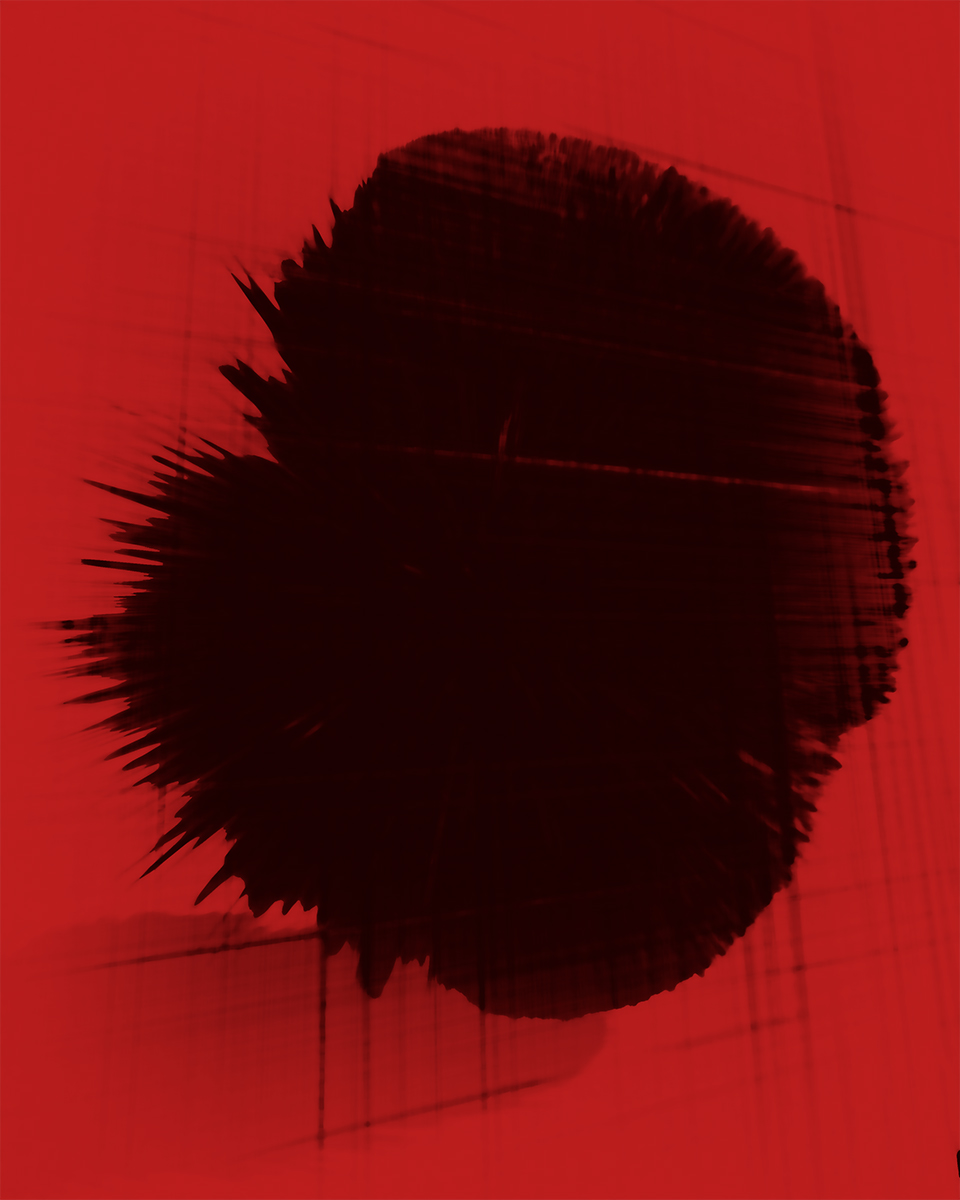
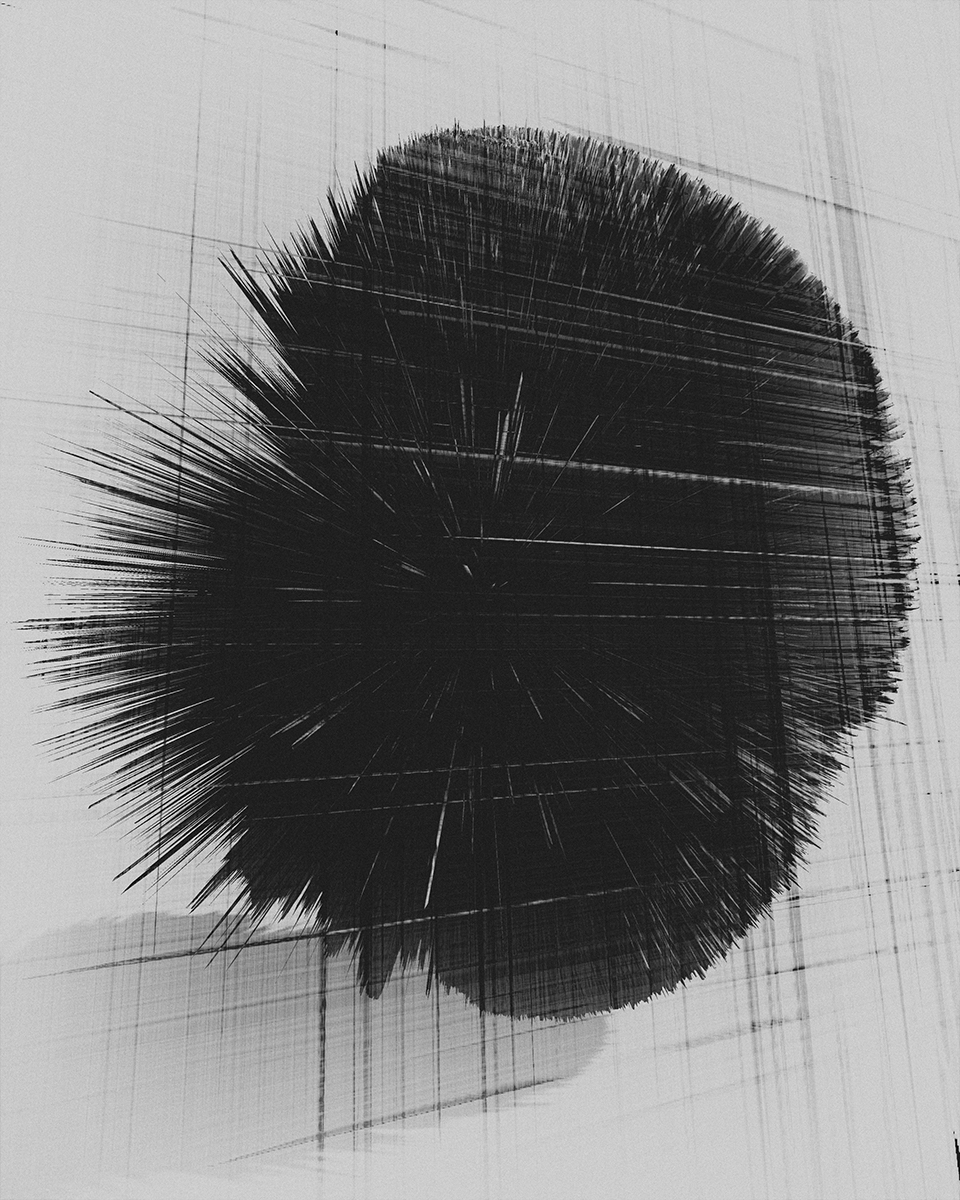

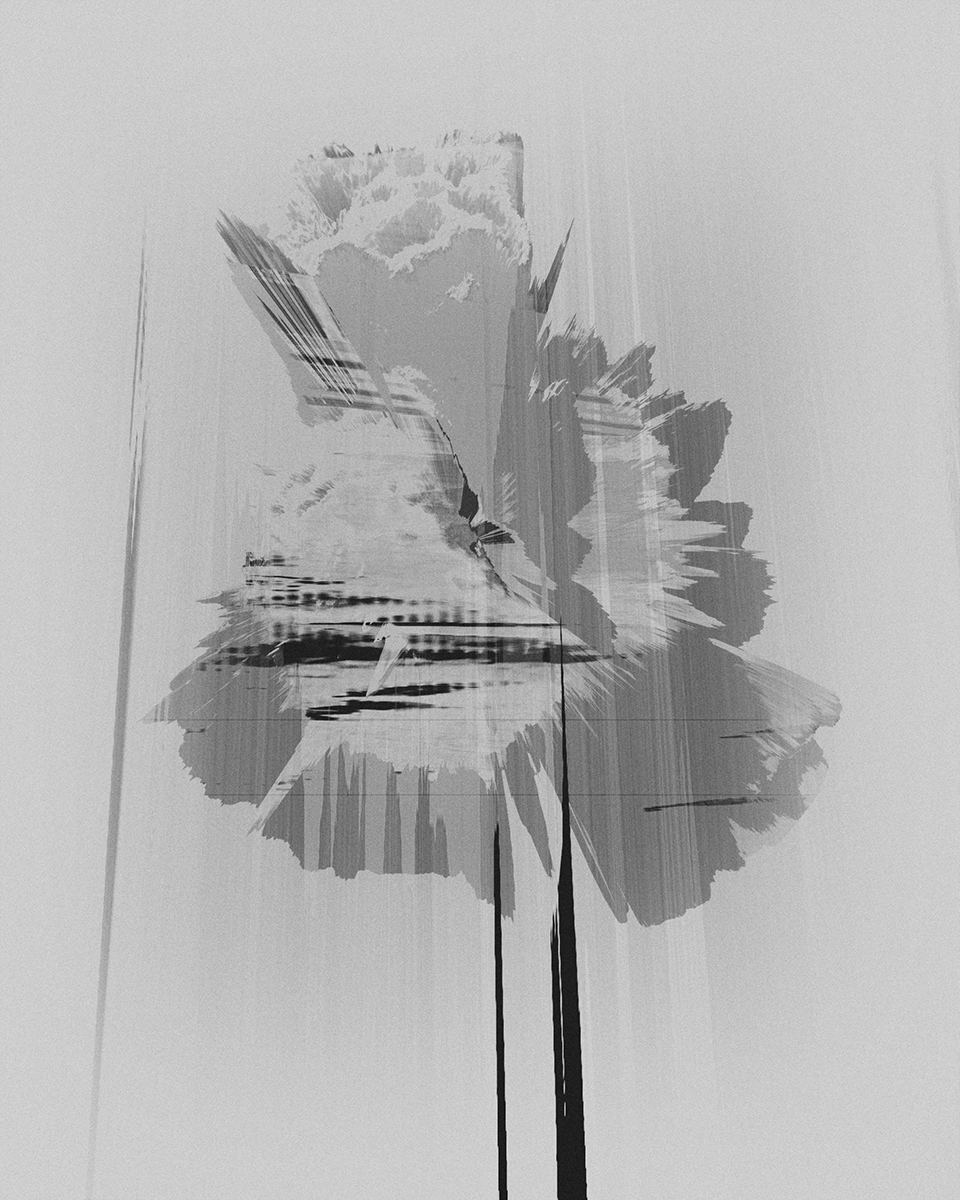





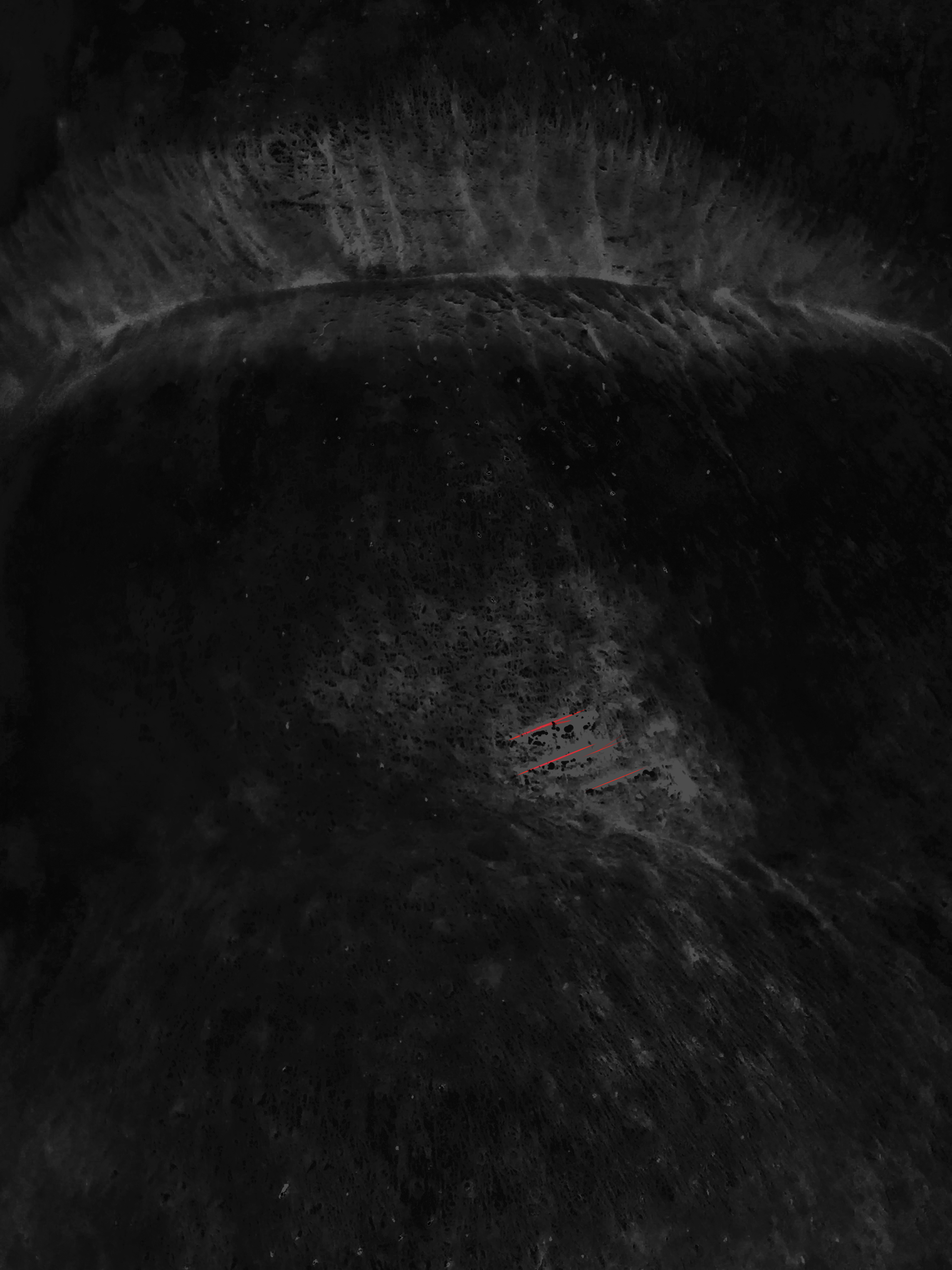

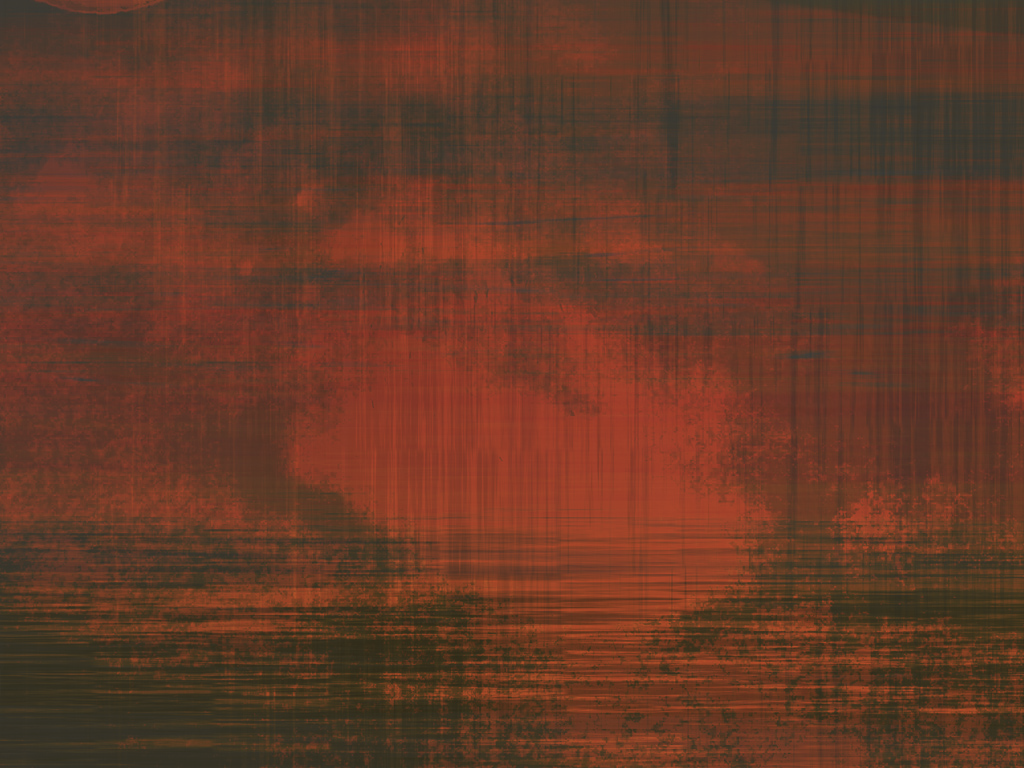
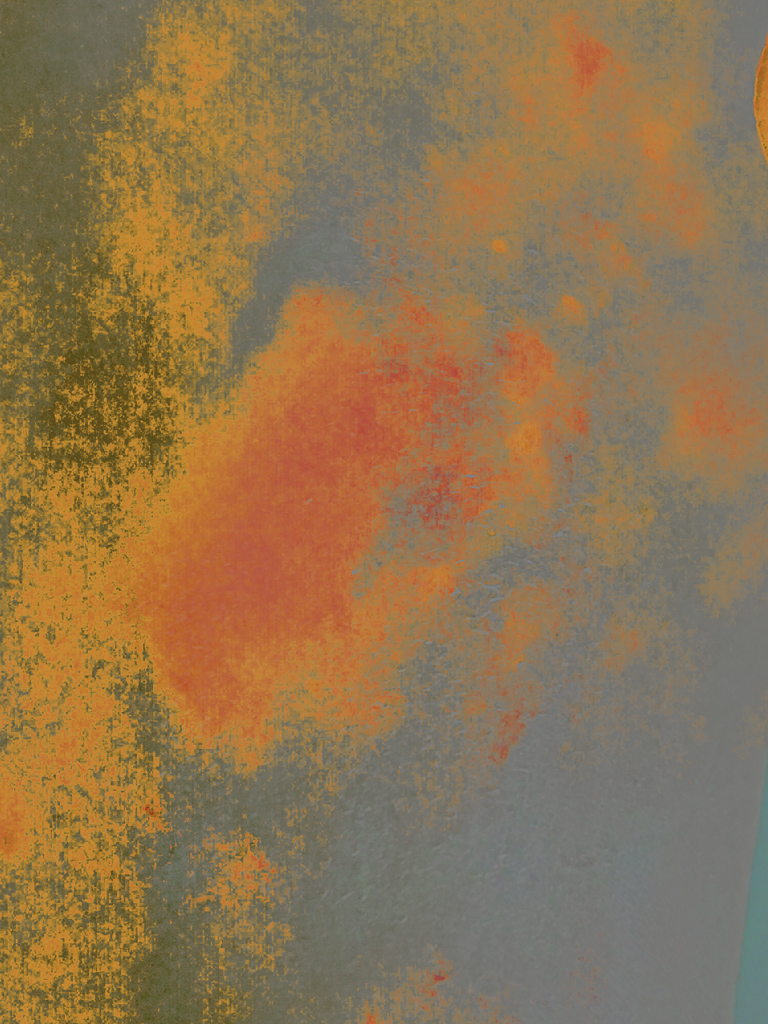









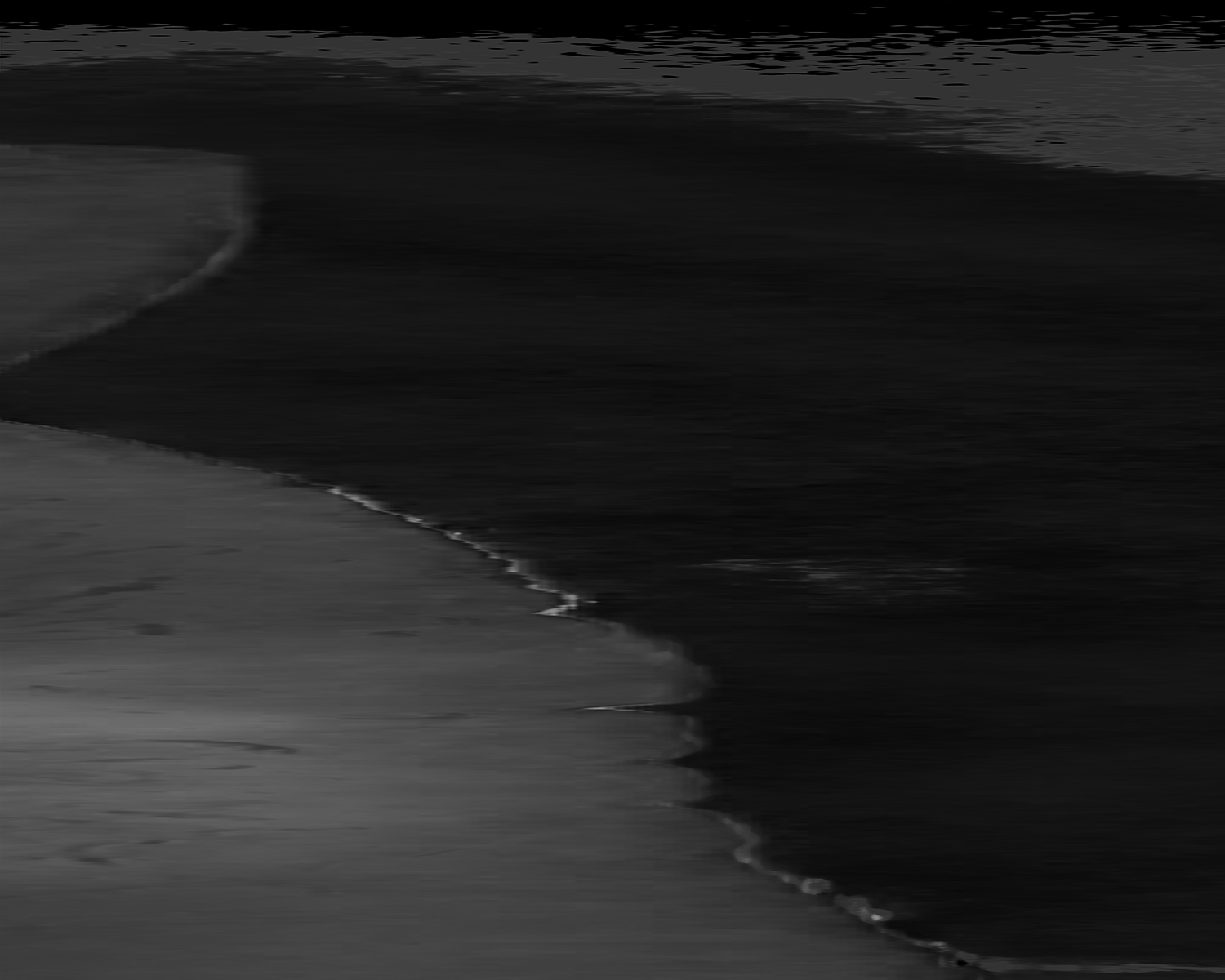


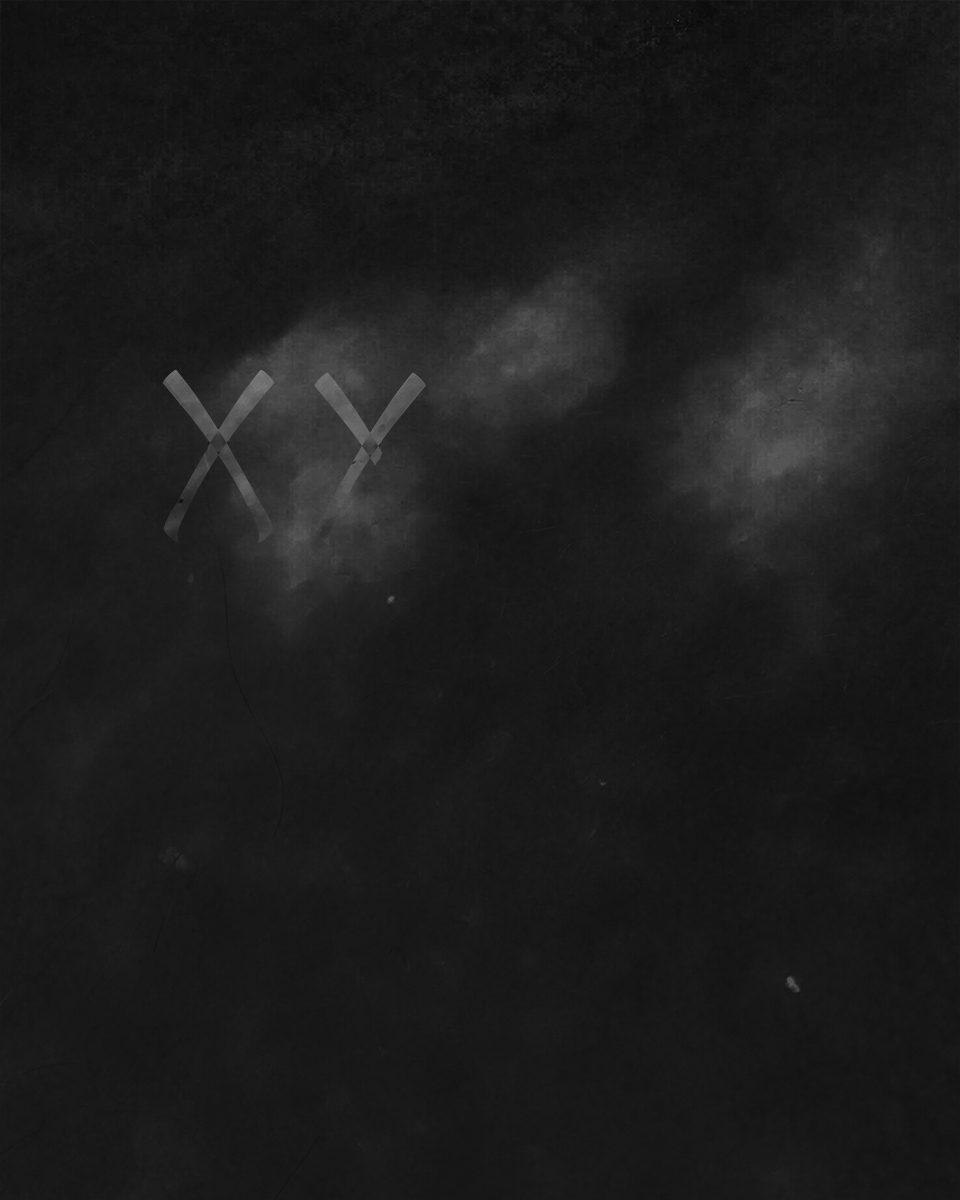
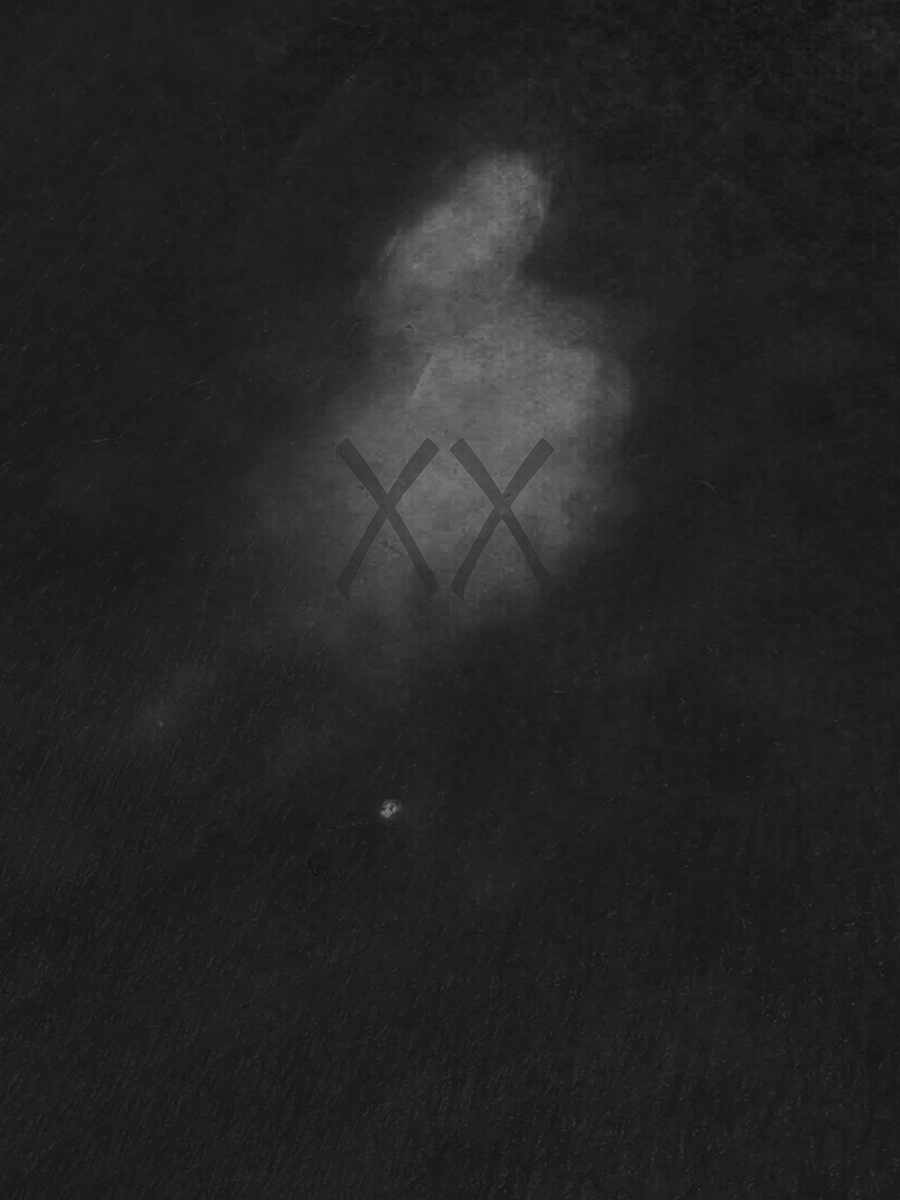





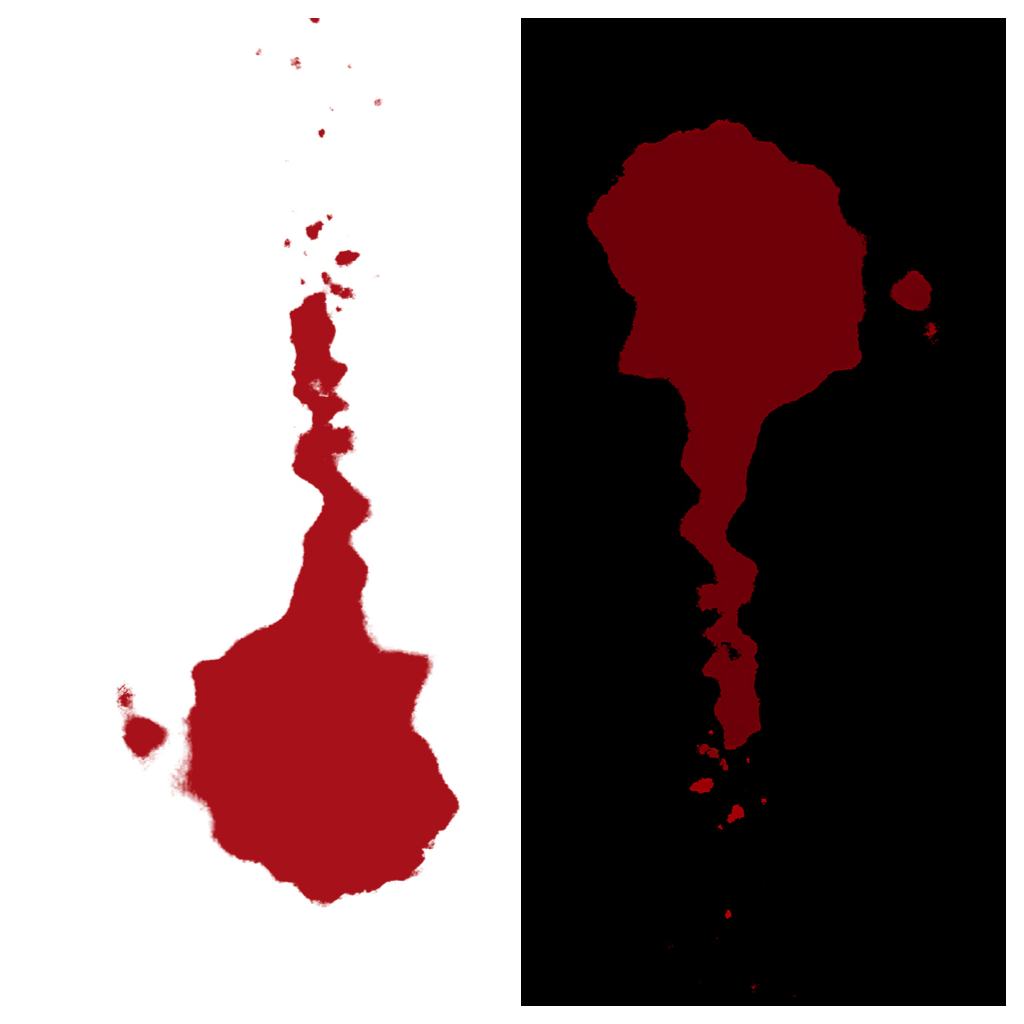
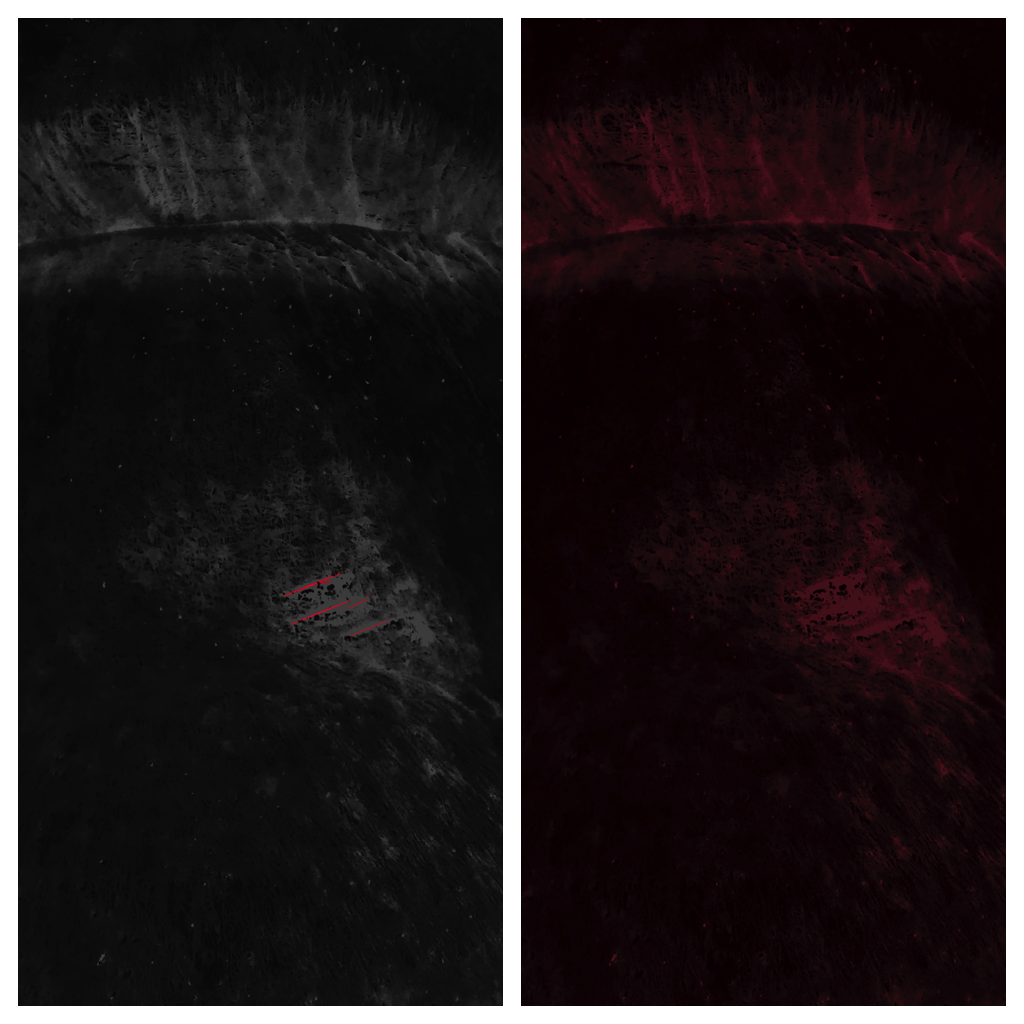

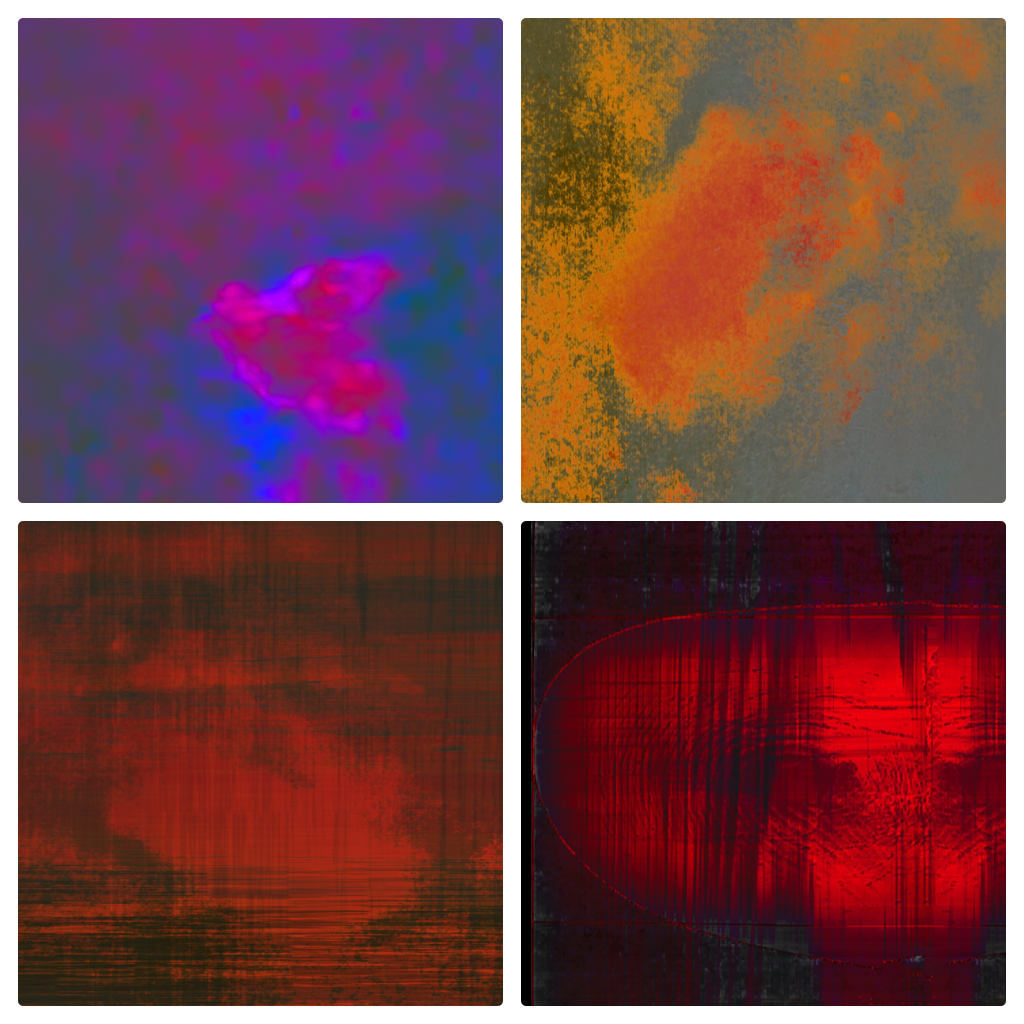

 Critical Research Journal